

 Prepared by Julien Faliu on 04 August 2026
El Salvador is the smallest country in Central America, yet it packs in a remarkably dense combination of practical advantages for people planning a long-term move. With a population of approximately 6.4 million (2026) spread across just 21,000 km², it is one of the most densely populated countries in the Americas. The official language is Spanish, and the economy runs entirely on the US dollar, which has been the only legal tender since 2001, eliminating any currency risk for residents earning in USD or other hard currencies. GDP growth reached 3.3% in 2026, underpinned by services, manufacturing, and a growing tech and nearshoring sector.
The expat community remains small but is expanding steadily, concentrated in San Salvador, the leafy suburb of Santa Tecla, and the surf towns along the Pacific coast. English proficiency is limited outside tourist zones and business circles, so building at least basic Spanish before arriving will make daily life considerably easier.
5 reasons expats are choosing El Salvador
- Dollarized economy: 100% USD since 2001, no exchange rate risk for anyone earning or saving in dollars.
- Territorial taxation: foreign-sourced income is generally not taxed in El Salvador, regardless of residency status.
- Dramatically improved security: the homicide rate fell from 105 per 100,000 (2015) to 1.3 per 100,000 in 2025, the lowest recorded in the Western Hemisphere that year.
- Low cost of living: a single person in San Salvador spends approximately $717/month excluding rent (Numbeo, May 2026).
- Business-friendly setup: a Sociedad por Acciones Simplificada can be registered entirely online with a minimum capital of just $1, at no registration cost.
Your setup journey
Guide in 11 steps. Click any step below to jump directly to the section you need.
01Where to Live in El Salvador: Four Destinations Worth Considering
El Salvador's compact size means that choosing a base is less about logistical trade-offs and more about lifestyle preferences. The capital offers the fullest range of services, the suburb of Santa Tecla appeals to families, the Pacific coast suits those drawn to outdoor living, and secondary cities offer a slower pace at lower cost. Below is a practical breakdown of the four main options for expats.
San Salvador
San Salvador is where the majority of expats are based, and for good reason. The city holds all of El Salvador's major private hospitals, all the main international schools, most multinational employers, and the country's only international airport (approximately 45 minutes away). The best neighborhoods for expats are Escalón, Zona Rosa, and San Benito, where security is high, restaurants are abundant, and the urban infrastructure is reliable. Rents in these areas range from $600 to $2,000+/month for apartments, and from $800 to $1,600/month for three-bedroom homes in safe neighborhoods. The main drawback is traffic: San Salvador's road congestion is significant and aggressive driving is common. International schools within easy reach include Escuela Americana, the International School of San Salvador, the British School of San Salvador, and the Panamerican School.
Santa Tecla
Santa Tecla sits on the western edge of the San Salvador metropolitan area and has developed into the preferred choice for families and remote workers. It is greener, quieter, and perceptibly safer than the capital, with a walkable town center, a concentration of cafes and coworking spaces, and a strong sense of local community. Proximity to the Escuela Americana and other international schools is a key draw for families. A good apartment in Santa Tecla rents for around $1,000+/month, and the town has seen significant investment in amenities over recent years.
La Libertad coast (Zaragoza, El Tunco, El Zonte)
The Surf City corridor along the La Libertad coast is El Salvador's fastest-growing area for foreign residents. El Zonte, internationally known as Bitcoin Beach, and the surf town of El Tunco have established communities of digital nomads, surfers, and entrepreneurs. Zaragoza, a small inland town just 20 minutes from the beach, has seen significant new development, with private gated communities like Tuscania and El Encanto offering secure, modern housing. Coastal and gated properties start from around $2,000/month. The trade-off is distance from international schools and major private hospitals, both requiring a trip to San Salvador.
Santa Ana
El Salvador's second city, Santa Ana, is in the western highlands about 65 km from the capital. It offers a substantially lower cost of living than San Salvador, with one-bedroom apartments in the $300-$500/month range. The pace of life is slower, the climate is slightly cooler than the coast, and the city has its own commercial infrastructure. It is a realistic option for retirees or remote workers who do not need daily access to San Salvador's international school network or specialist medical care.
02Visas and Residency in El Salvador: What You Need to Know
El Salvador offers several straightforward residency pathways, and a key 2026 reform has made them even more attractive. Since March 2026, temporary residents only need to spend a minimum of 90 days per year on Salvadoran soil, down from a previous requirement close to nine months. This change, enacted through Decreto No. 531 and published in the Diario Oficial on March 23, 2026, was explicitly designed to accommodate entrepreneurs, investors, and remote professionals with transnational lifestyles. Note also that since May 1, 2025, all travelers must complete the Digital Arrival Card (SVDAC) online before departure and present it at the border.
Main residency categories
The Dirección General de Migración y Extranjería (DGME), accessible at migracion.gob.sv, manages all residency applications. The principal options for long-term residents are:
- Visa Pensionado: for retirees with a guaranteed pension income of at least $1,100/month. Valid for one year and renewable. Your spouse, children, and parents can be included in the application.
- Visa Rentista / digital nomad regime: for passive income earners and remote workers with at least $1,460-$1,500/month in foreign-sourced income (rentals, dividends, royalties, remote salary). Valid for 12 months, renewable for up to approximately 4 years. Foreign income is not taxed under this regime.
- Investor visa: requires either a $1,000,000 investment registered with the National Investment Office, or a smaller equity stake of $10,000 in a Salvadoran company generating at least $4,000 in annual sales.
- Work permit: sponsored by a local employer, who submits the application along with an apostilled birth certificate, police clearance, and medical certificate from a Salvadoran doctor.
Application procedure
The process is largely document-driven. Your passport must be valid for at least 6 months. You will need passport photos, proof of accommodation, a health insurance plan, a health certificate, and an apostilled criminal record from your home country (and any country of residence in the past two years). Applications are filed at the nearest Salvadoran embassy, or online if no embassy is present in your country. Allow up to two months for a response.
Once in El Salvador, two additional administrative steps are essential: registering with the DGME if your stay exceeds the 90-day tourist window, and obtaining a NIT (Número de Identificación Tributaria) from the Ministerio de Hacienda, which is required for employment, banking, and contracts.
Path to permanent residency and citizenship
Temporary residency leads to permanent residency after approximately three years, with citizenship available after five years of total residency. Spanish and Latin American nationals benefit from a reduced citizenship track of just one year of residency. Spouses of Salvadoran citizens can apply after two years. The Salvadoran passport currently ranks 33rd globally, offering visa-free or visa-on-arrival access to around 131 destinations (Henley Passport Index, 2026).
03Working and Starting a Business in El Salvador
El Salvador's labor market is relatively compact but dynamic. The economy leans heavily on services, BPO operations, and export-oriented manufacturing, making it a regional hub for nearshoring. For expats, the most realistic entry points are either remote work under a residency permit, local employment in a multinational, or entrepreneurship. Setting up a company here has become genuinely simple in recent years, with an online registration system and minimal capital requirements.
Labor market snapshot
The table below summarizes the key employment indicators. Official figures show a tight formal labor market, though a significant portion of the workforce remains in the informal economy.
Indicator | Value | Year |
Unemployment rate | 4.65% | 2024 |
Employment rate | 47.58% | 2024 |
Average gross monthly salary | ~$500 (urban: ~$520) | 2026 |
Minimum wage (commerce/services) | $408.80/month | Since June 2025 |
Standard working week | 44 hours max (6 days) | - |
Sources: Trading Economics, U.S. State Dept. Investment Climate 2025
The minimum wage was raised by 12% in June 2025. Overtime is paid at double the regular rate, one of the highest overtime premiums in the region. The standard working week is capped at 44 hours across a maximum of six days.
Key sectors for expats
The strongest hiring sectors are BPO and call centers (English-language skills are at a premium), technology and fintech (El Salvador has developed a regulatory framework for digital asset service providers), tourism and hospitality, and agri-food processing. Export-oriented industries including textiles, coffee, sugar, and offshore assembly also employ significant numbers. For remote workers, the Visa Rentista provides a clean legal framework to live and work without engaging a local employer.
Starting a business
El Salvador has streamlined company formation considerably. The flagship option for solo founders is the Sociedad por Acciones Simplificada (SAS): minimum capital of $1, a single shareholder is sufficient, no notarial deed required, and the registration is done entirely online through the Centro Nacional de Registros (CNR) at no cost. The government's Miempresa portal can formalize registration in as little as three business days. A 2025 reform (Municipal Code Decree No. 322) removed the prior requirement to prove municipal solvency when incorporating, further simplifying the process. For a traditional Sociedad Anónima de Capital Variable (SA de CV), minimum capital is approximately $2,000, registration fees run $200-$250, and the process takes around five business days. A municipal business license adds $50-$300 depending on activity and location. All employers must register staff with the ISSS (social security) and an AFP (pension fund) before hiring. Digital asset service providers require a specialized license with application fees starting at $1,000.
04Finding a Home in El Salvador: Neighborhoods, Rents, and Practical Tips
The rental market in El Salvador is more varied than many first-time visitors expect. Prices span a very wide range, from modest apartments in secondary cities to upscale gated residences in San Salvador's most sought-after neighborhoods. The key factor shaping where expats choose to live is the combination of security, proximity to international schools, and access to private healthcare. Because the country is small, living outside the capital does not mean sacrificing convenience: most of El Salvador is within one to two hours of San Salvador.
Rental price ranges
Rental costs vary significantly by location and property type. The table below gives a practical breakdown by area:
Area | 1-bed apartment | 3-bed home |
Secondary cities (Santa Ana, San Miguel) | $300-$500/month | $500-$800/month |
Mid-range expat areas (San Salvador) | $600-$850/month | $800-$1,200/month |
Upscale expat zones (Escalón, Zona Rosa, Santa Tecla) | $1,200-$2,000+/month | $800-$1,600/month |
Coastal / gated communities (La Libertad) | From $2,000/month | From $2,000+/month |
Source: Numbeo (May 2026)
Popular neighborhoods for expats
Escalón and Zona Rosa are the most established expat neighborhoods in San Salvador: centrally located, safe, with restaurants, cafes, and a lively social scene. San Benito, adjacent to Zona Rosa, houses several embassies and international organizations. Antiguo Cuscatlán is a residential area popular with families. Renting a furnished property on a short-term basis costs 20-40% more than unfurnished long-term contracts. Landlords typically require proof of income or a local guarantor, and the deposit is usually one month's rent.
Practical rental tips
The rental process is informal by regional standards: no single listing platform dominates, and word-of-mouth through expat networks remains important. Leases are typically in Spanish, so having a bilingual contact or a lawyer review the contract is advisable. Utilities are usually managed separately: internet providers include Claro, Tigo, and Digicel, with packages ranging from $30 to $75/month. Electricity and water for a one-bedroom apartment average around $79/month. Car insurance is technically optional in El Salvador, and many local drivers do not carry it, so caution is warranted when renting a vehicle or driving.
05Cost of Living in El Salvador: Affordable Without Sacrificing Comfort
El Salvador occupies an interesting position in the Central American cost-of-living spectrum: meaningfully cheaper than Costa Rica and Panama, roughly comparable to Guatemala, and substantially more affordable than any major city in North America, Western Europe, or Australasia. The dollarized economy eliminates inflation surprises caused by currency fluctuations, and basic goods, transport, and local services are genuinely inexpensive. The main cost variable for expats is housing, which ranges from modest to competitive with mid-tier Western cities depending on the neighborhood chosen.
Monthly budget for a single person
The table below is based on Numbeo data for San Salvador (updated May 2026), supplemented by other verified sources. Figures exclude rent unless stated.
Expense | Monthly cost (USD) |
Rent, 1-bed apartment (city center) | ~$650 |
Groceries and food (incl. in total below) | ~50% cheaper than US average |
Water and electricity | ~$79 |
Internet (home) | $30-$75 |
Local transport (bus, per trip) | ~$0.35 |
Fuel (regular, per gallon, mid-2025) | ~$3.50-$3.95 |
Total excl. rent (Numbeo estimate) | ~$717/month |
Monthly budget for a family of four
For a family considering an international school and a three-bedroom property in a safe neighborhood, the following figures provide a realistic planning baseline. School fees represent the largest variable and depend significantly on the institution chosen.
Expense | Monthly cost (USD) |
Rent, 3-bed home (safe neighborhood) | $800-$1,600 |
Water and electricity | ~$130 |
International school fees (per child, monthly equiv.) | ~$420-$1,250 |
Groceries, food, utilities, and leisure | Included in ~$2,569 total (excl. rent) |
Total excl. rent (Numbeo estimate) | ~$2,569/month |
For broader context: Numbeo's data (2026) shows that a comparable standard of living in San Salvador at around $3,600/month (rent included) would require approximately $11,800/month in New York City. Private school fees and private health insurance are the two costs where El Salvador does not offer dramatic savings relative to other developing-country destinations. Everything else, from food to transport to utilities, is genuinely competitive. Sources: Numbeo San Salvador (May 2026), El Salvador Info
06Healthcare in El Salvador: Navigating a Three-Tier System
Healthcare in El Salvador is structured across three distinct tiers, and for most expats the practical choice comes down to private insurance paired with private hospitals. The public system exists and is technically accessible to legal residents, but overcrowding and resource constraints make it inadequate for most foreigners' needs. Planning your healthcare coverage before you arrive is not optional: it is a requirement for many residency applications and a genuine practical necessity.
The public system (MINSAL / MSPAS)
The Ministry of Health (MINSAL/MSPAS) operates around 30 public hospitals across the country, providing free or near-free basic care to the population. Legal residents can access these facilities, but long wait times, staff shortages, and equipment gaps are well-documented. Only approximately 20% of El Salvador's population has any form of health insurance, reflecting the structural limitations of the system.
Social security healthcare (ISSS)
Employees working in the formal sector and their employers contribute to the Instituto Salvadoreño del Seguro Social (ISSS), which provides coverage for primary care, specialist visits, hospitalization, and medication. The quality is noticeably better than the public hospitals, but specialist appointment backlogs remain a concern.
Private hospitals and expat healthcare
The large majority of expats in El Salvador rely on private facilities, which offer modern equipment, faster access to specialists, and English-speaking staff at the leading hospitals. The main private hospitals, all located in San Salvador, include:
- Hospital de Diagnóstico: two sites in San Salvador, strong in advanced imaging and oncology.
- Hospital de la Mujer: maternity and gynecological care.
- Hospital La Sagrada Familia and Hospital de Especialidades: comprehensive surgical and emergency services.
International private health insurance is strongly recommended. Policies that include medical evacuation and repatriation coverage are particularly valuable given that complex or highly specialized care may require travel outside El Salvador. For emergencies, the national number is 911. Outside San Salvador, access to specialist care becomes significantly more limited, which is worth factoring into your choice of where to live.
07Taxation in El Salvador: A Territorial System That Works in Your Favor
El Salvador operates a territorial tax system, which is its defining fiscal characteristic for internationally mobile residents. Only income generated from sources within El Salvador is subject to tax. Foreign-sourced income, whether from a remote employer, rental properties abroad, dividends, or investments held overseas, is generally not taxed in El Salvador regardless of whether you are a resident or not. This applies equally to domiciled individuals and non-residents. The tax authority is the Ministerio de Hacienda, specifically its Dirección General de Impuestos Internos (DGII), accessible online at mh.gob.sv.
Personal income tax (ISR)
For residents with Salvadoran-sourced income, the Impuesto Sobre la Renta (ISR) applies on a progressive scale. The annual tax year runs January 1 to December 31, and the annual return (Form F-11) is due by April 30 of the following year. Employers withhold ISR monthly from salaries. The current brackets, as published by PwC Worldwide Tax Summaries (reviewed February 2026), are:
Annual net income (USD) | Tax due |
$0 - $6,600 | Exempt |
$6,600 - $9,142.86 | $212.12 + 10% on excess over $4,064 |
$9,142.86 - $22,857.14 | $720.00 + 20% on excess over $9,142.86 |
Above $22,857.14 | $3,462.86 + 30% on excess over $22,857.14 |
Non-domiciled individuals pay a flat rate of 30% on any Salvadoran-sourced income. Professional fees (honorarios) are subject to a 10% advance withholding by the payer, which is credited against the final annual ISR liability.
VAT (IVA)
The Impuesto al Valor Agregado (IVA) applies at a standard rate of 13% on goods and services within El Salvador. Exports are zero-rated. Some basic staples (beans, rice, sugar) and certain medicines benefit from import duty exemptions. Educational and medical services are exempt in certain circumstances.
Other taxes and key notes
There is no wealth tax, inheritance tax, or gift tax in El Salvador. Corporate income tax follows the same territorial principle, with a top rate of 30%. The only minor local levy is a municipal road tax (Vialidad) of $3.43 per year. Regarding social security, formal-sector employees and their employers both contribute to the ISSS (health and social security) and a separate AFP (pension fund); exact contribution rates should be confirmed with a local accountant. On the question of Bitcoin: it was adopted as legal tender in 2021, but following an IMF loan agreement in 2025, mandatory acceptance by businesses was removed. Bitcoin remains a recognized means of payment and the government's Chivo Wallet continues to operate, but the USD is the effective currency for all practical purposes.
Tax treaties and FATCA
El Salvador has signed only one double-taxation treaty, with Spain. There is no treaty with the UK, Canada, Australia, or any other English-speaking country. In practice, this matters less than it might elsewhere, because the territorial system means El Salvador generally does not tax foreign-sourced income in the first place. El Salvador also does not adhere to FATCA or the Common Reporting Standard (CRS), meaning there is no automatic exchange of financial account information with foreign tax authorities. US citizens should be aware that their US filing obligations (IRS) continue independently of El Salvador's local rules.
08Schools and Education in El Salvador for Expat Families
Education in El Salvador is Spanish-language by default in the public system, which means most expat families with children look immediately to the private and international sector. The good news is that San Salvador has a solid concentration of well-established international schools offering globally recognized curricula, and fees are considerably lower than equivalent schools in North America or Europe.
The local education system
Public schooling is managed by the Ministry of Education and delivered entirely in Spanish. The curriculum follows local Salvadoran standards. While accessible and free, it is not typically the first choice for internationally mobile families who need continuity with foreign university entrance systems.
International schools in San Salvador
The following schools are the main options for expat families, all located in or near San Salvador:
- Escuela Americana (EA): the flagship international school, founded in 1946, located in Colonia La Mascota. Bilingual English-immersion school, US college-preparatory curriculum with Advanced Placement (AP) courses. Annual fees in 2025 (per U.S. State Department fact sheet, data from December 2024): PreK $8,780; Elementary $9,249; Middle School $9,872; High School $10,744. Enrollment of approximately 1,222 students.
- International School of San Salvador: instruction primarily in English, with ESL and SSL programs. Accredited by AdvancED (SACS) and the Salvadoran Ministry of Education. Member of AASCA (Association of American Schools in Central America).
- British School of San Salvador: approximately $12,000/year.
- ESI International School: approximately $10,000/year, with an IB-oriented and entrepreneurship-focused program.
- Panamerican School: bilingual program, located in Colonia Escalón.
Annual fees across international schools in El Salvador generally range from $5,000 to $15,000, with the most prestigious institutions exceeding $20,000. These schools deliver US, IB, and Cambridge/GCSE curricula, all internationally recognized for university entrance. Sources: U.S. State Department (2025 Fact Sheet), World Schools
Other language options
For families who prefer instruction in a language other than English, a Lycée français in San Salvador offers a French-Spanish bilingual curriculum with international recognition. Several private Salvadoran schools also operate strong bilingual (Spanish-English) programs at lower price points than the fully international schools listed above.
09Moving to El Salvador: Your Practical Relocation Checklist
Moving to El Salvador is relatively straightforward compared to many Central American destinations, but good preparation makes a meaningful difference. Several administrative steps have changed recently, including the introduction of a mandatory digital arrival card and a simplified residency presence requirement. Working through this checklist before and immediately after arrival will save significant time and stress.
Before you leave
- Complete the SVDAC (Digital Arrival Card) online before your flight. Mandatory since May 1, 2025, this digital form must be presented with your passport upon arrival.
- Check your passport validity: it must be valid for at least 6 months from the date of application for any residency type. For a work visa, a yellow fever vaccination certificate may also be required.
- Apostille and translate your documents into Spanish in advance: birth certificate, marriage certificate (if applicable), and criminal record certificate from your home country and any country where you have lived in the past two years.
- Arrange private health insurance before departure. A policy covering inpatient care, specialist visits, emergency evacuation, and repatriation is strongly recommended. Health coverage is also a requirement for most residency applications.
- Start learning Spanish. English is spoken in parts of San Salvador's business and tourist districts, but it is limited elsewhere. Basic conversational Spanish will make daily life and administrative processes considerably smoother.
On arrival and first weeks
- Register with the DGME if your stay will extend beyond the 90-day tourist window. Do not let your tourist authorization lapse before filing for residency.
- Obtain your NIT (Número de Identificación Tributaria) from the Ministerio de Hacienda. This tax identification number is required for opening a bank account, signing a lease, and most formal employment. Bring your passport and proof of address.
- Open a local bank account. Requirements vary: some banks accept applications with a tourist visa, while others require a residency permit. ATMs are widely available in urban areas, though credit cards are not universally accepted, particularly at smaller local businesses.
- Note electrical standards: El Salvador runs on 115V / 60Hz, using Type A and B flat-blade plugs (the same as North America). Other plug types will need adapters and possibly voltage converters.
Join the discussion on the forum
10Leisure, Culture, and Daily Life in El Salvador
El Salvador's geography is compact but remarkably varied, offering Pacific coastline, volcanic highlands, colonial towns, and a growing urban food and arts scene. For residents, this translates into a lifestyle that can be as active or as relaxed as you choose, at a price point well below comparable destinations in the region.
Outdoor and sporting activities
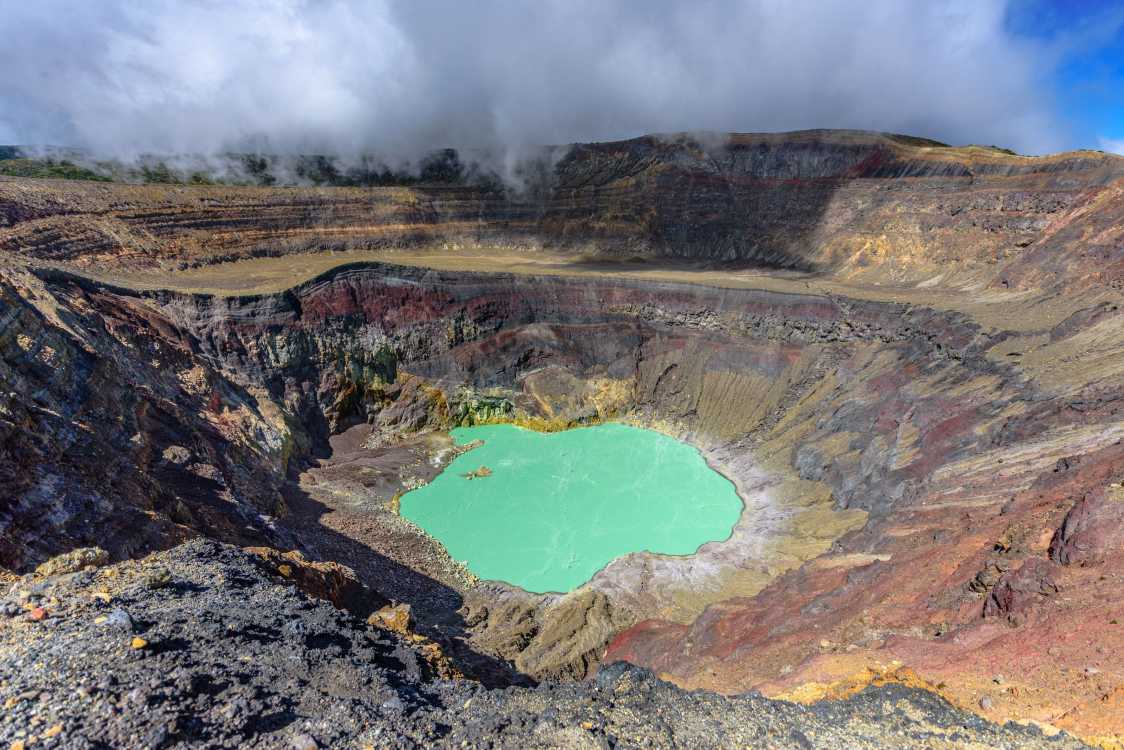
The Pacific coast is the headline draw. Surf City, stretching along the La Libertad coast, includes internationally recognized surf breaks at El Tunco, El Zonte, and Punta Roca, attracting surfers from around the world. The country's volcanic interior offers hiking and trekking on several active and dormant volcanoes, including Santa Ana and Izalco. Lake Coatepeque, nestled in a volcanic crater, is a popular weekend destination for swimming and kayaking.
Cultural life and the expat community
The colonial town of Suchitoto, about an hour from San Salvador, is the country's main cultural hub, known for art galleries, festivals, and a well-established community of local and foreign artists. San Salvador itself has a growing dining scene, particularly in Zona Rosa and Escalón, with a range of international cuisines. The expat community tends to organize through language exchange groups, professional networking events, and informal social circles. International chambers of commerce and cultural associations provide more structured networking opportunities.
Practical daily life
El Salvador drives on the right. Public transport relies on buses and informal colectivos (shared minivans), which are inexpensive but require some local knowledge to navigate. Taxis and ride-hailing apps operate in San Salvador. A 10% tip is standard in restaurants and service industries. The Ruta de las Flores, a scenic highland route through coffee towns and markets, is a popular weekend outing combining nature, food, and artisan crafts. Cinema tickets rank among the cheapest in the Americas (6th most affordable out of 90 cities tracked by Numbeo). Internet access at home is provided by Claro, Tigo, and Digicel, with monthly packages from $30 to $75.
11FAQ
12El Salvador in Brief: A Country Worth Watching
El Salvador has undergone one of the most rapid security and economic transformations in the region over the past decade. A dollarized economy, territorial taxation, low living costs, and a streamlined business registration process make it a credible option for expats, remote workers, retirees, and entrepreneurs. The Pacific coast offers outstanding outdoor living, and the country's compact size means everything is within reach. Spanish is essential, private healthcare is non-negotiable, and the ongoing state of exception is worth monitoring. For those who prepare well, El Salvador delivers an unusually high standard of living for the cost. Connect with the community and ask questions at the El Salvador forum on Expat.com.
Join the Salvador community
Get regular tips and advice to make the most of your expat life
Essential services for your expat journey




Forum topics on living in El Salvador
Discover forums topics on expat life in El Salvador: join the conversation, ask your questions, get advice and share your experience.
- Restrictions about everyday life
- New members of the Salvador forum, introduce yourselves here - 2026
- Property prices in El Salvador
- Top three expat communities in Salvador
- Like minded expats
- British and looking to move to El Salvador
- Intercultural relationships in El Salvador
- Keeping in touch while living in El Salvador
- Getting married in El Salvador
- Hi! Moving to a house on the beach.
- Buying a car in El Salvador
- SALVADOR FORUM CODE OF CONDUCT
- Cost of living in El Salvador – 2015
- Interested in living in El Salvador and looking for jobs!
- 5 good reasons for living in El Salvador
- The other side of the Salvadoran postcard