

 Prepared by Julien Faliu on 28 October 2025
Myanmar, formerly known as Burma, is a Southeast Asian nation with a population of 54.8 million people, ranking as the 27th most populous country globally. With a density of 84 people per km² and urban population accounting for 34.13% of the total, the country remains predominantly rural. The median age of 30.1 years reflects a young and dynamic population. Burmese is the official language, though English is widely used in business and tourism sectors, facilitating expatriate integration. The local currency is the Myanmar kyat (MMK).
⚠️ Critical Security Notice: Myanmar has experienced significant political instability since the military coup in February 2021. A devastating earthquake measuring 7.7 magnitude struck the country on March 28, 2025, killing over 3,500 people and collapsing numerous healthcare facilities. These events substantially impact expatriation conditions and require heightened vigilance.
5 Compelling Reasons to Relocate to Myanmar
- Exceptionally affordable cost of living: Myanmar ranks among Southeast Asia's most budget-friendly destinations, enabling a comfortable lifestyle on a moderate income
- Extraordinary cultural heritage: Thousands of ancient Buddhist temples and preserved traditions offer an unparalleled cultural immersion
- Diverse natural landscapes: From pristine lakes and verdant mountains to unspoiled beaches, the country showcases remarkable geographical variety
- Emerging market opportunities: Despite current political challenges, the country presents economic potential for savvy entrepreneurs and professionals
- Welcoming and educated population: High literacy rates and widespread English proficiency facilitate communication and integration
Your setup journey
Guide in 11 steps. Click any step below to jump directly to the section you need.
01Where to Live: Guide to Myanmar's Major Cities
Your choice of city significantly shapes your expatriate experience in Myanmar. Each city presents distinct characteristics regarding infrastructure, cost of living, professional opportunities, and quality of life. The two main metropolises, Yangon and Mandalay, concentrate most of the expatriate population and offer the best infrastructure.
Yangon: Economic Heart of Myanmar
Former administrative capital until 2006, Yangon remains the country's economic powerhouse and most international city. With approximately 5.2 million inhabitants, it concentrates the majority of corporate headquarters, international organizations, and embassies. Living costs are the country's highest, particularly for housing. A city center 1-bedroom apartment rents for USD 800-1,500 monthly, while a 3-bedroom family home in residential areas like Golden Valley or Bahan can reach USD 2,500-4,000 per month. The city hosts Myanmar's best international schools, including International School Yangon and Myanmar International School, plus the most modern healthcare facilities like Pun Hlaing Siloam Hospital. Transportation infrastructure includes the country's best-connected international airport. The tropical climate features a pronounced rainy season from May to October and consistent year-round heat.
Mandalay: Cultural and Spiritual Center
Mandalay, the second city with 1.7 million inhabitants, represents Myanmar's traditional cultural and spiritual heart. Located in the country's center on the Irrawaddy River, it offers more authentic lifestyle and prices typically 20-30% lower than Yangon. A modern 2-bedroom apartment rents for USD 800-1,500, and family houses start at USD 1,000 monthly. The city has Myanmar International School and Yangon International School Mandalay campuses for expatriate children's education. Medical infrastructure remains more limited than Yangon, with Mandalay General Hospital as the main reference, partially damaged by the March 2025 earthquake. The international airport maintains connections with major Asian cities. The expatriate population, though smaller than Yangon's, benefits from a tight-knit community and more relaxed atmosphere.
Nay Pyi Taw: Administrative Capital
Built from scratch to become the new capital in 2006, Nay Pyi Taw presents a unique face with oversized avenues and planned urbanism. The city has approximately 1.2 million inhabitants but suffers from a feeling of emptiness outside administrative zones. It hosts primarily civil servants, diplomats, and international organization employees. Housing costs remain moderate, with modern apartments starting at USD 600 monthly. Infrastructure is modern but cultural and leisure offerings remain limited. Installation here typically stems from professional obligations rather than personal choice.
Other Cities and Regional Considerations
Several secondary cities merit consideration for specific profiles. Bagan, a major archaeological site, attracts tourism professionals despite its small population. Inle Lake appeals for natural beauty but offers limited infrastructure. Coastal cities like Ngapali remain vacation destinations rather than permanent residence locations. Relocation to Kachin, Shan, Rakhine, and Chin States is strongly discouraged due to ongoing armed conflicts and absence of expatriate-suitable infrastructure. Your city choice must account for professional constraints, children's schooling needs, healthcare access, and current security conditions.
02Visa Requirements and Immigration Procedures
Securing the appropriate visa is fundamental to any Myanmar relocation plan. The country offers several visa categories tailored to different purposes, with an online application system that streamlines the process considerably. However, the current political situation demands careful attention and regular monitoring of regulatory changes.
Tourist eVisa for Short-Term Stays
The Tourist eVisa provides the most straightforward option for tourism purposes. Valid for 90 days from the date of issue, it permits a maximum stay of 28 days in-country. The fee is USD 50 with processing taking a minimum of 3 business days. Applications are completed entirely online through the official portal at evisa.moip.gov.mm. Authorized entry points include the international airports of Yangon, Mandalay, Nay Pyi Taw, plus the Kawthaung land crossing from Thailand. Note that this service was temporarily suspended from April 3-22, 2025 following the earthquake before being reinstated.
Business eVisa for Professional Travel
Business travelers and entrepreneurs should opt for the Business eVisa, which allows a longer 70-day stay from arrival. Valid for 90 days after issuance, it costs USD 70 and requires a minimum 3 business day processing time. Your application must include an invitation letter from a Myanmar company along with that company's registration certificate. The application process mirrors the Tourist eVisa, using the same online portal.
Visa on Arrival for Added Flexibility
The Visa on Arrival (VOA) offers convenience for nationals of 52 eligible countries. Available for both tourism at USD 50 and business at variable rates, it permits a 30-day stay for tourists. However, VOA can only be obtained at the airports of Yangon, Mandalay, and Nay Pyi Taw, excluding land border crossings.
Specialized Visa Categories
For extended meditation studies at monasteries and meditation centers, Myanmar offers a dedicated meditation visa. Those visiting family or friends can apply for a social visa, which requires an invitation letter. Both categories must be obtained through Myanmar embassies or consulates abroad.
Required Documentation and Eligibility
Regardless of visa type, you'll need a passport valid for at least 6 months beyond your planned departure date. VOA applicants should prepare 2 recent passport photos measuring 4cm × 6cm. All applicants must provide proof of return or onward tickets and confirmed accommodation booking. For eVisa applications, a valid email address and credit card for payment are essential. Citizens of 100 countries, including EU members, the United States, Canada, Australia, and the United Kingdom, qualify for tourist and business eVisas.
Critical Restrictions
Myanmar prohibits dual citizenship. Myanmar citizens, including dual nationals, may be subject to mandatory military service implemented since February 2024. This conscription applies to men aged 18-45 years and women aged 18-35 years under the 2010 law. Anyone with Myanmar ties should consider this carefully.
Join the discussion on the forum
03Employment and Business Opportunities
Myanmar's labor market presents unique characteristics, with officially low unemployment rates but a complex economic reality shaped by current political conditions. Nevertheless, opportunities exist for qualified expatriates in specific sectors. Understanding employment dynamics and salary structures proves essential for professional relocation.
Current Labor Market Conditions
Myanmar reports one of the world's lowest unemployment rates at 3.0% in 2024 according to World Bank data. However, this figure masks substantial underemployment, particularly prevalent in rural areas. The active workforce, estimated at 22 million people, is distributed primarily across agriculture employing approximately 50% of workers. The service sector follows with 37%, while industry accounts for 13% of total employment.
Key Sectors for Expatriate Professionals
Several industries offer promising prospects for international professionals. The oil and gas sector continues attracting international experts despite current challenges. Telecommunications is experiencing notable expansion with developing digital infrastructure. Tourism, though heavily impacted by recent events, retains recovery potential. Education, particularly international schools, and non-governmental organizations regularly seek qualified candidates. The textile, construction, and agribusiness sectors present occasional opportunities.
Compensation and Salary Ranges
Myanmar's minimum wage, set by government decree, stands at MMK 6,800 per day since October 2023. This 42% increase from the previous MMK 4,800 rate represents significant progress, though values remain modest by international standards. Qualified expatriates command substantially higher compensation depending on sector and role. International school teachers typically earn USD 1,000-2,500 monthly, while experienced petroleum engineers achieve considerably higher salaries. Compensation packages generally include housing, transportation, and sometimes children's education allowances.
Employment Sector Overview
The distribution of employment across sectors illustrates Myanmar's economic structure and identifies areas offering the most opportunities for international professionals.
Economic Sector | Employment Share | Expatriate Opportunities |
Agriculture | 50% | Limited (technical expertise) |
Services | 37% | Moderate (NGOs, tourism, education) |
Industry | 13% | Good (textiles, construction, energy) |
Daily Minimum Wage | MMK 6,800 | Since October 2023 |
Sources: World Bank, WageIndicator, Trading Economics
Starting a Business in Myanmar
Entrepreneurship in Myanmar remains viable though complicated by current conditions. Foreign investors typically must partner with local entities except in specific sectors. Company registration procedures go through the Directorate of Investment and Company Administration (DICA). The military government has maintained certain economic reforms, but the business environment remains unstable. Sectors open to foreign investment include textiles, agribusiness, and certain services, while other areas remain restricted or require special authorizations.
04Housing Market and Accommodation Options
Myanmar's property market presents distinctive characteristics, with supply concentrated in major cities and prices varying by neighborhood. Expatriates typically favor rental arrangements, given legal restrictions on foreign land ownership and the country's current instability.
Available Housing Types
In Yangon and Mandalay, expatriates can choose among several options. Condominium apartments represent the most popular choice, offering security and modern amenities. These residences typically feature swimming pools, fitness facilities, and 24-hour security. Standalone houses are found primarily in residential neighborhoods and offer more space, often with gardens. Serviced apartments provide practical solutions for temporary arrangements or initial weeks, including housekeeping, laundry, and sometimes meals. Luxury villas cater to senior executives, featuring substantial square footage and premium amenities.
Popular Neighborhoods in Yangon
Several areas concentrate the expatriate population in the capital. Golden Valley represents the most upscale sector, with large villas and luxury apartments in quiet, verdant surroundings. Monthly rents frequently exceed USD 2,500 for family housing. Bahan Township offers a good balance between quality of life and price, with numerous modern condominiums starting at USD 1,500 monthly. Kamayut Township attracts families due to proximity to several international schools, with rents ranging from USD 1,200 to 2,000. The city center (Downtown) appeals to young professionals with its vibrant urban life, despite sometimes older buildings, starting at USD 800 monthly.
Mandalay Rental Market
The country's second city typically offers rates 20-30% lower than Yangon. A modern 2-bedroom condominium apartment rents for USD 800-1,500 monthly depending on standard and location. Standalone houses with gardens are more accessible than in Yangon, with rents starting at USD 1,000 for comfortable spaces. The Aungmyethazan neighborhood concentrates most expatriates, offering good security and amenities.
Rental Procedures and Practical Aspects
Property searches typically go through real estate agencies, charging commission equivalent to one month's rent. Leases usually sign for one-year terms, with payment of 2-3 months' security deposit and often several months' rent in advance. This practice protects landlords against payment defaults. Contracts should be drafted in both English and Burmese, clearly stipulating each party's responsibilities for maintenance, repairs, and utilities. Most expatriate housing comes furnished or semi-furnished. Monthly utilities (electricity, water, gas) add to rent and typically represent USD 100-200 extra. Electricity remains the major expense, particularly with intensive air conditioning use during hot season.
Legal Restrictions on Property Ownership
Myanmar law prohibits foreigners from acquiring land. However, the 2016 condominium law permits non-residents to purchase apartments under certain conditions: the property must be located above the 6th floor and foreigners cannot hold more than 40% of units in a building. In the current context, property investment presents high risks and rental remains the option preferred by virtually all expatriates.
05Cost of Living: Budgets and Daily Expenses
Myanmar stands out for particularly affordable living costs compared to neighboring Southeast Asian countries and major Western cities. Expenses vary considerably depending on adopted lifestyle, housing choices, and imported product consumption. Capital Yangon presents rates slightly higher than Mandalay and secondary cities, particularly for housing and expatriate-frequented establishments.
Detailed Monthly Budgets
To establish realistic budgets, analyzing major expense categories according to your family situation proves essential. The amounts presented below reflect prices observed in 2025 and include comfortable lifestyle adapted to expatriate standards, balancing local and imported products.
Monthly Budget for Single Person
Monthly expenses for a single expatriate adopting intermediate lifestyle, combining modern housing and reasonable consumption, break down as follows.
Expense Category | Monthly Amount (USD) |
1-bedroom apartment rent (city center) | 800 - 1,500 |
Utilities (electricity, water, gas) | 80 - 150 |
Internet and phone | 30 - 50 |
Groceries and food shopping | 300 - 500 |
Dining out and entertainment | 200 - 400 |
Transportation (taxi, ride-sharing) | 100 - 200 |
Leisure activities | 100 - 200 |
International health insurance | 150 - 300 |
TOTAL MONTHLY | 1,760 - 3,300 |
Source: Numbeo Yangon - Data from July 2025
Monthly Budget for Family of Four
A family with two children enrolled in international school must plan substantially higher budget, primarily due to tuition fees and more spacious housing.
Expense Category | Monthly Amount (USD) |
3-bedroom house/apartment rent | 1,800 - 3,000 |
Utilities (electricity, water, gas) | 150 - 250 |
Internet and phone | 50 - 80 |
Groceries and food shopping | 700 - 1,200 |
Dining out and entertainment | 400 - 700 |
Transportation (vehicle + fuel) | 300 - 500 |
School tuition (2 children international school) | 2,500 - 4,000 |
Family health insurance | 400 - 800 |
Leisure activities | 300 - 500 |
Domestic help (optional) | 200 - 400 |
TOTAL MONTHLY | 6,800 - 11,430 |
Source: Numbeo Myanmar - Data from July 2025
Daily Living Price References
Beyond major budget categories, here are practical price benchmarks for everyday life in Yangon. A meal at a local restaurant costs USD 2-5, while dinner at a mid-range establishment for two averages USD 25-40. Coffee at a Western-style café runs USD 3-4, and local beer at a bar sells for around USD 2-3. For groceries, rice costs USD 1 per kg, milk USD 2.50 per liter, a dozen eggs USD 2, and bread USD 1.50. Local fruits and vegetables remain very affordable, with tomatoes at USD 1 per kg and bananas at USD 0.80. Gasoline costs approximately USD 1 per liter, a price that can fluctuate significantly during periodic shortages.
06Healthcare System and Medical Services
Myanmar's healthcare system faces major challenges, exacerbated by recent events. The March 2025 earthquake and political situation have significantly weakened medical infrastructure. For expatriates, thorough preparation and international health coverage become absolutely essential.
Current State of Healthcare
Myanmar has approximately 1,144 public hospitals distributed across the country, but equipment levels and staff qualifications vary considerably. The March 28, 2025 earthquake caused several healthcare facilities to collapse, notably in Mandalay where the public hospital partially collapsed. The World Health Organization had to intervene urgently to deliver medical supplies to affected areas. The ongoing armed conflict since 2021 has also forced many qualified healthcare professionals to leave the country, creating critical shortages in certain regions.
Medical Facilities for Expatriates
International-standard facilities concentrate primarily in Yangon. Among available options, Pun Hlaing Siloam Hospital is considered the country's best, offering standards approaching those of neighboring countries. Victoria Hospital and International SOS Clinic provide reliable alternatives for routine and specialized care. In Mandalay, options are more limited, notably Mandalay General Hospital for emergencies. Secondary cities typically have basic facilities often requiring evacuation to Yangon or Thailand for complex cases.
International Health Insurance: An Absolute Necessity
Given the public healthcare system's condition and high costs at private international facilities, comprehensive international health insurance proves indispensable. Policies must absolutely cover emergency medical evacuation to Bangkok or Singapore, the two preferred destinations for specialized care. Medical air evacuation costs can reach tens of thousands of dollars. Recommended insurers include Cigna Global, Allianz Care, and AXA Global Healthcare, offering plans adapted to the Southeast Asia region. Always verify your contract specifically covers Myanmar, as some insurers now exclude the country from standard coverage due to security concerns.
Pharmacies and Medications
Pharmacies exist in all cities, but imported medication availability remains unpredictable since 2021. Strongly consider building a personal medical kit with several months' supply of your regular medications. Western-brand medications are found mainly in Yangon at private hospital pharmacies, at prices significantly above Western levels. Counterfeit medications present a real risk; always use reputable establishments and keep original prescriptions.
Vaccinations and Health Precautions
Before departure, ensure you're current on universal vaccinations: diphtheria, tetanus, polio, pertussis. Vaccines for hepatitis A and B, typhoid, and Japanese encephalitis are strongly recommended. The rabies vaccine merits consideration for extended rural stays. Malaria persists in certain border regions; prophylactic treatment may be necessary depending on your location. Dengue and other mosquito-borne diseases require rigorous protection: repellents, treated mosquito nets, and covering clothing form the prevention foundation.
07Understanding Myanmar's Tax System
Myanmar's tax system encompasses several types of levies applicable to residents and non-residents. While relatively straightforward in structure, it contains specific provisions worth mastering for optimal tax planning. The tax authority, managed by the Internal Revenue Department (IRD), enforces precise rules regarding tax residency and filing obligations.
Tax Residency Status and Implications
An individual qualifies as a tax resident in Myanmar by spending at least 183 days during the fiscal year, which runs from April 1 to March 31. This status determines your tax obligations: residents face taxation on worldwide income, while non-residents only pay tax on Myanmar-sourced income. This distinction carries critical importance for expatriate tax planning.
Personal Income Tax
Myanmar applies a progressive taxation system for employment income through Personal Income Tax. Tax brackets for fiscal year 2024-2025 are structured as follows: the first MMK 4,800,000 is taxed at 0%, the next bracket up to MMK 10,000,000 at 5%, then up to MMK 20,000,000 at 10%, up to MMK 30,000,000 at 15%, and above that at 20%. Self-employment income follows similar structure, with a maximum rate of 25% for amounts exceeding MMK 30,000,000.
Capital Income Taxation
Interest income faces withholding tax varying by type. Bank interest is taxed at 15% for residents and 20% for non-residents. Dividends received also incur withholding tax of 15% for residents and 20% for non-residents. Capital gains from securities are taxed at 10%, while property capital gains fall under the progressive income tax schedule.
Social Security Contributions
Myanmar's social security system imposes contributions on employers and employees. Employers contribute 3% of gross salary for Social Security, while employees pay 2%. These rates apply up to a monthly ceiling of MMK 500,000. Self-employed individuals and expatriates employed by foreign companies may be exempt from these contributions depending on their situation.
Filing Requirements and Deadlines
Income tax returns must be filed by June 30 each year for the fiscal year ending March 31. Employees whose tax is withheld at source by their employer may be exempt from individual filing in certain cases. Payment generally occurs in a single installment upon filing, though an installment system exists for self-employment income. The tax authority has introduced an electronic filing system, simplifying procedures for taxpayers.
International Tax Treaties
Myanmar has signed double taxation avoidance agreements with several countries, including the United Kingdom, Singapore, Malaysia, Thailand, Vietnam, India, and South Korea. The absence of treaties with many Western nations, including the United States, Canada, and Australia, can create double taxation scenarios for those nationals. Consulting a specialized tax advisor is strongly recommended to optimize your situation under both countries' tax rules.
08Education and International Schools
Myanmar's education system offers several options for expatriate families, from local public schools to international institutions following foreign curricula. School choice significantly impacts children's integration and development, with notable differences in quality, language of instruction, and cost.
Local Education System
Myanmar's public education divides into several cycles: Prathom (primary) spanning 5 years, lower secondary covering 4 years, and upper secondary lasting 2 years. Instruction occurs primarily in Burmese, with English as a compulsory subject from primary level. While literacy rates remain high, teaching quality varies considerably by region and institution. Expatriate families rarely choose the public system due to language barriers and pedagogical differences.
International Schools in Yangon
The capital concentrates the country's quality international institutions. International School Yangon (ISY) represents the most prestigious option, following the American curriculum and accredited by the Western Association of Schools and Colleges. The school enrolls approximately 250 students from kindergarten through high school, with annual tuition ranging from USD 15,000 to 25,000 depending on grade level. Myanmar International School (MIS) offers the Cambridge program across two Yangon campuses. Fees range between USD 10,000 and 20,000 annually. Ayeyarwaddy International School provides an alternative combining IB Primary Years and Cambridge Secondary programs at slightly lower rates.
Educational Options in Mandalay
The country's second city offers more limited but acceptable quality choices. Myanmar International School operates a Mandalay campus providing the Cambridge program. The institution hosts a smaller community with pedagogical approach similar to the Yangon campus. Yangon International School has also opened a Mandalay branch, enabling continuity for families relocating between the two cities. Tuition fees remain comparable to those in the capital.
Programs and Accreditations
Myanmar's international schools primarily offer three program types: the American curriculum, Cambridge International, and to a lesser extent the International Baccalaureate (IB). The most reputable institutions hold international accreditations guaranteeing diploma recognition abroad. Always verify accreditations before enrollment, particularly if planning university studies in North America or Europe. School years generally follow the northern hemisphere calendar, beginning in August-September.
Costs and Enrollment
Beyond annual tuition fees, expect non-refundable registration fees reaching USD 3,000-5,000, plus additional expenses for uniforms, textbooks, extracurricular activities, and school transportation. Some employers include full or partial tuition coverage in expatriate packages. Enrollment typically requires several months' advance notice, as places are limited, particularly at the most reputable institutions. Most schools require admission testing, notably to verify English proficiency for non-native speakers.
09Planning Your International Move to Myanmar
An international relocation to Myanmar requires meticulous organization and careful attention to logistical, administrative, and practical aspects. Preparation ideally begins several months before departure, enabling smooth management of multiple procedures and avoiding unpleasant surprises upon arrival.
Comprehensive Moving Checklist
- Organize administrative documents: Gather passports, visas, diplomas, birth certificates, vaccination records, and all official documents. Arrange certified copies and English translations by certified translators
- Secure international health insurance: Compare offerings and subscribe at least 2 months before departure to guarantee coverage from arrival, absolutely including medical evacuation
- Complete necessary vaccinations: Consult an international vaccination center 3 months in advance for boosters and specific vaccines (hepatitis, typhoid, Japanese encephalitis)
- Select shipping method: Sea freight remains the most economical option for large volumes (6-8 week transit), while air freight suits urgent needs despite higher costs. Request multiple quotes from specialized international movers
- Establish detailed inventory: List precisely each box's contents to facilitate customs clearance and insurance. Photograph valuable items
- Understand customs formalities: Personal effects and furniture are generally duty-free when presenting your work visa. Avoid importing numerous new electronics
- Arrange temporary accommodation: Book lodging for the first 2-4 weeks while finding permanent housing. Serviced apartments offer comfortable solutions
- Handle banking matters: Inform your bank of your expatriation, verify international transaction fees, and consider opening a multi-currency account. Local account opening typically requires a work permit
- Prepare startup budget: Bring cash (preferably USD) equivalent to 3-4 months' expenses covering deposit, initial rent, supplementary furnishing, and unexpected costs
- Arrange children's schooling: Contact international schools at least 6 months ahead to reserve places, complete enrollment files, and schedule admission testing
- Secure medications: Build a 6-month minimum pharmacy supply of your regular treatments with translated prescriptions, given unpredictable imported medication availability
- Manage subscriptions and contracts: Terminate or suspend utility contracts, phone service, local insurance, and arrange mail forwarding
- Research tax implications: Consult a tax expert before departure to clarify your tax residency status and avoid double taxation, particularly given limited bilateral tax treaties
- Prepare essential equipment: Electrical voltage and plugs differ (220V, UK-style outlets), bring adapters. Internet connectivity can be unstable; consider backup solutions
- Address security concerns: Register with your country's citizen registry abroad, identify your embassy, and stay informed of security advisories
Successful international relocation hinges on anticipation and meticulous preparation of each step. Join online expatriate groups to benefit from advice of people already established in Myanmar.
10Cultural Attractions and Leisure Activities
Despite current challenges, Myanmar retains exceptional cultural and natural richness. From ancient temples to diverse landscapes and vibrant traditions, the country offers numerous discovery opportunities for expatriates, while requiring increased caution in travel.
Cultural Heritage and Historic Sites
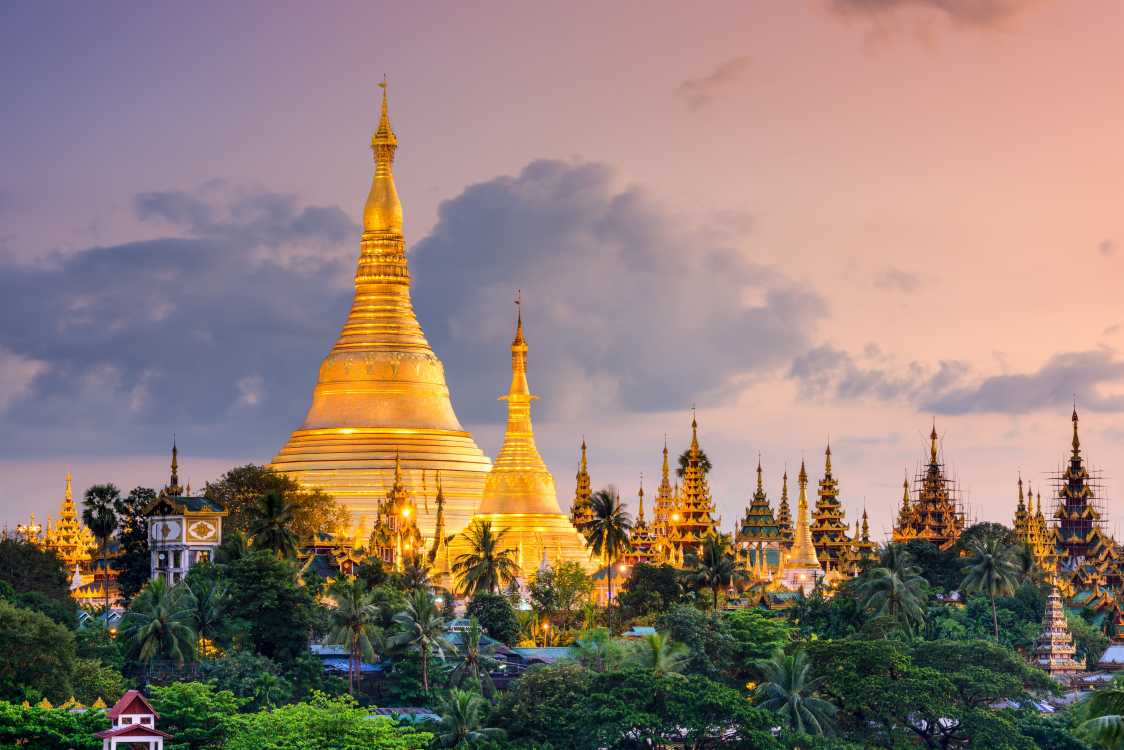
Myanmar hosts some of Asia's most spectacular Buddhist sites. The Bagan plain, with its 2,000 temples and pagodas dating from the 11th-13th centuries, constitutes an absolute must-see. The site is ideally explored by bicycle or hot air balloon at sunrise. Shwedagon Pagoda in Yangon, covered in gold leaf and crowned with thousands of diamonds, represents the country's most sacred worship site. The Golden Rock (Kyaiktiyo), perched precariously atop a mountain, attracts pilgrims and visitors in mystical atmosphere. The city of Mandalay contains numerous carved wooden monasteries and constitutes the country's traditional cultural heart.
Natural Wonders and Outdoor Activities
Inle Lake, located in Shan State, offers unique spectacle with its one-legged rowing fishermen and floating gardens. Hiking in the Kalaw mountains enables discovery of traditional villages and ethnic minorities, though border area security must be verified before any travel. Ngapali beaches on the west coast feature white sand expanses and crystal waters, providing an appreciated tropical escape. Mount Popa, an extinct volcano hosting temples at its summit, offers stunning panoramic views after ascending 777 steps.
Urban Life and Entertainment
Yangon concentrates most nightlife and cultural offerings for expatriates. The Chinatown quarter (19th Street) comes alive evenings with street food restaurants and lively bars. Several venues offer regular cultural programming, though offerings have reduced since 2021. Modern shopping centers like Junction City and Myanmar Plaza feature international boutiques, cinemas, and restaurants. Traditional markets, notably Bogyoke Aung San Market, showcase local crafts: lacquerware, silks, precious stones, and carved wooden objects.
Myanmar Cuisine and Dining
Myanmar cuisine blends Indian, Chinese, and Thai influences with distinctive specialties. Mohinga, fish noodle soup, comprises the national dish served at breakfast. Tea leaf salad (lahpet thoke) combines fermented tea leaves, peanuts, and crunchy vegetables. Yangon restaurants also offer varied international options, from Japanese establishments to Italian pizzerias. Expatriates particularly appreciate Inya Lake restaurants for their waterside terraces.
Travel Safety Recommendations
The political situation demands constant vigilance. Certain regions, notably Kachin, Shan, and Rakhine States, experience armed conflict and are inadvisable for travelers. Before any travel outside major cities, systematically consult your embassy's recommendations. Avoid gatherings and demonstrations. Curfews may be imposed without notice in certain zones. Favor private over public transportation for long journeys and always inform someone of your itinerary.
11In a Nutshell
Myanmar offers a distinctive expatriate experience, blending ancient cultural richness, breathtaking landscapes, and highly accessible living costs. However, the current political context, marked by the 2021 coup and aggravated by the devastating March 2025 earthquake, demands maximum vigilance and thorough reflection before any relocation. Weakened healthcare infrastructure, possible travel restrictions, and general instability necessitate meticulous preparation and solid support, ideally from an employer. For those deciding to take the plunge, the country reveals a warm population, professional opportunities in certain sectors, and unique cultural immersion. Join the community on the Myanmar expat.com forum to connect with established residents and benefit from their practical advice.
Join the Myanmar community
Get regular tips and advice to make the most of your expat life
Essential services for your expat journey




Forum topics on living in Myanmar
Discover forums topics on expat life in Myanmar: join the conversation, ask your questions, get advice and share your experience.