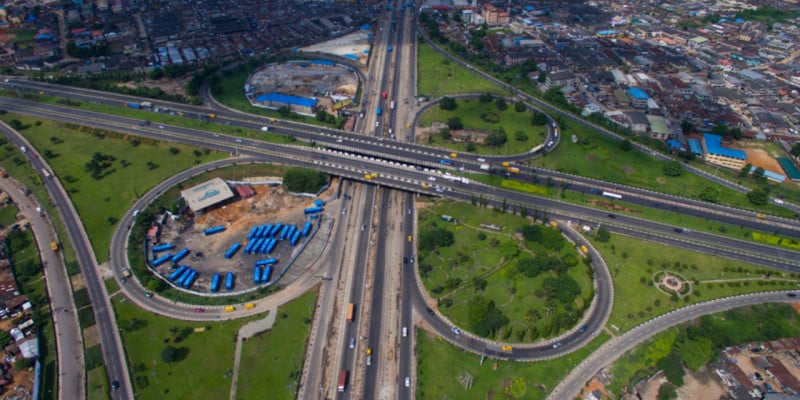
Road transport in Nigeria
The primary means of transportation in Nigeria, roads convey more than 80% of all traffic in the country. Expressways connect the major cities and the southern seaports, and smaller arteries stretch from the densely-connected south to the less populated northern areas.
Rolled out in the 1970s and 1980s, the national road system has been under-maintained ever since and is now in such a state of dereliction it has become dangerous to use. As a consequence, traffic accidents are quite common, especially around the busy city of Lagos. Driving on Nigerian roads demands extreme caution.
Besides, Nigeria offers a full range of road public transport options, but most expats recommend avoiding them, if possible.
Many inter-city buses (including the famous Molue yellow buses) run across the country, but more often than not the vehicles are not roadworthy and the drivers tend to be on the reckless side. This also applies to local city buses and shared minibuses. Overall, a number of expats in Nigeria will tell you that taking the bus is not an option.
As for private road transport, Nigerian cities offer numerous taxis, which are much safer. The same cannot be said of okadas (motorbike taxis), infamous for their breakneck driving style. In any case, you can either hail a taxi or okada from the street, or order one by telephone (which prevents scams). Taxis can either be metered or require you to negotiate the fare with the driver.
Rail transport in Nigeria
There is a dense railway network across Nigeria, and passenger trains circulate on several routes across the country, but the sluggish speed of trains and the poor quality of service have impeded railway transportation from truly taking off. Accordingly, trains in Nigeria offer more of a quaint adventure than an efficient way to travel from point A to point B.
Good to know:
Nigeria is currently at work rolling out a commuter train service around Lagos.
Water transport in Nigeria
Historically the main transportation channels in Nigeria, waterways such as the Niger river still carry significant amount of freight and also some passengers in the southern areas. This means of transportation, slow in itself, is further slackened by chronic congestion issues.
Air transport in Nigeria
Given the size of Nigeria and the road system condition, flying is a preferred means of transportation for intercity travel.
All of the country's large cities have their own airport or airfields and are served by domestic air routes. Additionally, Lagos (Murtala Muhammed International Airport), Abuja (Nnamdi Azikiwe International Airport) and Kano are serviced by foreign carriers operating on regional and international routes. However, Nigeria does not have a national flagship carrier yet, and many smaller local companies have a poor safety record.
Useful links:
Lagos State Transport Management
List of Bus Road Transportation Companies in Nigeria
Nnamdi Azikiwe International Airport