


 Guide written by Veedushi Bissessur on 06 November 2026
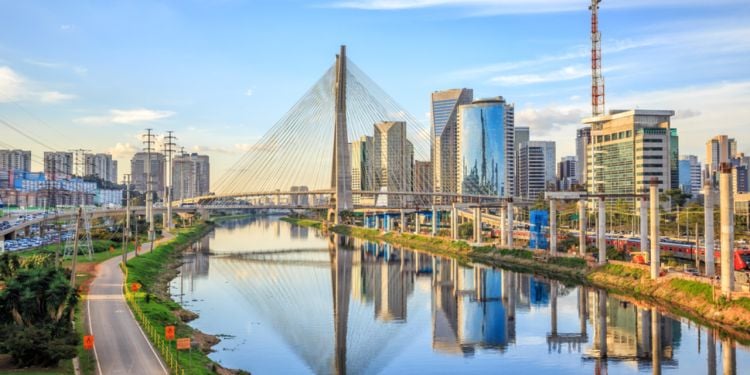
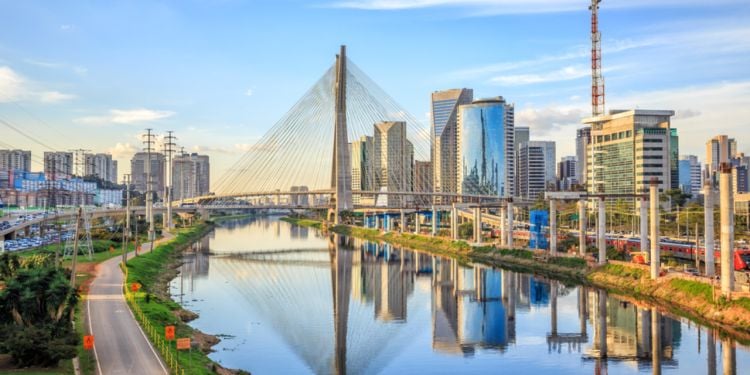
São Paulo is the largest city in Brazil and the economic engine of South America. The municipality had 11,904,961 residents on 1 July 2025, according to IBGE, Brazil's national statistics institute. The wider metropolitan region reaches 21.6 million people, the largest in the country. For newcomers, this means a huge job market, a dense network of services and a city that never really slows down.
A global city built by migrants
São Paulo grew on waves of immigration from Portugal, Italy, Japan, Lebanon, Korea and China. The city estimates that around 400,000 people of Japanese origin live in the capital, mostly linked to the Liberdade district. Today, about 385,120 foreign nationals from more than 150 countries hold legal residence in the city, close to 3.2% of the population. In 2025, the city's migrant reception centre (CRAI) served people mainly from Angola, Bolivia, Venezuela, Cuba and Guinea-Bissau. The official language is Portuguese, and the currency is the Brazilian real (BRL).
5 good reasons to move to São Paulo
- Brazil's largest economy: the biggest city and metropolitan market in the Southern Hemisphere.
- Corporate headquarters: home to the B3 stock exchange and most multinationals operating in Brazil.
- Top universities: USP, FGV, Insper and Unifesp rank among the best in Latin America.
- International schools: American, British, IB, German, Swiss and other curricula are available.
- Culture and connections: MASP, Theatro Municipal, Ibirapuera Park and Guarulhos (GRU), Brazil's main international airport.
Your setup journey
Guide in 8 steps. Click any step below to jump directly to the section you need.
01Working in São Paulo: Jobs, Key Sectors and Work Permits
São Paulo concentrates a large share of Brazil's skilled jobs, from finance to tech. The labour market is strong in 2026: national unemployment fell to 5.2% in Q3 2026, the lowest level for a third quarter since 2012. Salaries are among the highest in the country, but they remain modest by North American or British standards, so negotiate your package carefully.
Job market and key industries
Services account for about 74% of the city's GDP and industry for 8%, according to SP Negócios, the municipal investment agency. Finance leads, with the B3 exchange, major banks and a fast-growing fintech scene. Other strong sectors include tech and start-ups, consulting and business services, private healthcare, retail, media and advertising. The automotive and chemical industries remain important in the metropolitan area, especially the ABC region. State GDP grew 3.4% year on year in March 2026, with services up 4.6% (Fundação SEADE). The state also has a high rate of formal jobs: 82% of private-sector employees hold a signed work card (carteira assinada).
Employment indicators
The table below summarises the main labour indicators. City-level data is not published for every indicator, so state figures (São Paulo state, IBGE) are used where needed. Conversions use USD 1 ≈ BRL 5.40 (October 2026).
Unemployment rate (São Paulo state, Q2 2026) | 5.4% |
Average monthly income (São Paulo state, Q2 2026) | BRL 4,447 (USD ~824) |
Minimum wage (São Paulo state, since 1 June 2026) | BRL 1,874.36 (USD ~347) |
National minimum wage (2026) | BRL 1,621 (USD ~300) |
Leading sectors | Finance, tech, business services, healthcare, retail |
Sources: IBGE PNAD Contínua Q2 2026, IBGE income by state Q2 2026, ALESP – State Law 18,471/2026, SP Negócios – Investor Guide (SEADE data)
Work permits and residence
Brazil has no free movement scheme for UK, US, Canadian or Australian citizens. UK passport holders can visit for up to 90 days without a visa, while US, Canadian and Australian citizens have needed an eVisa since 10 April 2025 (fee USD 80.90, stays of up to 90 days). A visit visa never allows work. To take a job, you need a residence authorization linked to an employment contract, usually requested by your employer through the Ministry of Justice (MJSP). Remote workers paid from abroad can apply for the digital nomad visa (CNIg Resolution No. 45/2021) with proof of USD 1,500 monthly income or USD 18,000 in savings, valid for one year and renewable.
Starting a business
The most common company form is the Sociedade Limitada (LTDA). Each foreign partner needs a CPF; non-resident partners must appoint a legal representative living in Brazil. Companies register with the JUCESP (São Paulo Board of Trade), then obtain a CNPJ from the Receita Federal, and foreign capital is declared to the Central Bank (RDE-IED). SP Negócios states that a standard company can be opened in as little as 2 days in the city. An investor residence permit requires a minimum investment of BRL 500,000 (USD ~92,600), or BRL 150,000 for innovation projects.
Sources: Brazilian Ministry of Foreign Affairs announcement (via O Povo, April 2025), CNIg Resolution No. 45/2021, SP Negócios – Investor Guide (SEADE data)
Discover more
02Housing & Neighbourhoods: Where to Live in São Paulo
Rent is the biggest expense for most newcomers. São Paulo has the most expensive advertised rents in Brazil: BRL 65.36 per m² in August 2026, against a national average of BRL 54.47 (FipeZAP index). Prices still rose 5.73% over the 12 months to June 2026, so budget for annual increases.
Types of housing
Most people rent an apartment in a secure building with a 24-hour doorman (portaria). On top of rent, tenants usually pay the building fee (condomínio) and the municipal property tax (IPTU), about BRL 300–600 a month (USD ~55–110) for a small unit. Studios and serviced flats are common near metro lines. Families who want a garden often look at houses in gated communities (condomínios fechados) in Morumbi, Alto de Pinheiros or Granja Viana. Sharing costs BRL 700–1,200 per person (USD ~130–220). The average purchase price is BRL 12,055 per m² (USD ~2,232).
Popular neighbourhoods
- Pinheiros: the most expensive rents (BRL 98.9/m²), lively bars and restaurants, metro Line 4.
- Itaim Bibi: business district around Avenida Faria Lima, close to Ibirapuera Park (BRL 93.3/m²).
- Moema: residential and family-friendly, near Ibirapuera and Congonhas Airport (BRL 84.6/m²).
- Jardins: near Avenida Paulista, upscale shops and St. Paul's School (BRL 82.7/m²).
- Morumbi, Brooklin, Chácara Santo Antônio: houses and gated communities near Graded and Chapel.
- Lower-cost options: Vila Andrade (BRL 52.9/m²), Santana (BRL 47.7/m²), Tatuapé (BRL 44/m²).
Average rents
The table shows average monthly rents for unfurnished apartments, in local currency with US dollar equivalents. Conversions use USD 1 ≈ BRL 5.40 (October 2026).
Apartment | City centre | Outside centre |
1 bedroom | BRL 3,255 (USD ~603) | BRL 2,183 (USD ~404) |
3 bedrooms | BRL 5,636 (USD ~1,044) | BRL 4,026 (USD ~745) |
Sources: Numbeo – Cost of Living in São Paulo, FIPE – FipeZAP Rental Index
How renting works
Leases are governed by the Tenancy Law (Lei do Inquilinato 8,245/1991). The landlord can ask for only one guarantee: a cash deposit (caução) of up to three months' rent, a local guarantor (fiador), rent guarantee insurance (seguro-fiança) or a capitalisation bond. Newcomers without a Brazilian guarantor usually choose the deposit or insurance. You will need a CPF to sign. Visit at different times of day and check the commute before you commit.
Discover more
Join the discussion on the forum
03Cost of Living in São Paulo: Monthly Budgets for Singles and Families
São Paulo is the most expensive city in Brazil, but costs remain moderate for people earning in US dollars, pounds or other strong currencies. Rent and private schooling are the two items that change a budget most. The figures below are averages for 2026 and vary widely by neighbourhood. Conversions use USD 1 ≈ BRL 5.40 (October 2026).
Single person
A single person can expect to spend about BRL 5,000–8,300 per month (USD ~925–1,537), depending on the area and lifestyle. The table lists the main monthly costs for someone living alone in a central one-bedroom apartment.
Rent, 1 bedroom (city centre) | BRL 3,255 (USD ~603) |
Groceries and meals out | BRL 1,200–1,800 (USD ~220–335) |
Utilities (electricity, water, gas) | BRL 301 (USD ~56) |
Internet | BRL 112 (USD ~21) |
Public transport | BRL 250–350 (USD ~46–65) |
Leisure | BRL 300–500 (USD ~56–93) |
Health insurance (basic individual plan) | BRL 200–400 (USD ~37–74) |
Sources: Numbeo – Cost of Living in São Paulo, Serasa cost-of-living estimates (August 2026)
Family of four
For families, housing and international school fees dominate the budget. Detailed Numbeo data for a family of four was not available for São Paulo, so the table combines rent averages, school fees and official food-price references. Food costs use the DIEESE basic food basket per adult (São Paulo, May 2026) as a minimum reference.
Rent, 3 bedrooms (city centre) | BRL 5,636 (USD ~1,044) |
Rent, 3 bedrooms (outside centre) | BRL 4,026 (USD ~745) |
Basic food basket (per adult, minimum reference) | BRL 952.20 (USD ~176) |
Public transport (per adult) | BRL 250–350 (USD ~46–65) |
International school (per child, per year) | BRL 94,500–190,872 (USD ~17,500–35,350) |
Public school | Free |
Sources: Numbeo – Cost of Living in São Paulo, DIEESE – Basic Food Basket, Doris.school – Graded fees 2026/27, Doris.school – St. Nicholas fees 2026/27
Tips to manage your budget
Family health insurance prices depend on age and the insurer, and plans are regulated by the national health agency (ANS), so request several quotes. Living outside the most expensive districts can cut rent by a third. Building fees and IPTU come on top of rent. Remember that the state minimum wage is BRL 1,874.36 (USD ~347), which explains why local services such as domestic help or restaurants can seem affordable to newcomers paid in foreign currency.
04Higher Education & Universities in São Paulo
São Paulo is Brazil's leading university hub. You can choose between free, highly selective public universities and private institutions with strong business and law programs. Most undergraduate programs are taught in Portuguese, so plan language preparation before applying.
Public universities: free but competitive
The Universidade de São Paulo (USP) is the country's flagship university. All USP undergraduate courses are tuition-free. Entry is mainly through the FUVEST entrance exam, which is open to any candidate who has completed secondary school (the equivalent of a high school diploma or A-levels), foreigners included. FUVEST 2027 offered about 8,100 places, with registration closing on 9 October 2026 and a fee of BRL 228 (USD ~42). USP also admits students through ENEM-USP (national exam scores). A third route, Competições do Conhecimento, reserves places for students with strong results in academic olympiads, but it is limited to Brazilians and foreign residents. The federal Unifesp is a reference in health sciences, and the state-run Unicamp is about 100 km away in Campinas. Both are free and admit students through national exam scores (ENEM/SISU) or their own entrance exams.
Private universities and business schools
Insper offers business, economics, law, engineering and computer science. Its monthly tuition is BRL 8,300 (USD ~1,537), or about BRL 99,600 a year (USD ~18,440), valid until 31 December 2026, with intakes every semester. Fundação Getulio Vargas (FGV) is a national reference in management, economics and law. Universidade Presbiteriana Mackenzie and PUC-SP cover a broad range of fields, including law, engineering, architecture and communication.
Tuition overview
The table compares indicative costs for undergraduate study. Private fees vary by program, so check each university's current price list.
Institution | Type | Undergraduate tuition (2026) |
USP | Public (state) | Free; FUVEST exam fee BRL 228 |
Insper | Private, non-profit | BRL 8,300/month (USD ~1,537) |
Mackenzie, PUC-SP | Private | About USD 2,000–6,000/year depending on program |
FGV | Private foundation | Contact the school for 2026 fees |
Student visas and diploma recognition
Students from countries that need a visa must obtain a temporary study visa before arrival and then register with the Federal Police within 90 days. Foreign degrees are not recognised automatically. Bachelor's degrees go through revalidação and master's or doctoral degrees through reconhecimento, both filed on the Plataforma Carolina Bori (Ministry of Education). Allow up to six months for a decision.
Discover more

05Schooling for Children: Local, British, American and IB Schools
Families in São Paulo can choose between free public schools, Brazilian private schools and a wide range of international schools. The Brazilian school year runs from February to December, as it does across the Southern Hemisphere. Fees at top international schools are high, so check whether your employer offers an education allowance.
The Brazilian school system
Education is organised in three stages: Educação Infantil (ages 0–5), Ensino Fundamental (ages 6–14, nine years) and Ensino Médio (ages 15–17, three years), which ends with the equivalent of a high school diploma. Municipal and state public schools are free and open to foreign children whatever their migration status. Well-known Brazilian private schools include Colégio Bandeirantes, Colégio Santa Cruz and the German-Brazilian Colégio Visconde de Porto Seguro.
British, American and IB schools
Graded – The American School of São Paulo, in Morumbi, follows an American curriculum with the IB Diploma and has around 1,300 students. St. Paul's School, in Jardim Paulistano, is the city's British school, offering IGCSE and the IB Diploma to about 1,088 students. St. Nicholas School in Pinheiros combines the IB with Cambridge IGCSE. Other options include Chapel School, GIS-SP – The International School of São Paulo, Pan American Christian Academy and Avenues São Paulo.
International school fees
The table shows published annual tuition for the 2026/27 school year. Schools rarely publish full fee schedules, so these figures come from school-fee comparison sites and should be confirmed with admissions offices.
School | Curriculum | Annual tuition 2026/27 |
Graded – The American School | American, IB DP | BRL 153,816–190,872 (USD ~28,480–35,350) |
St. Paul's School | British, IGCSE, IB DP | From BRL 104,592 (USD ~19,370) |
St. Nicholas School | IB, Cambridge IGCSE | BRL 94,500–159,125 (USD ~17,500–29,470) |
Chapel, GIS-SP, PACA, Avenues | American / IB | About BRL 75,000–145,000 (USD ~13,900–26,850) |
Sources: Doris.school – Graded fees 2026/27, Doris.school – St. Paul's fees 2026/27, Doris.school – St. Nicholas fees 2026/27, International School Advisor 2026
Bilingual schools and enrolment tips
Bilingual Portuguese–English private schools are growing quickly and usually cost less than full international schools. Trilingual options also exist, such as Colégio Miguel de Cervantes (Portuguese, Spanish and English, with the IB Diploma) and Colégio Dante Alighieri. Graded requires a deposit of BRL 6,362 on enrolment. Contact schools as early as possible, ideally before signing a lease, because commuting times across the city can be long.
Discover more

06Daily Life in São Paulo: Transport, Food and Local Habits
Daily life in São Paulo is practical once you learn the rhythm. The city has one of Brazil's largest public transport networks, a strong food culture and services that run late. A few local habits, from Pix payments to the CPF number, make life much easier from the first week.
Getting around
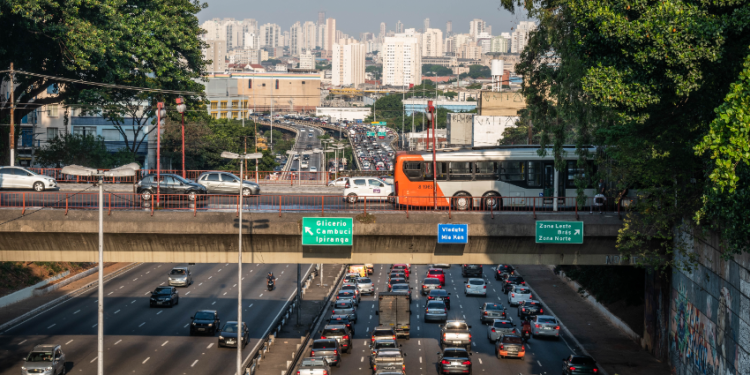
The metro, CPTM suburban trains and SPTrans buses are integrated. A bus ride costs BRL 5.30 (USD ~0.98), a metro or train ride BRL 5.40 (USD ~1.00), and a combined bus and metro trip BRL 9.38 (USD ~1.74). You pay with the Bilhete Único card. Daily commuters spend about BRL 250–350 a month (USD ~46–65). Employers must provide Vale-Transporte (transport allowance) to employees on standard contracts. Traffic is heavy at peak times, so living near your work or a metro line saves hours each week. Petrol cost BRL 6.40–6.47 per litre in July 2026, and ethanol BRL 3.73–3.94. The city has three airports: Guarulhos (GRU) for international flights, Congonhas (CGH) for domestic routes and Viracopos (VCP) in Campinas.
Shopping and eating
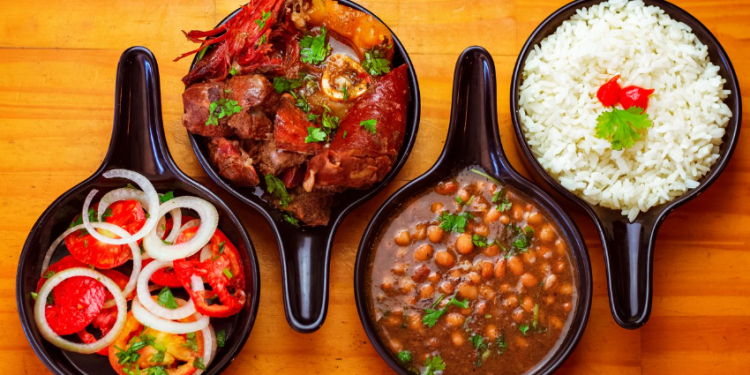
The basic food basket calculated by DIEESE cost BRL 952.20 (USD ~176) in May 2026, the highest of all Brazilian state capitals. Weekly street markets (feiras livres) operate in every district, and the Mercado Municipal downtown is a landmark. Main supermarket chains include Pão de Açúcar, Carrefour, Assaí and St Marche. Eating out is part of daily life: a pay-by-weight buffet averages BRL 86.86 per kg (USD ~16), and a set lunch (prato feito) about BRL 38.65 (USD ~7), according to Procon-SP.
Local habits worth knowing
- Pix, the Central Bank's instant payment system, is used for almost everything, from rent to coffee.
- Your CPF tax number is requested for most purchases, phone lines and online accounts, so get it as soon as you arrive.
- Home internet costs about BRL 112 a month (USD ~21).
- Portuguese is essential outside multinational offices; English is not widely spoken in shops or public services.
- Stay alert with phones and valuables, especially at night and on public transport.
- Healthcare: the public SUS is universal and free, similar in principle to the NHS or Medicare, while many residents also take private health insurance.
Sources: SPTrans, Metrô and Procon-SP fares compiled by Serasa (August 2026), DIEESE – Basic Food Basket
Discover more

07Leisure, Culture & Things To Do in São Paulo
São Paulo has one of the richest cultural calendars in Latin America. Museums, concert halls, free festivals, football and a huge restaurant scene fill every week. Weekends are also a good time to escape to the coast or the mountains.
Museums, music and culture
The MASP on Avenida Paulista, the Pinacoteca do Estado, the Museu do Futebol in Pacaembu and the Instituto Moreira Salles are among the city's major museums. The Theatro Municipal and the Sala São Paulo, home of the state symphony orchestra (OSESP), host opera and concerts. The Sesc network of cultural centres offers affordable shows, sports and exhibitions in many districts. Each district has its own character: Liberdade for Japanese and Asian culture, Bom Retiro for Korean food, Bixiga for Italian traditions and Vila Madalena for street art, including the Beco do Batman alley.
Festivals and major events
The free Virada Cultural took place on 23–24 May 2026 with more than 1,200 performances on 21 stages. The official calendar also includes the samba school parades during Carnival, the International Book Biennial, São Paulo Fashion Week, the LGBT+ Pride Parade, CCXP (Comic Con), São Paulo Tech Week and the São Paulo Art Biennial in Ibirapuera Park (even-numbered years). Food lovers can follow Mesa São Paulo, a gastronomy event on the same calendar, and the year closes with the city's official Christmas celebrations and the São Silvestre race on New Year's Eve.
Sport and outdoor life
- Formula 1: the São Paulo Grand Prix at Interlagos draws about 300,000 visitors per edition.
- Running: the São Silvestre race on 31 December and the São Paulo International Marathon.
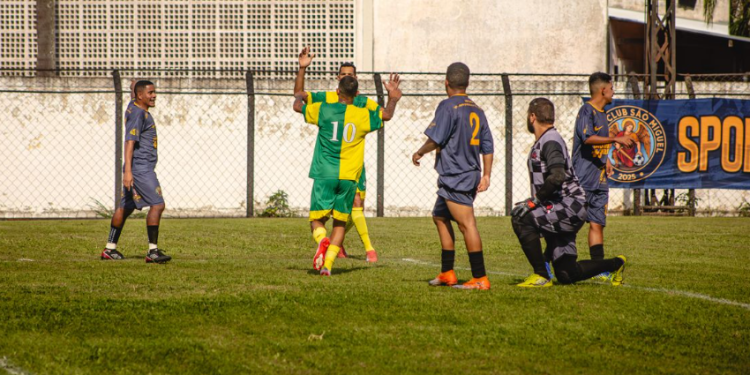
- Football: Corinthians, Palmeiras and São Paulo FC play at Neo Química Arena, Allianz Parque and MorumBIS.
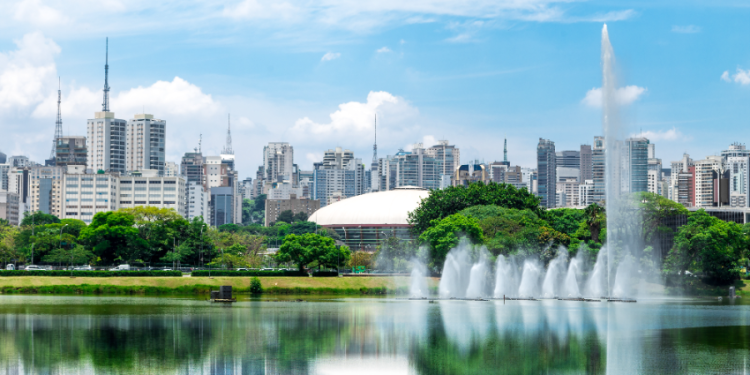
- Parks: Ibirapuera, Villa-Lobos and Parque do Povo, plus Sunday leisure cycle lanes (Ciclofaixa de Lazer).
Sightseeing, nightlife and weekend trips
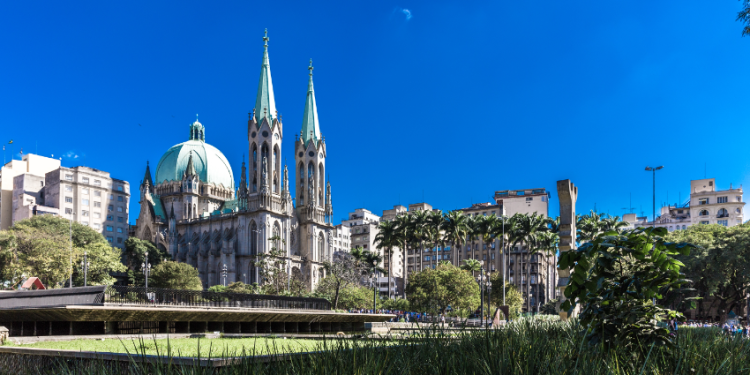
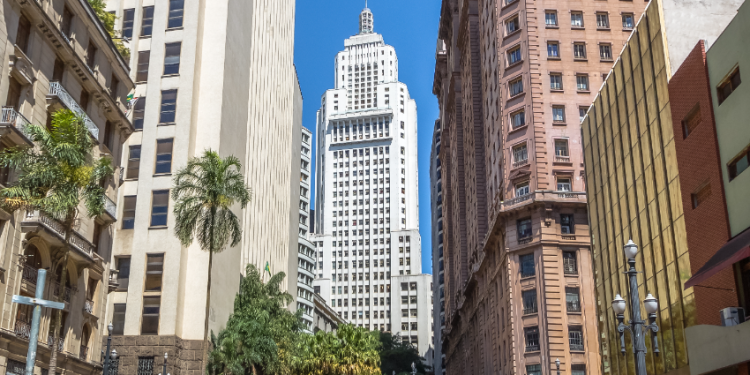
According to SPTuris visitor surveys, the most visited attractions are Avenida Paulista (10.96% of visits), Ibirapuera Park (7.76%), the Museu do Futebol (6.39%) and the Mercado Municipal (4.57%). The historic centre includes Pátio do Colégio, the Sé Cathedral and the Copan and Martinelli buildings. For nightlife, Pinheiros and Vila Madalena are packed with bars and live music. For weekend trips, Santos is about one hour away, the beaches of Ubatuba and Ilhabela three to four hours, and the mountain town of Campos do Jordão about three hours.
Sources: Correio da Manhã, May 2026, SPTuris, SPTuris – Official Events Calendar
08In short
São Paulo is not an easy city, but it rewards people who come with a plan. You get Brazil's biggest job market, strong universities, a wide choice of British, American and IB schools and a cultural life that rarely stops. Rents in central districts are high by Brazilian standards, yet overall costs stay reasonable for those earning in strong currencies. Learn some Portuguese, sort out your visa, CPF and CRNM early, and choose your neighbourhood around your commute. With that groundwork done, settling in becomes much simpler. Ready to take the next step? Join the Expat.com São Paulo forum to ask questions, swap tips and meet people who already call the city home.
Join the Sao Paulo community
Get regular tips and advice to make the most of your expat life
Essential services for your expat journey








Forum topics on living in São Paulo
Discover forums topics on expat life in São Paulo: join the conversation, ask your questions, get advice and share your experience.