

 Prepared by Julien Faliu on 24 July 2026
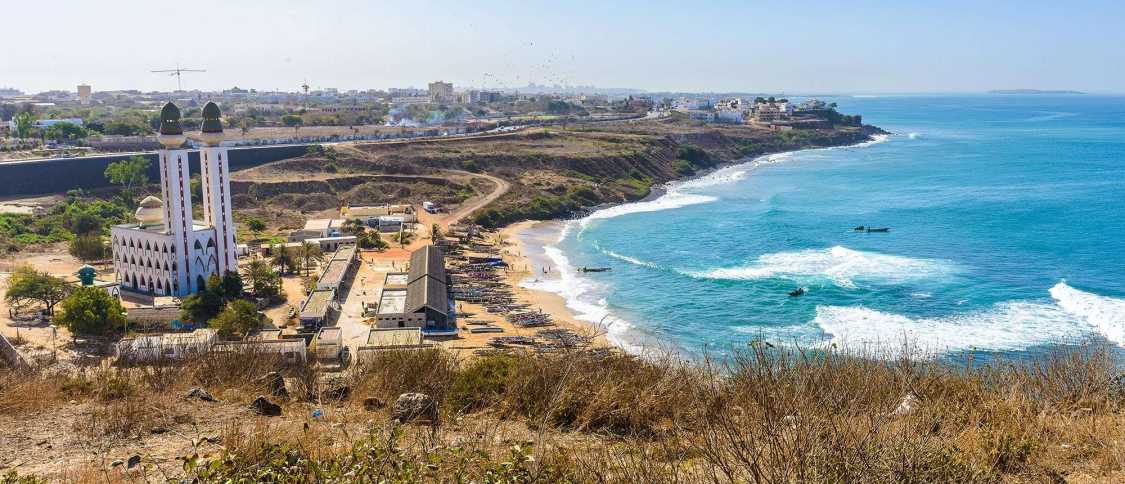
Perched on the Cap-Vert peninsula, the westernmost point of continental Africa, Dakar is Senegal's capital and a major hub for West Africa. The city's urban area population reached around 3,783,530 in 2026, growing by roughly 3.41% per year, while the wider metropolitan agglomeration is close to 4 million. French is the official language, Wolof is the everyday lingua franca, and the local currency is the West African CFA franc (XOF), pegged at 655.957 XOF = 1 EUR.
Dakar hosts the headquarters of the BCEAO (Central Bank of West African States) and regional offices of the UN, World Bank, and many NGOs. The expat community is diverse: a long-standing French presence of around 20,000 nationals, alongside Lebanese, Moroccan, Cape Verdean and other African communities. The climate is tropical Sahelian, with a dry season from November to May and rains from June to October. Average temperatures hover between 24°C and 27°C, tempered by Atlantic breezes.
5 good reasons to move to Dakar
- Regional hub status: home to the BCEAO, major NGOs and the headquarters of many West African operations.
- Political stability and safety: Senegal is widely regarded as one of West Africa's most stable democracies.
- Teranga hospitality: a Wolof tradition of warm welcome that shapes daily interactions.
- Moderate cost of living: roughly 27% cheaper than mid-sized North American cities such as Columbus, Ohio.
- Outstanding heritage and events: Gorée Island (UNESCO), Lake Retba, the African Renaissance Monument, and the 2026 Youth Olympic Games - the first Olympic event ever held in Africa.
Your setup journey
Guide in 9 steps. Click any step below to jump directly to the section you need.
01Working in Dakar: Jobs, Sectors and Permits
Dakar concentrates most of Senegal's formal economy and offers the country's widest range of professional opportunities. The city is particularly active in banking and finance, telecoms, energy, construction, international organisations and a fast-growing tech startup scene. Salaries in Dakar typically sit above the national average.
Labour market and key sectors
Senegal's economy is projected to grow at 7–8% in 2025–2026, driven by offshore gas and oil projects (GTA, Sangomar). However, unemployment remains high in urban areas. Strong sectors include the BCEAO and regional banks, the Sonatel/Orange-led telecoms market, the Port of Dakar logistics cluster, NGOs (UN, World Bank, USAID, GIZ), and the new administrative city of Diamniadio. Job-search platforms such as Senjob, LinkedIn Senegal and the public agency ANPEJ are widely used.
Work permits and taxes
A work permit issued by the Direction Générale du Travail is mandatory for non-ECOWAS foreign workers, and the process is employer-driven. The standard validity is 24 months, renewable. ECOWAS citizens benefit from free movement but still need a residence card. Personal income tax is progressive up to 43%, with effective rates of 20–35% for most expat packages.
Indicator | Value (2026) | Notes |
National unemployment rate | 19.2% | Q3 2025, higher among urban youth |
Average net salary in Dakar | XOF 226,621 / month (~USD 389) | Numbeo, January 2026 |
Statutory minimum wage (SMIG) | XOF 150,000 / month (~USD 240) | Non-agricultural, 40h week |
Top hiring sectors | Finance, telecoms, energy, NGOs, IT | Above-average pay in finance and telecoms |
Sources: Trading Economics – Senegal, Numbeo Dakar, Senegal hiring guide.
Discover more
02Housing & Neighbourhoods in Dakar
Dakar's housing market is structurally tight, with an estimated shortfall of 30,000 units per year. Foreign residents can buy and rent with the same rights as Senegalese nationals, and the city offers everything from beachfront villas to modern apartments and gated compounds.
Where expats tend to live
The premium expat area is Almadies: oceanfront, international restaurants, embassies and proximity to top schools. Ngor and Mermoz–Sacré-Cœur are popular with families, while Fann and Point E attract academics and professionals near UCAD and key hospitals. Plateau, downtown, hosts ministries, the BCEAO and business hotels. More affordable, fast-growing options include Yoff, Ouakam and the new administrative city of Diamniadio. Retirees often prefer the Petite Côte (Saly, Ngaparou, Somone), 1 to 1.5 hours south of the capital.
Rental and purchase prices
Most expat rentals are paid monthly, often with 2–3 months' deposit. Mortgage rates in 2026 average 8.08% over 20 years fixed. Property prices have risen 15–25% in the last 2–3 years in central Dakar.
Housing type | Monthly rent (XOF) | USD equivalent |
1-bedroom, city centre | 475,000 | ~USD 840 |
1-bedroom, outskirts | 252,600 | ~USD 447 |
3-bedroom, city centre | 1,017,333 | ~USD 1,800 |
3-bedroom, outskirts | 552,500 | ~USD 978 |
Villa in Almadies/Ngor (3–4 bed) | 1,500,000–4,000,000 | ~USD 2,660–7,080 |
Source: Numbeo Dakar, January 2026.
Discover more
Join the discussion on the forum
03Cost of Living in Dakar
Dakar is moderately priced by international standards but expensive for the region in certain categories. Numbeo data (January 2026) shows the city is about 26.9% cheaper than Columbus, Ohio excluding rent, and 43.2% cheaper for housing. However, imported goods, utilities with air conditioning, and international school fees can push expat budgets significantly higher.
Single person budget
A single professional living in a one-bedroom apartment in central Dakar can expect a comfortable monthly budget of around USD 1,500–2,500, depending on lifestyle and housing choices.
Item | Monthly cost (XOF) | USD equivalent |
Rent (1-bed, central) | 475,000 | ~USD 840 |
Groceries and food | 130,000–200,000 | ~USD 230–355 |
Utilities (85m², with A/C) | 118,944 | ~USD 210 |
Public transport pass | 45,000 | ~USD 80 |
International health insurance | 45,000–113,000 | ~USD 80–200 |
Family of four budget
For a family of four, international schooling is typically the largest single expense, often exceeding rent.
Item | Monthly cost (XOF) | USD equivalent |
Rent (3-bed, central) | 1,017,333 | ~USD 1,800 |
Groceries | 350,000–600,000 | ~USD 620–1,062 |
Utilities | 200,000–400,000 | ~USD 355–710 |
Family transport | 200,000–350,000 | ~USD 355–620 |
School fees (2 children, intl.) | 1,333,000–2,500,000 | ~USD 2,360–4,425 |
Family health insurance | 113,000–282,000 | ~USD 200–500 |
Sources: Numbeo Dakar, Expatistan Dakar.
04Retirement in Dakar and Along the Petite Côte
Senegal has long attracted retirees from Europe, particularly to the Petite Côte resorts (Saly, Ngaparou, Somone) just south of Dakar. Within the capital itself, Almadies, Ngor and Mermoz are popular for urban retirement. There is no dedicated retirement visa, so retirees apply for the standard Carte d'Identité d'Étranger (CIE) residence card.
What makes Senegal attractive for retirement
The climate is sunny year-round, the cost of living is manageable, and Dakar enjoys direct flights of around 5 hours to Paris via Air Sénégal, Air France and Corsair. The Petite Côte offers beaches, golf, established expat communities and affordable property. Private healthcare in Dakar is generally of good quality, anchored by clinics such as Clinique Pasteur, Clinique du Cap and Clinique de la Madeleine. A comprehensive international health insurance with medical evacuation is strongly recommended, as complex cases are usually handled in Europe.
Budget and practicalities
A modest single retiree can live comfortably on around XOF 800,000–1,200,000 per month (~USD 1,400–2,130), while a couple seeking a higher standard of living should budget XOF 1,500,000–2,500,000 (~USD 2,660–4,425). Rentals on the Petite Côte remain remarkably affordable, from XOF 250,000 to 700,000 per month. Power cuts can occur, so backup generators are common in upscale housing. The official residence portal is available via the US Embassy in Senegal.
Sources: US Embassy Senegal, Senegal visa guide.
05Higher Education & Universities in Dakar
Dakar is the main university hub of francophone West Africa, with a mix of large public universities, business schools and international campuses. Tuition fees remain low at public institutions, while private and international programmes follow global pricing.
Public universities
Université Cheikh Anta Diop (UCAD), founded in 1957, is the flagship campus in the Fann district. It welcomes around 92,000 students and is the largest francophone university in West Africa. UCAD offers six faculties (sciences, humanities, law, economics, medicine, education), the École Supérieure Polytechnique, and the renowned IFAN research institute on African studies. The university operates on the LMD system (Bachelor–Master–Doctorate) and applications run through admission.ucad.sn. Other public options include the Université Amadou Mahtar Mbow in Diamniadio (sciences and engineering) and the Université Gaston Berger in Saint-Louis.
Private and international institutions
Dakar offers strong private alternatives, especially in management. Notable schools include the Suffolk University Dakar Campus (American curriculum), Institut Africain de Management (IAM), ISM, BEM Dakar (linked to Kedge Business School) and CESAG, the BCEAO-affiliated regional management centre. Tuition typically ranges from XOF 1,500,000 to 4,500,000 per year (~USD 2,500–7,500) at quality private universities, and from XOF 3,000,000 to 8,000,000 at top international business schools. Public registration fees at UCAD remain modest at around XOF 30,000–100,000 per year for national students, with moderate increases for foreigners. Official information is available on the UCAD website.
Sources: UCAD, Times Higher Education.
Discover more

06Schooling for Children in Dakar
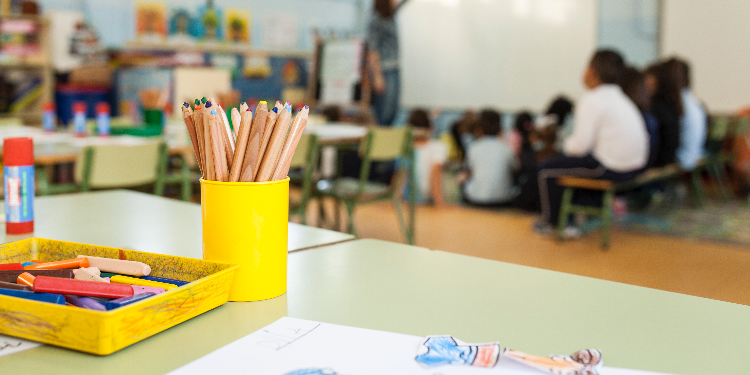
Dakar offers one of the widest selections of international schools in West Africa, with curricula in English, French, bilingual and IB tracks. Demand is high, so families are advised to apply at least 12 months before arrival, particularly for the most popular schools.
Local and international options
The Senegalese system follows the French model (CP through Terminale), with French as the language of instruction. Public schools are free for nationals and accept foreign students, though classes are large. Private local schools cost between XOF 200,000 and 1,500,000 per year. International schools are concentrated in the Almadies, Mermoz and Ngor areas and offer English-language, French AEFE or IB curricula.
Leading international schools
The International School of Dakar (ISD), in Mermoz, is a full IB World School (PYP/MYP/DP) opened in 1983, with 111 nationalities represented. Tuition for 2025–26 ranges from USD 16,950 in preschool to USD 30,825 in Grades 11–12. Dakar Academy runs three campuses with a North American Christian curriculum and offers boarding. The Lycée Français Jean Mermoz (AEFE network) hosts around 2,500 students and provides an International English Section. Bilingual options include École Actuelle Bilingue and Enko Dakar International School (IB Continuum). Premium tuition typically ranges from XOF 8,000,000 to 16,000,000 per year, plus one-off enrolment fees of XOF 300,000–1,000,000.
Sources: ISD Dakar, US State Department, Senegal school fees guide 2025-2026.
Discover more
07Daily Life in Dakar
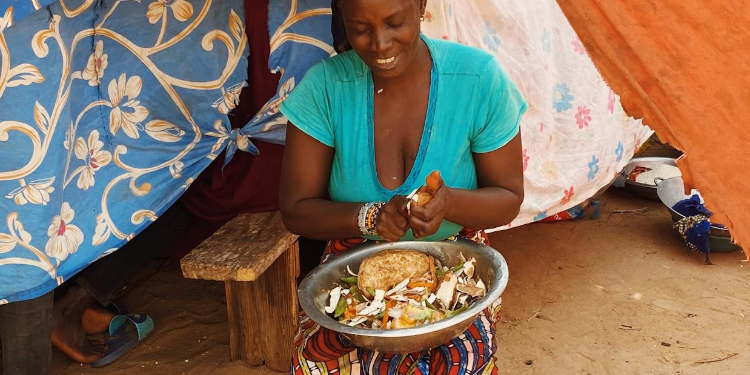
Daily life in Dakar blends an active urban rhythm with a strong coastal identity. The city is famous for teranga, the Wolof tradition of hospitality, and for a sociable lifestyle built around food, music and family gatherings.
Getting around the city
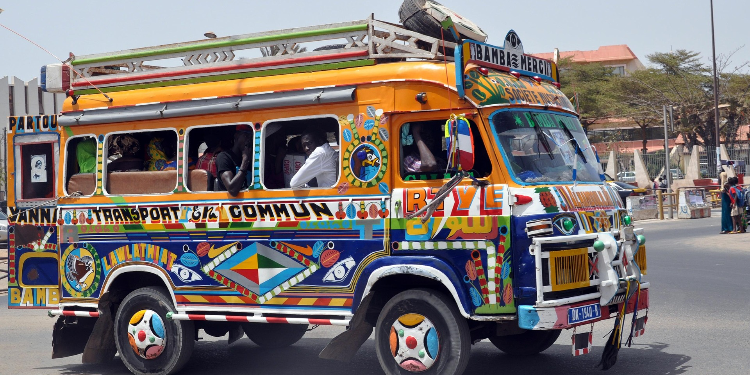
Dakar's transport network has modernised significantly. The TER (Train Express Régional), operational since 2021, links Plateau, Diamniadio and the Blaise Diagne International Airport (DSS), about 50 km from the city centre. The BRT (Bus Rapid Transit), opened in phases in 2024–2025, runs over 18 km between Petersen and Guédiawaye. Dakar Dem Dikk operates public buses, supplemented by yellow taxis (always negotiate before boarding), ride-hailing apps such as Yango and Heetch, and the iconic colourful cars rapides. Traffic congestion is severe at peak hours, particularly along the Corniche and on the VDN. A local bus ticket costs XOF 200, while a monthly public transport pass averages XOF 45,000.
Food, culture and connectivity
Senegalese cuisine is built around thiéboudienne (the national fish-and-rice dish), yassa (onion sauce with chicken or fish) and mafé (peanut stew). Supermarkets such as Auchan, Casino and Carrefour Express coexist with vibrant markets like Sandaga, Kermel and Soumbédioune. Home internet (60 Mbps+) costs about XOF 27,160 per month, and a 10 GB mobile plan is around XOF 6,825. Mobile money is widely used, with Orange Money and Wave dominant. While French is the working language, English is limited outside international institutions and upmarket hotels.
Source: Numbeo Dakar, January 2026.

08Leisure, Culture & Things To Do in Dakar
Dakar is one of West Africa's leading cultural capitals, combining a rich history of music, art and literature with easy access to beaches, islands and wildlife reserves. The city is hosting the 2026 Youth Olympic Games, the first Olympic event ever held on the African continent.
Heritage, museums and beaches
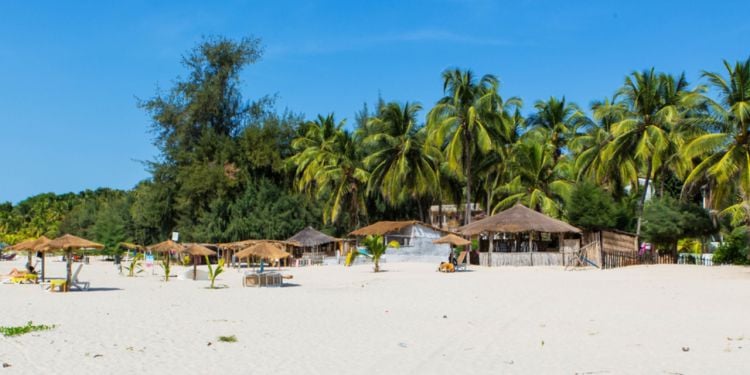
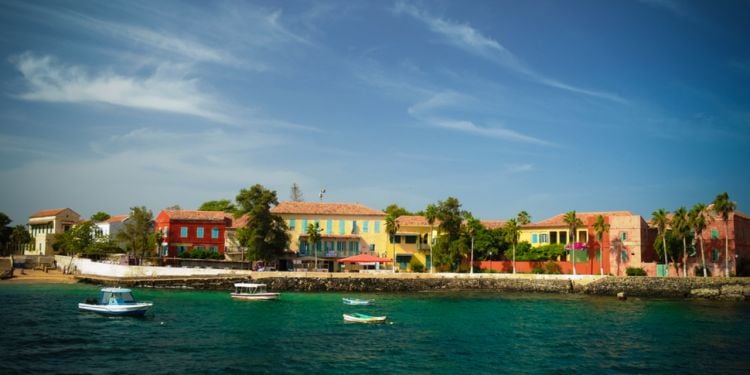
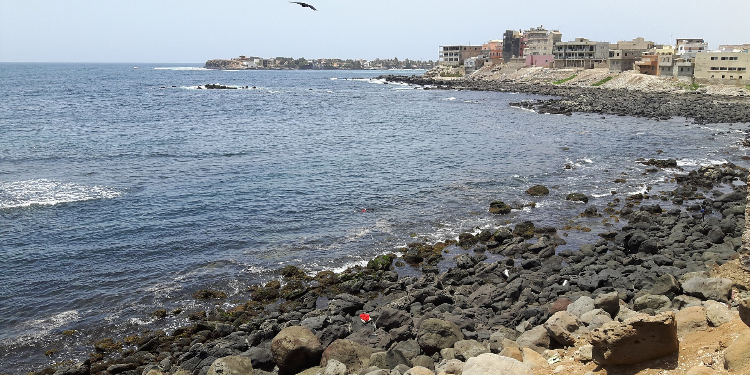
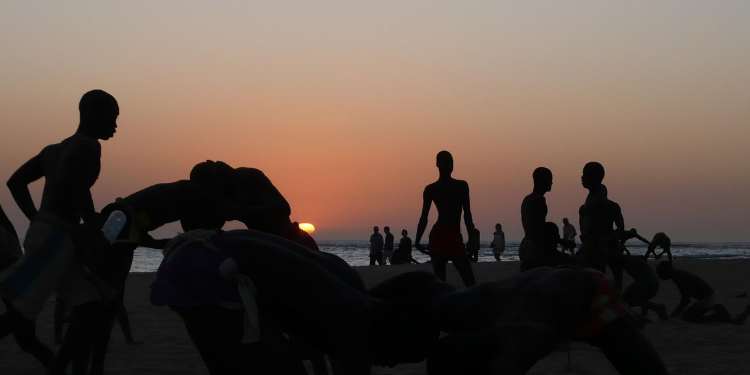
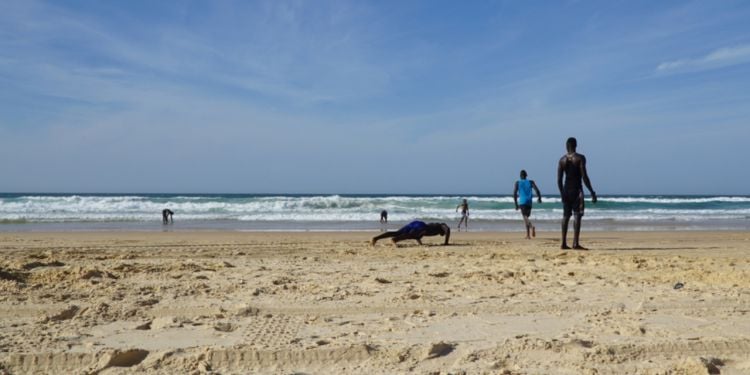
Gorée Island, a UNESCO World Heritage site since 1978, lies 3.5 km off Dakar (20 minutes by ferry) and houses the Maison des Esclaves, a powerful memorial to the transatlantic slave trade. The African Renaissance Monument, the tallest statue in Africa, dominates the Ouakam skyline, while the Musée des Civilisations Noires and the IFAN Museum of African Arts showcase pan-African heritage. Beach lovers head to Yoff, Ngor and Almadies for swimming and surfing, or to Lac Retba (Lake Rose), 45 minutes from the city. The Bandia Wildlife Reserve, 65 km away, offers safari-style outings with giraffes, rhinos and antelopes.
Events, dining and nightlife
Dakar's cultural calendar includes the Dak'Art Biennale (contemporary African art, even years) and the world-famous Saint-Louis Jazz Festival a short trip north. The city is the home of mbalax music made famous by Youssou N'Dour, with regular live shows at venues like Just4U in Almadies. The dining scene ranges from grilled fish along the Corniche to fine dining at Lagon 1, Terrou-Bi and La Calebasse. Sports fans can watch Senegalese wrestling (laamb), the national sport, at the Arène Nationale in Pikine, or football matches at the new Stade Abdoulaye Wade in Diamniadio.
Sources: TripAdvisor Dakar, Wikipedia – Dakar.
Join the discussion on the forum
09FAQ
10In short
Dakar combines the energy of a regional capital with the warmth of Senegalese teranga. Expats find a city where the Atlantic shapes daily life, where international institutions sit alongside lively markets, and where cultural events from the Dak'Art Biennale to the 2026 Youth Olympic Games keep the calendar full. The cost of living remains manageable for most professionals, schools and universities offer real choice, and the wider region, from Gorée Island to the Petite Côte and Casamance, invites exploration on every weekend. Whether you are arriving to work, study or retire, Dakar rewards those who embrace its rhythm.
Ready to take the next step? Join the Expat.com Dakar forum to connect with members already on the ground, share tips, and ask your questions before you move.
Join the Dakar community
Get regular tips and advice to make the most of your expat life
Essential services for your expat journey




Forum topics on living in Dakar
Discover forums topics on expat life in Dakar: join the conversation, ask your questions, get advice and share your experience.
- Our new Living in Senegal Guide is online!
- First time in Dakar , what do you struggle with most ?
- New members of the Senegal forum, introduce yourselves here - 2026
- Looking to buy a 4x4 vehicle in Dakar or surroundings
- Dakat - First visit (1 month)
- How is it living in Dakar (especially as a women)
- Women of Dakar
- digital nomads Dakar