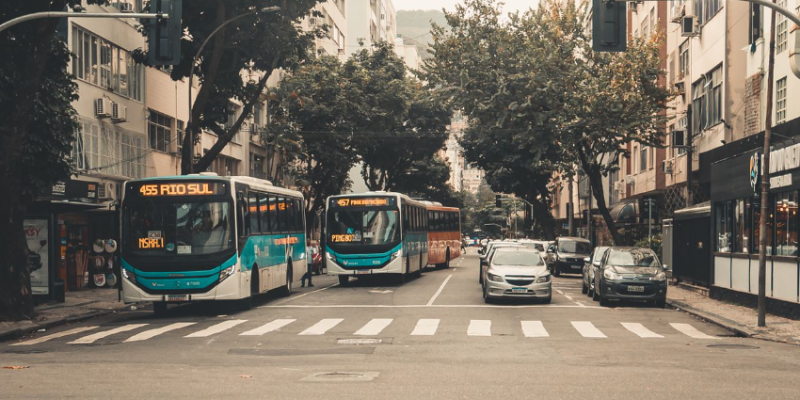
Getting around Rio de Janeiro can mean a short metro ride and a walk, or a longer journey combining buses, rail, and transfers. Centro and much of Zona Sul are easier to navigate without a car, while Barra and the far west call for more planning. Understanding the separate fare systems and the connections near your home makes a real difference to everyday travel.
Daily travel in Rio de Janeiro depends heavily on where you live. In Centro and parts of Zona Sul near a metro station, you can combine public transport with walking for many journeys. In Barra da Tijuca, the far west, and hillside neighborhoods, distance and transfers tend to matter more. A home that looks close to work on a map can still involve a bus ride, a train, and a walk.
Buses have a central role in transport across the metropolitan area. The metro covers major corridors, while ordinary buses and the bus rapid transit (BRT) network reach much farther. The VLT light rail handles shorter trips around the center and port. Commuter trains and ferries extend the options to other neighborhoods and neighboring municipalities.
Moovit works with COR-Rio to share city operations alerts alongside its journey-planning information. MetrôRio provides station and transfer information. When moving around, keep the station name, line number, and train destination handy rather than relying on color alone. Rain, road closures, and large events can change a familiar trip; check special transport plans for major events before you leave.
The Line 1 and Line 4 corridor runs from Uruguai, in Tijuca, to Jardim Oceânico, passing through Flamengo, Botafogo, Copacabana, Ipanema, Leblon, and São Conrado. Line 2 connects Pavuna and northern neighborhoods with the shared central corridor. On sections used by different services, the destination displayed on the train matters as much as the line number.
Central do Brasil connects with commuter rail; Carioca and Cinelândia connect with the VLT; and Vicente de Carvalho and Jardim Oceânico connect with BRT. Jardim Oceânico is the metro gateway to Barra, but many offices, shopping malls, and residential areas lie farther on and require another ride.
Regular metro hours are 5 a.m. to midnight Monday through Saturday, and 7 a.m. to 11 p.m. on Sundays and holidays. If you need to change lines, you must reach the transfer platform before closing. Longer hours for special events are announced separately. The metro avoids road congestion, though trains and platforms can be crowded during office and school rush hours. Allow time to reach the platform and wait for a train, and follow station notices when service is disrupted.
Accessibility varies by station and entrance. Elevators, ramps, or lifting platforms provide access at different locations, so the closest entrance on a map may not be the one you need with a wheelchair or stroller. The station accessibility information and station staff can help you plan the route. Traveling outside busy periods also makes handling luggage easier.
Join the Rio de Janeiro community
Get regular tips and advice to make the most of your expat life
Using buses and BRT in Rio de Janeiro
Ordinary buses connect residential streets with shops, schools, stations, and workplaces. Before boarding, check both the route number and destination, including any route variant. Buses with similar endpoints can take different roads. On board, use the stop signal before the stop where you want to get off.
BRT uses high-capacity buses on dedicated corridors. Transoeste serves the west and Barra; Transcarioca links Barra, Madureira, and the Galeão airport area; Transolímpica serves western districts; and Transbrasil follows Avenida Brasil toward Gentileza. A service marked parador stops at every station, while an express service serves selected stations. The municipal BRT guide covers the network.
Useful routes include line 22 between Jardim Oceânico and Alvorada, line 42 between Madureira and Galeão, line 60 between Deodoro and Gentileza, and line 90 between Gentileza and the Fundão university district. These links make a bus-and-metro combination practical even when neither service reaches your destination on its own.
On BRT, you validate your fare at the access gates before boarding. On an ordinary bus, the validator is on board. Municipal buses use electronic payment through Jaé or Pix. If you use cash, buy or load travel credit at a sales point before traveling. Having a balance ready is easier than arranging payment as you board.
Ordinary bus waiting times depend on the line, time of day, and traffic. Congestion can leave a long gap, then several buses arrive together. BRT corridors reduce exposure to road traffic, but waiting and crowding still affect the journey. An evening trip with a less frequent connecting bus can take much longer than the same trip during the day.
Some BRT services, including lines 60 and 80, have been included in municipal announcements of continuous overnight operation. That does not mean every bus connected to them runs all night. Check the last part of your journey and the main corridor; after the metro closes, a taxi or ride-hailing trip may be more practical.
Traveling by VLT in Rio de Janeiro
The VLT Carioca light rail network is everyday transport around Centro and the port, rather than just a sightseeing tram. Its four lines serve places including Santos Dumont airport, Central do Brasil, Praça XV, Praia Formosa, and Gentileza. Service runs daily from 5 a.m. to 11 p.m.; stop displays show the destination and the next vehicle.
At Terminal Intermodal Gentileza, VLT lines 1 and 4 meet BRT and municipal buses. Rodoviária do Rio, the intercity bus station, is nearby. Elsewhere, the VLT provides short links between rail, metro, ferry, and airport connections that would otherwise involve a walk or another bus.
Platforms are open, but every passenger must validate an accepted card or QR code at a station or on-board validator. Changing VLT lines within 1 hour of the first validation incurs a single charge. Level platforms, ramps, and reserved areas assist passengers with reduced mobility.
Paying for transport in Rio de Janeiro
Jaé, Jaézinho, and other payment options
A Jaé transport account covers municipal buses, BRT, VLT, and regulated local van services, and you can also use Jaé on the metro. You can use a QR code in the app or a physical card, and add credit through the app or at a sales point. A card is useful if you prefer not to depend on your phone battery.
The black personalized Jaé card requires a CPF, Brazil's taxpayer identification number, and gives access to eligible municipal transfer benefits. For occasional trips or your first days in the city, Jaézinho is an anonymous reloadable card. You can buy it at machines in BRT and VLT stations and selected metro stations. The municipal payment arrangements distinguish these casual cards from named accounts: benefits such as Bilhete Único Carioca and Margaridas require the personalized card or account.
For a simple metro ride, contactless Visa, Mastercard, or Elo payment works at the gate, including compatible devices. Giro and Riocard are also accepted. Use Jaé for the integrated metro and BRT fare. Riocard remains relevant for intermunicipal travel and state-level fare benefits, so the right card depends on your whole commute, not just the first bus.
The metro and BRT combination has a 2-hour transfer limit and applies to eligible routes. Executive buses have separate fares, and rail social fares have their own conditions. For eligible municipal journeys, Bilhete Único Carioca allows up to three rides within 3 hours for BRL 5 when BRT is included. The Margaridas benefit has different rules, including a specific return-journey benefit within 20 hours for eligible metropolitan terminal and Baixada users. It is not a general free return trip for everyone.
Senior, child, and student concessions
Passengers aged 65 and over can apply for free municipal travel through Jaé. Registration involves identification and a photo, with shop assistance available. Foreign residents should ask Jaé which identification documents it accepts before applying. Children through age 5 travel free subject to each mode's rules.
Student free travel covers public-school pupils and eligible university students, including those admitted through qualifying quota programs, receiving ProUni scholarships, or meeting the applicable income criteria. Enrollment alone does not establish eligibility. The metro also has a BRL 5 social fare through Riocard and Bilhete Único Intermunicipal, subject to age, income, and registration conditions.
Taxis and ride-hailing in Rio de Janeiro
You can find taxis at ranks, around busy areas, and through hotels or reservations. Uber and 99 also operate in Rio de Janeiro. A direct ride can be useful if you have luggage, after an evening out, or when your destination is far from a station. Apps show a price and pickup estimate, but the ride is arranged only after a driver accepts.
For conventional metered taxis, the municipal taxi tariff starts at BRL 6.30, followed by BRL 3.85 per km at the daytime rate. Tariff II is BRL 4.62 per km at night, on Sundays, and on holidays. Special rules apply on steep slopes, and waiting time and extra luggage can add to the bill. Executive taxis follow a higher fare schedule.
Ride-hailing prices change with demand and driver availability, especially during rain or after large events. Public transport generally costs less for an individual trip, but a group sharing one car may find the total competitive with several transit fares and transfers. Compare the displayed quote before booking.
An app can charge your registered payment method. At a taxi rank, agree on the payment method before leaving. Uber lets you add an optional tip in the app after the ride. For pickup, match the driver and license plate with your booking, wait in a busy, sheltered place, and keep phone use and valuables discreet.
Walking and cycling in Rio de Janeiro
In the commercial parts of Copacabana, Ipanema, Leblon, Catete, and Botafogo, walking works well for errands, meals out, and reaching public transport. Waterfront routes and Flamengo also offer good walking options. Longer journeys between districts can be less straightforward because of hills, distances, crossings, and where your destination entrance is.
Uneven sidewalks, steps, and crossings deserve particular attention with children, a stroller, or reduced mobility. For a long walk in the heat, cooler hours are more comfortable. After dark, favor busy, direct routes; a ride is a better option than a long walk along an isolated stretch.
Cycling is most practical on suitable routes along the Zona Sul coast, around Lagoa, and in parts of Barra. The municipal cycling network map helps identify infrastructure, crossings, and shared sections. Announced cycleway extensions don't necessarily mean the entire connection is ready to use, so plan around open sections. Major roads, unprotected gaps, rain, and slopes can make an otherwise short ride difficult. Bring a helmet, lights, a lock, and a place to park at your destination.
Bike Itaú Rio provides docked mechanical and electric bikes. Casual mechanical-bike use starts at BRL 7.90 for a 15-minute trip. Monthly plans start at BRL 43.90 and include up to four trips a day, with each included ride lasting up to 60 minutes on weekdays or 2 hours on weekends. Extra time, additional trips, and electric bikes are charged separately. Monthly subscriptions renew automatically. The app shows available bikes and free docks. Follow the unlocking and return instructions, then make sure the bike is locked into its dock and the return is confirmed before leaving.
Try a route through bike share or an occasional rental to decide whether to buy a bike. Local shops and workshops can maintain a personal bicycle. Bike share works for individual trips.
Driving in Rio de Janeiro
A car can be useful if your activities are spread out, you live in the far west, or you frequently take family trips and travel outside the city. If your everyday destinations are close to the metro, try public transport and occasional car trips before committing to ownership. However, car ownership costs much more than fuel.
Peak traffic can turn a short distance into a substantial journey. A TomTom citywide traffic benchmark put a 10 km drive at roughly 25-26 minutes during morning and evening peaks. This is an aggregate benchmark, not a prediction for your route, and parking and walking from the car add more time.
Rio Rotativo Digital uses the Jaé app to register your license plate and parking duration. The charge is BRL 2 for 2 hours, with stays of up to 10 hours in covered spaces. The signs at the space govern where and how long you can park. Private garages set their own rates, and parking access at home and work can make a considerable difference to your budget.
Beyond fuel and parking, budget for insurance or rental protection, maintenance, and tolls. The Rio-Niterói bridge is tolled. For a rental, the deductible, third-party coverage, toll-tag administration charges, and fuel policy affect your total cost.
Under applicable conventions or reciprocity arrangements, a foreign license can be used for up to 180 days after entry. Detran-RJ requires identification and proof of entry, and in applicable cases, an international driving permit alongside the original license. A longer stay requires the Brazilian licensing process.
Trains, ferries, and local transport in Rio de Janeiro
TrensRJ serves the Deodoro, Santa Cruz, Japeri, Belford Roxo, and Saracuruna corridors, with Central do Brasil as a main hub. Check the service for your travel day, especially on weekends when works can affect the timetable.
The Barcas Rio ferry network links Praça XV with Arariboia and Charitas in Niterói, and also serves Cocotá and Paquetá. Arariboia to Praça XV takes about 22 minutes and costs BRL 5; the Charitas fare is BRL 7.70. For a Niterói commute, the crossing can be an alternative to the bridge, but it includes travel to and from both terminals. Paquetá has fewer departures.
Regulated vans and small local vehicles known as cabritinhos serve routes where large buses are less suitable. Jaé is used in equipped municipal services. Establish the route and terminus before boarding and look for the service identification. Motorcycle taxis also handle local journeys, but they face a higher crash risk.
The historic Santa Teresa tram runs from the center over the Arcos da Lapa into Santa Teresa, serving residents as well as visitors. An ordinary ticket costs BRL 20, with concessions for registered local residents. It runs during the day with limited capacity, and tourist demand can affect boarding.
Galeão, or GIG, is on Ilha do Governador and is the main international gateway. There is no direct metro service from the terminal. Public transport involves a bus connection, while taxis, ride-hailing, and prearranged transfers offer a direct journey to your accommodation. For a budget trip, BRT line 42 costs BRL 5 and connects Galeão with Madureira. Your total journey depends on the destination and any onward transfers. Ordinary local airport buses also serve Bonsucesso, Fundão, and Ilha do Governador. The executive bus between Galeão and Gentileza costs BRL 15. It typically runs from 6 a.m. to midnight, with departures about every 20 minutes.
A direct car trip from Galeão to Zona Sul can take roughly 40-60 minutes with traffic, and over an hour at peak times. The airport car-access calculator can help with planning. Gentileza is a connection hub, so its usefulness depends on your next destination. For a solo traveler with light luggage, public transport can keep the cost down. With children or several bags, a direct ride can be easier than managing transfers. If you book through your accommodation or a private transfer service, agree on the total price and a vehicle large enough for the group and luggage.
Use the official Galeão taxi and app pickup arrangements, which distinguish conventional taxis, executive taxis, and Uber pickup locations. Get the price through the official counter or app, go to the designated pickup point, and match the car to your booking. Avoid unsolicited unofficial offers inside or outside arrivals.
Santos Dumont Airport
Santos Dumont, or SDU, handles domestic flights and sits on the edge of Centro. VLT line 1 connects Santos Dumont with Gentileza, with connections to the metro and port area. A VLT ride at BRL 5 followed by a metro ride at BRL 7.90 costs BRL 12.90 toward Zona Sul, before any additional connection.
A taxi or ride-hailing trip offers a direct journey, which can help with children and luggage. Accommodation in Centro may be only a few kilometers away, while Barra is much farther. For late arrivals, plan around the time you expect to leave the terminal: the VLT closes at 11 p.m., and you must also reach any metro transfer before it closes.
Frequently asked questions
If you live near a station in Centro or Zona Sul, start with the metro and walking, and add buses or the VLT as needed. Use Moovit and MetrôRio for routes and connections. In Barra and farther west, expect longer journeys and more transfers.
The metro avoids road congestion, while buses and BRT provide wider coverage. Crowding, traffic, weather, and connecting services can affect a trip. Allow extra time for important appointments and check disruption notices; waiting times vary by route and time of day.
A Jaé card or app works for municipal buses, BRT, and VLT, and the metro also accepts Jaé. The personalized account requires a CPF and provides eligible transfer benefits. Anonymous reloadable Jaézinho cards suit casual trips. The metro also accepts supported contactless bank cards.
Yes, particularly for trips along the Tijuca, Centro, and Zona Sul corridor to Jardim Oceânico, and from northern neighborhoods served by line 2. Many destinations farther into Barra still require an onward bus or another ride.
Uber and 99 operate in the city, but a displayed pickup estimate does not guarantee a driver. A ride is arranged when a driver accepts it. Rain and major events can increase prices and demand. Match the driver and plate with your booking before entering.
Walking works well for many local trips in parts of Zona Sul and Centro. Cycling is practical on suitable routes along the coast, around Lagoa, and in parts of Barra. Hills, uneven sidewalks, busy roads, and gaps in protected cycle routes make route choice important.
Walking costs nothing where the route is practical. Municipal buses, BRT, and VLT cost BRL 5 for an ordinary ride, and eligible municipal transfers can keep a multi-stage trip at that fare. The transfer benefit can matter more than the single-ride price.
Buses play a central role across the metropolitan area, alongside metro, BRT, commuter trains, and other options. The combination depends on where people live and work. Near metro corridors, walking and rail can cover much of the trip; farther away, bus connections become more important.
A car helps with dispersed destinations, family trips, the far west, and trips outside the city. If your routine centers on metro stations, public transport and occasional car rides can help you avoid daily congestion and parking costs. When comparing costs, include fuel, insurance, parking, maintenance, and tolls.
From Galeão, BRT is a budget option, while the executive bus to Gentileza connects with VLT and metro. A direct taxi or booked car is easier with heavy luggage or children. From Santos Dumont, VLT Line 1 offers a public transport connection. Late arrivals should check closing times and use official pickup arrangements.
ℹ️
We do our best to provide accurate and up to date information. However, if you have noticed any inaccuracies in this article, please let us know in the comments section below.
A journalist, holder of the DALF C1 and C2 and a diploma from the University of Mauritius, I have nearly twenty years of writing experience. After six years in the Mauritian press, I joined Expat.com, where I have been working for over a decade, including five years as editorial assistant, and now as editorial manager.