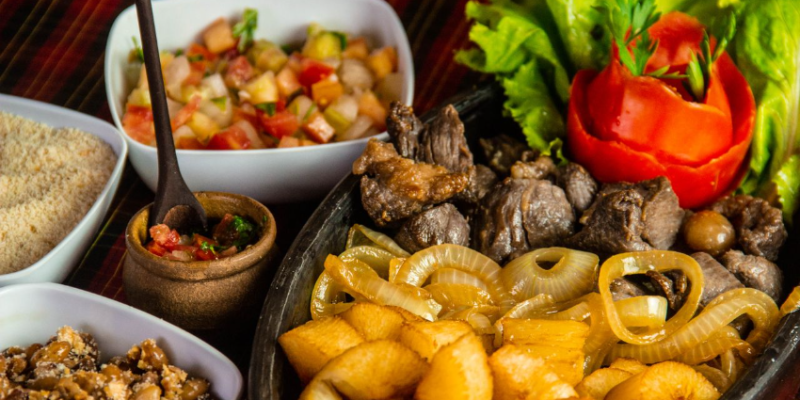
Rio de Janeiro's food scene runs from black bean feijoada and shared plates in neighborhood bars to iced mate on the beach and contemporary tasting menus. Portuguese traditions, regional Brazilian cooking, and international restaurants all have a place. For newcomers, everyday eating also means getting to know the lunch buffet, the weekly street market, grocery delivery, and the way restaurant bills work.
A weekday lunch in Rio de Janeiro might be a plate put together at a buffet and paid for by weight. A weekend meal could stretch over several shared dishes at a neighborhood bar, while a bakery offers coffee and something to eat without the commitment of a restaurant meal. These everyday places are as much a part of the city's food scene as its beachfront restaurants and tasting menus.
Portuguese cooking has left a lasting influence, particularly in cod dishes and pastries. Migration from other parts of Brazil has brought regional recipes and ingredients into the city, with northeastern traditions especially visible at Feira de São Cristóvão. International restaurants add another layer, from familiar bistro cooking to dishes that combine foreign techniques with Brazilian ingredients.
The boteco, a neighborhood bar serving drinks and food, sits at the center of Rio's culinary culture. You can order small plates as the conversation continues, often sharing them over beer or juice. Some also serve substantial meals. The lunchtime buffet serves a different purpose: you choose what goes on your plate and can fit a meal into a workday or a break between classes.
Opening hours depend on the business. A lunch buffet may close after its midday service, while a bar may keep serving food into the evening. Cafés aren't necessarily dinner venues. When someone invites you for a meal, agree on a time rather than assuming every household follows the same schedule.
Feijoada is a substantial black bean stew made with several cuts of meat, including salted or smoked meats. It's served with rice, shredded collard greens, an orange, and farofa, a preparation made with cassava flour. A restaurant may serve the components in several dishes, so find out how many people each portion serves before ordering one each.
Bar snacks include bolinhos de bacalhau (cod fritters), meat croquettes, and pastéis, fried pastries with savory fillings. The bolinho de feijoada turns the flavors of the bean stew into a small fritter. Aconchego Carioca in Praça da Bandeira is associated with this dish. Boteco cooking also includes larger plates for sharing, so a visit can be a full meal rather than just drinks and snacks.
Fish, shrimp, and octopus appear in coastal cooking and contemporary restaurants. Camarão com chuchu, shrimp with chayote, is one of the city's traditional combinations. There are also modern interpretations of familiar bar food, including croquettes and pork sandwiches that keep the pairing of pork and pineapple.
Beach snacks and market food
Iced mate and biscoitos de polvilho, light, puffed cassava-starch biscuits, are closely associated with Rio's beaches. Globo is an emblematic biscuit brand. Mate is served chilled, plain or with lemon; juice bars offer a separate range of drinks made from fruit or fruit pulp.
At street markets, a pastel and a glass of caldo de cana, freshly pressed sugarcane juice, can become part of the shopping trip. Fillings include cheese and meat, among others. The filling matters if you avoid animal products, as do the way the food is stored and handled when buying from a street or beach vendor.
Pastries, coffee, and other drinks
Portuguese pastries sit alongside Brazilian sweets in the city's confeitarias, pastry shops with café seating. A pastel de nata is a custard tart in flaky pastry; a brigadeiro is a soft confection usually made with condensed milk and chocolate. Pudim de leite is a caramel custard. You can stop for one of these without ordering a full meal.
Confeitaria Colombo serves sweets, savory snacks, breakfast dishes, and coffee. Its Café do Forte branch in Copacabana has an English-language menu, which is useful for reviewing dishes and ingredients before you visit. This branch is separate from Colombo's historic premises in Centro.
A cafezinho is a small coffee, while café com leite is coffee with milk. Specialty cafés offer more bean and brewing options. For a drink later in the day, chope means draft beer. A classic caipirinha combines cachaça, lime, sugar, and ice, although menus also offer other fruits and vodka-based variations. Juice, coconut water, and iced mate provide different nonalcoholic options.
Join the Rio de Janeiro community
Get regular tips and advice to make the most of your expat life
Everyday meals and fine dining in Rio de Janeiro
For a single meal, a prato feito, often shortened to PF, is a plate with a set price and a set combination of food. It might include rice, beans, meat or another main preparation, and side dishes. A menu executivo is a restaurant's set lunch. Whether it comes with an appetizer, drink, or dessert depends on the menu.
At a por quilo restaurant, you serve yourself from a buffet and have your plate weighed. The plate's weight is deducted, so you pay only for the food. Prices may be displayed per kilogram or per 100 g, and some items can carry a separate rate. Drinks, dessert, and coffee aren't necessarily included. The appeal for a solo diner is straightforward: you choose both the combination and the amount.
A rodízio works differently. You pay a fixed amount for successive servings, such as meat or pizza, depending on the restaurant. Drinks, desserts, and children's prices can be separate. For groups, shared dishes at a bar or restaurant offer another way to eat together, as long as everyone understands the serving sizes.
Bakeries, called padarias, sell bread and often serve drinks and snacks too. Cafés and brunch venues offer a longer sit-down meal, including on weekend outings. Some sell individual dishes; others put together a platter for several people. For a family, a platter's contents matter more than the name of the breakfast or brunch package.
Fine dining usually involves more planning. At Oteque in Botafogo, the tasting menu uses local, seasonal ingredients and reservations are sold as prepaid packages. Under its cancellation terms, qualifying advance notice can lead to a credit rather than a cash refund. A prepaid dinner therefore deserves a closer look at the booking conditions before you commit.
Where to eat in Rio de Janeiro
Botafogo brings together bars, newer restaurants, and contemporary dining, including around Voluntários da Pátria, São Clemente, and Conde de Irajá streets. You can plan a meal around a particular restaurant or meet for a more casual evening. Neighboring Humaitá adds further dining options.
Ipanema and Leblon have bistros, international restaurants, cafés, and seaside venues, with options ranging from a snack to a more elaborate dinner. In Copacabana, neighborhood businesses sit alongside places that cater to visitors. The beachfront and the streets behind it don't all offer the same kind of meal.
Centro's lunch trade is tied to offices and shops. Around Praça XV, Rua do Mercado, and Rua do Rosário, you'll also find bars and restaurants, but weekday and weekend opening patterns can differ. In Lapa and Santa Teresa, a meal can be part of an evening involving music or a cultural outing. Some Santa Teresa restaurants occupy older houses.
Tijuca and Praça da Bandeira have their own bar-food scene, including places around Rua Uruguai and nearby streets. Farther west, Barra da Tijuca's dining options are spread across shopping malls, Jardim Oceânico, Avenida Olegário Maciel, and Ilha da Gigóia. In Barra, the distance between restaurants and access to the islands can shape the outing.
Feira de São Cristóvão, at the Centro Luiz Gonzaga de Tradições Nordestinas, brings together northeastern food, regional products, crafts, and music. Dishes include baião de dois, made with rice and beans, and dried or salted meat served with cassava. Admission arrangements and the program vary by day, so check those when planning a visit.
International food in Rio de Janeiro
The city's dining options include Italian, Japanese, French, and Middle Eastern restaurants. Zona Sul and Barra have concentrations of international restaurants. Menus range from a recognizable regional repertoire to local adaptations and combinations of different traditions.
In Copacabana, Haru Sushi Bar serves sushi, sashimi, and an omakase menu where the chef chooses the dish order. That is a different experience from a fixed-price Japanese rodízio. In Botafogo, La Villa - Bistrô Francês focuses on French bistro cooking, while Sult combines Italian-inspired food with Brazilian ingredients, including pirarucu, an Amazonian fish.
For home cooking, supermarkets and specialty shops carry imported products. The Zona Sul catalog for Leblon on Rappi includes imported chocolates and Italian charcuterie. Availability depends on the store, stock, and delivery address, so a particular brand may require an order rather than a visit to the nearest shop. Casas Pedro also sells condiments, seeds, and pulses for a range of cuisines.
Grocery shopping in Rio de Janeiro
Supermarkets, produce shops, street markets, and specialist stores can all play a part in your weekly shopping. Mundial has stores in Botafogo, Copacabana, Tijuca, and Barra, among other locations. Guanabara operates in several parts of the city, including the north and west, while Zona Sul offers both stores and online shopping. Comparing the items you buy regularly gives a clearer picture of your grocery bill than assuming one chain is cheapest for everything.
Hortifruti sells fruit, vegetables, and other groceries. At Casas Pedro, the range includes pulses, dried fruit, nuts, and condiments, with bulk products that let you choose the quantity. Shared containers and serving utensils are a consideration if you have a food allergy.
Street markets and organic produce
The city's feiras livres are street markets held on different days of the week. Feira da Glória takes place on Sundays on Avenida Augusto Severo, combining fresh-food shopping with prepared food. Payment options vary between stalls, so it helps to have a backup for small purchases.
Botafogo: Praça Nelson Mandela, near the metro, on Saturdays.
Tijuca: Praça Xavier de Brito on Saturdays.
Flamengo: Praça José de Alencar on Tuesdays.
These markets are open from 7 a.m. to 1 p.m.
Online groceries
Your CEP (postal code) determines which delivery services and time slots are available. Zona Sul offers scheduled delivery, faster delivery, and store pickup, with item limits and address restrictions on express services. For goods sold by weight, the final charge can change with the quantity supplied. Stores also set their own rules for replacing out-of-stock items.
Eating-out costs in Rio de Janeiro
A fixed-price lunch, a buffet plate, and a tasting menu involve very different bills. Portion size and extras matter as much as the main dish. A beachfront restaurant or fine-dining venue serves a different purpose than an everyday lunch near work, but a sought-after neighborhood can still offer several kinds of restaurants.
A complete lunch in Rio de Janeiro can cost around BRL 64.80 per person. It includes a main course, a nonalcoholic drink, dessert, and coffee. Ordering only the main dish changes the comparison; alcohol, extra portions, and repeated delivery orders can push spending in the other direction.
Each dining format builds the bill differently. A PF or set lunch has a stated price, with inclusions shown on the menu. At a buffet, the weight of your portion matters. In a boteco, shared food and drinks determine the table's total. Rodízios and tasting menus charge per person, but drinks, desserts, service, or other options may cost extra. For children, the restaurant's charging policy also matters.
Service charges and payment
A line marked serviço or gorjeta may appear on the bill for service. The proposed rate can be 10%, 12%, or more. In Rio state, paying this charge is optional, and the percentage must be disclosed. If you choose to pay it, you don't automatically need to leave another tip.
Many restaurants accept card payments, but accepted networks vary, and you may need to check with the venue about a foreign-issued card. Pix is Brazil's instant-payment system, but having a bank card doesn't automatically give you access to it. For markets and small purchases, it helps to have a second way to pay.
Dietary requirements in Rio de Janeiro
Vegetarian and vegan food
Rio has fully plant-based restaurants as well as general restaurants with vegetarian dishes. Teva offers plant-based cooking in Ipanema and café food in Copacabana. Elsewhere, a vegetable side dish may contain butter, cheese, or meat stock, so the dish's appearance alone won't tell you how it was prepared.
The useful Portuguese terms are vegetariano for vegetarian and vegano for vegan. You can make the request more specific with sem carne, sem peixe, sem leite e sem ovos: no meat, fish, milk, or eggs. Beans, soups, and farofa are worth discussing with staff because their preparation can include animal ingredients even when no meat is visible.
Gluten-free food and allergies
The Riosemgluten directory lists gluten-free dining and delivery options, including Tori in Ipanema and specialist bakeries. For someone with celiac disease, the kitchen also needs to prevent cross-contact with gluten. A dish made from rice or tapioca isn't enough on its own to establish that it is suitable.
When explaining an allergy, include shared utensils and frying oil in the conversation. Tenho alergia a amendoim means "I'm allergic to peanuts." For a milk allergy, sem lactose, or lactose-free, doesn't necessarily mean free of milk proteins. On packaged food, the warning pode conter means the product may contain the allergen named. If staff can't clearly explain the ingredients and preparation, choose an option they can confirm.
Kosher and halal food
Beit Lubavitch Rio provides information about kosher meals, bakery products, and orders, including Kosher Deli in Leblon and a meat restaurant in Copacabana. Confirm supervision arrangements, ordering requirements, and Shabbat-related hours for the service you plan to use.
A Middle Eastern or Arab menu alone doesn't prove a restaurant serves halal food. Meat sourcing, ingredients, and preparation need explicit confirmation. For packaged products, the CDIAL Halal directory of certified companies can help you check certification, but the certificate must cover the relevant manufacturer and product. Finding suitable food can take more advanced research than choosing a cuisine in a delivery app.
Food delivery in Rio de Janeiro
iFood and 99Food offer restaurant delivery in Rio. The restaurants you see depend on your address and the time of day, so the options at work can differ from those at home. Rappi also offers grocery orders from partner stores.
The final price can include food, a delivery charge, and other fees disclosed before checkout. Promotions may depend on a minimum spend or a particular payment method. The total at checkout is the best basis for comparison, not the discounted dish price alone. Retirada means pickup, an option if you can collect the order yourself.
Include the building number, apartment, and access instructions in your address. In a building with reception staff, specify the handoff location and keep your phone available for the courier. Preparation time, traffic, and rain can all affect an estimated arrival time. An advance order or pickup can leave more room when a meal needs to fit around a meeting or school schedule.
A courier tip is separate from the delivery fee and restaurant table service. Some apps let you add one voluntarily; there isn't a single percentage to apply to every order. Grocery services have their own time slots, minimum orders, and substitution rules, so they work differently from an immediate restaurant delivery.
Reservations and dining etiquette in Rio de Janeiro
A reservation is especially useful for a particular restaurant, a group meal, or fine dining. Businesses may take bookings through their website, a platform, or WhatsApp. The confirmation should settle the date, time, and party size. For prepaid meals, the change rules matter before you pay.
At a boteco, you can order several portions for the table. Restaurant dishes may be individual or intended for two or more people. Serve quantas pessoas? means "How many people does it serve?" When sharing the bill, agree on how to split drinks and extras to avoid confusion. Dividir a conta means to split the bill.
Clothing expectations vary between a beach kiosk, a work lunch, and a fine-dining restaurant, and a hotel restaurant may have its own rules. With young children, kitchen hours, portion sizes, and meal duration can matter more than whether there is a children's menu.
A couvert artístico is an entertainment charge at a venue offering music. Venues should disclose its price and conditions before charging it. This is separate from a food couvert, such as bread and small appetizers, and from the service charge. In Rio state, customers are also entitled to a printed menu and free filtered drinking water, known as água da casa.
Frequently asked questions
The city's food culture includes black bean feijoada, cod fritters and other boteco dishes, iced mate with cassava-starch biscuits, and shrimp or fish preparations. Rio also has northeastern Brazilian food and a wide range of international cuisines.
Small coffees accompany breaks and end meals. Bakeries and confeitarias serve drinks, pastries, and savory food, while specialty cafés and brunch venues offer other ways to sit down for a meal or coffee. Confeitaria Colombo's Café do Forte branch has an English-language menu.
Many restaurants accept cards, but accepted networks vary, and you should confirm acceptance of a foreign-issued card before ordering. Meal vouchers and bank cards may not be accepted on the same terms. A backup payment method helps with smaller purchases.
A service charge may be proposed on the bill, with the percentage disclosed by the restaurant. Paying it is optional in Rio state. If you pay the service charge, you don't automatically need to add another tip. Entertainment charges and courier tips are separate.
iFood and 99Food offer delivery, but available restaurants and estimated arrival times depend on your address and the time of day. Preparation, traffic, and weather can affect arrival. A complete address and clear handoff instructions help, but they don't guarantee punctual delivery.
Buffets that charge by the weight of your food, dishes meant for more than one person, and a proposed service charge on the bill can take some getting used to. At a buffet, distinguish a price per kilogram from a price per 100 g. For shared dishes, find out how many people the portion serves.
Some serve into the late evening. Oteque, for example, lists service from 7 p.m. to 11:30 p.m., Tuesday through Saturday. Lunch buffets and many cafés close earlier. A venue's closing time isn't necessarily when the kitchen stops taking orders, so confirm the service you plan to use.
ℹ️
We do our best to provide accurate and up to date information. However, if you have noticed any inaccuracies in this article, please let us know in the comments section below.
A journalist, holder of the DALF C1 and C2 and a diploma from the University of Mauritius, I have nearly twenty years of writing experience. After six years in the Mauritian press, I joined Expat.com, where I have been working for over a decade, including five years as editorial assistant, and now as editorial manager.