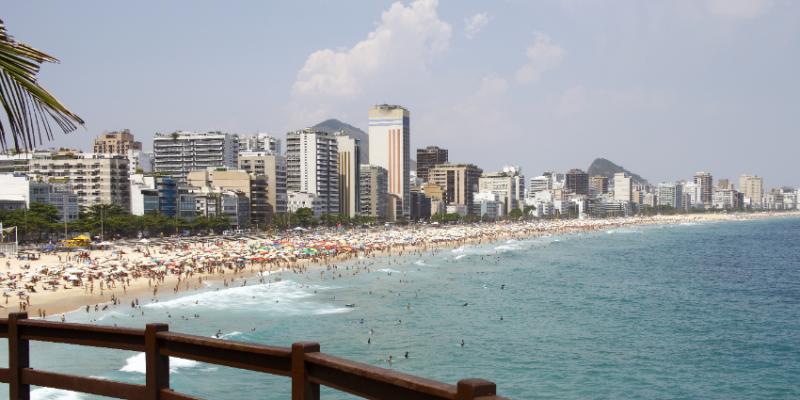
Life in Rio de Janeiro brings beaches, forest, and cultural venues into a large, busy city. Your neighborhood determines much of the experience, from rent and commuting to school runs and evenings out. Settling in includes Portuguese, humid heat, and everyday safety precautions, along with the outdoor activities and social connections that draw international residents here.
Rio de Janeiro is a major working city with beaches, forests, and mountains woven into its urban landscape. Its municipality has roughly 6.2 million residents, and its neighborhoods range from dense apartment districts beside the sea to extensive residential areas farther west. Hills and tunnels shape the routes between them. A place that looks close on a map can involve a substantial daily journey.
Brazil's former national capital and the capital of Rio de Janeiro state, the city remains important to the country's cultural and international life. Tourism, universities, energy-related businesses, services, and creative work bring people here for different reasons. An overseas assignment, a university course, retirement, or the chance to work remotely can all lead to very different versions of life in Rio.
Outdoor recreation can fit into an ordinary week, whether that's a beachfront walk before work or an afternoon in a park with children. The adjustments are just as much part of daily life: humid heat, getting things done in Portuguese, planning nighttime travel, and being careful about using your phone outdoors. Income and access to services differ considerably across the city. Where you live shapes both your expenses and how much time you have to enjoy the place.
The Zona Sul, or southern zone, brings together beaches, shops, restaurants, metro connections, and established international residents. It also includes some of Rio's most expensive housing. Copacabana has dense apartment blocks and plenty of everyday services, making it easy to run errands without a car. Noise and tourist activity vary from street to street. Ipanema and Leblon combine beach access, shopping, and metro access, but with substantially higher rents.
Botafogo combines bars and restaurants with schools and metro access, making it worth considering for professionals and remote workers who want an active neighborhood. Flamengo and Catete put residents closer to Centro and the open spaces of Aterro do Flamengo. For retirees, nearby stores, healthcare, and a relatively flat walking route can matter more than being directly on the seafront.
Laranjeiras has residential streets, local shops, and international schools. Metro access depends on the address and the walk to Largo do Machado. Gávea and Jardim Botânico appeal to people who want residential surroundings close to green spaces, though more journeys rely on buses or cars. Gávea is also relevant to students attending Pontifícia Universidade Católica do Rio de Janeiro (PUC-Rio). Students elsewhere should start with their actual campus: Tijuca offers shops, services, apartments, metro access, and comparatively lower rents, but it won't shorten every university commute.
Barra da Tijuca has large residential complexes, shopping malls, and long beaches. Some residences include pools, sports facilities, and children's spaces, with building charges to match. Distances are substantial. Jardim Oceânico, at the metro terminus, offers a different transport situation from addresses farther west in Barra or Recreio. A family whose school and work are nearby can have a very different routine from one traveling across the city each day.
Santa Teresa has houses, studios, and cultural venues, along with hills and a greater reliance on road access. Centro and the port area offer offices, museums, and transport connections, but street activity changes after businesses close. Visit a prospective home at the times you'll normally travel, and walk the immediate surroundings. The neighborhood name alone won't tell you what that daily route feels like.
Join the Rio de Janeiro community
Get regular tips and advice to make the most of your expat life
The cost of living in Rio de Janeiro
Housing creates some of the largest differences between budgets in Rio. Living alone near a Zona Sul beach costs considerably more than sharing a home or choosing a less expensive district with metro access. The FipeZAP rental index provides the following comparison of advertised apartment rents. These are asking rents per square meter per month, rather than the rents paid under all existing leases:
Neighborhood
Monthly asking rent per square meter
Leblon
BRL 124.70
Ipanema
BRL 118.10
Botafogo
BRL 77.40
Copacabana
BRL 77.30
Barra da Tijuca
BRL 76.80
Flamengo
BRL 73.30
Laranjeiras
BRL 63.40
Tijuca
BRL 38.80
Multiplying these figures by 50 square meters gives BRL 1,940 in Tijuca, BRL 3,870 in Botafogo, and BRL 6,235 in Leblon. That illustrates the difference between areas; it isn't a quote for a particular apartment. Its condition, exact address, and facilities will affect the advertised price.
The rent is only part of the housing bill. The condomínio charge covers building services and shared facilities, including security, elevators, and a pool. The lease may also require the tenant to pay IPTU, the municipal property tax. Electricity is generally a separate expense, and air-conditioning use affects the bill. Water and gas may be included in building charges or billed separately. A breakdown of charges and previous utility bills will give you a clearer picture than the rent alone.
Food spending depends heavily on how often you cook, eat out, or order delivery. Leisure includes free activities as well as paid events: walking along the beach or in a park involves a different budget from a gym membership, regular shows, and car rides home at night. For remote work, internet availability needs to be established at the exact address, including the connection technology and contract terms. Testing the apartment's connection is useful before relying on it for work.
A standard metro trip costs BRL 7.90. Two trips on each of 22 working days come to BRL 347.60, before any discounts or other travel. A single person sharing housing near the metro, a couple renting their own Zona Sul apartment, and a family paying for childcare or school transport therefore need quite different budgets.
Climate and housing comfort in Rio de Janeiro
Rio has a tropical climate, with hot, humid summers in the southern hemisphere and milder, generally drier winters. Heavy rain is a particular concern from November through March, although it can occur in other months. Cold fronts also bring cooler, windy days, so a wardrobe made up entirely of beach clothing won't cover the year.
Heat affects the timing of outdoor activities, which are often more comfortable early or late in the day. Humidity can keep nights uncomfortable too. In an apartment, airflow, shade, air conditioning, and the bedroom's orientation all matter. A sunny room beside a noisy road may be hard to sleep in, whether the windows are open or closed. Coastal districts, the foot of the mountains, and inland areas don't all feel the same.
Heavy rain can cause flash flooding and landslides, disrupting journeys and outdoor plans. Follow the city's weather forecasts and warnings, avoid flooded roads, and follow official instructions during severe weather.
Getting around Rio de Janeiro
The metro connects Tijuca, Centro, much of the Zona Sul, and Jardim Oceânico. Buses, the BRT rapid bus system, trains, and the VLT light rail serve other journeys. Commercial areas of the Zona Sul and Tijuca let you run many errands on foot, while coastal cycle paths and routes around Lagoa offer cycling without covering every commute.
A car isn't essential for everyone. It becomes more useful farther from rail connections, particularly in western districts, but adds parking and congestion to the household budget. Try the weekday journey between a prospective home and your workplace or school. Taxis and ride-hailing services can fill gaps, especially at night; match the vehicle's plate and the driver's identity before getting in.
Language and communication in Rio de Janeiro
Portuguese is the everyday language. You may find English in tourism and international workplaces, but arranging a repair, discussing a school matter, or dealing with building management calls for Portuguese. The local carioca accent can take some getting used to: certain “s” sounds resemble “sh,” and fast speech and informal vocabulary can make familiar words harder to recognize. “Você pode falar mais devagar, por favor?” means “Can you speak more slowly, please?”
The Federal University of Rio de Janeiro, UFRJ, offers community language courses through CLAC, including Portuguese for foreigners; enrollment depends on the relevant course notices. Private lessons and intensive courses offer other ways to learn, including options in the Zona Sul.
WhatsApp is useful for staying in touch with schools, associations, and service providers. Written messages also give you a record of an address, appointment time, or agreed price. A translation app can help with a simple request, but it isn't enough on its own when you need to understand a contract or an explanation involving responsibility or obligations.
Culture and social customs in Rio de Janeiro
Samba, Carnival, football, and time spent in cafés, bars, and outdoor spaces are visible parts of Rio's cultural life. They sit alongside many different neighborhood cultures and social groups. Joining a regular activity gives you a more concrete way into that life than assuming everyone shares the same tastes or habits.
A greeting and a little conversation are a useful start to an encounter. Let the other person guide how close to stand and how to greet them. When making plans, agree on an actual time and place; an informal social atmosphere isn't a reason to arrive late for a professional or medical appointment. Light clothing suits the heat, but workplaces and schools have different expectations than the beach.
Religion also shapes the city's public and cultural life. São Sebastião celebrations honor Rio's patron saint through Catholic ceremonies and cultural expressions, including activities associated with Pequena África. At a religious venue, follow its instructions about clothing, photography, and participation.
Work and the pace of life in Rio de Janeiro
Rio's outdoor setting doesn't remove the pressures of a large city. Rush-hour traffic, long journeys, and family responsibilities can take up much of the day. Compared with life in a smaller Brazilian city, the distances here can leave less time between finishing work and getting home.
For employees, the actual working routine depends on the employer: office hours, remote days, and availability outside normal hours need to be clear. Self-employed residents also need time for appointments and travel between clients. If you work remotely for people overseas, time differences and a quiet place for calls can shape your day more than the local beach schedule. An apartment close to restaurants and nightlife may also come with street noise.
Weekends offer beaches, sports, meals with friends, music, and cultural outings. Carnival and other major events bring crowds and traffic changes, while heavy rain can interrupt even ordinary plans. Your leisure time depends as much on your home and work locations as on what's happening in the city.
Food and eating out in Rio de Janeiro
The boteco, a neighborhood bar serving drinks, snacks, and sometimes full meals, is one way to get to know Rio's food scene. Feijoada, made with black beans and meat, is an emblematic dish, but seafood and cooking from other Brazilian regions also have a place here. For an everyday lunch, a prato feito is a set plate meal. At a buffet priced by weight, the weight of your food determines the charge; drinks and extras may be separate.
Dining districts include Tijuca and Praça da Bandeira for Brazilian food and bars, Santa Teresa for restaurants in older houses, and Jardim Oceânico and Ilha da Gigóia for further options. International restaurants include Italian dining. Cafés and bakeries offer places for daytime meetings, while an evening that continues with music costs a little more and requires a plan for getting home late.
Outdoor produce markets, or feiras livres, operate at neighborhood-specific locations and on particular days. Mealtimes depend on work, school, and social arrangements, so agree on a time when booking a restaurant or planning dinner with someone rather than relying on a single citywide schedule.
Leisure and social life in Rio de Janeiro
The beach is a place to meet, exercise, take classes, and swim. Running, volleyball, football, and organized activities provide ways to spend time outdoors. Aterro do Flamengo and Lagoa offer further space for walking and sports. For a class, the meeting point, required level, and registration arrangements matter more than simply knowing that the activity exists.
Tijuca National Park brings forest, waterfalls, and walking routes into the city, but its entrances are dispersed and routes differ in difficulty. An isolated trail requires different preparation from a walk through a neighborhood park. Weather, opening conditions, and security all affect which outing is appropriate.
Museums, exhibitions, cinema, theater, and concerts offer alternatives to outdoor activities. Lapa is associated with music and nightlife, while Santa Teresa has studios and cultural spaces.
Returning to the same language class, sports group, or workshop creates more opportunities to get to know people than a succession of one-off outings. Portuguese-language activities can also widen your contacts beyond an international circle.
Family life in Rio de Janeiro
For families, home, school, and work locations need to make sense together. Laranjeiras offers local services and the Lycée Molière; Flamengo has access to Aterro do Flamengo; and some Barra residences include children's facilities. The daily journey can outweigh those advantages if school or work is across the city. Heat, traffic, and sidewalk conditions also affect whether a route is manageable with a stroller or a young child.
International school options include The British School, with sites in Botafogo and Urca in the Zona Sul, as well as Barra. The Lycée international français Molière is in Laranjeiras and follows a southern-hemisphere calendar from February to December. A child arriving from a different school calendar may need a discussion about class placement. Before committing to housing around a school, settle the campus, grades offered, teaching language, and available places.
The municipal education network covers early childhood education and ensino fundamental, Brazil's basic schooling stage. The municipal enrollment route and the 1746 information service help families understand access. An application doesn't guarantee a place in the requested neighborhood or at the preferred hours.
Private childcare can be part-day or full-day. Monthly fees are BRL 1,000-3,000 at a selection of Rio establishments; other providers charge more. A useful quote specifies the hours, meals, materials, and holiday opening arrangements. School and childcare closures also have to fit around the adults' working schedules.
Safety and practical precautions in Rio de Janeiro
Theft is a concern in places residents and visitors use regularly, including Copacabana, Ipanema, Lapa, and Santa Teresa. A busy commercial street by day and an isolated route after dark can feel very different, even within the same district. Keep valuables discreet, be careful when using your phone outdoors, take only what you need to the beach, and don't leave anything unattended. If you're robbed, don't resist.
For a ride booked through an app, match the driver and license plate to the booking and follow the route during the journey. Official safety guidance also addresses fake drivers and diversions. If police operations or conflict affect an area, follow local instructions and avoid the affected streets. A navigation app alone isn't enough to judge whether a route is appropriate.
When calling for assistance, provide your address, a nearby landmark, and a brief description of the problem in Portuguese. The municipal 1746 service handles city services information; it isn't an emergency response line.
Environment and livability in Rio de Janeiro
Living near the sea and forest gives Rio strong outdoor appeal, but conditions around a home still matter. Road noise, congestion, and sanitation can affect daily comfort. A bedroom facing a courtyard may feel very different from one overlooking an avenue. Trees, shade, and proximity to a park don't remove every nuisance.
A beach's appearance doesn't indicate whether the water is safe for swimming. Inea's bathing-water guidance explains how contamination can occur, including runoff and discharges after heavy rain. Follow health notices, posted signs, and lifeguard advice. Air conditions also vary by place and day; the city's MonitorAr program publishes measurements. Flooding and landslide exposure are additional reasons to consider a home's immediate location.
Rio's international residents include employees, entrepreneurs, students, families, and temporary residents, as well as immigrants and refugees building longer-term lives. Schools, universities, neighborhood activities, and associations offer different ways to make contacts. Living near other foreign residents doesn't automatically provide a social network.
For an English-accessible community, theAmerican Society of Rio de Janeiro welcomes all nationalities. Its activities include celebrations of American traditions, networking and happy hours, family events, and service projects. The British & Commonwealth Society of Rio de Janeiro brings together charitable, cultural, social, and recreational interests and connects with the wider Brazilian community. French speakers and people interested in French culture can also explore Rio Accueil, whose activities include cultural outings, sports, workshops, and coffee gatherings, subject to membership and activity terms.
The Centro de Referência e Atendimento para Imigrantes, CRAI-Rio, serves a different purpose. It provides immigrants, refugees, and stateless people with orientation on rights, documentation, and opportunities to learn Portuguese. Contact it about intake and the support you need.
Over time, a language-based network can sit alongside regular local activities through work, school, studies, sports, or volunteering. Portuguese and time to participate shape the relationships you can build.
Frequently asked questions
It suits remote workers who want outdoor activities and city life, especially in areas with shops and metro access. The home itself needs a dependable internet connection and a quiet place for calls. Check service at the exact address, and account for overseas working hours, rent, heat, and nighttime travel.
English helps with tourism and some international workplaces, but Portuguese matters for repairs, school meetings, building matters, and broader social life. Translation apps help with simple requests; contracts and explanations involving obligations need a fuller understanding. Portuguese courses include UFRJ's CLAC program, subject to enrollment notices.
Housing, household size, childcare, and lifestyle make a single total misleading. Applying the neighborhood asking-rent figures to 50 square meters gives BRL 1,940 in Tijuca, BRL 3,870 in Botafogo, and BRL 6,235 in Leblon, before building charges, taxes payable under the lease, and utilities. Metro travel at the standard fare for two trips on 22 working days costs BRL 347.60. These components do not constitute a complete monthly budget.
Official guidance highlights theft risks in Copacabana, Ipanema, Lapa, and Santa Teresa. Assess the actual street and your usual travel times, including how busy the route is after dark. Keep valuables discreet and plan nighttime journeys.
A short stay lets you explore neighborhoods before committing to a home. Longer-term living depends more on what you can sustain: commuting, school or childcare (where relevant), healthcare access, housing costs, Portuguese, and social connections. Comfort during humid summer weather also deserves attention.
Long journeys, rush-hour traffic, humid heat, heavy rain, and everyday safety precautions can create pressure. Choosing a home near work or school, with convenient transport connections, can reduce time spent traveling. Work schedules and family obligations determine how much time you have for leisure.
Access depends on the documents you can provide, your budget, and a rental guarantee the landlord accepts. Application requirements and leases vary. Brazilian rental law permits several forms of guarantee but prohibits requiring more than one in the same lease. A cash deposit cannot exceed three months' rent and must be placed in a savings account as the law requires.
ℹ️
We do our best to provide accurate and up to date information. However, if you have noticed any inaccuracies in this article, please let us know in the comments section below.
A journalist, holder of the DALF C1 and C2 and a diploma from the University of Mauritius, I have nearly twenty years of writing experience. After six years in the Mauritian press, I joined Expat.com, where I have been working for over a decade, including five years as editorial assistant, and now as editorial manager.