Living in Moscow: the ultimate expat guide
Everything you need to know for a successful life in Moscow.
Moscow, the capital of Russia, is a sprawling metropolis of over 13 million residents that blends Soviet-era grandeur with modern urban development. As one of Europe's largest cities, it serves as Russia's political, economic, and cultural center. The city offers an efficient metro system, world-class museums, and a dynamic arts scene. Newcomers will find a city that operates around the clock, with 24-hour delivery services, late-night dining options, and vibrant nightlife. While the language barrier and harsh winters present challenges, the city rewards those who embrace its unique character.
Five Good Reasons to Move to Moscow
- Affordable cost of living compared to major Western capitals, with groceries, transport, and entertainment at accessible prices.
- World-class public transport featuring one of the most beautiful and efficient metro systems globally, with stations operating as underground art galleries.
- Rich cultural heritage with the Bolshoi Theatre, Tretyakov Gallery, and countless museums offering endless exploration.
- Excellent digital infrastructure including fast and affordable internet, widespread contactless payments, and efficient app-based services.
- Safe urban environment with low street crime rates and extensive security presence throughout the city.
Working in Moscow: Jobs, Industries, and Permits
Moscow dominates Russia's job market, accounting for approximately 20% of the national GDP. The city attracts professionals across multiple sectors, though international workers must navigate a structured work permit system. Employment opportunities exist across technology, finance, energy, and services, with salaries significantly higher than other Russian regions.
Key Industries and Employment Sectors
The IT and technology sector continues to expand rapidly, with demand for software developers, data analysts, and cybersecurity specialists. IT professionals can earn between 120,000 to 180,000 RUB monthly (approximately USD 1,300–2,000). The finance and banking sector offers competitive salaries averaging 150,000–200,000 RUB monthly for experienced professionals. Energy and natural resources companies maintain headquarters in Moscow, providing well-compensated positions. The average monthly salary in Moscow reached 162,124 RUB (approximately USD 1,780) in 2024, substantially above the national average.
Work Permits and Visas
Foreign nationals require a work permit and work visa to be legally employed in Russia. The employer must initiate the process by obtaining a permit to employ foreign workers and applying for a quota if required. Highly Qualified Specialists (HQS) earning over 3 million RUB annually benefit from a simplified process and can receive a multiple-entry visa valid for up to 3 years. Standard work permits are location-specific and typically valid for one year. Citizens of CIS countries benefit from simplified procedures and can work on a patent system.
The table below presents key employment indicators for Moscow:
Average Monthly Salary (2024) | 162,124 RUB (USD 1,780) |
Unemployment Rate | 0.51% |
Top Sectors | IT, Finance, Energy, Services |
Sources: Federal State Statistics Service (Rosstat), Moscow City Government

Finding work in Moscow
Finding a job in Moscow can be a quite tedious task, although the local labour market is very open and dynamic. Advance preparations are necessary, ...
Universities and Higher Education in Moscow
Moscow hosts some of Russia's most prestigious universities, attracting over 389,000 international students nationwide in 2024. The city offers diverse programs in English and Russian, with tuition fees significantly lower than comparable institutions in North America or Western Europe. Universities provide strong foundations in sciences, engineering, medicine, and humanities.
Top Universities for International Students
Lomonosov Moscow State University (MSU) ranks as Russia's top institution, positioned at #105 globally in the QS World University Rankings 2026. MSU hosts over 47,000 students, including 4,000 international students annually. The university offers programs across 39 faculties, with tuition starting around USD 4,000–7,000 per year for undergraduate programs. Higher School of Economics (HSE) is renowned for economics, social sciences, and business programs, with extensive English-taught options. RUDN University (Peoples' Friendship University) specializes in welcoming international students from over 155 countries. Bauman Moscow State Technical University excels in engineering and applied sciences, ranked among the world's top 300 institutions.
Admission Process and Requirements
International applicants must have their foreign education credentials recognized through the AIS Recognition system. Most programs require submission of documents by June 20 for the autumn semester. Russian-language programs typically require TORFL-II (B2 level) certification, while English-taught programs need IELTS 6.0 or equivalent. A one-year preparatory program (Padfak) is available for students needing Russian language training before degree studies. Student visas are issued based on university invitations, and dormitory housing ranges from 12,000–15,000 RUB monthly.
Sources: Moscow State University, QS World University Rankings
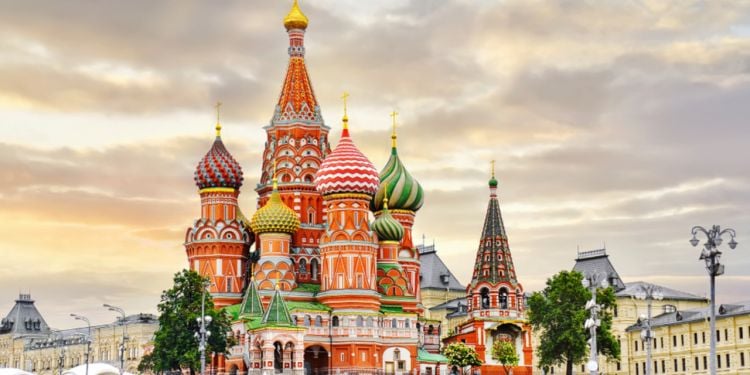
Study in Moscow
Russia's capital city has always conjured up some kind of mysterious fascination amongst foreigners. Despite all the stereotypes which have persisted ...
Schools for Expat Children in Moscow
Moscow offers over 20 international schools catering to expatriate families, with most following British, American, or International Baccalaureate (IB) curricula. These schools provide instruction primarily in English and prepare students for university admission worldwide. Local Russian schools maintain high academic standards but teach exclusively in Russian.
International School Options
The International School of Moscow (ISM), part of Nord Anglia Education, follows the British National Curriculum from Early Years through A-Levels. Annual tuition ranges from 1,600,000 to 3,500,000 RUB (approximately USD 17,500–38,000) depending on grade level. The British International School (BIS) operates six campuses across Moscow, serving students aged 2–18 from over 65 nationalities. BIS offers both International and Russian educational programs, with class sizes limited to 15 students. The Cambridge International School provides IGCSE and A-Level qualifications across multiple Moscow campuses. English International School of Moscow offers a comprehensive English curriculum with competitive fees.
Enrollment and Practical Information
Applications are accepted year-round at most schools, though spaces fill quickly. Enrollment fees typically range from 400,000–600,000 RUB as a one-time payment. Assessment tests are standard requirements for admission. Many schools offer sibling discounts (10–50% on enrollment fees) and early-payment reductions. Transport services are available at additional cost, connecting students from across the city. Before selecting a school, families should verify proximity to housing, as Moscow traffic can result in 60–90 minute commutes during peak hours.
Sources: International School of Moscow, British International School
Housing and Neighborhoods in Moscow
Moscow's rental market offers diverse options ranging from Soviet-era apartment blocks to modern luxury complexes. Housing costs vary dramatically based on location, with central districts commanding premium prices. Most expatriates prioritize proximity to metro stations due to the city's severe traffic congestion.
Popular Neighborhoods for Expats
The most sought-after central areas include Patriarshiye Prudy (Patriarch's Ponds), Arbat, Tverskaya, and Chistye Prudy, offering walkable streets, restaurants, and cultural venues. Monthly rents in these districts range from 80,000–180,000 RUB (USD 880–1,970) for a one-bedroom apartment. Zamoskvorechye and Khamovniki provide a balance of central location and residential atmosphere. For families seeking space and international school proximity, gated communities like Pokrovsky Hills and Rosinka offer houses with gardens, security, and amenities, though rents start around USD 6,000 monthly. More affordable options exist in districts near the MKAD ring road, with one-bedroom apartments available from 40,000–60,000 RUB monthly.
Renting Practicalities
Leases typically run 11 months to 3 years and may be written in both Russian and English. Landlords commonly request a one-month security deposit. Rent can be paid in rubles, US dollars, or euros by agreement. Furnished, semi-furnished, and unfurnished options are available. Water and gas are usually included in rent, while electricity, internet, and telecommunications are tenant responsibilities. Utilities average 12,000 RUB monthly for a standard apartment. Key resources for apartment searches include CIAN.ru, Avito, and specialized expat agencies.
The table below shows typical rental costs:
1-Bedroom (City Center) | 111,765 RUB (USD 1,225) |
1-Bedroom (Outside Center) | 60,319 RUB (USD 660) |
3-Bedroom (City Center) | 263,103 RUB (USD 2,880) |
3-Bedroom (Outside Center) | 117,656 RUB (USD 1,290) |
Sources: Numbeo, CIAN Real Estate
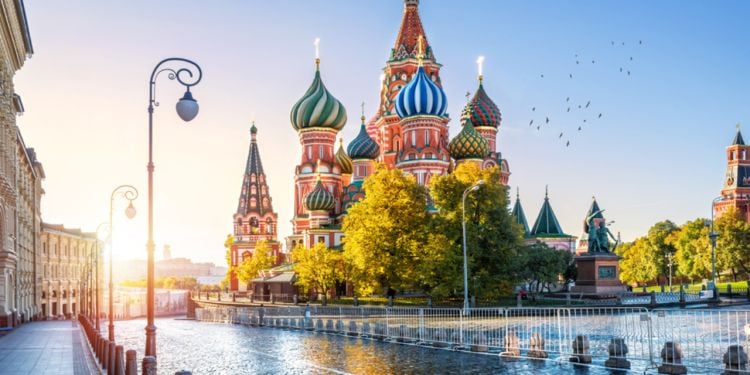
Accommodation in Moscow
Moscow was founded on the banks of the Moskva River and stretches over 2,511km2. It is deemed to be one of the world's most expensive capitals ...
Leisure, Culture, and Things to Do in Moscow
Moscow offers extraordinary cultural depth, from world-renowned theaters to expansive urban parks. The city maintains a vibrant nightlife scene, diverse dining options, and year-round festivals. Art lovers, history enthusiasts, and nature seekers all find abundant activities regardless of season.
Museums and Cultural Attractions
The Tretyakov Gallery houses the world's finest collection of Russian art, from medieval icons to avant-garde works. The Pushkin Museum of Fine Arts features exceptional European masterpieces, including Impressionist and Post-Impressionist collections. The Kremlin Museums showcase Russian imperial treasures, while the Cosmonautics Museum at VDNKh celebrates Soviet space achievements. Theater remains central to Moscow culture—the Bolshoi Theatre offers world-class ballet and opera, with tickets ranging from 500 to 15,000 RUB. Cinema tickets cost approximately 550 RUB for international releases. The Troika card provides discounted entry to the Moscow Zoo, Planetarium, and Tretyakov Gallery.
Parks, Sports, and Nightlife
Gorky Park has transformed into a modern urban oasis with free fitness equipment, cycling paths, and summer beach areas along the Moskva River. VDNKh (Exhibition of Achievements of National Economy) spans 240 hectares featuring Soviet pavilions, the largest skating rink in Europe during winter, and numerous museums. Zaryadye Park near Red Square showcases innovative landscape design with a floating bridge over the river. Fitness club memberships average 3,600 RUB monthly. Moscow's nightlife ranges from sophisticated cocktail bars around Patriarch's Ponds to legendary techno clubs. Popular areas for evening entertainment include Kitai-Gorod, Tverskaya, and the Red October former factory complex. The city hosts numerous festivals throughout the year, including the Moscow International Film Festival and City Day celebrations in September.
Sources: Moscow City Official Portal, Tretyakov Gallery
Leisure activities in Moscow
Moscow, the Russian capital city, is world famous for its cultural and historical legacy. So, if you are moving there, you are likely to discover and ...
Daily Life and Getting Around Moscow
Daily life in Moscow revolves around efficient public transport, digital convenience, and adapting to dramatic seasonal changes. The city operates 24/7, with online delivery services, ride-hailing apps, and late-night venues readily available. Learning some Russian significantly improves daily interactions, as English proficiency outside tourist areas remains limited.
Public Transportation
The Moscow Metro is the backbone of city transport, with 14 lines and over 260 stations covering most of the city. Trains operate from 5:30 am to 1:00 am, with frequencies of 1–3 minutes during peak hours. The metro is renowned for its architectural beauty—44 stations are recognized as cultural heritage sites. A single metro ride costs 54–57 RUB (approximately USD 0.60). The Troika card offers the most economical payment method, available for a refundable 50 RUB deposit at any metro station. The card can be topped up to 10,000 RUB and used across metro, buses, trams, and the Moscow Central Circle railway. Monthly transport passes cost approximately 3,070 RUB. Yandex Go dominates ride-hailing services with affordable fares starting around 200 RUB.
Lifestyle and Cultural Adaptation
Moscow experiences extreme seasons: winters from November to March bring temperatures as low as -20°C and limited daylight, while summers offer pleasant 20–25°C weather and white nights. Central heating operates city-wide from October to April and cannot be individually controlled. Hot water may be cut off for 1–2 weeks annually for pipe maintenance. Grocery shopping is convenient with major chains like Perekrestok, VkusVill, and Azbuka Vkusa (premium). Cash is rarely needed—contactless payments work virtually everywhere. The Yandex ecosystem provides essential services including maps, food delivery, taxi, and e-commerce.
Sources: Moscow Metro, Moscow Transport Portal
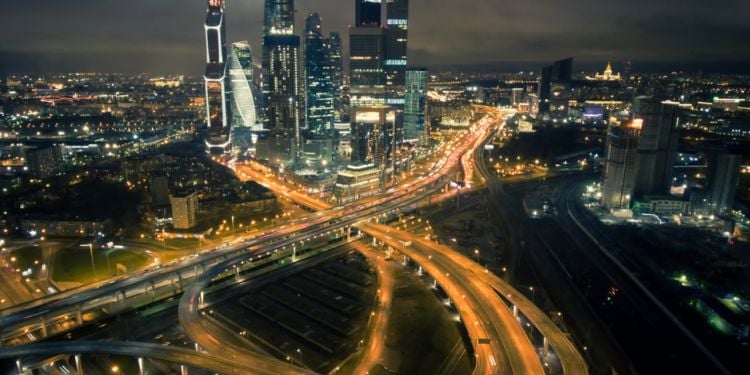
Travelling around Moscow
With a population of some 12.3 million inhabitants, Moscow is one of the most populated cities in Europe. It also attracts thousands of tourists ...
Cost of Living in Moscow: Monthly Budgets
Moscow's cost of living is 33% lower than major American cities while offering comparable urban amenities. Housing represents the largest expense, followed by childcare and international schooling for families. Groceries, transport, and entertainment remain affordable by international standards. The tables below provide realistic monthly budgets based on current data.
Budget for a Single Person
A single professional can live comfortably in Moscow on approximately USD 1,500–2,000 monthly, excluding high-end preferences. This budget assumes renting outside the city center, using public transport, and cooking most meals at home while allowing for dining out and entertainment.
Rent (1-bedroom, outside center) | 60,000 RUB (USD 660) |
Utilities (electricity, heating, water) | 12,000 RUB (USD 130) |
Groceries | 25,000 RUB (USD 275) |
Transport (monthly pass) | 3,070 RUB (USD 34) |
Mobile + Internet | 1,300 RUB (USD 14) |
Dining & Entertainment | 20,000 RUB (USD 220) |
Total Estimated | 121,370 RUB (USD 1,330) |
Budget for a Family of Four
Families with children should budget approximately USD 4,000–6,000 monthly, with international school fees representing a major expense. The budget below assumes renting a 3-bedroom apartment outside the center and one child in international school.
Rent (3-bedroom, outside center) | 117,000 RUB (USD 1,280) |
Utilities | 15,000 RUB (USD 165) |
Groceries | 60,000 RUB (USD 660) |
International School (per child/month) | 100,000 RUB (USD 1,100) |
Transport | 8,000 RUB (USD 88) |
Healthcare Insurance | 25,000 RUB (USD 275) |
Dining & Entertainment | 40,000 RUB (USD 440) |
Total Estimated | 365,000 RUB (USD 4,000) |
Sources: Numbeo December 2025, Moscow Transport
In Short
Moscow presents a unique opportunity for expatriates seeking affordable living in a major global city with exceptional cultural offerings. The city rewards patience and adaptability—those who embrace the Russian language, navigate the visa system, and prepare for harsh winters discover a metropolis of surprising warmth and endless discovery. World-class museums, efficient transport, safe streets, and a growing international community make Moscow a compelling destination. The cost of living allows for a comfortable lifestyle on moderate budgets, while the digital infrastructure rivals any major city. Whether pursuing career advancement, academic opportunities, or cultural immersion, Moscow delivers experiences unavailable elsewhere. Connect with fellow expats, share advice, and find local insights on the Expat.com Moscow forum—your gateway to a supportive community ready to help you settle in.
We do our best to provide accurate and up to date information. However, if you have noticed any inaccuracies in this content, please contact us.