Living in Milan: the ultimate expat guide
Everything you need to know for a successful life in Milan.
Milan is an economic powerhouse and one of Europe's most dynamic metropolitan areas. Home to 1.4 million residents in the city and over 3.2 million in the metropolitan area, this northern Italian city combines historical grandeur with modern business energy. As the nation's financial capital and a global fashion hub, Milan attracts professionals, students, and entrepreneurs from across the world who come for its career opportunities, universities, and cosmopolitan atmosphere.
5 good reasons to move to Milan
- Career opportunities: Italy's business and financial center hosts multinational corporations, fashion houses, and innovative startups across finance, technology, design, and consulting sectors.
- World-class education: Home to prestigious institutions like Bocconi University and Politecnico di Milano, offering internationally recognized programs taught in English.
- Cultural richness: Experience Leonardo da Vinci's Last Supper, La Scala opera house, Gothic architecture, and year-round festivals celebrating art, fashion, and design.
- Strategic location: This northern Italian city boasts excellent transport connections to Switzerland, France, and major European cities via three international airports.
- Efficient infrastructure: Italy's most efficient public transportation system, modern amenities, and services that function reliably compared to other Italian cities.
Source: World Population Review
Working in Milan
Milan hosts the headquarters of major Italian banks, insurance companies, and multinational corporations alongside thriving sectors in fashion, design, technology, and consulting. For expats, the job market in Milan offers more opportunities than many other Italian cities, though competition remains strong and knowledge of Italian is increasingly important even in international firms.
Key employment sectors
The financial services sector is Milan's biggest employer, with institutions like UniCredit, Intesa Sanpaolo, and Generali employing thousands across banking, insurance, and asset management. The fashion and luxury goods industry provides opportunities not just in design but in marketing, retail management, and supply chain roles with houses like Armani, Prada, and Versace headquartered here. The technology and consulting sectors have grown substantially, and the tourism and hospitality sector, while not Milan's largest, usually has plenty of seasonal work.
Work permits
EU citizens enjoy freedom of movement and are free to work in Milan without a permit. However, they must register with local authorities within three months of arrival. For non-EU citizens, a work visa (Nulla Osta) is required and must be obtained through employer sponsorship before arriving in Italy. The employer must demonstrate that no suitable EU candidate is available for the position and apply through Italy's quota system, which allocates a limited number of permits annually based on nationality and profession.
Unemployment rate (Italy) | Approximately 6.0% |
Average monthly salary (net) | €2,096 |
Main employment sectors | Finance, fashion, consulting, technology |
Data correct as of December 2025.
Sources: Istat (Italian National Institute of Statistics), Trading Economics, Numbeo
🔍To learn more
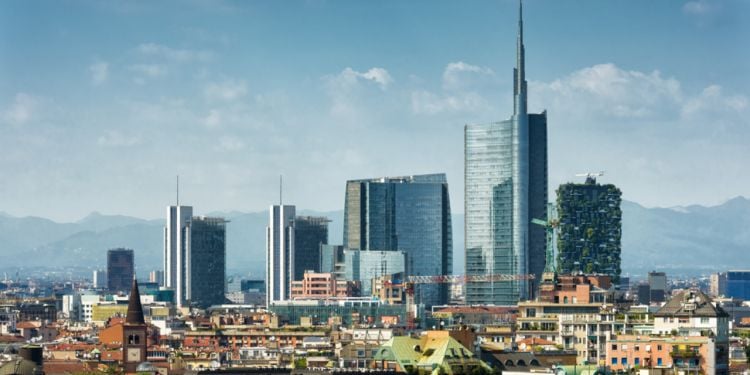
Finding work in Milan
Milan has always been the economic capital of Italy. Renowned for its fashion, design and service ...

Labor market in Milan
Fashion, design, finance, culture, tourism and many other sectors are the key components of ...

The work culture in Milan
Milan is Italy's city of work par excellence. It was rebuilt after the Second World War to ...
Higher education & universities
Milan has established itself as a leading European education hub, hosting several world-renowned universities.
Top universities and programs
There is a remarkable selection of top-tier universities in Milan. Among them are: Bocconi University, founded in 1902, is a premier business school consistently ranked in global top 10 lists for economics and management programs. Politecnico di Milano is a prominent technical university, specializing in engineering, architecture, and design, with numerous English-taught master's options. The University of Milan, the city's largest public institution offers degrees across eight faculties, and Università Cattolica del Sacro Cuore provides Catholic education with programs in medicine, psychology, economics, and communication sciences.
Application and admission requirements
Application processes vary by institution but generally require submission of previous academic transcripts and proof of English proficiency (TOEFL, IELTS, or Cambridge certificates). Prospective students may also have to sit entrance exams or interviews. For Bocconi, students must typically demonstrate strong quantitative skills and previous academic excellence. Politecnico requires specific technical prerequisites depending on the chosen engineering discipline.
Sources: Bocconi University, Politecnico di Milano, Università degli Studi di Milano.


Schooling for children
From Italian state schools to international institutions following British, American, and International Baccalaureate curricula, parents have a number of schooling options in Milan for their children.
Italian state schools
Public schools in Italy offer free, high-quality education from ages 3 to 19, divided into scuola dell'infanzia (preschool), scuola primaria (primary, ages 6-11), scuola secondaria di primo grado (middle school, ages 11-14), and scuola secondaria di secondo grado (high school, ages 14-19). Instruction occurs entirely in Italian.
International schools
Milan hosts several established international schools, each offering distinct curricula and philosophies. The International School of Milan (ISM) follows the complete IB continuum (PYP, MYP, DP) for students aged 2-18, operating from a modern campus in Baranzate. The American School of Milan combines American curriculum with the IB Diploma Programme for ages 3-18, serving students from over 50 nationalities. The British School of Milan, founded in 1969, follows the English National Curriculum leading to IGCSEs and the IB Diploma. Other notable institutions include Lycée Stendhal de Milan (French curriculum), Canadian School of Milan (Ontario curriculum and IB), and Deutsche Schule Mailand (German-Italian bilingual).
Sources: The International School of Milan, American School of Milan, Deutsche Schule Mailand
Housing & neighbourhoods
Milan's housing market reflects its status as one of Italy's most expensive city, with rents significantly exceeding other urban centers. However, it offers diverse neighborhoods suited to different lifestyles and budgets.
Where expats live
Centro Storico offers a premium, historic location near the Duomo, while areas like Porta Romana and Porta Venezia are central and slightly more affordable, popular with young professionals. The canal-side Navigli attracts young internationals for its lively, bohemian atmosphere. Modern districts like Isola and Porta Garibaldi appeal to business professionals working in Porta Nuova. More budget-conscious expats, including students, choose Lambrate and Città Studi or suburban options like Sesto San Giovanni for lower rents.
Rental process and rental costs
Rental contracts in Italy typically follow one of two models: the contratto a canone libero (free market, minimum 4 years) or the contratto a canone concordato (agreed rent, 3 years with associated tax benefits). To secure a property, landlords generally require a security deposit equal to 2–3 months' rent, proof of income, and sometimes a guarantor. Finally, note that the registration tax (imposta di registro) is typically split between the tenant and the landlord.
One-bedroom apartment (city center) | €1,200 - €1,850/month |
Three-bedroom apartment (city center) | €2,500 - €4,000/month |
Data correct as of December 2025.
Source: Numbeo
🔍To learn more
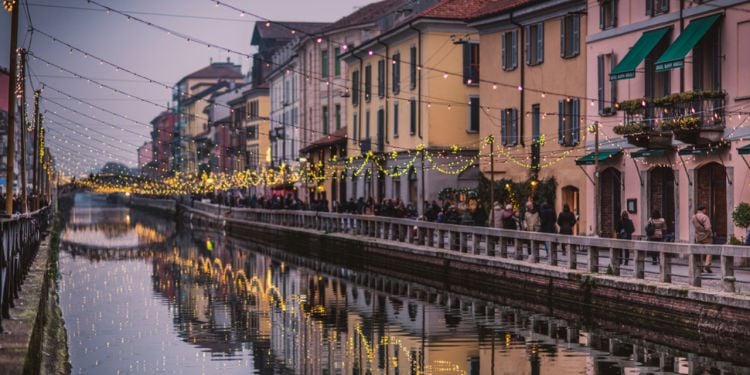
Accommodation in Milan
Milan is one of the world's fashion capitals and, as Italy's most important industrial and ...
Buying property in Milan
The decision to buy a flat or a house in Milan, a city with the highest prices in Italy, is a ...
The Milan neighbourhood guide
Greater Milan, as the Milanese call it, is, without doubt, the most important center in Italy ...
Leisure, culture & things to do
Milan's cultural offerings extend far beyond fashion runways, encompassing world-class museums, historic architecture, performing arts, and green spaces.
Museums and cultural landmarks
The city’s most iconic artwork is Leonardo da Vinci’s fragile fresco, The Last Supper, housed at Santa Maria delle Grazie, which requires booking well in advance. Dominating the skyline is the magnificent Duomo di Milano, one of the world's largest Gothic cathedrals, featuring spectacular rooftop views. Art lovers can explore the Renaissance masterpieces at the Pinacoteca di Brera and browse the collections at the massive 15th-century Castello Sforzesco. Meanwhile, opera, ballet and classical music fans flock to the prestigious Teatro alla Scala.
Parks, sports, and outdoor activities
Milan has an abundance of green spaces, starting with Parco Sempione, the city's largest central park. Other central options include Giardini Pubblici Indro Montanelli and newer spaces like CityLife Park and the contemporary Biblioteca degli Alberi near Porta Nuova. For unique outdoor experiences, the historic Navigli canals buzz with activity, particularly during evening aperitivo. Cycling and water sports enthusiasts can visit Idroscalo, a large artificial lake easily accessible by metro. If you are into soccer, the city is home to two world-renowned football clubs, AC Milan and Inter Milan, who share the iconic San Siro Stadium.
Sources: Parco Sempione, AC Milan, Inter Milan
🔍To learn more
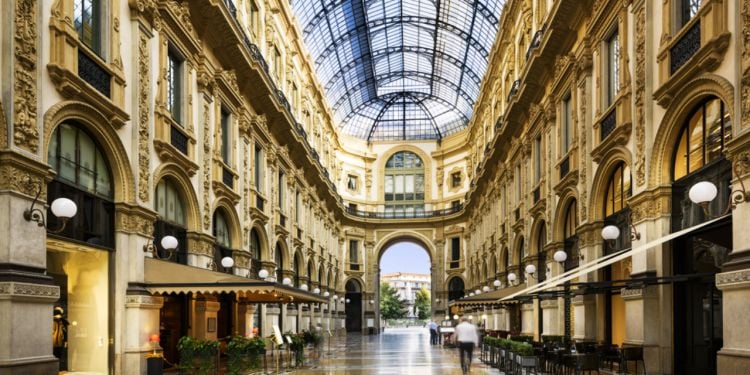
Leisure activities in Milan
Famous for fashion, gastronomy and design, Milan has much more to offer than glamour. The city is ...

Things to do in Milan alone, with friends or with family
Milan is a magical city that caters to the needs and desires of each of its inhabitants. Whether ...

Outdoor activities in Milan
Milan offers unlimited possibilities when it comes to activities and nature escapes. Its ...
Daily life
Milan's daily rhythm tends to differ markedly from stereotypical Italian cities, operating with northern European efficiency while retaining Italian warmth and style.
Public transportation
Milan boasts Italy's most extensive and reliable public transportation network, operated by ATM (Azienda Trasporti Milanesi). The system includes five metro lines (M1 red, M2 green, M3 yellow, M4 blue, M5 lilac), trams, buses, and suburban trains covering the entire metropolitan area. Night buses operate after metro closure for late-night travel. Since 2024, Milan has phased out paper tickets in favor of the rechargeable RicaricaMi card available at metro stations, tobacconists, and authorized retailers. Travelers can also use contactless payment cards directly at turnstiles, with fares automatically calculated.
Lifestyle and cultural habits
Unlike some other Italian cities, Milanese culture strongly prioritizes punctuality and efficiency. Business meetings typically start on time, and shops reliably observe their posted hours.
This efficiency blends with a pervasive fashion consciousness. Milanese tend to dress more formally than residents of other Italian cities, reflecting the city’s status as a global style capital. For instance, office environments usually require business or smart casual attire, and even casual social settings involve a noticeable attention to appearance.
🔍To learn more
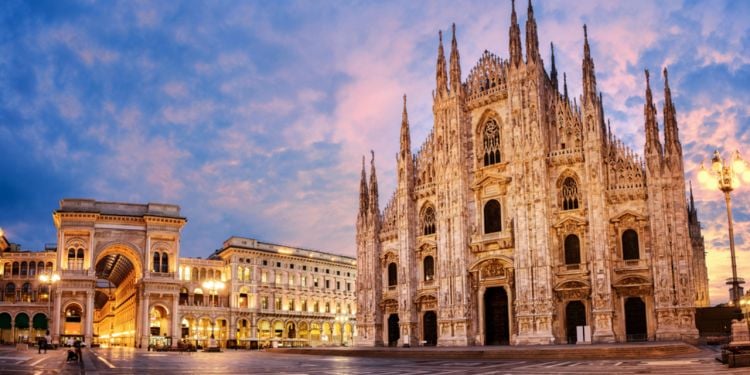
Discovering Milan
Milan naturally attracts visitors, but also many expatriates. Italy's economic capital has many ...
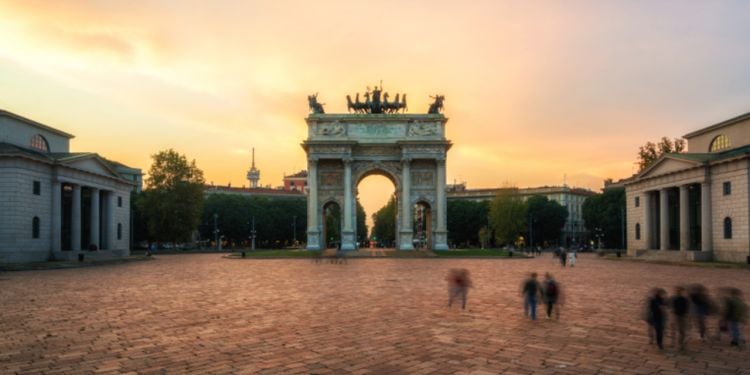
Adjusting to the Milanese lifestyle
How a person might perceive Milan depends on their personal background and aspirations. For those ...

Developing your social circle in Milan
Some call Milan The Little London, as it offers plenty of possibilities to make new friends and to ...
Cost of living
Milan consistently ranks as Italy's most expensive city, with living costs comparable to major European capitals while salaries remain lower than northern European equivalents.
Monthly expenses for a single person
Rent (1-bedroom apartment in the center) | €1,200 - €1,850 |
Utilities | €106 - €303 |
Groceries | €200 - €300 |
Data correct as of December 2025.
Monthly expenses for a family of four
Rent (3-bedroom apartment in the center) | €2,500 - €4,000 |
Utilities | €200 - €350 |
Groceries | €800 - €1,000 |
Data correct as of December 2025.
Source: Numbeo
In short
As Italy's economic engine, Milan provides career opportunities unmatched elsewhere in the country, supported by excellent universities, reliable infrastructure, and cosmopolitan energy. The trade-off comes in the form of high living costs, particularly housing. Yet for professionals, students, and families willing to navigate these challenges, Milan delivers access to world-class culture and a lifestyle that blends Italian style with international dynamism. For more information, our guides and articles are handy resources, and you can also join the Expat.com Milan forum where members share experiences, tips and advice about life in this fascinating city.
We do our best to provide accurate and up to date information. However, if you have noticed any inaccuracies in this content, please contact us.


News & testimonies

Tips for international students in Milan
Education will without a doubt be one of your main concerns if you're an expat looking to move to Milan with your family. The International School of Milan provides tailor-made programs so your children can benefit from quality education. Here are some tips for studying in Milan.

Work in Italy: Who qualifies for the 500,000 new visas?
Facing persistent labor shortages across multiple sectors, Italy is once again looking beyond its borders for solutions. The government has announced a new plan to issue nearly half a million work visas to non-EU nationals over the next three years.
Milano 3.0: Your new home surrounded by nature
The new residential complex of Milano 3.0 is the latest addition to the Milano 3 neighborhood, located in the south-west of the city, nestled in the lush greenery.

Italy considers stricter legislation on surrogacy: Are parenthood rights under threat?
Italy, which already has one of the strictest laws on surrogacy, is taking another historical turn. Does this imply new challenges for parenthood and abortion rights? What is the situation like in other countries?
Essential services for your expat journey