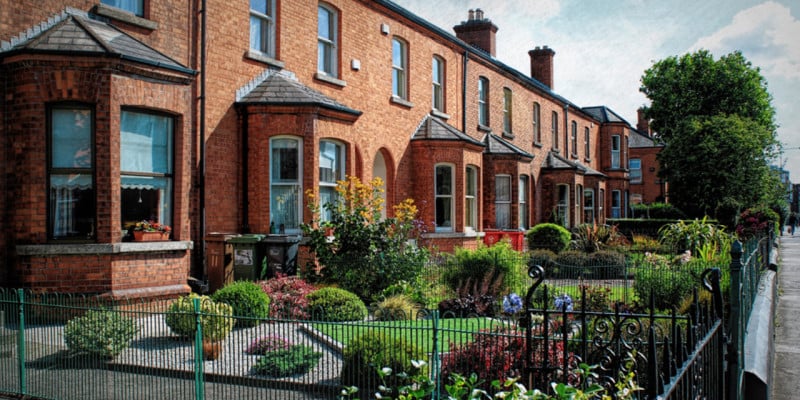
Dublin's real estate market
In Ireland, the average price of a property is now eight times higher than the average income, according to a report from property website MyHome.ie. The average price of a three-bedroom semi-detached house in Dublin is €558,000, which means as a single person you will need to be earning at least €150,000 annually to qualify for a mortgage. Dublin is the only county in Ireland where a six-figure salary is required to buy a typical first-time buyer home. Despite the affordability issues within the property market, competition for properties remains fierce, with homes typically selling for 8 per cent above the asking price.
Read also Working in Dublin
There are a lot of new housing developments and apartment complexes in the pipeline. Once they are completed, the hope is that the increase in supply levels will subsequently lead to property prices in Dublin levelling off.
Buying a house in Dublin
Buying a property in Dublin all depends on how much you earn. You will need to have your deposit saved up when approaching a bank to obtain a mortgage. Usually, this deposit will be at least 10% of the total value of the property you are looking to buy.
You subtract the deposit amount from the total price of the property. You then divide this figure by 4, as this is your Loan-to-Income limit or the maximum amount you can borrow, which is 4 times your gross income if you are a first-time buyer, and 3.5 times your gross income if you are a second or subsequent buyer, as per the Central Bank of Ireland's rules. If you are looking to buy a property with your other half, you can pool your incomes together when it comes to calculating how much you will be able to borrow for a mortgage. So, for example, if you are a couple buying your first house in Ireland, and you have a combined income of €100,000, you can borrow up to a maximum of €400,000.
In the past, there was reckless lending by the banks in Ireland, which caused massive instability in the Irish property market and the economy as a whole. Therefore, mortgage providers are now very strict about how much money they lend.
There are rare exceptions to the 3.5 and 4 times your income rule, so it may be worth double-checking with the different lenders when applying for a mortgage.
Read also Opening a bank account in Ireland
Property prices in Dublin
Dublin remains Ireland's most expensive city to buy property in, largely due to its status as an economic hub and tech magnet. Strong demand continues to outstrip supply in the capital, serving to drive property prices even higher.
Current average property prices in Dublin are as follows:
- One-bed city centre apartment = €280,000-€380,000
- Three-bed house in the suburbs = €450,000-€600,000
- House in a prime area, such as Dublin 4 or Dublin 6 = In excess of €800,000
- Coastal property = In excess of €900,000
- Tech hub area = €500,000-€700,000
- Two-bed apartment in a new development = €440,000-€600,000
- Three-bed in one of the more affordable areas such as Ballymun = €300,000-€450,000
Read also Accommodation in Dublin
Premium areas of Dublin to buy property in
Dublin is home to some of the most exclusive neighbourhoods in Ireland, each with its own distinctly unique character. Many areas around Dublin are referred to by their postal district numbers. An even number indicates an area to the south of the River Liffey, for example, Dublin 2, Dublin 4, and so on, while an odd number indicates an area on the north side, such as Dublin 1, 3, 5, and so on. Property prices in central neighbourhoods in the capital are typically more expensive, while the suburbs can sometimes offer slightly more affordable options. Generally, you will find that properties which are located close to major public transport stops and stations, like the DART and the Luas, will have a price premium on them.
Whether you are looking to buy a property in the bustling heart of the city or on the outskirts, Dublin has many great neighbourhoods to choose from, each with its own unique character and charm.
The most expensive and sought-after neighbourhoods in Dublin include Sandymount, Foxrock, Ballsbridge, Dalkey , Donnybrook, Ranelagh, Portobello, Rathmines, and Blackrock.
Sandymount is an affluent residential suburb located along Dublin's south-eastern coast. Its sandy beach and coastal vibe make it an enviable location for those looking for a peaceful retreat from the bustling city. A three-bedroom semi-detached house in Sandymount will cost in the region of €1.1 million.
Foxrock is a charming neighbourhood located in the south of Dublin, and is known for its elegant architecture and tranquil lifestyle. It boasts stunning period homes on tree-lined streets and a range of local boutiques, cafes, and restaurants. You can expect to pay just under €1.1 million for a property in Foxrock.
Ballsbridge is located south of Dublin's city centre, making it one of the most sought-after neighbourhoods in Dublin with its tree-lined streets and Victorian and Georgian houses. It is also home to many embassies, luxury hotels, and renowned restaurants. It is a great option for those looking for a more laid-back lifestyle compared to the hustle and bustle of the city centre. A three-bedroom semi-detached house in Ballsbridge will set you back about €1.1 million.
Dalkey is a charming village situated along the coastline in South County Dublin, and within close proximity to the city. Its stunning location and breath-taking sea views make it one of the most exclusive neighbourhoods in Dublin. The village has an abundance of independent boutiques, charming pubs, gourmet restaurants, and cosy cafes, adding to its appeal. Properties range from quaint cottages to elegant period homes. The average price of a property here is over €1 million.
Donnybrook, in Dublin 4, is a highly sought-after neighbourhood located on the southside of Dublin. It is home to a number of world-class restaurants, pubs, and schools. A quick walk will land you in Dublin city centre in 30 minutes. The average asking price for a property in Donnybrook is about €675,000.
Ranelagh is a hot spot for higher-end properties with its proximity to Dublin's major business districts and tech hubs, and IT giants like Google and Facebook are located nearby. It is home to some of the most desirable addresses in the city, with its array of red brick townhouses. Its central location makes it a much sought-after neighbourhood for those who prefer an urban lifestyle. A three-bedroom semi-detached house in Ranelagh will set you back about €990,000.
Portobello is a pretty and leafy neighbourhood located south of the city, with Victorian streets and a cosy village feel. It boasts a number of art galleries, Michelin-star restaurants, bars and cafes, and its proximity to the city centre makes it one of the most enviable neighbourhoods in Dublin. It is a mix of modern apartments, Georgian townhouses, and charming cottages. Expect to pay some €640,000 on average for a property in this trendy neighbourhood.
Rathmines is another hotspot thanks to its many trendy cafes and restaurants, vibrant nightlife, and convenient public transport links. It's a much sought-after neighbourhood that offers a mix of period homes, red-brick terraced houses, and modern apartments. A three bedroom semi-detached house in Rathmines will set you back about €810,000.
Blackrock, located just a few kilometres southeast of Dublin city centre, is one of Ireland's most desirable suburbs with its tree-lined streets, elegant period homes, and picturesque costal location. The most expensive Eircode area in Dublin in July 2025 was Blackrock, with an average price of €797,500.
More affordable areas in Dublin
Some of the more affordable areas in Dublin include Darndale, Tallaght, and Ballymun, with three-bedroom semi-detached houses selling for between €300,000- €325,000.
Property is also significantly cheaper if you look outside of Dublin, for example, in commuter belts like Kildare or Meath.
Read also Accommodation in Ireland
The process of buying property in Dublin
Buying a property in Dublin as an expat is rarely straightforward due to the amount of paperwork, bureaucracy and additional fees (discussed below), but getting the keys to your new home will be a memorable milestone.
There are a couple of other things to note when you're buying a property in Ireland:
BER Cert: All homes listed for sale in Ireland must have a Building Energy Rating (BER) Certificate, which tells you how energy efficient the property is. As the rating will have an impact on your energy bills going forward, this is something to bear in mind when you are looking for the perfect home to buy, as older properties usually have a lower energy rating.
Contract signing: Your solicitor and the seller's solicitor will arrange a final closing date and time to sign the contract. If you withdraw from the sale after the contract has been signed, you may lose your deposit. Only after closure is successfully completed can you get the keys to your new home.
Property deeds: Your solicitor will secure your property deed which shows that you are the new owner. They will arrange for this to be stamped with the Revenue Commissioners (which must happen within 30 days of the completion of the sale), and lodged for registration with the Registry of Deeds and/or the Land Registry.
The entire process of purchasing a property can take anywhere from three to six months from the time you put an offer on to the close of sale.
Additional costs when buying a property in Dublin
There are many costs involved in buying a home in Ireland. Your mortgage will usually be the main expense. But there can be other significant costs you'll need to consider and budget for as well, including:
Mortgage protection: This is a legal requirement when buying a property in Ireland. It is an insurance policy that pays the balance of your mortgage to your lender if you die before your loan is fully repaid.
Legal fees: You will need to engage a solicitor to deal with all the paperwork involved in buying a property. Some solicitors charge a flat fee, and some charge a percentage of the purchase price of your home. You can expect to pay between €1,500 and €3,000.
Stamp duty: Stamp duty is a tax you pay when you transfer property. You must pay it when you buy a home in Ireland. It is based on the final sale price of your property. Your solicitor will calculate how much stamp duty you owe on the property and ask you for this amount before the sale is finalised. The rate of stamp duty in Ireland is 1% of the first €1,000,000 of the property sale price, and 2% on anything above that.
Surveyor: Although not a legal requirement, it's always a good idea to engage a professional surveyor to look at the property to see if there are any structural or other hidden defects.
Insurance: Most mortgage providers require your property to be insured as a condition of your loan.
Management fees: If you are buying an apartment or a house in a multi-unit development, you will have to pay management fees each year. The management company is responsible for looking after the common areas in the development, such as the grounds, entrances, hallways, lifts, and stairs. Each owner pays annual management fees to cover the cost of upkeep of these areas.
Local property tax: LPT is charged on all residential properties in Ireland and is due on 1 November each year. The LPT charge for your home depends on the value of your property.
Useful links:
My Home
Daft
Property.ie