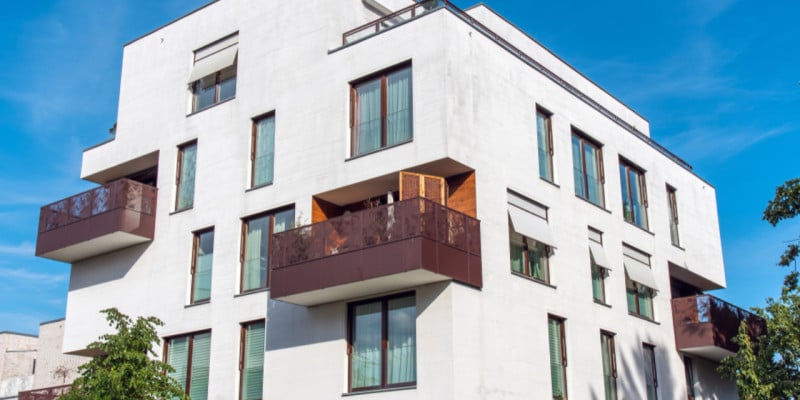
When it comes to moving to a new country, one of the first and most important factors to decide on is your accommodation. There are many different ways you can go about this. You want to be living in an area that suits your specific needs and desires. It can be an overwhelming process when you don't know a lot about a country and you are trying to decide where you want to live. This article gives some insight that can help you with this process in Ireland.
Ireland offers a range of different housing options, each catering to individual needs, budget, and lifestyle preferences. Options range from a private bedroom in a shared house with common areas like the kitchen and living room used by all, small studio apartments, one-bedroom apartments, multi-bedroom apartments, and houses. The most popular types of accommodation in Ireland will be houses and apartments.
A lot of people, when they first arrive in a new country, will try to obtain some short-term accommodation while they begin their house hunt. If you are looking to rent for the short term, there are numerous options available, including serviced apartments, Airbnb accommodations, and hostels.
Typically found in the suburbs, houses in the major cities can be either detached, semi-detached, or terraced. Generally, when you get nearer to the centre of a city, you will get less bang for your buck. A lot of young professionals will share multi-bedroom apartments and houses with one another in order to save money. This is particularly popular in the major cities like Dublin, Cork, Limerick, and Galway, where rent prices are very high. Flat sharing is widespread in the cities for those trying to afford the rent and is particularly popular among students and young professionals. Most of the time, the lease will be for at least one year, and most properties come already furnished.
The most popular neighbourhoods will vary depending on where in the country you are situated. For example, in Dublin, some of the more popular neighbourhoods include Ballsbridge, Rathmines, the Liberties, Phibsborough, the IFSC, Portobello, Ranelagh, Smithfield, Stoneybatter, Donnybrook, Blackrock, Foxrock and Leopardstown.
The most popular places for expats in Ireland are the major cities of Dublin, Cork, and Galway, which offer diverse job markets, lively cultural scenes, and international communities. While Dublin is the primary hub for career-focused professionals, Cork provides a smaller city experience with a thriving food and tech scene, and Galway is known for its vibrant arts and culture. For families or those seeking lower costs, Waterford is a popular choice. Some expats also choose quieter coastal towns within commuting distance of the major cities for a change of pace, including places like Skerries, Malahide, Ennis, and Westport.
To determine if you are looking at accommodation in a good area, you can do a quick Google search to see what pops up. You can also usually tell when viewing the accommodation whether it looks and feels like a good fit for your needs. Generally, the neighbourhoods that are close to public transport and schools are going to cost more than those that are not.
Get regular tips and advice to make the most of your expat life
Rent prices in Ireland
The housing crisis continues to be the most pressing issue facing Ireland. Chronic undersupply and soaring rental costs in the housing market have left renters struggling to secure affordable accommodation. Rent prices have been hitting all-time highs over the past few years. The housing market is particularly challenging, as rents and property prices have soared all over the country. There is excess demand for rental space, which has caused upward pressure on price levels.
Rental prices vary depending on factors like location (city vs countryside ), the type of accommodation (studio apartment vs house share), as well as proximity to public transport and schools. Generally, property in a city centre or near public transport links tends to be more expensive.
In terms of rental prices for a property in Dublin, you can expect to pay an average of €2,500 per month—that's according to the latest Daft.ie Rental Report, as of March 2025. A room in a house share typically costs anywhere between €900 and €1,200 a month, €2,000 per month for a one-bedroom apartment, €2,300 – €3,500 per month for a two-bedroom apartment, while a 3 or 4 bedroom house anywhere in Dublin will set you back €2,500–€4,000or more.
The average rental price in Dublin is €2,500. This compares to an average rent of €2,200 in Cork, €2,100 in Galway, €1,704 in Limerick, and €1,735 in Waterford. If affordability is an issue in central locations, explore neighbourhoods that are slightly outside of the major cities. Often, these areas provide more space at a lower cost while still offering reasonable access to city amenities. While the capital city Dublin is expensive, the cost of living is still a lot cheaper than other major European cities such as Copenhagen, London, Paris and Zurich.
Lease conditions and formalities in Ireland
If you are renting a property in Ireland, you have the right to stay in it indefinitely after 6 months of renting. This is known as security of tenure. Once secured, your landlord can only terminate your lease for valid legal reasons and must adhere to strict notice requirements, as per the Residential Tenancies Board (RTB) guidelines. Valid legal reasons for terminating a lease include the sale of the property, the landlord or a family member intending to move in, or carrying out substantial renovations.
You are entitled to at least 90 days' advance notice if your landlord wants to raise your rent, and there are strict rules about how often they can do this and by how much. Any proposed increase must be in line with local market rents and evidence provided if required. In Rent Pressure Zones (RPZs) like Dublin, Cork, and Galway, rent increases must stay within inflation limits set by the RTB Rent Index.
Every rental property in Ireland must comply with the Housing (Standards for Rented Houses) Regulations 2019, which ensure safe, habitable living conditions. Most leases will come with a furnished property, and it is always a good idea to note any damage to furnishings before moving into a place. This prevents the landlord from trying to say it was you who caused this damage. There will be a security deposit in place that is usually one month's rent in advance. The lease will outline what charges you need to cover and what the landlord needs to cover. Utility bills, such as electricity, gas, and broadband, are usually not included in the rent and need to be paid separately.
Irish law restricts deductions and sets rules for handling security deposit disputes under the Residential Tenancies Act 2004. Deductions by your landlord are only allowed for unpaid rent, excessive damage, or breach of lease, and not for normal wear and tear, basic cleaning, or age-related repairs.
The Residential Tenancies Board provides information on all your rights and responsibilities as a tenant, and any disputes can be filed with them.
There are a number of new tenancy protections coming into effect from 1st March 2026 as the Irish government plans to introduce major reforms to the rental sector. Reforms around rent cap rules and security of tenure protections for tenants are the key focus, and we await further details on this (as of September 2025).
If you are planning to move to Ireland, it is recommended that you find a short-term rental first so that you can give yourself plenty of time to find a property. Because the demand for housing in the capital far exceeds supply, it can make finding a place both challenging and competitive.
There are dedicated websites for finding rental accommodation in Ireland, which are a great starting point; the most popular are Daft.ie, Rent.ie, and MyHome.ie, which allow you to filter properties by location, price, and type. Websites that list properties can give you insight into average rents and property prices in different neighbourhoods.
Those looking for house shares will often post on rental Facebook groups. Search for “accommodation Galway”, or “Dublin Rent a Room” on Facebook and a whole range of groups will appear.
Engage with reputable local real estate agents who understand the market dynamics. They can provide insights into upcoming properties and help you navigate the rental process. Engage with local expat groups on social media or in person. They can offer invaluable tips and recommendations on neighbourhoods and available properties.
The rental market in Ireland moves fast. You may find a property that you like won't actually be available a day later. So when you find a house or apartment that you like, be prepared to act fast, and have all the necessary documents ready to secure the property.
Important:
Never transfer money before viewing the property in person or sending someone to view it on your behalf. Rental scams, such as fake listings, requests for deposits before viewings and false advertising, are on the rise, with fraudsters taking advantage of the housing crisis and the high demand for rental properties.
We do our best to provide accurate and up to date information. However, if you have noticed any inaccuracies in this article, please let us know in the comments section below.
Debbie has a degree in English, and also studied journalism in Dublin. She is a digital content writer for a number of online publications. She loves swimming in the sea or pool, walking her Labrador retriever Casper, thrifting, and travel. She takes the ferry to France every year with her beloved dog in tow, and one day hopes to own her own cottage in Brittany, preferably with blue shutters. She currently lives by the sea in Galway.