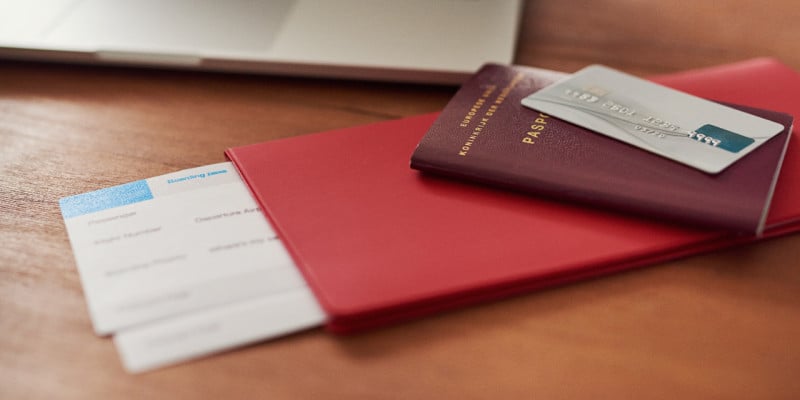
Do you need a visa to travel to Ireland?
People from the countries in the EU and UK nationals do not need a visa to enter Ireland and can live and work there. The countries currently in the European Union are Austria, Belgium, Bulgaria, Croatia, the Republic of Cyprus, the Czech Republic, Denmark, Estonia, Finland, France, Germany, Greece, Hungary, Italy, Latvia, Lithuania, Luxembourg, Malta, the Netherlands, Poland, Portugal, Romania, Slovakia, Slovenia, Spain, and Sweden. Under the Common Travel Area rules, UK and Irish citizens can live and work freely in each other's countries and travel freely between them.
In addition, the Visa Waiver Programme allows nationals from certain Eastern European, Middle Eastern, and Asian countries who hold a UK short-stay visa to travel to Ireland without needing a separate Irish visa.
Since February 2022, citizens of Ukraine do not need a visa to travel to Ireland. Ukrainian people fleeing Russia's invasion have EU Temporary Protection. This means they can live and work in Ireland.
People seeking International Protection can come to Ireland looking for asylum and safety.
Read also Work visas in Ireland
The different types of visas available for Ireland
Irish visas are categorised into two broad categories - C Visas for short-term stays (up to 90 days) and D Visas for long-term stays (over 90 days).
Ireland C Visas (Short Stay Visas)
If you plan to visit Ireland for less than three months, you can apply for a short-stay ‘C' visa. There are a number of visa types within the short-stay category (outlined below) and they are issued for 90 days or less. You cannot stay for longer than 3 months on a C Visa. You must leave Ireland and apply for another visa if you want to return.
Short Stay Visas are typically used for tourism, short business trips, attending events, or attending a short course.
Tourist Visa
The Tourist Visa allows you to travel to Ireland and stay for up to 90 days for the purposes of tourism. During your stay, you are not permitted to undertake work (either paid or unpaid) or use publicly funded services, such as hospitals.
Business Visa
You may travel to Ireland for up to 90 days for some business activities related to your employment, including attending meetings, negotiating, or signing agreements or contracts.
Read also Starting a business in Ireland
Exam or Interview Visa
The Exam or Interview Visa is only for three types of exams: PRES for doctors, professional accreditation exams for accountants, and remote education exams, only in cases where there is no exam centre in your country and the Irish centre is the closest.
Performance or Tournament Visa
This visa allows artists to fly in for performances and athletes to take part in tournaments.
Family or Friends Visa
The purpose of this visa is to allow you to visit relatives or friends living in Ireland. One of the key factors that will be analysed by a visa officer will be whether you can be relied on to leave Ireland at the end of your stay. The maximum stay for those who wish to visit family or friends on a short stay visa is 90 days (three months).
You must report to an immigration border official upon your arrival in Ireland and provide the relevant documentation to demonstrate your reason or entering the country. A visa officer assessing your application will consider the following when making their decision:
- You will leave Ireland before your visa expires.
- You (or your family/friends in Ireland who are sponsoring your visit) are able to support yourself financially during your visit, without access to public funds or employment.
- You have provided proof of return/further travel arrangements.
- You will not breach the Common Travel Area by attempting to enter the UK via Ireland without holding a valid UK visa.
- Your immigration history.
- You are of good character.
- Your application is truthful/accurate.
Marriage Visa
If you want to come to Ireland to marry your partner (or enter into a civil partnership), you may be eligible to apply for a Marriage Visa. Before applying, you must first have received acknowledgement from the Registrar of Civil Marriages in Ireland confirming that you have submitted an official notification of your intention to marry. Your partner must be an Irish citizen or have residency status.
Read also Getting married in Ireland
Ireland D Visas (Long-Stay Visas)
If you're planning to come to Ireland for more than three months, for example, to study, for work, or to settle permanently with family members who live in the country, then you can apply for a long stay ‘D' visa. Within the long stay category, you can apply for business, work, student, family, spouse, and retirement visas.
Study visa
This visa is for non-EEA students who wish to come to Ireland to study for more than 90 days. You will need to have a letter of enrolment, and have paid your fees. You should apply for a Long Term Study Visa up to three months before your date of travel to Ireland. You have the option to attend a third-level course at a university or other third-level institution, a language course, a fee-paying private primary or secondary school, or a short-term course.
Read also Study in Dublin
Join a Family Member Visa
If you want to join a family member (who is an Irish Citizen) in Ireland for more than three months, you can apply for a Family Member Visa.
Family Reunification under the International Protection Act 2015 also gives certain family members an immigration permission allowing them to live in Ireland with the holder of an international protection declaration.
Employment Visa
Ireland is an increasingly popular destination for highly skilled talent from all over the world, with its thriving job market and numerous multinational corporations headquartered there, such as LinkedIn, Facebook, Google, Intel, Dell, and JP Morgan.
There are a number of different work visa options that you can apply for, depending on your specific circumstances; for example where in the world you are a citizen and what you plan on doing in Ireland.
Read also Work in Ireland
Work permits are issued by the Department of Enterprise, Trade and Employment. General Employment Permits and Critical Skills Permits are the most popular types of work permits in Ireland.
The Critical Skills Employment Permit, formerly called the Green Card, is aimed at highly skilled professionals in sectors experiencing significant shortages in Ireland. Eligible sectors include IT, engineering, finance, and healthcare. To qualify, you must be offered a minimum salary of €38,000 from an occupation in the Highly Skilled Eligible Occupations List or a minimum salary of over €64,000 from an occupation not on the Ineligible Categories of Employment List.
You are only issued a Critical Skills Employment Permit if your job offer is at least a minimum of two years in duration. After two years, you can apply to continue working in Ireland without a permit, making it particularly attractive if you are planning to stay in the country. Applications cost €1,000, with €900 of this refundable if your application is unsuccessful.
The General Employment Permit allows you to be employed in Ireland in a broad range of jobs, unlike the Critical Skills Employment Permit. The aim of this permit is to attract non-EU country nationals for job sectors which are experiencing a labour or skills shortage. A Labour Market Needs Test is generally required.
Either you or your prospective employer can apply for the permit. The permit can be issued for two years and can then be renewed for up to a further three years. After five years, you can apply to the Department of Justice for long-term residency in Ireland. Your spouse, dependant, or partner cannot apply for a Dependant Employment Permit and must apply for their own employment permit.
The criteria to be eligible for the General Employment Permit are as follows:
- The job offer must be for at least 12 months.
- The job is not in an excluded job category under the Ineligible List of Occupations for Employment Permits.
- The job must pass a Labour Market Needs Test, demonstrating that no suitable candidate within the EEA is available for the role.
- Minimum annual remuneration is €34,000, unless you are employed as a horticulture worker, or meat processor operative, in which case the minimum annual salary is €30,000, or you are a health care assistant or home support worker, in which case the salary is €30,000 a year.
- You can work at an Irish company, but not if your employment means there are more foreign nationals working there than EEA nationals. This is called the 50:50 rule.
For details on how to make a General Employment Permit application, the Department of Enterprise, Tourism and Employment in Ireland has provided a step-by-step video, which is available to view on YouTube.
The fee for a new General Employment Permit is
- €500 for an employment permit of 6 months or less duration.
- €1,000 for an employment permit from 6 months up to 24 months duration.
Your application must be received at least 12 weeks before the proposed employment start date.
Minister of Religion Visa
This visa enables eligible candidates to come to Ireland to undertake certain forms of religious work. It is usually granted for one year, and up to a maximum of three years. The role must match the criteria for Minister of religion work outlined in the immigration rules.
Employment (Van der Elst) Visa
This visa is for those who work legally in another EU country but are not an EU citizen and whose work requires them to come to Ireland for up to 12 months to perform work duties.
Volunteer Visa
A Volunteer Visa allows you to work for up to two years as a volunteer with a pre-approved organisation in the arts, culture, religion, sports, or community.
Useful link:
Irish Immigration website