

Living in Germany: the ultimate expat guide
Everything you need to know for a successful life in Germany.
Germany ranks among Europe's most attractive destinations for expats, combining economic strength, excellent healthcare, and world-class infrastructure. The country welcomes skilled professionals, students, entrepreneurs, and families seeking stability and opportunity.
Top reasons to move to Germany
- Strong job market across multiple sectors, particularly in engineering, technology, healthcare, and logistics.
- Well-organized administrative system with clear procedures and reliable institutions.
- Major cities like Berlin, Munich, Frankfurt, and Hamburg offer dynamic, international environments.
- While German remains essential for full integration, English is widely used in international companies and universities.
- Political stability and recognized education system make Germany ideal for medium to long-term relocation.
Key figures at a glance
Total population | 83 million inhabitants |
Foreign residents (estimate) | 13.1 million (16% of population) |
Top nationalities (estimates) | Turkey (~1.5M), Romania (~0.91M), Poland (~0.87M), Italy (~0.64M), Syria (~0.70M) |
Sources: Destatis 2024, Reuters 2024
Visas and residency requirements
Moving to Germany requires completing specific administrative procedures. While the process is structured and transparent, understanding the requirements before arrival saves time and prevents complications.
🔑 Key requirements
EU citizens don't need a visa but must complete mandatory registration called Anmeldung at the local city hall within 14 days of arrival.
For non-EU nationals, a visa or residence permit is required before entering the country. Applications must be submitted at German embassies or consulates abroad.
The Anmeldung is essential for obtaining your tax number, opening a bank account, or signing a lease.
A tax identification number called Steuer-ID is automatically assigned after registration and is required for employment and tax filing.
Health insurance is mandatory for all residents and often required to obtain or extend residence permits.
📍 Learn more
Work visas for Germany
Germany is one of Europe's best countries to develop your career and gain international work ...
The Working Holiday Visa for Germany
If you have always dreamt of visiting Germany while taking your time and also getting a little job ...
Entry requirements for Germany
Nationals of the EU and EEA can travel to Germany as short-term visitors without restrictions, with ...
Working and doing business in Germany
Germany offers a stable, attractive job market open to international talent, particularly in technical and industrial sectors. The country also supports entrepreneurship, including for foreign nationals who meet specific administrative requirements.
🔑 What you need to know
High-demand sectors include engineering, healthcare, information technology, education, logistics, and construction.
German language skills are often required, except in large international companies or tech startups where English is the working language.
Diploma recognition is mandatory for regulated professions, particularly in healthcare and education.
Starting a business in Germany is possible as an expat but requires proof of business viability and registration with local authorities.
Employment contracts are well-regulated and provide strong employee protections.
📍 Learn more

Finding work in Germany
Germany is one of Europe's best countries to develop your career and gain international work ...
The German labour market
Germany's labor market is very attractive to expat talent. Thanks to one of the lowest ...

Setting up a business in Germany
The German government is very open to foreign investment. European citizens do not need special ...
Higher education opportunities
Germany is renowned for its high-quality higher education, which is accessible, structured, and internationally oriented. The country attracts hundreds of thousands of international students annually, particularly due to low or no tuition fees and European degree recognition.
Institution types include universities (research-focused), Hochschulen, and Fachhochschulen (more professionally oriented).
Instruction is primarily in German, though increasing numbers of programs are offered in English, especially at master's level.
Tuition fees are very low or non-existent at public universities (except in Baden-Württemberg for non-EU nationals).
Academic standards are internationally recognized, particularly in engineering, sciences, medicine, business, and environmental studies.
Admission requirements include a recognized diploma such as Abitur or equivalent, sufficient language proficiency, and application through the uni-assist platform or directly to institutions.
📍 Learn more
Study in Germany
Germany has about 400 state-recognized higher education institutions, offering 20,000 study ...

Requirements to study in Germany
Germany offers quality education, with 240 state universities and 100 private universities located ...

Student life in Germany
Studying in Germany has so many benefits for international students. What makes the experience even ...
Banking and taxes in Germany
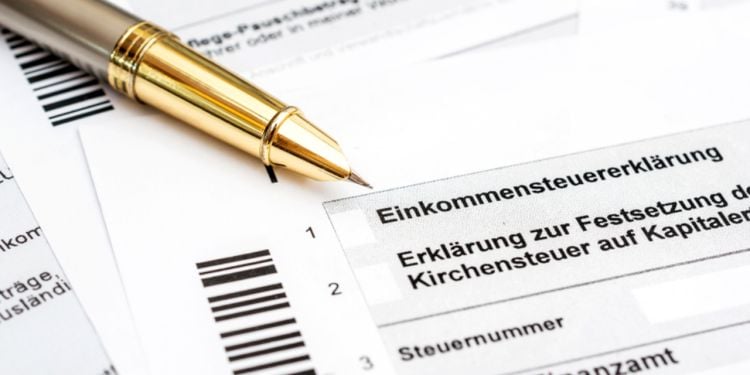
Germany operates a reliable banking system and maintains clear tax regulations. Key procedures such as obtaining your tax identification number or Steuer-ID are essential from the start for employment, tax payment, and financial management.
🔑 Essential information
Germany has a diverse banking network including traditional banks such as Deutsche Bank, Commerzbank, and Sparkasse, plus online banks and digital banking options.
You can open a bank account online or in branch. Required documents typically include passport or ID card, proof of address through your Anmeldung, and sometimes proof of income.
Credit and loans are accessible to foreigners with good banking history and regular income. Interest rates are generally competitive.
A tax number is mandatory for working and filing tax returns. It's automatically assigned after you complete your registration at city hall.
Income tax is withheld at source from salaries. An annual tax return may be required depending on your situation.
Tax classes called Steuerklassen are determined by marital and family status and directly affect the amount of tax withheld.
📍 Learn more

Healthcare and social protection
Germany operates one of the world's most reputed healthcare systems, funded through mandatory insurance. Social protection is comprehensive, but accessing it requires completing specific procedures upon arrival.
🔑 What you need to know
Health insurance is mandatory. All residents must enroll in either public health insurance or private insurance.
Contribution amounts are calculated as a percentage of your income and shared between employer and employee.
Germany has an extensive network of doctors, clinics, and public or private hospitals, with generally short waiting times.
Social protection also includes unemployment insurance, pension, and workplace accident coverage, funded through mandatory contributions.
A health insurance card will be issued by your insurance provider, allowing direct access to healthcare services.
📍 Learn more

The German healthcare system
The German healthcare system is neither homogenous nor static. On the contrary, it has various ...

Emergency in Germany
One of the biggest worries expats have to deal with when arriving in a new country is what to do in ...

Having a baby in Germany
Germany has a well-established preventive maternal healthcare system based on medical check-ups for ...
Education and schools for expat families
Germany's education system is recognized for its quality and diversity but differs from systems in many other countries. Understanding how it works is essential for smoothly integrating children into school.
🔑 Key points
School attendance is mandatory from ages 6 to 18, with pathways adapted to students' abilities and plans.
Public schools are free and high-quality, with instruction primarily in German.
Many international schools operate in major cities, offering curricula in English or other languages, often with International Baccalaureate (IB) programs.
After primary school, students are directed to different types of institutions including Gymnasium, Realschule, or Hauptschule.
Language support is often provided for non-German-speaking children.
📍 Learn more
Finding accommodation in Germany
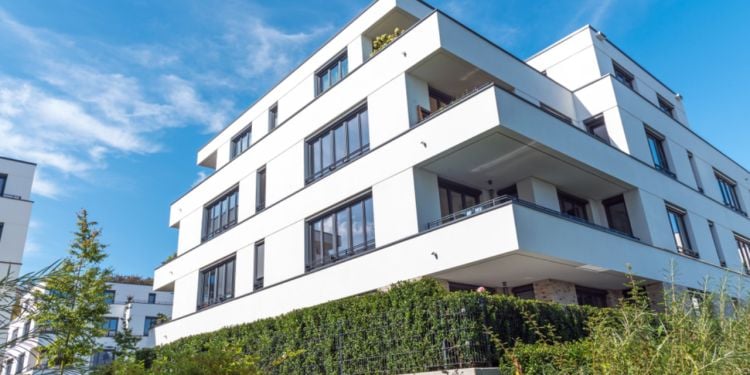
Germany's rental market is highly regulated but competitive, especially in major cities. Thorough preparation and complete documentation are essential for securing accommodation quickly.
🔑 What you need to know
The housing market is tight in Berlin, Munich, Hamburg, and Frankfurt, where demand far exceeds supply.
To access rental properties, you'll need ID documents, proof of income, a credit certificate called Schufa, and sometimes a reference from your previous landlord. Leases are typically open-ended with a three-month notice period for tenants. Rent is quoted as either Kaltmiete (cold rent, excluding utilities) or Warmmiete (warm rent, including utilities but excluding electricity and internet).
Property purchase is accessible to foreigners but requires solid financing and often a substantial down payment.
📍 Learn more
Accommodation in Germany
Despite the COVID-19-induced economic crisis and thanks to the government's and central bank's relief measures, the German real estate market ...
Moving to Germany: practical steps
Relocating to Germany requires careful planning, especially when transporting belongings from abroad. Anticipating procedures and choosing the right service providers will help ensure a smooth arrival.

Lifestyle and leisure activities
Germany offers diverse activities for all interests, from rich cultural life to sports, cuisine, and varied landscapes. Each region has its own traditions and signature events.
🔑 What to explore
Germany features renowned museums, UNESCO World Heritage sites, and internationally acclaimed theaters and opera houses.
Outdoor enthusiasts can enjoy hiking in the Black Forest, water sports on the lakes, and cycling on thousands of kilometers of dedicated paths.
Don't miss signature events like Oktoberfest in Munich, Christmas markets, and music and film festivals.
Football is hugely popular, along with winter sports in the Bavarian Alps and water activities in the northern regions.
📍 Learn more


Daily life in Germany
Living in Germany means experiencing an organized lifestyle where punctuality, efficiency, and respect for rules are cultural norms. Expats generally adapt quickly, especially in major cities with strong international communities.
🔑 Essential tips
Speaking German remains essential for full integration, though English is common in major cities and international companies.
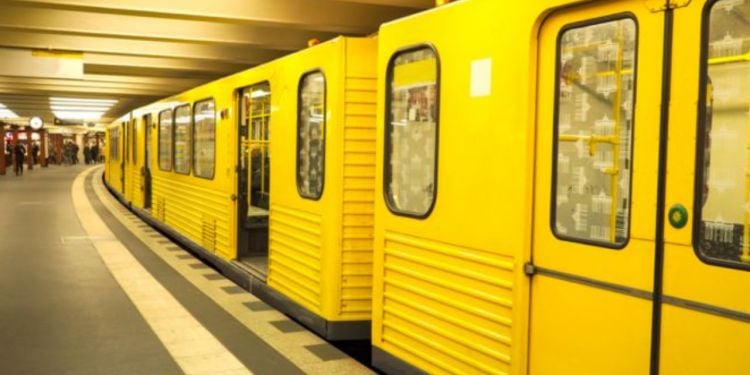
The transportation network is reliable and punctual, with well-developed train, bus, tram, and cycling infrastructure.
Shops typically open from 9 AM to 8 PM and close on Sundays, except at train stations and airports.
Joining clubs and associations is highly recommended for integration.
📍 Learn more
Getting around Germany
Once you have settled in Germany, familiarising yourself with your new city and the region will happen gradually as you are going out to work, ...

Connecting to the internet in Germany
Staying connected in Germany is easy thanks to its advanced telecommunications network and the ...

Using phones in Germany
Thanks to instant messaging services such as Skype, WhatsApp, Messenger, Viber, and Telegram, ...
In brief
Germany's administrative system is structured with clear procedures to follow from arrival: the Anmeldung registration, choosing health insurance, and obtaining your tax number.
The German economy is robust with strong demand in engineering, healthcare, IT, and education.
Germany offers professional opportunities for all profiles, from recent graduates to families and active retirees.
Quality of life is high, supported by excellent infrastructure, overall security, and a rich cultural environment.
Cost of living varies, higher in major southern and western cities, more affordable in the east.
German language skills are a major asset for integration, though English is present in certain professional environments.
Choosing Germany for relocation means opting for economic strength, excellent organization, and high quality of life. Whether you're coming to work, study, start a business, or join family, the country offers modern infrastructure, excellent healthcare, and an attractive job market. Join the expat community and share your experience on our Germany forum.
We do our best to provide accurate and up to date information. However, if you have noticed any inaccuracies in this content, please contact us.


News & testimonies

Germany approves record minimum wage increase for 2026
The Merz government signed off on the decision on 29 October 2025—an unexpected step given the country's deep economic troubles. Yet the independent commission that issued the recommendation argues that the increase should boost household spending and, in turn, support overall economic growth.

Is Germany's spouse visa language test unfair?
According to official data, the German Federal Foreign Office issued fewer spousal visas in 2024 than in 2023. One likely reason is the language requirement: level A1, classified as “elementary.” This level reflects a basic command of German, enabling applicants to introduce themselves and engage in simple conversations—provided their interlocutor speaks slowly and clearly.

What to know about Germany's new immigration rules
The ascendancy of the conservatives signifies a shift towards a more stringent immigration policy, albeit with continued openness to non-European skilled professionals. On March 12, negotiations commenced between the conservative CDU and the Social Democrats (SPD) to form a coalition, expected to finalize by late April.

Germany's labor crisis: What should foreign workers expect?
Germany is grappling with a sluggish economy, declining employee morale, and the fears of foreign workers and prospective expats for political reasons. The outlook includes a GDP barely surpassing 0% and a plummeting birth rate. Nevertheless, the government relies on immigration reform to reverse this trend and attract foreign professionals.
Essential services for your expat journey