Getting daily life in Charleroi right starts with letting go of the airport association. Brussels South Charleroi Airport gives the city global name recognition, but Charleroi itself is a distinct Walloon urban center, roughly 60 km south of Brussels, with its own rhythm, identity, and set of trade-offs. The practical case for living here is real: apartments in the EUR 550-800 range, a functioning light metro and national rail network, and a post-industrial cityscape undergoing genuine transformation in districts like Gilly and Marchienne-au-Pont. The non-negotiable is French: every municipal service, school enrollment, and rental contract runs exclusively in French, and the social infrastructure that helps newcomers settle is neighborhood-based rather than built around an international expat scene.
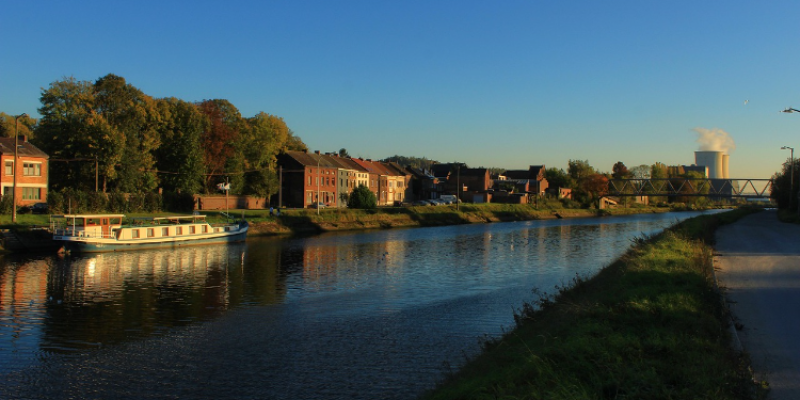
Roughly 60 km south of Brussels, Charleroi occupies a distinct place in the Belgian urban landscape: a large Walloon city shaped by coal and steel, now in an active and visible transformation. Its self-described identity sits somewhere between working-class pragmatism and creative reinvention, and the city leans into that tension rather than hiding it. Arrivals who expect a polished European city center will be surprised; those who come ready to engage with the city on its own terms tend to settle faster and more comfortably.
One confusion worth clearing up immediately: Brussels South Charleroi Airport carries the Brussels brand internationally, but Charleroi itself is an entirely separate city with its own administration, identity, and daily rhythm. There is no direct rail link between the airport and the city center; a TEC bus shuttle connects the two, which catches many first-time arrivals off guard.
Daily life in Charleroi is functional and neighborhood-based rather than cosmopolitan. Practical rhythms, neighborhood services, public transport, and municipal leisure facilities define the pace more than international nightlife or prestige amenities. The city's Régie Communale Autonome (RCA) manages public swimming pools and sports facilities across the territory, giving residents accessible recreation without relying on private gyms.
The regeneration story is real and ongoing. The 25-hectare Quartier du futur site in Marchienne-au-Pont, the In Square residential conversion in Gilly, and continuous public-space investments mean newcomers arrive in a city that is changing, not stagnating. The contrast between former industrial fabric and new living districts is one of the first things residents notice, and it remains part of the texture of daily life throughout the city. French is the working language of all local administration, housing, schools, and healthcare: newcomers without French will need support from the outset, not just for paperwork but for everyday interaction.
Charleroi's territory covers a wide patchwork of urban zones, each with a distinct character. Understanding the differences early helps newcomers match their priorities to a specific district rather than defaulting to the center by default.
Charleroi Centre, divided into Ville-Haute (upper city) and Ville-Basse (lower city), is the most practical starting point for newcomers who want immediate access to shops, municipal services, events, and transport. Parc Reine Astrid links the two levels of the city and serves as a central green social hub throughout the year. Charleroi-Central station connects the center to the wider TEC light-metro and bus network and to the national rail system.
Gosselies, to the north, suits residents who need proximity to Brussels South Charleroi Airport or employment in the northern economic zones, while still sitting within Charleroi's administrative and transport networks. Gilly is the clearest up-and-coming residential signal: the former Saint-Joseph hospital site is being converted into the In Square living district, with nearly 30% of the first homes reserved before construction began, which reflects genuine demand for new supply in a regenerating area.
Marchienne-au-Pont is where the city's most ambitious transformation is taking shape. The Charleroi La Défense project positions this district as a future technology and defense employment zone; it appeals to residents interested in long-term urban renewal more than established residential comfort. Marcinelle and Montignies-sur-Sambre, south and east of the center, offer more residential surroundings with established childcare and school infrastructure, making them practical choices for families who prioritize space and local services over the urban energy of the center.
Mont-sur-Marchienne is home to the Musée de la Photographie, one of Charleroi's major cultural anchors, and has a quieter residential character with a clear cultural identity. Jumet has a strong neighborhood life and hosts recurring community events, including the Quartiers Libres gathering in Parc Bivort, which makes it a practical option for residents who value local belonging.
Neighborhood character across Charleroi should be treated as dynamic rather than fixed. The city's strategic program describes public-space renovation and district transformation as a continuing direction, so conditions in any given area can shift meaningfully over a few years. Visiting streets at different times of day before committing to a neighborhood remains the most reliable approach.
Join the Charleroi community
Get regular tips and advice to make the most of your expat life
Cost of living in Charleroi
Charleroi's housing market sits noticeably below Belgium's higher-cost urban centers. Typical apartments in several districts fall in roughly the EUR 550 to EUR 800 per month range, with lower-cost options in areas such as Couillet and more family-oriented supply in Marcinelle. A single person's total monthly cost including housing, a transport pass, and everyday expenses runs to around EUR 1,600. Arrivals should budget for a rental guarantee of up to two months' rent, held in a blocked bank account (compte bloqué) rather than paid to an agent, which is the standard Belgian mechanism and differs from deposit protection schemes common elsewhere.
Municipal childcare costs are calculated on an income-based sliding scale rather than a flat city tariff, so the monthly contribution to one of Charleroi's eight crèches varies by household income. Out-of-school care for children aged 6 to 12 costs EUR 1.25 per morning or evening attendance and EUR 2.50 for Wednesday afternoon care, per child, for families domiciled in Charleroi.
Climate and weather in Charleroi
An oceanic, temperate maritime climate means rain arrives in every season in Charleroi, with no clearly defined dry period. Annual precipitation reaches approximately 892 mm spread across around 137 days per year with at least 1 mm of rain; that works out to roughly one day in three. December is the wettest month at around 89 mm, but even July and August average 65 to 82 mm each, so waterproof shoes and a rain jacket are year-round requirements rather than seasonal accessories.
Summers peak at around 23°C in July and August, with overnight lows around 14°C: pleasant by day but noticeably cool in the evenings for anyone arriving from southern or central Europe. Only about 5 days per year reach 30°C or above, which means air conditioning is rare in Charleroi housing; on the occasional warm spell, good ventilation becomes important. The most comfortable outdoor months are May, June, and September, when daytime highs sit between 18°C and 21°C with manageable rainfall.
Winters are cool rather than harsh: average highs of 6°C and lows of 2°C in December, with around 57 frost days per year. Frost is a regular presence from late autumn through early spring, so adequate heating and well-insulated housing are practical necessities. Annual sunshine totals around 1,557 hours, with the lowest values concentrated in the grey autumn and winter months. Newcomers from sunnier climates should expect a meaningful adjustment to the limited winter daylight.
For housing priorities: good insulation, reliable heating, and protection against damp matter more in Charleroi's climate than in many southern cities. The Institut Royal Météorologique (IRM) issues public warnings for thunderstorms, heatwaves, and storms across Belgium; monitoring IRM alerts is a useful part of seasonal planning.
Getting around Charleroi
The city's public transport backbone combines TEC buses, the Charleroi light metro (prémétro), and national rail at Charleroi-Central station. The integrated City Pass covers travel on SNCB trains and TEC buses, trams, and metros within the Charleroi zone, making the center manageable without a car for most daily needs.
Central Charleroi is walkable for everyday errands, with several streets operating as shared-space zones. Outer districts and former communes are more transit- or car-dependent, and a car remains useful for shift work, late-night travel, and airport connections. Cycling is increasingly viable for daily use through RAVeL routes and a developing vélo ring, though the network remains uneven across the municipality.
Uber operates in Charleroi with UberX requests typically matched to licensed taxi drivers, and official taxi stands are located within the central ring. Bolt e-scooters are authorized on the city's territory. For planning, the TEC app and SNCB app cover bus, light metro, and train journeys respectively.
Language and communication in Charleroi
French is the sole administrative language of the City of Charleroi. All municipal publications, online procedures, resident services, school communications, and integration resources operate in French. Housing contracts, healthcare appointments, neighborhood life, and everyday paperwork default to French; unlike Brussels, Charleroi has no parallel administrative infrastructure in any other language. Newcomers without functional French face a significant practical barrier from day one.
The city's adult education offer includes ECEPS, known locally as Charleroi Langues, which runs evening language courses for adults at Athénée Solvay, Boulevard Emile Devreux 27, 6000 Charleroi. Courses cover German, English, Chinese, Spanish, Greek, Italian, Japanese, Dutch, and Portuguese, as well as sign language and introductory Walloon. Contact the center directly at 071 33 30 43 or ecea.langues@charleroi.be to enroll. The breadth of languages taught reflects an internationally diverse resident population.
Walloon, the regional Romance language of southern Belgium, has a small cultural presence in Charleroi and appears in the adult education offer, but it plays no practical role in everyday administration or services. Online municipal procedures are accessible through the city's e-guichet, which partially reduces the administrative friction for written tasks, but spoken interactions with services remain French throughout.
Culture and social norms in Charleroi
Charleroi's cultural identity is officially framed around post-industrial reinvention: "dynamic and unusual," linking local life to sport, culture, heritage, folklore, and urban discovery rather than to a polished city-center image. The city is described as working-class, offbeat, good-natured, bohemian, and creative, and that framing genuinely reflects the day-to-day atmosphere newcomers encounter.
Social integration in Charleroi is structured and neighborhood-based. The city's Plan de Cohésion sociale funds 27 actions aimed at neighborhood social development, fighting precarity, and fostering local belonging. Newcomers who engage through neighborhood events, local associations, and French-language channels integrate faster than those waiting for an English-speaking social network to form around them.
Belgium observes 10 national public holidays: January 1, Easter Monday, May 1, Ascension, Whit Monday, July 21 (Belgian National Day), August 15 (Assumption), November 1 (All Saints), November 11, and December 25. Municipal and many private-sector services close or reduce on these dates; planning administrative tasks around them matters, particularly for newly arrived residents navigating registrations and appointments in the first weeks.
Religion in Charleroi is visible as heritage rather than a force shaping everyday civic life. The city highlights religious landmarks and historic buildings as cultural attractions, but practical city services and integration resources are entirely secular.
Pace of life and work culture in Charleroi
A working-city rhythm defines Charleroi's daily pulse: functional, locally rooted, and shaped by Belgian employment norms rather than by an international professional culture. The city's description as "offbeat and good-natured" captures something real: less of the pressure-cooker energy associated with capital cities and more of the steady cadence of a mid-sized regional center where neighbors know each other and lunch breaks are taken seriously.
Belgian employment rules set the standard working week at 38 hours, calculated on an annual basis, with a daily limit of 8 hours. Workers have a protected right to disconnect: telework arrangements must include clear expectations, and employees have the right not to be connected to professional digital tools outside working hours, during rest time, leave, weekends, and evenings. This is a meaningfully enforced boundary in Belgian workplaces, not merely a formal statement.
Remote work is widespread but increasingly structured. Over 91% of Belgian companies with more than 10 employees allow remote working, while around 17% require staff to be present in the office at least 4 days per week. Charleroi residents should expect company-specific office-day policies rather than fully flexible arrangements. The central area has a visible weekday lunch culture, with local restaurants advertising weekly menus and breakfast-to-midday service; the midday break functions as a structured social pause rather than a desk-side snack.
Charleroi's outdoor and social life shifts noticeably from late spring. The city promotes terril (slag heap) walks, green-route cycling, summer festivals, and seasonal leisure-travel promotions. The rhythm of the year has a pronounced seasonal quality: grey and inward-looking through the winter months, then opening outward as the weather lifts from May onward.
Food culture in Charleroi
Charleroi's food scene is built around neighborhood brasseries, local cafés, and friteries (chip shops) rather than a prestigious restaurant quarter. The friterie and the neighborhood brasserie are the most common everyday eating formats beyond the home; this is a city where people eat well without ceremony, and where the quality of an ordinary lunch menu is taken seriously.
The city's official food programming includes the annual Nourrir Charleroi event series, which connects local food to territory, shared cultures, and urban life, as well as a Food Truck Festival. Both confirm that street food, public-space eating, and community food formats are active parts of the current food scene rather than occasional additions to a conventional restaurant calendar.
Charleroi's roughly 30 slag heaps (terrils) are among the most distinctive free leisure assets in the region. Green and walkable, they offer panoramic views and a landscape that is genuinely unlike anything else in Belgium. For residents, they represent a cost-free outdoor resource that works for morning walks, weekend cycling, and informal social gatherings throughout the warmer months.
The Régie Communale Autonome de Charleroi (RCA) manages public swimming pools and sports facilities across the territory, giving residents accessible everyday recreation. Parc Reine Astrid in the city center serves as Charleroi's main green social hub and hosts an annual outdoor cultural festival, Basho by Quartier d'Été, typically running through the summer months, which functions as a unifying moment for central Charleroi life.
The Musée de la Photographie at Mont-sur-Marchienne is one of Charleroi's most significant cultural assets and one of the more important photography museums in Europe, regularly staging major exhibitions. It draws residents as well as visitors and is consistently overlooked by those who associate Charleroi purely with its industrial image. The Charleroi Bad Festival, a major annual cultural event, typically runs from late spring through summer and is listed among Charleroi Métropole's seasonal program.
Neighborhood events provide a consistent social calendar: the Quartiers Libres gathering in Parc Bivort in Jumet, for example, is a family-friendly community event and offers a practical route for newcomers to meet neighbors. RAVeL cycling and walking routes extend across the Charleroi area on former rail and towpath corridors, connecting urban zones to the wider Sambre valley landscape without requiring a car. Street art and repurposed industrial buildings are also part of the city's leisure identity: the tourism offer explicitly promotes urban discovery and industrial heritage as activities in their own right.
Charleroi has solid municipal infrastructure for families with young children, built around French-language public services. The city runs eight municipal crèches, all approved and subsidized by ONE (the Walloon childcare authority), caring for children aged 0 to 36 months, Monday to Friday from 06:30 to 18:30. Financial participation follows ONE's income-based scale, so costs vary by household income. To register, contact the single registration number 071/86.70.37 from the completed third month of pregnancy, providing the expected start date, preferred care schedule, and preferred crèche location. Crèches are spread across the municipality, including in Gosselies and Marcinelle.
The city's municipal education network covers more than 130 school sites, spanning nursery, primary, secondary, alternating education, academies, adult education, and training. Children may enter nursery school from age 2½. To enroll, contact the head of the chosen school directly; if the school is full, the head directs parents to the nearest available school in the Charleroi network. All teaching is in French.
Out-of-school care (PEPS) at schools staffed by city ATL workers costs EUR 1.25 per morning attendance, EUR 1.25 per evening attendance, and EUR 2.50 for Wednesday afternoon care, per child, for children aged 6 to 12 domiciled in Charleroi. Scanning operates from 08:15 in the morning and from 15:30 in the evening. For seasonal holiday activities run under the PEPS program (approved by ONE, for ages 2½ to 15), the weekly fee for families domiciled in Charleroi is EUR 30 for the first child, EUR 25 for the second, and EUR 20 for the third and beyond at the same address. Families from outside the municipality pay EUR 60, EUR 55, and EUR 50 respectively.
Children under 6 travel free on all TEC services across the Walloon network without a ticket or card, which is a direct cost saving for everyday travel. The Coordination Accueil Temps Libre (ATL) service supports children aged 2½ to 12 through coordinating extracurricular and leisure-time care and informing families about available options; contact the ATL team at accueiltempslibre@charleroi.be. The AMO (Action en Milieu Ouvert) services provide free reception, information, and support for young people aged 0 to 22 and their families, and are a useful first-contact resource for families navigating the local support landscape.
Projet 100% Accueil provides two one-week holiday stays at reduced prices for children aged 6 to 12 from Charleroi households in precarious situations, co-financed by the European Union through the ESF program; it also supports inclusion for children with specific needs. Families in financial difficulty should ask the ATL coordination service whether their child qualifies.
Safety in Charleroi
Charleroi has a moderate urban safety profile that the city itself acknowledges as an active priority. The ZP Charleroi police zone recorded 29,085 criminal facts in 2024 (Police Fédérale Belge); the city's own strategic documents identify perceived insecurity as a continuing concern and treat ongoing improvement as a live commitment rather than a completed task.
The most pressing day-to-day concern for residents is not dramatic crime but incivilities: illegal dumping, noise complaints, and public-order breaches. Around 3,000 files for police-regulation and environmental offenses were processed in 2025, with an average prosecution rate of 70%. The city's messaging is explicit: incivilities are rising and are the declared top enforcement priority.
Phishing and impersonation scams are a genuine concern across Belgium and visible in Charleroi specifically: local police register new complaints every week involving scams targeting residents or their relatives. Treat unsolicited requests for money, bank details, codes, or urgent action with suspicion; scammers adapt their scripts regularly to bypass prevention messages. Apply greater caution at night around transport nodes, nightlife areas, and poorly lit public spaces, where offenses involving public roads, bus and metro stations, and parking areas are more concentrated.
For day-to-day safety, complaints can be filed at a police station or online at police.be. The Police Locale de Charleroi's official Facebook page issues collective-emergency updates and real-time local alerts. The Direction de la Coordination de la Sécurité at the City of Charleroi handles information on the city's strategic security and prevention plan. The Centre d'aide aux victimes, a free municipal multidisciplinary service, provides support following any offense. Belgian emergency numbers are 101 for police and 100 for medical and fire services.
Environment in Charleroi
Charleroi's industrial image understates its green assets. The city maintains parks including Parc Reine Astrid, which links the upper and lower city, and Parc Nelson Mandela (over 6 ha), alongside roughly 30 terrils across the territory, presented by the city as green "lungs" inherited from coal-mining history and now open for walking and leisure year-round.
Air quality monitoring is active and accessible. Charleroi participates in the Pure Cities project, with real-time data available through the Airscan system across the city's communes. Greener and pedestrianized areas such as Place Vauban show lower pollutant concentrations, often below European thresholds. Neighborhoods closer to road, rail, and airport corridors experience higher noise levels; updated airport noise-exposure zones around Brussels South Charleroi Airport were adopted by the Walloon Government in September 2025 and are relevant for residents in Gosselies and surrounding areas. Checking the Airscan real-time map before finalizing a neighborhood is a practical step for anyone with air quality as a health priority.
Urban cleanliness is a real daily-life issue. The city recorded over 10,778 illegal dumping cases in 2025, treated on average within 34 hours. The municipality explicitly links street cleanliness to quality of life and frames it as an active enforcement priority. On the sustainability side, Charleroi has signed the Covenant of Mayors and adopted a local Sustainable Energy and Climate Action Plan, committing the city to energy transition and environmental protection as municipal policy rather than voluntary aspiration.
Expat community in Charleroi
Belgium's population is 13.8% non-Belgian nationally, with a further 22.8% Belgian with a foreign-origin background (Statbel), reflecting a genuinely diverse resident base across the country's cities. Charleroi fits that national picture: the city is international in its resident makeup, though the expat community is not organized into a large, visible international bubble of the kind found in Brussels.
Charleroi has a historically deep Italian community, one of the longest-established foreign-origin communities in Wallonia, rooted in the post-war mining and steel era. The Centre Régional d'Intégration de Charleroi (CRI Charleroi) is the primary public integration body for foreign nationals and people of foreign origin in the area. Its annual program covers migration rights, interculturality, social-law insertion, access to the labor market for foreign workers, diploma-equivalence alternatives, and citizenship training. It is the most comprehensive first stop for any newcomer navigating the administrative and social integration landscape.
API Charleroi (Accueil et Promotion des Immigrés) supports immigrants through reception, French language learning, and social integration, with an active annual activity program. It is a practical first contact for recent arrivals navigating everyday settlement challenges. The Maison de la Participation et des Associations is the city-supported hub for local nonprofits and citizen projects, and a useful entry point for newcomers who want to meet residents through volunteering, neighborhood projects, or civic life rather than through a formal expat network.
Consular services for foreign nationals are handled at embassies in Brussels rather than in Charleroi itself; new arrivals should identify their country's relevant Brussels-based representation before settling.
Integration in Charleroi is strongly French-language and neighborhood-based. Newcomers who invest in French from the start, use municipal and association services, and participate in neighborhood events settle faster and more fully than those waiting for an international social scene to coalesce around them. Long-term resident sentiment is mixed-positive: Charleroi suits people comfortable with French-speaking Wallonia, post-industrial scenery, and local integration, but may disappoint those expecting a dense international-amenities ecosystem.
The clearest advantage is affordability. Apartments in the EUR 550 to EUR 800 range are a meaningful contrast to Brussels-level rents, and everyday costs are lower across the board. Combined with a comprehensive public transport system for a Walloon city of this size (TEC buses, light metro, SNCB rail, and Uber coverage within the central ring), Charleroi offers a genuinely functional urban life at a manageable cost.
Airport proximity is a practical asset for frequent travelers: Brussels South Charleroi Airport serves a wide range of low-cost routes, and the TEC bus shuttle makes it accessible without a car, though the connection requires planning rather than a direct train.
Culturally, Charleroi offers something that its more polished Belgian neighbors do not: the Musée de la Photographie, street art routes, terril walks, repurposed industrial sites, and an "unexpected" tourism identity. These are genuine assets for residents who value creative grit over postcard aesthetics. The city's active regeneration momentum, from the Quartier du futur in Marchienne-au-Pont to the In Square project in Gilly, signals a city that is investing in itself.
Set against these advantages are three challenges that newcomers should consider honestly. First, safety perception and incivilities: the city's own strategic documents acknowledge that perceived insecurity and quality-of-life offenses are active concerns. Improvement is ongoing, but the issue is part of daily life in some districts. Second, the French-only environment: municipal administration, schools, local news, housing, and neighborhood life operate almost entirely in French. There is no administrative parallel infrastructure in any other language, and the integration barrier for non-French speakers is real from day one. Third, the uneven urban fabric: first impressions of transitional or still-industrial districts can be stark before neighborhood-level familiarity develops.
Charleroi also lacks the international school network, large English-speaking professional communities, and dense expat-services sector found in Brussels. Newcomers who arrive expecting that kind of cushioning will need to build their own networks through local channels. The city works best for residents who value affordability, airport access, industrial-heritage culture, and Belgian work-life norms, and who are prepared to invest in French from the start.
Have questions about settling in Charleroi? Join the Expat.com community to connect with people who have navigated the same process.
Frequently asked questions
Charleroi can work for digital nomads who prioritize low housing costs, TEC and SNCB transport connections, and proximity to Brussels South Charleroi Airport over a polished nomad hub. The main gap is a limited coworking and international nomad-community scene. It suits independent remote workers who are self-sufficient and comfortable operating in a French-speaking environment better than those seeking a ready-made nomad network.
Yes. French is the working language of all local administration, housing, healthcare, schools, and neighborhood life in Charleroi. English can help in limited professional or airport contexts, but it does not substitute for French in day-to-day dealings with landlords, municipal services, or school communications. Newcomers who start French learning early through local providers such as ECEPS Charleroi Langues settle considerably more easily.
For a single renter, a comfortable budget starts with rent in the EUR 550 to EUR 800 range for a one-bedroom apartment, plus charges, utilities, and a transport pass. A single person's total monthly cost including housing runs around EUR 1,600. Arrivals should also budget for an upfront rental guarantee of up to two months' rent, held in a blocked bank account, plus initial setup costs.
The most practical approach is to visit streets at different times of day, prioritize well-lit areas near transport and services, and compare districts such as Marcinelle, Montignies-sur-Sambre, Gosselies, and the city center block by block. The city's own security strategy treats safety as a city-wide transition issue rather than concentrating problems in a single district.
Better for long-term living. The value proposition, including lower rents, accessible local services, transport links, and neighborhood familiarity, compounds over time. Short-term visitors often encounter the post-industrial rough edges without experiencing the daily convenience and affordability that make the city genuinely livable for longer-term residents.
The most common surprise is the contrast between external reputation and lived reality: a city with a harsh industrial image that is also one of Belgium's more affordable urban bases, with major regeneration projects underway and a friendlier day-to-day social atmosphere than the reputation suggests. The Brussels South Charleroi Airport brand makes the city internationally recognizable, while daily life remains locally grounded and entirely French-speaking.
Foreigners can rent in Charleroi through normal Belgian channels. Ease depends on income proof, solvency documents, and the ability to communicate with landlords or agents in French. Standard Belgian rental conditions apply: monthly rent, building charges, and a rental guarantee of typically two months' rent held in a blocked bank account. Arrivals from abroad should prepare strong financial documentation and expect to need temporary accommodation while visiting properties in person.
The main downsides are: uneven urban aesthetics and an ongoing industrial-to-residential transition feel in some areas; a weak international expat ecosystem with no English-language administrative infrastructure; strong French-language dependence for housing, services, and neighborhood life; and significant neighborhood variation that makes first impressions difficult without on-the-ground exploration. The trade-off is meaningfully lower housing and living costs than Belgium's more polished cities.
ℹ️
We do our best to provide accurate and up to date information. However, if you have noticed any inaccuracies in this article, please let us know in the comments section below.
I fell in love with words at an early age After a break to focus on my studies, I rediscovered the joy of writing while keeping a blog during my years between London and Madrid. This passion for storytelling and for exploring new cultures naturally inspired me to create Expat.com, a space for my own reflections as well as for anyone wishing to share their experiences and journeys abroad.