

Cooking like a local in Thailand


Enjoying the local food of your expat country is great, but learning to cook the dishes yourself is even better. Please share what it's like cooking like a local in Thailand.
What are some of the most popular local dishes that are easy to prepare?
What are the most common ingredients used in dishes in Thailand? Where can you purchase them?
Is there a specific technique or a secret ingredient to master the local cuisine?
Are there resources available to teach you to cook like a local (classes, websites, etc.)?
What are the advantages of learning to prepare local dishes in Thailand?
Thank you for sharing your experience.
Priscilla
- Developing your social circle in Bangkok - Guide
- Local courier services in Thailand - Business
- Flights to Thailand - 2 Replies
- Could anyone tell me what Thailand is like for expats? - 2 Replies
- Phuket Thailand - 1 Reply
- How to cook at home as an expat? - 9 Replies
- The importance of local language in Thailand - 14 Replies



If anyone can recommend ready-made Thai SAUCES with a low salt /sodium content... it would be very helpful.
I'm not a good Thai language reader, so understanding what's on food labels isn't easy for me.


Back in the states I looked up Thai recipes. I didn't find much on line. In Chiang Mai I did take a cooking class. We made five basic items. One short coming of the school was that staff did the prep work in contrast to the students. They may have laid the ground work for students having a successful experience but, in my opinion, it did not give the student the challenge to learn how to do the dish. At that time I was told that cooking schools can cost as much as 8 k baht, and that's only for a day or two.
Having lived in Chiang Mai off and on for three years I've had the pleasure of eating in many places, generally more Thai then Farang. Doing so has taught me variations of the same dish. It also gives me some essence of the "Thai Taste'. One owner keeps saying it's hard to keep the Thai's from adding Thai Taste to his American food.
Looking at cooking, and many aspects of Thai life, history plays a part to it. As an American I have a kitchen at home and have a lay out for working with appliances and tools for many different things. One element at home is that I have an oven and a five burner stove. Historically speaking much of Asia has had one burner for a wok. As time progressed the separate rice cooker evolved. Today two gas burners are common in most homes. Recently I went to buy a glass top burner. They do not have two top burners. All in all what I am saying here is that cooking Thai or Asian food is a learning process.
Then there is the food itself. I, knowingly, do not eat beef in Thailand. Much of the beef server\d comes from Australia and is not corn feed. If you shop in the good markets both the pork and chicken are very good. Thailand also has "luxuries" that I don't participate in. For example they do serve frog, but I like it sautéed in garlic butter.
As an example I came across a man who grows chili peppers and makes his own hot sauce. In the states he grew a variety of peppers. In Chiang Mai he can't grow some of these because of the soil content. The same is true in the opposite direction. There are plants (food) grown here that don't grown anywhere else. (oh there are a variety of bananas that grow here.)
Unlike the US you don't have all vegetables all year long. And some US vegetables don't exist in Thailand (to my knowledge) such as full grown celery. And then sometimes the definition of vegetables gets cloudy. Basil is a seasoning in the US. Whereas as in Thailand it's considered a vegetable. One prolific dish is basil (as a vegetable), garlic, with any sauce, and any meat, often ground pork.
To me the bottom line when a Farang cooks is that he/she needs to be inventive. There are many curry sauces that help augment the cooking. There is even Swiss Knorr with it's powdered seasonings. I also bought a crock pot that expands my options. In the future I may buy some kind of grill to further my options. It's a learning curve and in a way not that hard to make progress with. Oh, in my case I use olive oil. That means that I cannot do stir fry like Thai's because of the flash point of olive oil. Have fun learning.
As usual you are talking out of place! For someone whose been in Thailand for 50 years and who wants to remodel his kitchen in his villa, that's one thing. For a Farang coming to Thailand that's another.
You didn't answer the question of the topic. You just took one cheap pot shot at one little item, and turned it into a cheap bar stool commentary.
I did not mention you but pointed out that they have every imaginable type of burner. Sorry if your being wrong offends you so much but it isn't my fault. But, here you are attacking me personally...again!

If you really want to eat alone in your room, they will gladly bag the food for you to take home. That is my opinion but feel free to disagree and do it your own way.


The great thing about cooking Thai food for yourself is you can change the nuances of the dish's flavor to suit your exact tastes. You also have the control over what types and how much oils are used within the dishes. One of the things about eating out in Thailand that is great is you can have the option between dishes that are still relatively cheap, but cost more than eating off a food cart, that will have a higher grade and larger quantity of meats and vegetables than the cheaper and more cost efficient choice of food courts and food carts that cater to those on a more limited monthly budget. Either choice is tasty and inexpensive in Thailand.
I didn't realize how easy it was to cook Thai dishes. Once the preparation is done the actual cooking process only takes a few minutes. I have a member site to help retirees decide, plan, prepare and settle into a life in Thailand. In the site I put up about 10 video postings of cooking Thai dishes demonstrating how some dishes, that are the most popular in Thailand (and back home in Thai restaurants), can be easily cooked in a one room apartment with just an induction cooker and a wok.
One of the things that make this so easy is that a company by the name of Lobo puts out packets of seasonings that are either comprised of dried herbs and spices or pastes that get added into the dish while it's cooking. The tastes of these are outstanding. Some of the packets they sell and the videos I have made about cooking these dishes are some of the favorites of not only myself but most people that enjoy eating in Thai restaurants. They include Pad Krapow Gai which is Spicy Thai Basil Chicken. This dish can also be made with other meats and seafood besides chicken. The dish is very aromatic and a little bit spicy. There are also Lobo packets for red and green curry dishes, Larb Gai, which is Spicy Minced Chicken Salad, and many more.
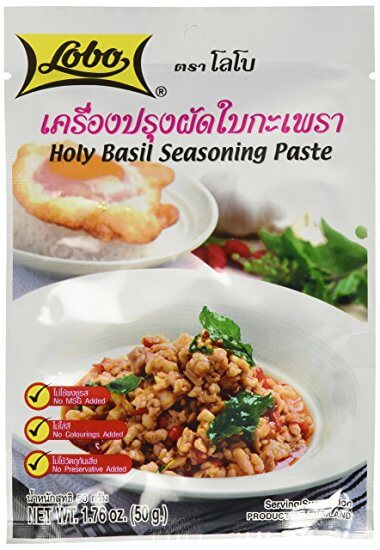
These packets can be found in any grocery store in Thailand and also in Asian grocery stores in Western countries as well. They're very inexpensive and are a very easy and efficient way to cook your own Thai dishes. All you need to do is prepare any vegetables you want in the dish, and the source of protein if desired, and for some dishes toss in a few fresh herbs and voilà!
Another option for people coming to live or are visiting Thailand, are the plentiful Thai cooking classes. In any city that has a moderate amount of tourism, there are multitudes of classes that will teach how to prepare Thai dishes. At these classes you learn about the different herbs and condiments used in Thai cooking and many of these classes will take the students into a fresh market and purchase the herbs and condiments that will be used in the dishes that will be taught to the students. I've never been to any of these classes but I hear they are a lot of fun and you get to meet other people as well and top it off by eating a great meal!
So I hope this is been helpful. Happy cooking!
JC
VF
I did over reach when I referred to Thailand not having a double glass top burner. I should have said Chiang Mai. I have looked for them in departments stores. I even asked my Thai friend who has lived in Chiang Mai for the past 50 years. She said that she has never seen them anywhere. So I did over reach when I referred to Thailand. I didn't think of Amazon or Bangkok. So be it.
I have no problem with learning or being corrected. It just your vile denigration of anybody is just a little too abrasive for anybody. Then again you seem to revel in denigration.
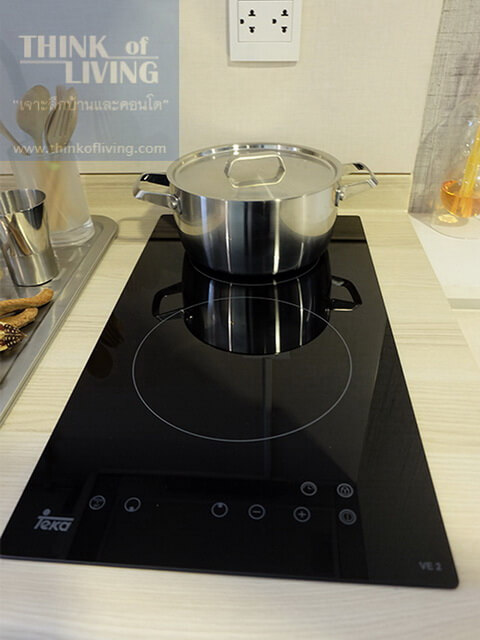
Is this sort of what you are referring to?
Thank you very much for asking and interjecting. I appreciate it.
Cooking in Thailand is challenging, interesting and rewarding.
"Vile denigration...too abrasive"??? Are you sure you are not looking in the mirror?





When i meet my wife i told her i was looking for a girl to live with that cook Thai & Asian food daily.
But my wife 31 years old when i meet her, Have never cook anything in her live, Lucky for us, She say no problem !!!!
She talk to her father who is a very very good cook, And he help her out, First by 8-10 food dishes, What to use, how to do it and so on.
She learn over the weeks / month to come that she cook great, I like it, her family when come like it, And all so our friends.
That give her a "push" to better her self, learn more.
So today she is a super cook.
She learn over the years that i like to eat home baked cakes and more around Christmas, So she learn to do that all so, Yea, Lucky me !!
I all ways cook on Christmas evening, That day i cook like back in Denmark.(I am a good cook all so)
And 3-5 timer doing the year when my wife want me to cook some food from back home, I do it for her, I don't miss it, I like the Thai & Asian food more.
Kindly.
Considering that there are so few written Thai recipes, at least from my searches, would your wife have any particular ideas to share in terms of some of the basics? I see JC suggesting using the curry or chili sauces in the store, which adds a huge variation to flavors. I also watched an Anthony Bourdain video on Chiang Mai. One part was where he showed that there are maybe 5 flavors that are blended many ways to produce Thai or Lanna dishes. Any thought's along those line?
I stand corrected. I was at a shop yesterday and asked about double glass top burners, induction. They had none on display but could be ordered. The only thing was that buying two individual burners was a lot cheaper then buying one double burner, about 60% less. Oh, I also learned that any metal cookware is fine to work with the induction heater, since the heat is based on magnetic activity and not heat. So one does not need to buy any special cookware, as long as your existing cookware is metallic (just check it using a magnet).


When I'm at home in Prawet BK, my wife and I reside at our 3rd floor apartment above my in-law family. The family has three working chefs who run two market style restaurants. They cook everything early in the morning before sunrise and then take it to market in dozens of steaming trays. Every day, I wake up to an amazing brunch that they leave on the table for me. They create amazing stuff. But, so far, they haven't cooked up two things that are on my list of favourites.
So, I've got two questions:
(1) Does anyone know the recipe for deep fried Thai Chicken from the south, i.e. cooked in a caldron on the street in Nakhon Si Thammarat? (superb, not greasy). Heavy hot work -- I saw a male chef.
(2) Does anyone know the recipe for Thai Noodles made by the street vendor on the Saturday walking street in Chiang Mai? (flavour balances, wow). I saw a male chef and sous-chefs cooking on a hot table at a portable stand.
Two special mention notes: There is also a wonderfual Tom Young soup (sp?) that a lady chef cooks up. She works in old BK at a market near the canals, not too far from the airport. There is amother lady chef who works on the docks of Krabi Town. She makes a wonderful spicy papaya salad. My family does these too. However, when it comes to details, there are little tiny secrets that set these other two chefs apart from all of the crowd.
As for me, I can cook up a pretty good North American (Canadian) style breakfast but that's where my culinary talents leave off. My wife is the career chef, fine-artist, forever mastering these arts. I'm just a guitar player, ESL teacher, student of writing, forever mastering these arts. At 69 years of age, I'm a non-stop working guy. As my wife says at work and at home: "Go, go, go".
Got to love the art of Thai cuisine, eh? Cheers. dcb
Is it a mix of both soft and crunchy noodles with a spicy thicker sauce? Maybe khaoi soi?
There is a reason Thais travel great distances to eat certain dishes and why some restaurants stay in business while others fail. If signature dishes could be easily replicated with a simple recipe they would go out of business overnight. Even good household cooks have a top ten list of their favorite places for specific dishes. Having to wait for the next time you are in an area to be able to have special dish just adds to the experience. Always remember to buy some take-home to share with someone special, too.
VF: Ah, yes. So true about Thais who travel great distances to their favourite places to dine. That's also why people called foodies fly across the world to taste the treasures of Thai cuisine. In Priscilla's original post she asks "Is there a specific technique or a secret ingredient to master the local cuisine?" But if any particular ingredient were a secret ingredient, how would we know what it is? With regard to a "special technique" might I use a metaphor of an Olympic athlete who beats all the rest by fractions of a second. I think the same might apply to our taste buds and that one amazing dish. However, getting back to the "signature" dish, we can at least have fun guessing and maybe even getting close when we try to replicate the dish ourselves. But, yeah, I hear you VF. Examples: There was this famous Polish sausage maker in Toronto Canada. People flocked to his shop and he sold everything every day. After he died, another company bought his signature recipe and named it after him -- The replicated sausage was extremely tasty but never quite the "I can't stop eating this" same as the original. The sausage maker's son who I know well said that he thought his dad intentionally left something out of the recipe. Even his son who helped his dad make the sausage couldn't replicate it perfectly. So many details go into these amazing dishes -- timing, cooking utensils, a dash of this and pinch of that. It's like the Stradivarius violins -- They have been copied for ages but scientists have not been able to clone the original. Another example: My wife cooks up a sticky rice that sends a local Vietnamese-Canadian chef restaurant-bar owner into taste-bud heaven. The chef recently came back from her visit to southeast Asia saying that for three weeks she travelled extensively through three countries including Thailand. She tried all of the sticky rice dishes. She reported to me yesterday that nothing comes close to my wife's dish. I've watched my wife make it. It looks simple enough, although her cooking utensils are somewhat exotic looking. So something happens during the process where the sticky rice gods descend from the heavens and zap her dish with a lightning bolt, and viola -- one of a kind. Having said all of this, after we finish some business in Canada, my wife and I are going to fly back to Thailand and travel to these places, sample these gems, watch the chefs, talk with them and then maybe we'll at least hit the ball into the ballpark . . . but yeah, home runs are at a premium in this art. It's like that Italian pasta that Mama used to make -- Good luck trying to duplicate that, but do keep trying! The topic of secret ingredients and special techniques will provide us all with mouth-watering culinary conversations for an eternity it seems. Cheers, y'all. dcb
Then there is also the Thai idea of flavors. It's not a whole lot different where a company, such as Coke or Pepsi, changes there recipe more toward local standards. I know that Japanese Soy sauce and Thai Soy sauces are very different. That may also be true with fish sauce, Thai vs. Vietnamese.
All in all Thai cooking gives many opportunities to be creative and to experiment.

Much has been provided in detail above regarding your question of cooking Thai food and I can add nothing more. I'm just a consumer of home and restaurant cooked Thai food and like others I enjoy it immensely and have for many decades in Thailand.



But please keep the replies coming. Always fascinated with food items and tune in a lot to Mark Weins on his food blog (Thailand cuisine)
bill kip wrote:One aspect of Thai cooking is that there are seasoning that aren't readily available outside of Thailand. Kaffer Lime, ground, is one of those spices. Since coconut is so readily available coconut milk is used in some dishes. Plus it seems the Thai soil has some unique qualities, which I can't exactly explain. All in all this gives opportunities for flavors unlike what the western palate would be accustomed to.
Then there is also the Thai idea of flavors. It's not a whole lot different where a company, such as Coke or Pepsi, changes there recipe more toward local standards. I know that Japanese Soy sauce and Thai Soy sauces are very different. That may also be true with fish sauce, Thai vs. Vietnamese.
All in all Thai cooking gives many opportunities to be creative and to experiment.
BK as an experienced consumer of Thai food rather then a chef I whole heartedly agree with you. Once out of Thailand and Southeast Asia many of the ingredients aren't readily available and some aren't available at all. Try to easily find fresh padaman leaf or a bunch of fresh pepper (from which the powderd variety is made) outside of SEA.
Most herbs and spices that are available outside of Thailand lack the freshness found here. The difference really changes the flavor of the finished dish. Fresh king ( ginger) and kah ( ginger like) and kratai ( lemongrass) comes to mind. Here ours are more crispy and flavorful compared to the dried versions in North America and Europe. The coconut water and coconut milk is right from the coconuts here and elsewhere from a can.
Those interested in cooking Thai food in Thailand certainly will not lack the ingredients. Outside of the country one will adjust and improvise a bit. I think many first cooks try easy dishes first. Even I can make som tom ( green papaya spicy salad). Pad Thai ,a noodle dish and Tom Yum Krung, traditional soup are fairly easy to make. Use less prik ( chili pepers) and especially naam pla at first and adjust later as desired...once in the pot you can't take it out...but you can add more water.
I enjoy the creativity that is used when making Thai dishes BK. I've always loved pad ped pla duke tod...spicy crispy fried chopped slices of cat fish with a little red curry and usually grapow ( a type of basil) and sometimes whole bunches of fresh pepper. I must have eaten it several hundred times and every chef makes it little different...a simple dish becomes a culinary adventure.
BK, the differences between naam pla ( fish sauce) to my palate relates to differences in pungency in both taste and smell. I can't tell you what country it's from only whether I like it or like it more. The difference between Coca-Cola and Diet Coke for instance. wgn
What you will find on the streets and the less expensive restaurants are probably about 15 or 20 standard dishes that can be made inexpensively and therefore sold inexpensively. As somebody coming to live in Thailand, they will sample different dishes at different vendors and find ones that suit their own tastes. If you're a fan of something even as simple as phad Thai noodles or fried rice you can go eat at 10 different places and get 10 different varieties of the same dish. Different amounts and quantities of the meat and/or the vegetables plus the amounts of the standard cooking condiments they personally use, changes the flavor and consistency of the dish.
What's cool about this is you'll have your specific favorites of each individual dish and most likely they won't be coming from the same restaurant or vendor. When you feel like fried rice you go to your favorite fried rice vendor or restaurant and when you feel like something like stir fried noodles you have a favorite for that as well. More than likely you'll end up with 10 or 15 different vendors or restaurants that you visit when you have a particular hankering for a specific meal.
I love this because it adds a variety to our days here which is very important especially when someone is retired and has extra time on their hands.
Another upside of this is you end up with interactions among a lot of different Thai people. And also many vendors, owners or cooks will also start to recognize specific things you like or do not like within a dish and integrate them automatically when they see you. This makes for your own unique dishes that are being prepared to your liking. Just another one of those great things about living in Thailand!
Essential services for your expat journey




- Researching Hua Hin
- Purchasing a home in Thailand
- Life for senior expat retirees
- Santander closing UK accounts
- Is 1 million Thai baht too much for Sin sod Thailand
- Basic Medicines in Thailand
- We're trying to decide between Pattaya and Chiang Mai
- Cost of Visa agent
- Do property auctions in Thailand exist?
- Sending and receiving packages in Thailand
- Thai- Farang relationship--- some advice please
- Moving to Hua Hin
- Thai Lottery
- The nightlife scene in Thailand
- looking forward to move to thailand with NO degree
- Online shopping in Thailand
- Scams in Thailand
- Bangkok night life