Have you ever felt that your job might not be as fulfilling as you had expected it to be? Or maybe, you have accidentally landed on a job that you don't particularly enjoy. If this is the case, moving abroad could be a wonderful way to rejuvinate, put things into a perspective, plan the future, and boost your career — all at the same time.
Information has never been more accessible than it is today, which makes expatriation and adaptation to the destination country a whole lot easier. However, the change in the environment, in your priorities and obligations in the new country shift your focus, and you are caught up in a new project. For me, it was distance learning.
When I graduated, I believed that studying was a chapter in my life that I would forever close. But later on, during a period of personal and professional reinvenation, I definitely changed my mind, and clearly saw that studying was the most suitable action, if I wanted to achieve my future goals. This is when I got into distance learning — a more flexible and liberal way of learning that was in total agreement with my new lifestyle.
I'm happy to live in Melbourne, a city that has been named six times in a row “the most pleasant city in the world”. Indeed, Australia is a top destination for expatriates who are looking for new professional opportunities — even for those who do not have high profiles with a ton of qualifications.
In Australia there are opportunities for everyone, and you will be only assessed on your particular skills. In fact, you don't need a Master's degree or ten years of experience to work in most fields — you need the skills and a good command of English, if you are ready to start from square one.
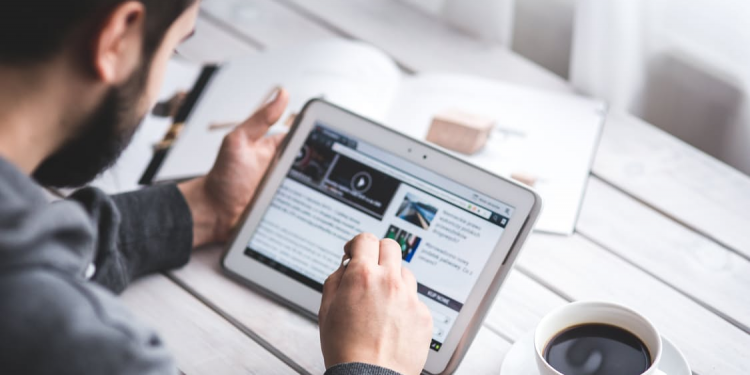
Taking into account my new goals in Australia, I looked for a training program, which suited my new commitments. I was then in between two options: a face-to-face or a virtual class. Each of these alternatives had its own benefits and drawbacks. On-campus studies mean having a specific pace of work while adding to a more promissing social life. Online courses, on the other hand are more flexible but implicate a lot of self-study and online interaction.
Given the equivalence of diplomas offered, I prefered the flexibility stemming from distance learning courses. I can snooze till late morning, plan each day differently, take part in arts and sports activities, explore the country on long weekends — for many (including me) it's a dream life.
Of course, there are some not so bright aspects of distance learning. Think of 12 to 15-hour-long working days in silence and isolation, and to top it off there are moments or even days that you will feel homesick and you will self-doubt your decisions and capability. But at the end of the day, all you need is a solid project, motivation, and any kind of support that you can get to face these ordeals.
I embarked on this adventure with all my uncertainties, but after six months of distance lerning, I finally found the right balance. I have to admit that I have no regrets at all. I have not only been able to improve my knowledge of the world but also to progress more rapidly than I would have in a face-to-face course. And I've been able to reach my professional goals faster than ever expected.
Self-studying has helped me to better understand myself and urged me to find other ways to communicate with the rest of the world, and make contacts. Of course, distance learning — as much as expatriation — is not meant for everyone. However, being organised, motivated and passionate about your project will definitely help. Expect distance learning to shake your routine, but it's totally worth it!