Where are you from, and what brought you to Morocco? How long have you lived there?
I'm from France. I came to Morocco for personal reasons in 2006.


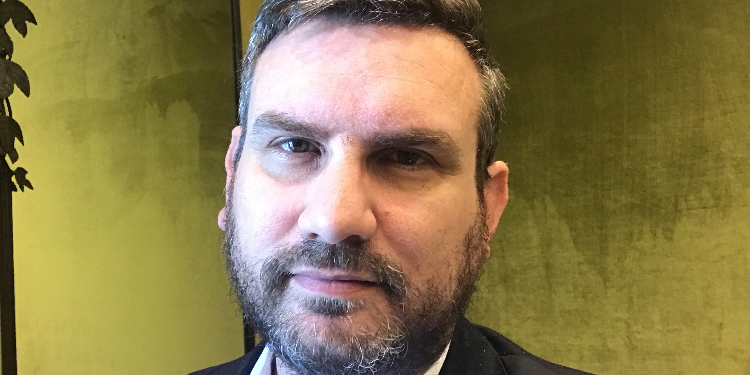 © Hervé Gindre
The COVID-19 spreading like wildfire all over the world is taking its toll on the global economy. The unprecedented health crisis is currently paired with an economic crisis with significant repercussions on practically all sectors. Hervé Gindre, a French entrepreneur in Morocco, shares his views about the economic slowdown.
I'm from France. I came to Morocco for personal reasons in 2006.
I have been practising as an independent legal advisor in Morocco since early 2007.
Get regular tips and advice to make the most of your expat life
It's a bit complicated. Morocco is in a state of health emergency with curfew and confinement since March 20, 2020. But the exceptions (especially for professional reasons) are so many that, in fact, there can be several situations. Subsidiaries of multinational companies have already switched to remote work and the closure of their sites (industrial or services). In contrast, others seem to perceive no risk for their staff and, sometimes even, question the significance of remote work.
The impact is indirect. As a service provider, my activity also depends on the activity of my clients, and therefore on the rest of the economy. The Moroccan economy was already slowing down before the pandemic. This means that, with the pandemic, certain sectors are really suffering. Tourism, for example, has practically come to a halt. Real estate, which is another pillar of the Moroccan economy, also got its two feet on the brake. In large cities, trade is being penalised due to the closure of non-essential businesses, shopping malls, etc. However, this is not the case in small towns where the state of health emergency seems to be less rigorous.
For the time being, my priority is to ensure a level of activity which makes it possible to avoid financial and personal danger. It is, therefore, crucial to reconcile sanitary prudence and the need to work. There are no social safety nets in Morocco. Let's not forget that Ramadan is coming (mid-April) – that it is traditionally a period of low activity. This year, it is likely to be more difficult for many (low wages, especially for workers of the informal sector, who are still numerous in Morocco). In the long run, I'm expecting a violent recovery when the pandemic is over. Companies will be faced with the need to restart the machine quickly to catch up. We will also undoubtedly have state subsidies to help the recovery by sectors. But these are nothing but a feeling, not objective elements.
If you have not moved abroad yet, wait for some time. This seems, to me, to be the best precautionary measure, everywhere in the world. Thus, you won't lose any investment in the context of stoppage or violent slowdown. For the rest, I prefer not to venture too far. The future is still uncertain, especially regarding the duration of the crisis.
Today, my whole life is in Morocco. If I had to return to France, it wouldn't be easier. Would I go back to be confined, without employment (or income)? I don't think it would be any better.





Get regular tips and advice to make the most of your expat life