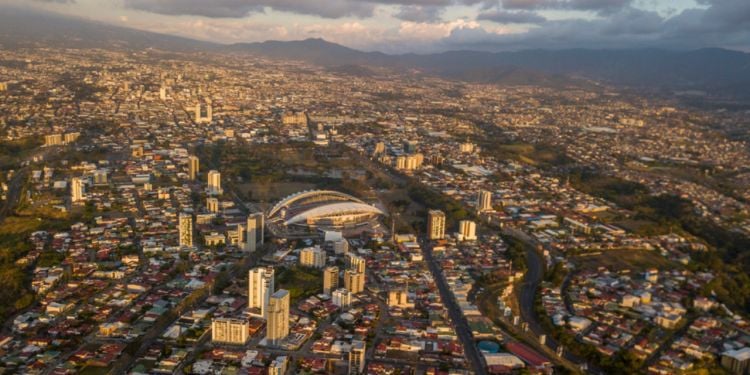
San Jose sits at the center of Costa Rica's economy, and its job market reflects a city that has moved well beyond its agricultural roots. Today, the capital drives the country's growth in technology, life sciences, and shared services, attracting major multinationals that have turned the Central Valley into one of Latin America's most competitive business destinations. For expats considering a move here, understanding how the local job market in San Jose works, and where opportunities realistically lie, is the first step toward a successful transition.
Job market overview in San Jose
San Jose's economy is no longer defined by coffee and bananas. The city has repositioned itself as a regional hub for technology, medical devices, business process outsourcing (BPO), and shared corporate services. These sectors have drawn significant foreign direct investment and now account for a large share of formal employment in the metropolitan area. The primary industries actively hiring in San Jose include life sciences and medical device manufacturing, software development, data analytics, and customer service operations supporting markets across the Americas.
Costa Rica's national unemployment rate closed a recent year at 6.3%, according to the National Institute of Statistics and Census (INEC), with the informal sector accounting for nearly 38% of total employment. While these figures cover the country as a whole, San Jose's formal economy skews notably better, anchored by multinational employers that offer structured contracts and legal employment frameworks.
For expats, the picture requires some nuance. Costa Rican labor law requires companies to fill at least 85% of their workforce with Costa Rican nationals, unless a specific skill set is demonstrably unavailable locally. This means that expat job opportunities in San Jose are most realistic in specialized IT roles, engineering positions, and senior management, where local talent pools may not fully meet demand. Many expats in San Jose instead opt to work remotely for foreign employers under Costa Rica's Digital Nomad Visa, which requires proof of a stable monthly income of at least USD 3,000 for individuals or USD 4,000 for those applying with family members.
Key business districts in San Jose
Where you work in San Jose will shape where you want to live, and understanding the city's business geography early saves a great deal of daily frustration. The capital's economic activity is not confined to a single downtown core. Instead, it fans out across several distinct zones, each with its own industry character and commute profile.
The western suburbs of Escazú and Santa Ana are the primary addresses for multinational corporate offices, financial services firms, and regional headquarters. Escazú, often nicknamed "Little America" by expats, offers a dense concentration of international companies alongside high-end residential options, restaurants, and shopping malls. For expats hired into corporate roles, living within or close to these suburbs dramatically reduces daily commuting stress.
Beyond the city proper, Free Trade Zones (FTZs) located in the neighboring municipalities of Heredia and Alajuela cluster many of the biggest names in international technology, electronics, and pharmaceuticals. These zones operate under special fiscal incentives and attract large-scale employers. Commuting to the FTZs from downtown San Jose involves navigating some of the area's worst traffic bottlenecks, and travel times can easily double during peak hours. If your employer is based in one of these zones, living in the northern suburbs closer to Heredia is worth considering.
For those drawn to a more urban, walkable lifestyle, Barrio Escalante has become a popular base for younger professionals, remote workers, and startup-oriented employees. The neighborhood's café culture, independent restaurants, and central location make it a practical and lively option for those whose work does not require a daily commute to the western suburbs.
Top employers in San Jose
The San Jose metropolitan area hosts a remarkable concentration of global companies for a city of its size. In the technology sector, Intel has maintained a cornerstone presence in the Central Valley for decades, regularly hiring for engineering and technical roles. Alongside Intel, Microsoft, Amazon, and IBM all operate significant local teams, according to recruitment specialists active in the market.
The life sciences sector is equally prominent. Costa Rica has established itself as a global hub for medical device manufacturing, and San Jose's surrounding area is home to major operations run by Abbott, Medtronic, and Boston Scientific. These companies employ thousands locally and represent some of the most stable employment in the region.
The BPO and shared services sector rounds out the top tier of San Jose employers. Numerous call centers and corporate support hubs hire bilingual staff to handle customer service, technical support, and HR operations for companies across North and Latin America. Fluency in both English and Spanish is a genuine competitive advantage in this segment.
One area where expats should not expect opportunities is the public sector. Government jobs in San Jose are strictly regulated and are effectively closed to foreign nationals. Nationalization policies protect public sector roles for Costa Rican citizens, making foreign hiring in this space exceedingly rare. Expats evaluating their options should focus entirely on the private sector and, in particular, on multinationals with established operations in the city.
Finding jobs in San Jose
The most practical starting point for an expat job search in San Jose depends heavily on your profile and how you plan to enter the market. For those already working within a multinational company, securing an internal transfer before relocating is often the most reliable route. The 85% local hiring rule makes cold applications from abroad significantly harder, and an intra-company transfer sidesteps much of that friction entirely.
For those searching independently, several platforms serve the local market. Brete.cr, a government-backed employment platform managed by the Ministry of Labor and Social Security (MTSS), lists thousands of local vacancies and is a useful benchmark for understanding demand. The platform elempleo.com focuses more specifically on corporate recruitment and is widely used by companies hiring white-collar professionals.
Specialized recruitment agencies in San Jose are another important resource, particularly for navigating local hiring regulations. Firms such as DevsData (IT staffing), Remote People, Doris Peters & Asociados, and Human Capital HR Consultants are active in the market and familiar with the specific compliance requirements that apply to foreign hires. For senior or technical roles, going through an agency that understands both the legal landscape and the expectations of multinational employers can save considerable time.
Large tech, pharmaceutical, and financial companies with operations in San Jose also post roles directly on their official corporate websites and LinkedIn pages. Monitoring these channels consistently, especially for companies based in the FTZs, gives expats access to openings before they reach broader job boards.
Salaries and benefits in San Jose
Understanding the difference between what the local market pays and what an expat package might offer is essential before accepting any role in San Jose. These two worlds can look very different.
The average monthly salary in Costa Rica sits at around CRC 605,000 (approximately USD 1,150). Expat professionals in San Jose, particularly those in specialized or senior roles, typically earn between CRC 1,000,000 and CRC 4,000,000 gross per month (roughly USD 2,000 to USD 8,000), according to figures cited by local expat analysts. Roles in software engineering, medical device management, and regional finance leadership tend to fall at the higher end of that range.
Expats hired through intra-company transfers by major multinationals may receive expat packages that include housing allowances, flights, and sometimes school fee contributions. However, expats hired locally, directly into the Costa Rican market, are typically offered local contracts with no such additions. Understanding which type of contract applies to your situation before negotiating is critical.
All formal employees in Costa Rica benefit from legally mandated protections. Employers must contribute 26.5% of an employee's salary to the Caja Costarricense de Seguro Social (CCSS), commonly known as the "Caja," which covers public healthcare and pension. Employees contribute between 9% and 10.83% of their gross salary in return for full access to the public health system. Beyond healthcare, every formal employee is legally entitled to an Aguinaldo, an annual Christmas bonus equivalent to one full month's salary, paid in December. The law also mandates two weeks of paid annual leave for every fifty weeks worked with the same employer.
Cost of living should factor heavily into any salary negotiation. A single person living in San Jose needs roughly USD 969 per month to cover daily expenses excluding rent, according to Numbeo's cost of living data for San Jose. A one-bedroom apartment in a safe, central neighborhood typically costs between USD 700 and USD 1,200 per month, depending on location, which means total monthly outgoings for a single expat can easily exceed USD 1,700.
Work culture in San Jose
The work culture in San Jose is shaped by two forces that coexist rather comfortably: the professional expectations of global multinationals and the deeply held local values that Costa Ricans describe as "Pura Vida." This philosophy, which loosely translates to "pure life," reflects a genuine prioritization of family, leisure, and personal wellbeing that filters into the workplace in meaningful ways.
Costa Rican professionals highly value work-life balance and generally bring a warmer, less driven approach to office life than many North American expats might expect. Direct confrontation is typically avoided, and business relationships are built on trust and personal rapport. Taking time for friendly conversation before getting into professional matters is not a distraction here; it is considered a basic courtesy and part of how effective working relationships are established.
The standard legal workweek in Costa Rica runs up to 48 hours, and any work performed on public holidays must be compensated at double the regular rate. In practice, many corporate and tech offices in Escazú and Santa Ana observe a standard Monday-to-Friday schedule, with working hours that align more closely with North American corporate norms. Dress codes in these environments tend toward business casual, though client-facing roles in larger firms may maintain more formal expectations.
Remote and hybrid work have become more common across the technology and shared services sectors, where many international companies allow employees to split their time between home and the office. However, roles in medical device manufacturing, laboratory operations, and on-site customer support remain firmly office- or facility-based. Expats should clarify the remote work policy of any prospective employer early in the hiring process, as practices vary significantly by industry and company.
Commuting in San Jose
Traffic is one of the defining daily realities of living and working in San Jose, and no account of the city's work life is complete without addressing it honestly. Rush hours peak between 5:00 AM and 7:00 AM and again between 3:00 PM and 6:00 PM. During these windows, what might appear on a map as a short cross-city trip can stretch into a one- to two-hour ordeal. The road network connecting downtown San Jose to business parks in Santa Ana, or to the FTZs in Heredia and Alajuela, is particularly prone to severe gridlock.
Most expats manage this by living close to where they work. Those employed in western corporate hubs tend to settle in Escazú, Santa Ana, or nearby residential areas. Those working in or near the city center often prefer walkable neighborhoods like Rohrmoser or Barrio Escalante, which allow them to avoid major arteries entirely during peak hours.
For daily commuting, expats frequently rely on ride-sharing apps such as Uber and DiDi, which offer more predictable and safer travel than navigating the public bus network, particularly after dark. The public bus system does cover the city broadly, but routes can be complex and schedules inconsistent. Those who drive should be aware that road conditions outside central areas can be unpredictable, with unpaved stretches and sudden closures common on secondary routes. Expats and locals alike consistently recommend using Waze rather than Google Maps for real-time routing, as Waze reflects local knowledge of traffic jams, road closures, and alternate routes far more accurately.
Frequently asked questions
Do I need a work permit to work in San Jose?
Yes, foreigners legally need residency and a work permit to be employed locally by a Costa Rican company. Getting a local work permit is difficult because employers must demonstrate that no qualified Costa Rican citizen is available to fill the position. This requirement makes local hiring of expats relatively uncommon outside of highly specialized roles.
What is the income requirement for the Digital Nomad Visa?
Costa Rica's Digital Nomad Visa allows expats to live in San Jose while working remotely for a foreign employer. To qualify, you must prove a stable remote income of at least USD 3,000 per month for individuals, or USD 4,000 per month if applying with family members. This visa has become a popular alternative for expats who cannot obtain a local work permit.
What is the CCSS or "Caja"?
The Caja Costarricense de Seguro Social (CCSS), known as the "Caja," is Costa Rica's national public healthcare and social security system. It is funded through mandatory payroll contributions from employers (26.5%) and employees (approximately 9% to 10.83%), granting contributing workers full access to public medical facilities. All formal employees in San Jose are enrolled automatically.
Is it expensive to live in San Jose as an expat?
San Jose is one of the more expensive cities in Central America, though it remains significantly cheaper than major North American or European destinations. A single person needs roughly USD 969 per month for daily expenses excluding rent, according to Numbeo. Adding a one-bedroom apartment in a safe neighborhood brings the realistic monthly baseline to between USD 1,700 and USD 2,200.
Do I need to speak Spanish to work in San Jose?
Many multinational tech and medical companies operating in the Free Trade Zones work primarily in English. That said, basic Spanish is heavily relied upon in daily office life, client interactions, and social settings. Speaking Spanish meaningfully increases your employability across the broader San Jose market and helps you integrate far more effectively into the local workplace culture.
What are the typical working hours and overtime rules?
The legal workweek in Costa Rica is up to 48 hours, often spread across six days, although many multinational and corporate offices operate on a Monday-to-Friday schedule. Overtime must be compensated at higher rates, and any work performed on official public holidays requires employers to pay double the standard rate. These protections apply to all formal employment contracts.
Is San Jose safe for expat workers?
San Jose has areas with elevated petty crime and occasional organized criminal activity, particularly in some downtown districts. Expats who settle in the well-established western suburbs of Escazú and Santa Ana generally report a safe and comfortable daily experience, supported by solid residential security infrastructure. Following standard urban safety practices, such as avoiding walking alone late at night and being aware of your surroundings, goes a long way.
How do most expats commute in San Jose?
Most expats use ride-sharing apps like Uber and DiDi for daily commutes, or drive their own vehicles. Those who drive consistently recommend using Waze for navigation rather than Google Maps, as it provides far more accurate real-time traffic and road condition data for the San Jose area. Living close to your workplace is the single most effective way to manage the city's notorious rush-hour congestion.
We do our best to provide accurate and up to date information. However, if you have noticed any inaccuracies in this article, please let us know in the comments section below.