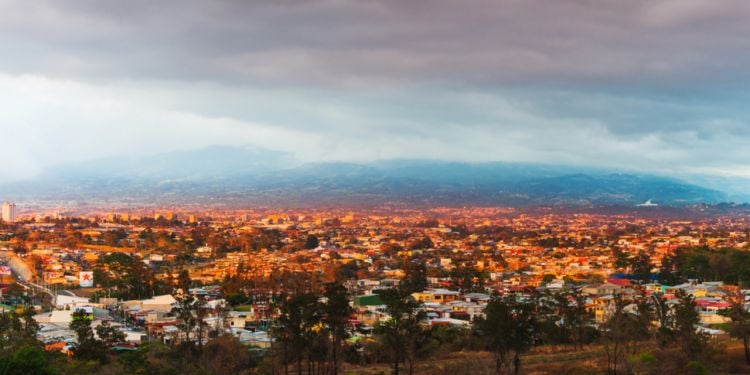
San Jose is the beating heart of Costa Rica, economically, culturally, and socially. For expats, it is also the most common first stop, offering a dense concentration of international employers, coworking spaces, hospitals, international schools, and a well-established expat community. The city's rental market is active and competitive, driven by multinational companies, digital nomads, and a steady stream of new arrivals from North America and Europe. Whether you are relocating for work, semi-retiring, or simply testing life in Central America, understanding how the housing market in San Jose works before you land will save you time, money, and stress.
Housing market overview in San Jose, Costa Rica
San Jose has the tightest rental vacancy rate in the country, sitting between 5% and 7%, compared to a national average closer to 12%. That gap tells you something important: demand consistently outpaces supply, and well-priced properties in popular neighborhoods move fast. The average rent per square meter in San Jose runs at about USD 18 per month, which is roughly 20% to 30% higher than in nearby cities like Heredia or Alajuela, making it the most expensive rental market in Costa Rica.
The market has two distinct peak seasons. The first runs from January through February, driven largely by corporate relocations at the start of the fiscal year. The second peaks between July and August, influenced by university enrollment cycles. If you plan to search for a property during either window, expect shorter availability windows and less room to negotiate on price. Outside of peak periods, the market softens slightly, giving renters more leverage, particularly on long-term leases.
One structural advantage for long-term renters in San Jose is that Costa Rican law caps annual rent increases. When inflation runs low, existing tenants can see renewal cycles with little to no price increase, making a stable long-term lease considerably more economical than cycling through short-term accommodation.
Neighborhoods in San Jose
San Jose's neighborhoods, known locally as barrios, range from dense urban centers to quieter residential suburbs tucked into the surrounding hills. For expats, the choice of neighborhood often reflects a trade-off between lifestyle, commute, security, and budget. The city's geography means that some of the most desirable areas sit just outside the administrative limits of San Jose proper, in the Greater Metropolitan Area (GAM).
Escazú and Santa Ana are the first names most expats encounter, and for good reason. Escazú is sometimes called the "Beverly Hills of Costa Rica," a label that reflects its concentration of upscale restaurants, gated communities, top international schools, the CIMA Hospital, and the Multiplaza shopping mall. Santa Ana, immediately to the west, offers a similar profile with slightly more space and a growing number of tech company offices. Both neighborhoods attract a predominantly North American and European expat population and offer the highest level of English-language services of any area in the city.
Barrio Escalante has emerged as the city's cultural and culinary hub. It is a walkable, relatively compact neighborhood packed with independent cafés, coworking spaces, galleries, and restaurants, making it a natural draw for younger professionals and digital nomads. Rents here are higher than the city average, but the lifestyle trade-off is significant for those who want to live at the center of San Jose's social scene.
Barrio Escalante has emerged as the city's cultural and culinary hub. It is a walkable, relatively compact neighborhood packed with independent cafés, coworking spaces, galleries, and restaurants, making it a natural draw for younger professionals and digital nomads. Rents here are higher than the city average, but the lifestyle trade-off is significant for those who want to live at the center of San Jose's social scene.
Rohrmoser and La Sabana cater to urban professionals who want modern high-rise living with an active outdoor lifestyle. Both neighborhoods border the large Metropolitan Park La Sabana, and both feature well-maintained residential towers with strong security infrastructure. This area is particularly popular with professionals working for embassies and international organizations.
For expats on a tighter budget, Moravia, Guadalupe, Desamparados, and Tibás offer a more affordable entry into San Jose's rental market. Average monthly rents in these neighborhoods run between USD 500 and USD 900, while still providing reasonable access to the city center by public transport. These areas are more residential and locally oriented, which can be an advantage for expats who want genuine immersion in Costa Rican daily life.
Types of accommodation in San Jose
San Jose's housing stock covers a wide range of options, and the type you choose will affect both your monthly costs and your day-to-day experience in the city.
Apartments and studios are the most common choice for single expats and couples, particularly in urban neighborhoods like Barrio Escalante and La Sabana. These units suit a lock-and-leave lifestyle and tend to have shorter minimum lease terms in practice, even if the law provides broader protections.
Modern condominiums are growing rapidly across the Greater Metropolitan Area. These high-rise buildings typically include shared amenities such as 24/7 security, fitness centers, swimming pools, and sometimes coworking spaces. The monthly maintenance fee (cuota de mantenimiento) is an additional cost to factor into your budget, but the security and community infrastructure they provide can be worth it, especially for new arrivals.
Houses and villas in San Jose are most commonly found in gated communities (condominios horizontales) in Escazú and Santa Ana. These properties offer standalone family homes with private gardens, shared amenities, and high perimeter security. They are the natural choice for families relocating with children.
On the furnished versus unfurnished question, the distinction matters both practically and financially. Furnished apartments are in strong demand among expats and corporate tenants arriving with just a suitcase. According to The Latinvestor, furnished units typically command a 15% to 25% rent premium over comparable unfurnished properties. For those willing to invest in their own furniture locally, unfurnished units offer significantly better long-term value.
For the first weeks or months of a relocation, short-term rentals through platforms like Airbnb or Blueground offer fully furnished serviced apartments that make settling in much easier. Average nightly rates in San Jose sit at around USD 59. This approach also gives you time to explore neighborhoods in person before committing to a long-term lease.
Rental prices in San Jose, Costa Rica
Rent prices in San Jose are generally quoted and paid in either US dollars or Costa Rican colones, with USD being particularly common in high-end expat neighborhoods. The figures below reflect current market conditions and are subject to change as market conditions evolve.
- Studios: Average around USD 750 (CRC 379,000) per month, with a range of USD 550 to USD 950 depending on the building's amenities and location.
- One-bedroom apartments: Average USD 1,000 (CRC 505,000) per month. Prices range from USD 750 in everyday districts to USD 1,400 in premium areas like Escazú and Santa Ana.
- Two-bedroom apartments: Average USD 1,050 (CRC 535,000) per month, with luxury units reaching up to USD 1,800.
- Houses and villas: Standard three-bedroom family homes in upscale gated communities range from USD 1,500 to over USD 3,000 per month.
Rent growth across the city is expected to remain between 2% and 5% in the near term, though high-demand pockets like Rohrmoser and the Lindora corridor in Santa Ana could see increases closer to 7% due to sustained expat demand and limited new supply. Budget areas like Moravia and Tibás remain well below the city average, offering a practical alternative for cost-conscious renters.
Finding accommodation in San Jose
Expats have several reliable channels for finding a rental in San Jose, and using more than one in parallel is the most effective strategy.
Local property listing platforms are the starting point for most searches. Sites like Encuentra24 are widely used by both locals and expats and carry a broad range of listings across all price points. MercadoLibre Costa Rica also carries rental listings and tends to capture more locally advertised properties that do not appear on international platforms.
Working with a local real estate agent (corredor de bienes raíces) is highly recommended, especially for expats who do not speak Spanish. Agents have access to unlisted properties, can navigate Spanish-language negotiations on your behalf, and typically charge their commission to the landlord rather than the tenant, making their services effectively free for renters. You can find vetted real estate agencies in San Jose through the Expat.com business directory.
Facebook groups remain a genuinely useful resource in San Jose. Communities such as "Expats in Costa Rica" and "Costa Rica Housing and Rentals," as well as neighborhood-specific groups, carry direct listings from property owners who prefer to avoid agency fees. These groups also offer honest peer feedback on specific buildings and landlords.
One distinctly local practice worth knowing: many property owners in Costa Rica simply place a hand-written "Se Alquila" (For Rent) sign in a window or on a gate with a phone number, and never list the property online at all. Walking your target neighborhoods, particularly on weekends, can uncover hidden listings that never appear on any platform.
Whatever channel you use, never commit to a rental sight unseen. Visiting in person allows you to assess security infrastructure, check for noise from nearby traffic or construction, and verify the actual condition of the unit against the listing photos.
The rental process in San Jose
The rental process in San Jose is relatively straightforward compared to many other major cities, but it moves quickly in high-demand areas. Properties near international schools, tech company offices, or in neighborhoods like Escazú and Barrio Escalante can be snapped up within fifteen to thirty days of listing, so being ready with your documents before you start viewing is a practical advantage.
The standard application process involves direct negotiation with the landlord or their agent. There is no centralized application system or credit-scoring mechanism equivalent to those used in the United States or Europe. Landlords rely primarily on the documents you provide to assess your reliability as a tenant.
The documents typically required include:
- A valid passport or DIMEX (residency card)
- Proof of income, such as an employment contract, foreign pension documentation, or recent bank statements
- A reference from a previous landlord, if available (this is helpful but rarely mandatory for foreign tenants)
Once an agreement is reached on price and terms, the lease is drawn up, almost always in Spanish. Upon signing, you will pay the first month's rent and the security deposit, after which the keys will be handed over. The full process from agreement to move-in can often be completed within a few days.
Lease terms in San Jose
Costa Rica offers tenants unusually strong legal protections by regional standards, and understanding the framework before you sign is important.
Under the General Law of Urban and Suburban Leases (Law 7527), every residential lease carries a legally protected minimum term of three years. Even if the written contract specifies a shorter term of one year, you retain the right as a tenant to renew up to that three-year threshold, provided you pay rent on time and comply with the lease terms. This is a significant protection that gives expats meaningful security of tenure.
For unfurnished properties, the standard deposit (depósito de garantía) equals one month's rent. For furnished properties, landlords may request up to two months' rent as a deposit to cover potential damage to furniture and appliances. Both amounts are legally regulated.
Notice periods require tenants to provide at least thirty days' written notice before their intended move-out date or before the end of a lease term, in order to recover their deposit and avoid triggering an automatic renewal.
Rent increase rules differ depending on the currency of the contract. For leases denominated in Costa Rican colones, annual increases are legally capped and tied to the official Consumer Price Index (CPI). For contracts denominated in US dollars, rent increases are generally prohibited for the full initial three-year legal term unless specific legal conditions allow otherwise. This makes USD-denominated leases particularly attractive for expats seeking predictable long-term housing costs.
Challenges for expats in San Jose
The San Jose rental market is accessible to foreigners, but several recurring challenges are worth knowing about before you begin your search.
Banking and payments present the most common friction point. Paying rent by direct debit or setting up local utility accounts often requires a Costa Rican bank account. Opening an account at institutions like Banco de Costa Rica or Scotiabank can be bureaucratically slow for foreigners who do not yet hold a DIMEX residency card. In the interim, many landlords accept cash or international transfers, but you should clarify the payment method before signing. Using a multi-currency account from providers like Wise can help bridge the gap during the early months.
Guarantor requirements can catch expats off guard. Some landlords, particularly risk-averse ones, request a local Costa Rican guarantor (fiador) before agreeing to a lease. Expats without local family connections can usually overcome this by negotiating a higher security deposit or offering to pay several months' rent in advance. This workaround is widely accepted and rarely a dealbreaker.
Language barriers are a practical reality. While many real estate agents in Escazú and Santa Ana speak fluent English, all lease contracts must be written in Spanish to be legally binding in Costa Rican courts. Before signing anything, have the contract reviewed by a bilingual lawyer or a trusted certified translator. The cost of this step is modest relative to the financial commitment of a multi-year lease.
Rental scams do occur, particularly targeting foreign renters. Common patterns include fake listings that request wire transfer deposits before you have visited the property. To protect yourself, always verify the landlord's ownership through Costa Rica's National Registry (Registro Nacional) before transferring any money, and prioritize listings sourced through reputable agencies or trusted community groups.
Utilities and bills in San Jose
Understanding what is and is not included in your rent is essential for accurate monthly budgeting in San Jose.
For standard long-term unfurnished rentals, tenants are responsible for setting up and paying all utilities independently. Short-term or fully furnished rentals often include water, internet, and sometimes electricity within the advertised rent, though you should always confirm this in writing before signing.
Basic utilities, including electricity, water, and garbage collection for a standard apartment of around 85 square meters, average between USD 80 and USD 150 per month. The wide range reflects the significant impact of air conditioning usage. San Jose's climate sits at a comfortable altitude where many residents manage without air conditioning for most of the year, but those who run it regularly will see their electricity bills climb noticeably.
Internet connectivity in San Jose is reliable and widely available. High-speed fiber-optic plans from providers such as Kolbi, Liberty, and Telecable typically cost between USD 40 and USD 60 per month. Setup times are generally fast, and coverage in central and suburban areas is good.
For tenants in condominiums or gated communities, HOA fees (cuotas de mantenimiento) are an additional monthly cost to build into your budget. These fees cover 24/7 security, maintenance of common areas, and shared facilities. They generally range from USD 50 to USD 200 per month, though luxury-tier developments can reach up to USD 550 per month, according to data from InterNations. In some listings, the HOA fee is advertised as part of the total monthly cost; in others, it is listed separately, so always clarify which figure you are looking at.
Frequently asked questions about renting in San Jose
Can I rent an apartment in San Jose as a tourist?
Yes. Foreigners hold the same rental rights as Costa Rican citizens and can legally rent an apartment using just a passport, even while on a tourist visa. Formal residency is not a legal requirement to sign a lease, though holding a residency card (DIMEX) makes setting up a local bank account and utility contracts considerably easier. You can learn more about the visa and immigration requirements in Costa Rica to understand your options.
What is the standard duration of a lease in San Jose?
Under Costa Rican Law 7527, residential leases carry a legally protected minimum term of three years. Even if your written contract states a shorter period, you are legally entitled to renew and remain in the property for the full three years, provided you pay rent on time and abide by the lease conditions.
What documents do I need to rent an apartment?
Landlords typically ask for a valid passport or residency card, proof of income such as an employment letter, foreign pension documentation, or recent bank statements, and sometimes a reference from a previous landlord. Formal background checks are rarely requested of foreign tenants, and the process is generally less document-heavy than in North America or Western Europe.
How much is the typical security deposit?
The standard security deposit equals one month's rent for an unfurnished apartment. For fully furnished properties, landlords may request up to two months' rent as a deposit to account for potential damage to furniture and fittings. Both amounts are regulated under the Costa Rican tenancy law.
Are utilities generally included in the rent?
For most standard long-term leases, utilities such as electricity, water, and internet are paid separately by the tenant. In condominiums, the monthly HOA maintenance fee covering security and shared facilities is sometimes bundled into the advertised rent, but this varies by building. Always confirm what is included before signing.
Can my landlord increase the rent whenever they want?
No. Rent increases are strictly regulated in Costa Rica. For colón-denominated contracts, annual increases are capped at the official inflation rate. For contracts in US dollars, rent increases are generally prohibited throughout the initial three-year legal term, making USD leases particularly stable for expats planning to stay long-term.
Is it better to rent a furnished or unfurnished place?
Furnished apartments are the practical choice for expats arriving with limited belongings, though they carry a 15% to 25% rent premium over comparable unfurnished units. For expats planning to stay for a year or more and willing to buy furniture locally, an unfurnished unit offers significantly better long-term value. The right answer depends on how long you plan to stay and how much you want to invest in setting up a home.
Do I need a local guarantor to rent in San Jose?
Some landlords request a Costa Rican guarantor (fiador), but this is rarely a fixed requirement for foreign tenants. If a landlord raises the issue, the most common workaround is to offer a higher security deposit or pay two to three months' rent upfront. Strong documentation of foreign income and savings usually resolves the concern without difficulty.
Have questions about renting in San Jose or Costa Rica more broadly? Join the Expat.com community to connect with expats who have been through the process and can share first-hand advice.
We do our best to provide accurate and up to date information. However, if you have noticed any inaccuracies in this article, please let us know in the comments section below.