



Veedushi Bissessur
@Veedushi
Mauritian citizen
Forum posts
1643
Contacts
68
About me
Mauritian
Lives in Quatre Bornes
Speaks Français, anglais, créole, hindi
Registration: 02 April 2013
Articles written or translated by Veedushi Bissessur

Arriving in Rosario with a job to find means entering a market that runs on commerce, services, and industry, with an unemployment rate of 8.2% in the Gran Rosario agglomeration as of early 2026, above the national urban average. That context matters for planning: entry-level roles are competitive, Spanish is the working language across all sectors, and salaries are set by sector-wide collective agreements rather than individual negotiation. What makes Rosario distinctive for expats is that the city's main job platforms are accessible from day one.
22 July 2026
Argentina draws retirees with a combination of relatively affordable urban living, a rich cultural life, and a formal residency pathway that accommodates both pension recipients and those living off passive income. The process is more bureaucratic than many expect, and the income threshold tied to Argentina's minimum wage shifts multiple times a year, so preparation matters. This article covers the two official residency routes available to foreign retirees, the documents and fees involved, how taxes work, what healthcare looks like in Buenos Aires, and the real cost of renting in the country's major cities.
22 July 2026
Argentina attracts expats with its European-inflected culture, vibrant cities, and relatively accessible immigration system, yet the process of actually securing the right status is more layered than many expect. The Dirección Nacional de Migraciones (DNM) manages all entry controls and residence authorizations nationwide, operating across the entire country around the clock. Whether you are arriving as a skilled worker sponsored by an Argentine employer, a remote worker serving clients abroad, a student enrolled at a Buenos Aires university, or a retiree drawing a foreign pension, each situation maps to a specific residence category with its own documents, fees, and timeline. This article covers the full landscape of Argentine immigration, from short tourist stays and the digital nomad figure through to permanent residency and citizenship, so you can identify your path before you arrive and understand exactly what to prepare.
22 July 2026
Moving to Argentina with children involves a different set of calculations than relocating solo. The country has a well-established public education system, a national vaccination program available free of charge, and a lively family culture that makes it relatively welcoming for families of all kinds. At the same time, the school calendar varies by province, childcare requires formal registration procedures, and the practical landscape differs considerably from what many expat families are used to. This article covers the key areas: how the education system works, what childcare looks like and what it costs, how healthcare for children is structured, and what legal rules apply to teenagers. Whether you are arriving in Buenos Aires or settling in Mendoza or Córdoba, the information here will help you plan your family's transition with greater confidence.
22 July 2026
Argentina recognizes marriage between two people under the Código Civil y Comercial (CCyC), the national legal framework that governs eligibility, impediments, and property rights for all couples, including those where one or both partners are foreign nationals. Because civil registration is administered at the provincial level, the practical steps, fees, and document requirements vary depending on where in the country you plan to marry. This article covers the legal conditions, required documents, property regime choices, booking procedures, and costs that apply across the country's main jurisdictions, so you can plan your civil marriage in Argentina with a clear picture of what to expect.
22 July 2026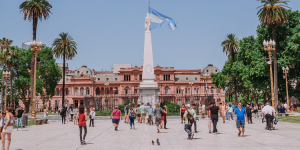
Argentina stretches across an extraordinary range of landscapes and cultures, from the wine country of Mendoza to the glaciers of Patagonia, giving expats a leisure landscape that few countries can match. This article covers the key cultural sites, outdoor parks, annual festivals, shopping events, and discount schemes that shape daily life here, so you can plan your time with accurate, up-to-date information from official sources.
22 July 2026
Football is practically a civic religion in Argentina, but the country's sports scene extends well beyond the pitch. From padel courts in Buenos Aires to ski slopes in Patagonia, expats who want to stay active or connect with locals through sport will find no shortage of options. This article covers where to play, how to find clubs and facilities, what things cost, and which events are worth watching or attending.
22 July 2026
Argentina's size means that getting around looks very different depending on where you live. Buenos Aires has a subway, an extensive bus network, and ride-sharing apps; Rosario runs a city-managed bus system with its own fare structure; Bariloche publishes route-based fares on a municipal page; and Greater Mendoza operates a light-rail line alongside conventional buses. What connects almost all of these systems is the SUBE card, a single payment ecosystem that expats will use from their first week. This article covers every major mode of transport across the country, including what to pay, how to pay it, and where the rules differ from city to city.
22 July 2026
Getting your pet to Argentina takes more planning than most owners expect. The country's veterinary authority, SENASA (Servicio Nacional de Sanidad y Calidad Agroalimentaria), has clear requirements for dogs and cats arriving from abroad, and the timelines built into those requirements mean you need to start the process well before your travel date. This article covers everything from the documents SENASA requires and how to prepare them, to airline options, border procedures, costs, and what life with a pet looks like once you arrive.
22 July 2026
Cordoba runs entirely on wheels: there is no metro or subway, and daily life depends on a dense network of buses and trolleybuses operated by the municipal company TAMSE, supplemented by taxis, ride-hailing apps, and an expanding free public bike scheme. Paying for a ride means understanding SUBE, the nationwide transport card that replaced the local Red Bus system in May 2025 and now coexists with contactless cards, NFC payments, and QR wallets.
22 July 2026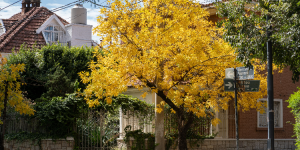
Property purchase in Cordoba is open to foreign nationals on the same terms as Argentine citizens for urban homes, but the practical reality is shaped by a market in flux, rents in pesos that move with inflation, mortgage access that remains limited and selective for foreign applicants, and a transaction process anchored in the provincial cadastre, the escribano's office, and the property registry. For an expat planning to settle in Nueva Cordoba, Villa Belgrano, or one of the city's neighborhoods, the central questions are less about whether to buy than how to verify title, what closing costs to expect, and how to handle a purchase without local financing.
22 July 2026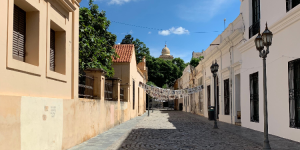
You have decided to move to Cordoba, and the first decision waiting for you is where, and how, to rent. The city has more than 500 barrios, but the practical map for newcomers narrows fast to Nueva Cordoba, the Centro, Alberdi, Guemes, General Paz, Alta Cordoba, and a handful of nearby areas. Rental supply has expanded recently, with vacancy rising and high payment compliance reported by the local real estate body. Prices remain peso-denominated and move with inflation, and the local guarantor system, built around resident Argentine guarantors, is the friction most foreigners encounter before they sign anything.
22 July 2026
Most people assume that working in Cordoba mirrors the Buenos Aires job market in miniature. The reality is different: Cordoba is a mid-sized regional capital where the municipality, the Universidad Nacional de Córdoba, and a handful of industrial and technology employers shape most of what is realistically available to expats. Auto-parts and industrial production remain dominant, technology firms such as Clarika and rhvision continue to recruit locally, and Mercado Libre's recent shift to fully remote work for its 1,260 Cordoba employees illustrates how quickly the local landscape can change.
22 July 2026
Many expats in Cordoba quickly realize that most of the city's cultural and leisure offer is concentrated in a walkable historic core and run, at least in part, by the Municipality, which means a substantial share of museums, walks, workshops and festivals is free or low cost. The city's identity sits at the intersection of two UNESCO recognitions: the Jesuit Block, with the old Universidad Nacional de Cordoba at its heart, and cuarteto, a musical tradition born locally and now on the Representative List of the Intangible Cultural Heritage of Humanity. Around that, summer carnivals fill the neighborhoods, central festivals activate the pedestrian streets, and large parks handle everyday outdoor life.
22 July 2026
Argentina welcomes millions of visitors each year without requiring a consular visa, yet the country's entry framework has become more structured in recent years. Decree DNU 366/2025 introduced a sworn health insurance declaration as a condition of admission for all foreign nationals, making it essential to arrive prepared even if your passport qualifies for visa-free entry. This article covers who needs a visa, what type to apply for, how the application process works, what happens at the border, and what to do if you need more time in the country.
22 July 2026
Argentina has more mobile connections than people. With 64.55 million mobile accesses across a population of roughly 46 million, the country's telecommunications market is one of the most active in Latin America. For expats settling in Buenos Aires or relocating to a smaller city or province, understanding how the mobile and fixed internet landscape works will save time and prevent costly missteps. This article covers everything from getting your first SIM card to choosing a home broadband plan, understanding speed benchmarks, and knowing which websites are subject to court-ordered blocks.
22 July 2026
Argentina taxes residents on their worldwide income, while non-residents are taxed only on Argentine-source earnings: a distinction that shapes every expat's financial life from day one. Understanding where you stand in the system, which regime applies to you, and what you need to file can prevent costly surprises. This article covers the key taxes that affect foreign nationals living in Argentina, from obtaining your tax identification number to filing your annual return, including the simplified income tax declaration introduced by the national tax authority in 2026.
22 July 2026
Argentina has a structured legal framework for internships that sets it apart from many countries in the region. Known locally as a "pasantía educativa," the system is governed by national law, carries specific rights and protections, and includes a dedicated immigration pathway for foreign interns. Whether you are a student arranging a placement through your home university or a recent graduate looking to gain experience in Buenos Aires or Rosario, understanding how the system works will help you arrive prepared, legally compliant, and with realistic expectations about compensation and day-to-day life.
22 July 2026
Argentina draws foreign entrepreneurs with a large domestic market, a highly educated workforce, and a growing technology sector. Setting up a company here is more accessible than many expect: foreign nationals face no ownership restrictions in most sectors, and one of the main company types can be registered entirely online. This article covers the key decisions involved, from choosing a business structure and navigating the registration process to understanding your tax obligations and finding local support.
22 July 2026
Argentina ranks first in South America on the Global Peace Index 2025, offers a digital nomad residence pathway, and sits at the top of Latin America for English proficiency. For expats weighing up a move, those three facts alone set the country apart from most of its regional neighbors. This article covers the key dimensions of daily life in Argentina, from cost of living across multiple cities to visa options, safety realities, language dynamics, and where to find community once you arrive.
22 July 2026
Argentina's healthcare system is more layered than most expats expect before they arrive. The country operates three distinct subsystems side by side: a public network funded by general revenues, a social security structure built around employer-linked health funds known as Obras Sociales, and a private sector anchored by prepaid health plans called medicina prepaga. Understanding how these three pieces fit together, and which one applies to your situation, is the most practical first step you can take before booking your first appointment. This article covers the full picture: how each subsystem works, what expats can access and under what conditions, how to choose private coverage, where to find a licensed provider, and what to do in an emergency anywhere in the country.
22 July 2026
Argentina's public universities offer tuition-free undergraduate education to international students on the same basis as Argentine nationals, making the country a genuinely accessible destination for students from around the world. Whether you're planning to enroll in a degree program in Buenos Aires, Tucumán, or Neuquén, this article covers the structure of the higher education system, how accreditation works, what the student visa process involves, and where to look for financial support.
22 July 2026
Argentina draws expats for many reasons: a rich cultural life, relatively affordable costs by regional standards, and cities as varied as Buenos Aires, Córdoba, and Mendoza. Getting the move right, however, requires careful preparation well before your flight. This article covers the full relocation journey, from planning your residency documents and budgeting your move to clearing customs on arrival and setting up your first home.
22 July 2026
Finding a rental in Argentina means navigating a housing market shaped by persistent inflation, a dual-currency reality, and contract terms that place greater weight on private agreements than on standardized rules. Whether you are settling in Buenos Aires, considering Córdoba's more settled market, or drawn to Rosario or Patagonia, understanding how the system works before you sign anything will save you considerable time and money. This article covers current rent benchmarks across several cities, the main property types, how to search and apply, what the lease will likely say, and what to budget beyond the monthly rent itself.
22 July 2026
Argentina's job market is in a period of genuine transition. After years of high inflation and economic turbulence, the country recorded GDP growth of 4.4% across 2025 and an unemployment rate of 7.5% in the fourth quarter of that year, signaling a stabilizing environment that is beginning to attract renewed foreign investment. For foreign nationals considering a move for work, the landscape rewards preparation: Spanish fluency matters, employer-sponsored visas require advance planning, and salary negotiations must account for persistent inflation. This article covers the practical steps to finding and starting work in Argentina, from job search platforms and visa procedures to contracts, working hours, and your rights as an employee.
22 July 2026
Getting behind the wheel in Argentina is straightforward for most new arrivals, but the rules shift significantly once you become a resident. Foreign licenses are recognized for up to a year under international conventions. Argentina now issues its driving license in digital format with full legal validity, and it has bilateral exchange agreements with several countries that simplify the conversion process. Whether you are renting a car for a road trip, buying a vehicle, or working out whether you need a license at all, this article covers every practical step.
22 July 2026
Setting up your finances is one of the first practical tasks you will face after arriving in Argentina, and the local banking system has its own distinct logic. A peso savings account is free by law, a government program exists specifically to help migrants access the financial system, and the digital banking scene is growing quickly. At the same time, obtaining the tax identification number you may need to unlock certain products can take up to 30 business days for non-residents, so the timing of your first steps matters more than in many other countries. This article covers every stage of the process, from choosing the right account type to understanding fees, cards, ATMs, and the compliance rules around holding US dollars locally.
22 July 2026
Argentina does not issue a standalone "work permit" in the way many countries do. Instead, the right to work legally is embedded within the country's residence authorization system, governed by Immigration Law 25.871 and administered by the Dirección Nacional de Migraciones (DNM). Whether you are applying from abroad at an Argentine consulate or converting your status after arriving in the country, the pathway depends on your employment situation, your nationality, and which route you take into the system. This article covers every official work authorization category currently available, the documents and employer obligations involved, the fees you will pay, and what happens when it is time to renew.
22 July 2026
After several years in the technology sector, Benoit Debellaire returned to Mauritius with the ambition of making business management simpler for local entrepreneurs. In 2020, he founded B-Wi and later developed BoS, a Mauritian cloud-based platform designed to reduce paperwork, automate everyday tasks, and bring essential business tools into one place. In this interview, he discusses his entrepreneurial journey, the challenges of building a local tech company, and the role digitalization and artificial intelligence can play in the future of businesses in Mauritius.
20 July 2026
Most people assume that living in a smaller Argentine city means trading cultural richness for affordability, but San Miguel de Tucumán complicates that assumption. As the capital of Tucumán Province and the city where Argentina declared independence on July 9, 1816, it carries a civic identity that shapes daily life in ways that immediately distinguish it from other provincial cities. With a population of 590,342 across 91 km², it operates at a slower, more locally networked pace than Buenos Aires, yet offers year-round cultural programming, two professional football clubs, a food scene centered on the celebrated empanada tucumana, and monthly living costs averaging USD 682 for one person.
01 July 2026
La Plata draws expats and newcomers into a city shaped by the Universidad Nacional de La Plata (UNLP), one of Argentina's largest public universities, which gives the city a younger, more intellectually active character than many provincial capitals. That academic energy translates directly into leisure: weekend agendas in La Plata run from natural history museums and opera to tango milongas, craft beer festivals, open-air fashion markets, and independent film screenings. The Museo de La Plata alone holds more than 3,000,000 specimens and provides free audioguides in English and Portuguese, making it one of the more newcomer-friendly cultural anchors in the region.
01 July 2026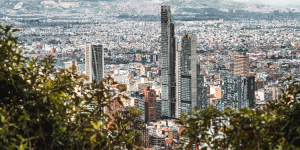
Medellín has built a distinct economic identity around innovation, with a city-backed technology ecosystem that draws startups and established companies alike. The Milla de Oro corridor in El Poblado concentrates corporate offices alongside restaurants and services, while the Ruta N Innovation District channels public investment into tech-based ventures across sectors from health to aerospace. Whether you are joining a multinational, exploring the startup scene, or negotiating a local contract, understanding how the city's job market works will help you make informed decisions before you arrive.
25 May 2026
Football is practically a civic religion in Medellín, but the city's sports scene runs far deeper than the Atanasio Girardot stadium. A public sports infrastructure managed by INDER gives residents access to free swimming pools, cycling corridors, and subsidized sports classes, while a growing padel scene and a well-established running culture add further options for expats looking to stay active. This article covers the main spectator sports, the practical ways to join team activities, gym costs, outdoor routes, kids' programs, and how to navigate the city's public booking system.
25 May 2026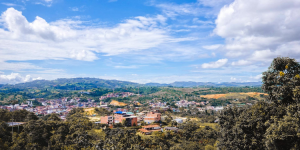
Colombia's internship system is closely integrated into higher education, with many professional programs requiring a práctica profesional as part of the graduation process. These placements operate within a formal legal framework based on a tripartite agreement between the student, the university and the host organisation. In March 2026, the government introduced Decree 0223, which reorganised and clarified the rules governing internships and apprenticeships, including the roles, responsibilities and conditions under which students can be placed. While the reform improves oversight and structure, internships generally remain classified as training rather than standard employment, and compensation is not universally guaranteed. This article covers everything you need to navigate that framework: visa requirements, contract types, where to find openings, what you can expect to earn, and how to convert a placement into a full-time role.
25 May 2026
Choosing the right school is one of the first decisions expat families face in Medellín, and the city's education landscape is more varied than many expect. Between the public sector managed by the city's Secretary of Education, a well-established private school market, and internationally accredited institutions offering IB and French national curricula, families have real choices to work through. This article covers each option in practical detail, from how to request a place in a public school to what fees to expect at the city's main international schools, and how those schools connect to university pathways abroad.
25 May 2026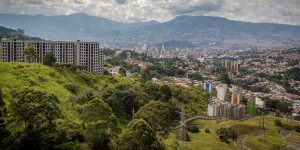
New housing sales in Medellín grew by 24.9% in a recent 12-month period, signaling a market that has recovered meaningful momentum after years of uncertainty. For foreign buyers, the city offers a straightforward legal framework: foreigners hold the same property rights as Colombian citizens, and no residency requirement stands between you and completing a purchase. What does require careful planning is the administrative side, from routing funds correctly through banking channels to navigating notary procedures and annual property tax obligations. This article covers the full picture, from neighborhood price ranges and the step-by-step buying process to transaction costs, legal safeguards, and what happens when you decide to sell.
25 May 2026
Medellín has built a reputation as one of Latin America's more active innovation hubs, and that momentum shows up directly in how professionals and newcomers connect. The city organizes networking around sector themes, scheduled events, and a WhatsApp-first community culture that bridges online discovery with in-person meetups. Whether you're arriving with a professional agenda, looking to plug into the startup ecosystem at Ruta N, or simply want to meet people outside of work, this article covers the main channels, events, and practical norms you need to know.
25 May 2026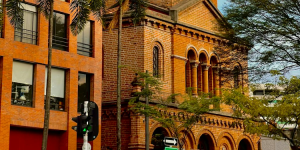
Medellín has grown into a serious destination for international students, offering over 13 higher education institutions, a relatively low cost of living by regional standards, and a year-round temperate climate. Whether you are planning a full degree, a semester exchange, or an intensive Spanish language program, this article covers what you need to know: from choosing a university and applying for a student visa to finding housing, managing a student budget, and getting around the city.
25 May 2026
Medellín's food scene runs the full spectrum from a COP 12,000 set lunch at a neighborhood spot to a COP 380,000 tasting menu with jazz. That range is not an accident: the city's Paisa culinary tradition sits alongside a growing international dining culture, and understanding how both work will save you money, help you settle in faster, and make everyday eating genuinely enjoyable. This article covers the local dishes you'll encounter everywhere, the neighborhoods where restaurants cluster, what grocery shopping looks like, how food delivery actually performs, and the one tipping question every newcomer gets wrong at the payment terminal.
25 May 2026
After years of building a life in Colombia, many foreign nationals reach a point where renewing a temporary visa every one or two years starts to feel like an unnecessary burden. The Resident Visa (Visa Tipo R) offers a way out of that cycle: it grants the right to live, work, and settle indefinitely in the country without the restrictions tied to a specific employer, investment level, or annual income threshold. What makes Colombia's approach distinctive is that the main pathway to permanent residency relies primarily on accumulated time spent legally in the country, with no language exam or civic integration test standing between applicants and their status. This article covers every stage of the process, from understanding which temporary permits count toward eligibility to maintaining your status once it is granted.
25 May 2026
Finding the right school is often the most time-sensitive decision a relocating family faces, and Colombia gives you more options than many expect. The country runs two distinct academic calendars, hosts a growing network of internationally accredited schools in its major cities, and enforces a legal framework for inclusive education. Whether you are moving to Bogotá, Medellín, or Cali, understanding how the system works before you arrive will save you months of uncertainty and, in some cases, a place on a waiting list.
25 May 2026
Colombia has a well-established pet culture, and cities like Bogotá, Medellín, and Cali have seen a steady rise in pet-friendly housing, green spaces, and veterinary services in recent years. Bringing a dog or cat into the country is entirely feasible, but the process follows strict agricultural health rules set by the Instituto Colombiano Agropecuario (ICA), and the margin for error is narrow: the veterinary health certificate that travels with your pet is only valid for 10 calendar days. Starting your preparations at least 4 to 6 months before your departure date gives you the time needed to align vaccinations, documentation, and airline bookings without unnecessary stress.
25 May 2026
Colombia has between 16.5 million and 18 million LinkedIn members, one of the largest professional networks in Latin America, yet the country's real networking currency remains something no app can replicate: personal trust. Whether you are building a business contact list in Bogotá's financial district or looking for a weekend cycling group in Medellín, understanding how Colombians connect will shape every interaction you have. This article covers the professional and social networking landscape across the country, from chamber of commerce events and startup ecosystems to language exchanges and workplace lunch culture.
25 May 2026
Colombia's 1991 Constitution declared the country a multiethnic and pluri-cultural nation, embedding legal protections for diversity into its foundations at a time when few Latin American constitutions went that far. That framework has since grown into one of the more comprehensive sets of equality laws in the region, covering gender, disability, sexual orientation, and religious freedom. This article breaks down what those laws mean in practice, where gaps between legislation and daily reality persist, and what expats from diverse backgrounds can expect when they settle in Bogotá, Medellín, Cali, or beyond.
25 May 2026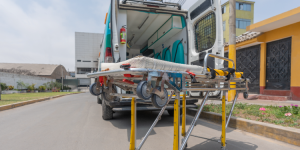
Colombia covers a vast and varied territory, from Andean mountain cities to Caribbean coastlines, and the emergency services that cover this geography are as varied as the landscape itself. For expats, understanding how to reach help quickly and what to expect when it arrives can make a significant difference in a crisis. This article covers every major emergency scenario you are likely to face in Colombia: medical emergencies and hospital payment realities, roadside assistance, natural disaster alerts, police contacts, lost documents, personal safety, and mental health support. One detail that sets Colombia apart from many destinations is its single universal emergency number, 123, which routes callers to police, fire, and ambulance services nationwide from any device, free of charge.
25 May 2026
Colombia has the third-largest tech startup ecosystem in Latin America, with over 2,126 active startups and venture capital inflows projected to exceed USD 600 million. For foreign entrepreneurs, the country offers full ownership rights, a streamlined digital registration process, and visa pathways tied directly to business investment. This article covers everything you need to get a company off the ground in Colombia: from choosing the right structure and meeting capital requirements to opening a corporate bank account and understanding your tax obligations.
25 May 2026
Colombia has a two-track healthcare system that gives expectant parents a genuine choice between public and private care, and that choice shapes almost every aspect of the pregnancy experience. Major cities like Bogotá, Medellín, and Cali are home to internationally accredited private hospitals with dedicated maternity wards and bilingual staff, while the public system provides broad coverage for residents enrolled in the national health insurance framework. Understanding how both tracks work, what they cost, and what the administrative requirements are after birth can save considerable stress later. This article covers the full journey from confirming a pregnancy to registering your baby, along with the specific rules that apply to expat parents on questions of citizenship, maternity leave, and childcare.
25 May 2026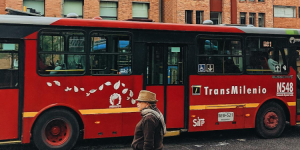
Bogota runs on one of Latin America's largest Bus Rapid Transit networks, a sprawling cycling infrastructure, and a ride-sharing scene that most expats rely on from day one. The city is also mid-way through a landmark transformation: its first metro line is under construction and reshaping traffic patterns across major corridors. Whether you plan to commute daily on the TransMilenio, cycle through Chapinero, or drive under the Pico y Placa restriction system, understanding how Bogota moves will save you time, money, and frustration from the moment you arrive.
25 May 2026
Finding an apartment in Medellín involves navigating a rental market shaped by Colombian law, a tiered utility system, and a sharp divide between the furnished expat-oriented segment and the unfurnished local market. Ley 820 de 2003 governs all urban housing leases in Colombia and prohibits cash security deposits, which surprises many newcomers used to paying one or two months upfront. Instead, landlords and agencies require a guarantor or an insurance product. Prices vary widely by neighborhood, furnishing level, and lease type, with furnished mid-term rentals in popular areas running 20 to 40% above equivalent unfurnished contracts. This article covers the main neighborhoods, accommodation types, price ranges, the rental process, lease terms, common challenges for expats, and what to expect on your monthly utility bills.
25 May 2026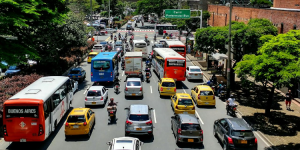
Medellín's public transport network is built around one of the most integrated urban transit systems in Latin America, combining a metro, aerial cable cars, a tram, and feeder buses under a single payment card. For expats settling in the city, understanding how these pieces connect and what restrictions apply to driving makes a real difference from day one. This article covers every mode of transport available in Medellín, from the metro schedule and Cívica card top-up rules to taxi fares, cycling corridors, and the airport bus.
25 May 2026