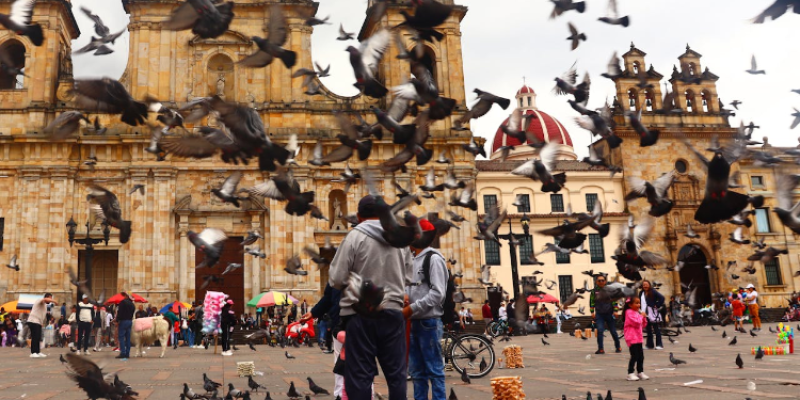
Bogotá sits at 2,640 meters above sea level, making it one of the highest capital cities in the world, and that altitude shapes almost everything about daily life here: the cool climate, the physical adjustment period on arrival, and even the hearty local cuisine. With a metropolitan population of nearly 12 million, Colombia's capital is a sprawling, high-energy city that blends colonial architecture with a fast-growing tech and corporate economy. This article covers the neighborhoods where expats tend to settle, what things cost, how the city moves, and what to expect from the culture, the food, and the community you'll find here.
Bogotá is the political, administrative, and economic center of Colombia, generating a significant share of the country's GDP and serving as its primary hub for education and corporate activity. Its brick-heavy skyline, frenetic street life, and dense urban fabric give it a character that is distinctly Andean: more formal, cooler, and more architecturally layered than Colombia's coastal cities. The city's metropolitan area population sits at approximately 11,922,000 (UN World Urbanization Prospects), making it a true megacity by any measure.
Expats are drawn to Bogotá for several concrete reasons: the cost of living is considerably lower than in Western Europe or North America for those earning in foreign currency, a growing tech and startup ecosystem has created a community of remote workers and entrepreneurs, and the city's northern districts offer a level of urban amenity that makes daily life genuinely comfortable. The sheer scale of the city can be disorienting at first, and the altitude requires a short adjustment period, but most expats find their footing quickly once they settle into the right neighborhood.
Bogotá is divided into 20 administrative localities, each containing numerous smaller neighborhoods. For expats, the relevant geography is almost entirely concentrated in the northern and eastern corridors, where infrastructure, dining, and security standards are noticeably higher than in other parts of the city.
Chapinero, particularly the sub-zones of Zona G and Quinta Camacho, is the preferred base for digital nomads, young professionals, and creatives. The area is walkable, restaurant-dense, and home to a concentration of coworking spaces. It also serves as the heart of Bogotá's LGBTQ+ community, giving it a progressive, open atmosphere that contrasts with more conservative parts of the city.
Usaquén, including the Santa Bárbara district, offers a quieter, more village-like feel that is particularly popular with expat families. The area has a well-known Sunday antiques market, strong access to international schools, and a relatively calm pace compared to the rest of the city. Chico and the area around Parque 93 function as Bogotá's international corporate corridor, housing embassies, luxury apartment buildings, and upscale amenities. These are the neighborhoods where many corporate assignees and senior diplomats end up.
Teusaquillo, centered on the Parkway, is an increasingly popular choice for expats seeking lower rents and a more authentic neighborhood character without paying the premium of the northern zones. Tree-lined streets and a strong local community give it a different feel from the more insular expat enclaves further north.
The deep southern districts, including Ciudad Bolívar, and the historic center known as La Candelaria, are not areas where expats typically live. La Candelaria is worth visiting during daylight hours for its museums and street art, but security conditions after dark are not comparable to those in the northern neighborhoods.
Join the Bogota community
Get regular tips and advice to make the most of your expat life
Cost of living in Bogotá
For expats earning in USD or another strong foreign currency, Bogotá offers a cost of living that is substantially lower than most Western cities. Even in upscale northern neighborhoods, day-to-day expenses remain manageable. The figures below use a reference rate of USD 1 to COP 3,674.
Rental costs vary significantly by neighborhood and apartment type. A standard one-bedroom apartment averages around COP 2,350,000 (USD 640) monthly, while a studio averages approximately COP 1,850,000 (USD 504). A two-bedroom apartment in mid-to-high zones averages around COP 3,350,000 (USD 912). Premium neighborhoods such as Rosales and Chico typically command 40% to 60% above these citywide averages.
Colombian law caps annual rent increases for existing leases based on the previous year's inflation rate. The maximum permitted increase in the current cycle is 5.10%, which provides meaningful protection for tenants on longer-term contracts. High-end apartment buildings also charge monthly homeowners association fees (administración) that can run between COP 400,000 and COP 1,200,000 and are rarely included in the advertised rent figure.
On the groceries and dining side, a meal for two at a mid-range restaurant costs approximately COP 130,000 (USD 35), a liter of milk runs around COP 5,000 (USD 1.36), and a dozen eggs costs roughly COP 9,800 (USD 2.66), based on Numbeo cost of living data for Bogotá. Essential grocery shopping at local markets remains genuinely affordable.
Climate and weather in Bogotá
Bogotá's position near the equator combined with its elevation of 2,640 meters produces a climate that locals sometimes describe as "perpetual autumn": temperatures typically range between 14°C and 19°C year-round, with little seasonal variation. Rain can arrive quickly and unexpectedly at any time of year, and the diurnal temperature shift between midday and evening is sharp enough that layering is always necessary. Locals wear jackets, scarves, and closed-toe shoes throughout the year; shorts and sandals are not part of the city's everyday dress code.
Bogotá has two rainy seasons and two drier periods, but the distinctions are not as dramatic as in many other tropical climates. The city's weather is heavily influenced by broader climatic cycles. El Niño conditions bring elevated temperatures, reduced rainfall, and an increased risk of wildfires in the eucalyptus-heavy Eastern Hills (Cerros Orientales), which can significantly worsen air quality across the city. A previous El Niño episode led to citywide water rationing and a sharp drop in the Chingaza reservoir system, which supplies much of Bogotá's water. Expats moving into apartment buildings should ask about the building's water storage capacity as a practical precaution.
Getting around Bogotá
The primary public transport network is TransMilenio, a Bus Rapid Transit system that covers much of the city, supplemented by the SITP network of neighborhood buses. TransMilenio can be extremely crowded during peak hours, but it remains the fastest surface option on its dedicated lanes.
Bogotá's first elevated metro line (Line 1) is currently under construction and reached 75.5% completion in early 2026. The 24-kilometer driverless line is projected to begin operations in early 2028, which will substantially change the city's transit landscape. Construction along Caracas Avenue and Avenida 68 is currently causing significant surface traffic disruption.
For day-to-day movement, most expats rely on ride-hailing apps such as Uber, Cabify, and Didi rather than street taxis. The city also has over 600 kilometers of permanent cycling infrastructure (Ciclovías), and the northern expat zones are reasonably walkable. For a detailed look at transport options, costs, and routes, see the dedicated Bogotá transport article.
Language and communication in Bogotá
Spanish is the working language of all daily, legal, and commercial life in Bogotá. English proficiency exists in pockets: upscale neighborhoods, multinational offices, and some tourism-facing businesses will have English-speaking staff, but outside these environments, it cannot be assumed. The EF English Proficiency Index places Colombia in the "moderate" proficiency band, which in practice means that managing a lease, opening a bank account, or navigating government offices requires functional Spanish or the help of a bilingual facilitator.
Bogotá's Spanish is widely considered one of the clearest and most neutral in Latin America, making it a relatively good environment for learners. A few local expressions are worth knowing: a person from Bogotá is a Rolo, the casual greeting "¿Qué más?" means roughly "What's up?", and "A la orden" is a standard service phrase meaning "At your service." One cultural linguistic note: Bogotanos use the formal "usted" far more widely than in other Spanish-speaking cities, including in casual and family conversations, which can feel unexpectedly formal to newcomers from other parts of Latin America or Spain.
Culture and social norms in Bogotá
Bogotanos have a reputation for politeness and formality that distinguishes them within Colombia. Transactions and conversations are almost always opened with "Buenos días" or "Buenas tardes" before anything else, and skipping this greeting can come across as rude regardless of how simple the interaction is. The formality extends to dress: the cool climate and corporate culture combine to make jeans, jackets, and smart casual attire the standard for most public settings. Beachwear and athletic clothing outside of gyms or parks are not the norm.
The city has a strong Catholic cultural heritage that shapes public holidays, family rhythms, and social norms in older, more established neighborhoods. At the same time, areas like Chapinero have developed a progressive, cosmopolitan identity that sits comfortably alongside that tradition. Chapinero in particular is the center of Bogotá's LGBTQ+ community and hosts an active social scene that is open and visible.
Sunday in Bogotá has a distinctly different character from the rest of the week. Family gatherings are a genuine priority, many businesses operate on reduced hours, and the city's famous Ciclovía transforms major avenues into pedestrian and cycling spaces. Understanding this weekly rhythm helps expats plan social and practical activities more effectively.
Pace of life and work culture in Bogotá
The work culture in Bogotá is relationship-driven and hierarchical. Face-to-face meetings carry more weight than email exchanges, and extended business lunches remain a standard part of building professional trust. Decisions move through formal channels, and seniority is respected. Expats used to flat corporate structures may find the pace of decision-making slower than expected.
The workweek pace is intense, with heavy traffic congestion adding significant time to daily commutes. Colombian labor law is reducing the maximum legal workweek: under Law 2101, the cap is dropping from 44 hours to 42 hours, effective July 15, 2026, without any corresponding reduction in base salaries. Labor reforms have also moved the start of the official night shift from 9:00 PM to 7:00 PM, triggering a 35% mandatory surcharge for any work conducted after that hour. Expats managing local teams or operating under Colombian employment contracts should ensure their arrangements reflect these requirements.
Outside working hours, Bogotá slows down noticeably. Sundays in particular are family-centered, and the city's restaurant and café culture is genuinely strong throughout the week for those who know where to look.
Food culture in Bogotá
Bogotá's food scene is shaped by altitude and Andean tradition. The flagship local dish is ajiaco: a rich, warming soup made with three varieties of Andean potato, chicken, corn, capers, and cream. It is served in homes and restaurants throughout the city and is one of the most direct expressions of Bogotá's culinary identity. Lunch, known as almuerzo, is the main meal of the day and is typically eaten between 12:30 PM and 2:00 PM. Most local restaurants offer a set lunch menu called a corriente, which usually includes a soup, a main course, a juice, and a small dessert at a fixed price. Dinner tends to be lighter.
Street food is a constant presence: arepas and empanadas are available on almost every block. The Paloquemao market is the city's central wholesale food market and a worthwhile destination for sourcing tropical fruits, fresh produce, and local specialties at low prices.
The international dining scene is concentrated in Quinta Camacho, Zona G, and the area around Parque 93, where restaurants cover everything from Japanese and Korean to contemporary Italian and Latin fusion. Vegetarians will find standard Colombian lunch spots limited, as meat features prominently in traditional menus, but Chapinero has a strong concentration of plant-based and vegetarian restaurants that cater to the neighborhood's more cosmopolitan demographic.
Leisure and social life in Bogotá
One of Bogotá's most distinctive social institutions is the Ciclovía: every Sunday from 7:00 AM to 2:00 PM, the city closes over 100 kilometers of main avenues to motorized traffic, giving millions of residents space to cycle, run, skate, and walk freely through streets that are otherwise dominated by cars. It is one of the largest regular urban car-free events in the world and a genuine window into Bogotá's community life.
Parque Simón Bolívar, one of the largest urban parks in Latin America, functions as the city's green center and hosts major outdoor festivals and concerts throughout the year. The Museo del Oro (Gold Museum) holds one of the most significant pre-Columbian gold collections in the world and is a cultural landmark that resonates well beyond tourism. La Candelaria, the historic center, is home to a dense concentration of street murals and galleries that have made Bogotá a recognized destination for urban art.
For nightlife, Zona Rosa (also known as Zona T) is the upscale hub for bars and clubs, while Chapinero offers a more diverse and alternative scene with large venues catering to a wide range of crowds. Ascending Cerro de Monserrate by cable car or funicular is a popular weekend activity that offers panoramic views over the entire city and its surrounding mountains.
Family life in Bogotá
Expat families in Bogotá tend to concentrate in Usaquén, Santa Bárbara, and Cedritos, all of which offer proximity to international schools, parks, and a relatively calm residential atmosphere. The choice of school often determines which neighborhood a family ends up in, since school runs and after-school activities structure daily logistics.
Bogotá has a developed international school landscape. Expats should distinguish between two distinct categories: local bilingual schools, which teach in two languages but follow the Colombian national curriculum, and fully accredited international schools, which deliver foreign curricula such as the International Baccalaureate, the American model, or the British model. The latter are the relevant options for families who may relocate again and need curriculum continuity.
Named international schools with a presence in Bogotá include Colegio Anglo Colombiano, Knightsbridge Schools International, Colegio Los Nogales, Lycée Français Louis Pasteur, and Deutsche Schule Bogotá. Annual tuition at top-tier institutions ranges from approximately COP 28,000,000 to COP 45,000,000 (USD 7,621 to USD 12,248), while mid-tier schools typically fall in the COP 22,000,000 to COP 38,000,000 range (USD 5,990 to USD 10,343). Colegio Los Nogales charges a COP 260,000 application fee, with fees structured around a one-time enrollment charge and monthly tuition. Expats on corporate relocation packages should confirm whether their employer's education allowance covers the full range of tuition at their preferred school before finalizing enrollment.
Bogotá carries a medium risk rating for expatriates. The most common concerns are opportunistic street crime: pickpocketing, mobile phone snatching, and bag theft in busy areas. The practice, locally known as paseo millonario, in which a passenger is forced to make ATM withdrawals during an unregistered taxi ride, is why expats are consistently advised to use ride-hailing apps rather than hailing taxis from the street.
The northern districts, including Chapinero Norte, Chico, and Usaquén, are well-patrolled and considered safe for daytime walking. La Candelaria is manageable during daylight hours but significantly less safe after dark. The deep southern districts are not areas expats typically venture into, and there is no practical reason to do so.
A few habits reduce risk substantially: keep your phone in your pocket when walking on busy streets, avoid displaying expensive items in public, and use a ride-hailing app for all taxi journeys. The local expression "no dar papaya" captures the underlying logic well: don't make yourself an easy target. These precautions are not unique to Bogotá, but they are worth applying consistently here.
Environment in Bogotá
Bogotá's altitude is the environmental factor that affects new arrivals most immediately. At 2,640 meters, the reduced oxygen levels frequently cause mild altitude sickness (soroche) in the first few days, with symptoms including headaches, fatigue, and shortness of breath. Taking it easy on arrival, staying hydrated, and avoiding strenuous exercise and heavy alcohol consumption for the first two to three days is the standard approach to acclimatization.
Air quality is a more persistent concern. Vehicle emissions from one of Latin America's most congested road networks get trapped by the surrounding Andean mountains, producing elevated PM2.5 levels on a regular basis. Wildfire events in the Eastern Hills, driven by dry conditions, worsen air quality significantly when they occur, as documented during previous El Niño cycles when fires spread rapidly through the eucalyptus forests above the city.
Despite the pollution challenges, Bogotá has substantial green infrastructure. Parque Simón Bolívar and the city's Botanical Garden provide large urban sanctuaries, and the mountains that frame the eastern edge of the city remain a defining visual and recreational feature of daily life.
Bogotá has a large and increasingly diverse expat community. The traditional base of corporate assignees, diplomats, and NGO workers has expanded significantly with the growth of remote work and Colombia's introduction of a Digital Nomad Visa, which has brought a new wave of location-independent professionals to the city.
Geographically, the community clusters in the northern corridor. Single professionals and remote workers tend to favor Chapinero Alto and Quinta Camacho, where coworking spaces, cafés, and social venues are concentrated. Diplomats and high-earning corporate expats lean toward Rosales and Chico. Expats in Teusaquillo and parts of Chapinero generally report stronger integration with local life, while those in the more insular northern enclaves can find themselves operating primarily within an English-speaking social circle.
The coworking scene in Chapinero is the most practical entry point for remote workers looking to build a professional network quickly. The neighborhood's density of cafés, shared workspaces, and social venues makes it easier to meet people without requiring a pre-existing network.
Bogotá offers a genuinely compelling package for the right kind of expat. The advantages are concrete: purchasing power for foreign earners is strong, the café and restaurant culture is rich and varied, the local population is notably polite and welcoming, and the surrounding region of Cundinamarca offers accessible weekend escapes to warmer climates, colonial towns, and natural reserves. The city's cultural life, from its museums and street art to its music and nightlife, is active and diverse.
The challenges are equally real and worth naming clearly. Traffic congestion is structural and severe: commute times in the northern zones can be unpredictable even for relatively short distances, and the ongoing metro construction adds further disruption on several major corridors. Street-level security awareness requires consistent effort, particularly for those unfamiliar with urban Latin American environments. Administrative processes, from banking to residency paperwork, operate entirely in Spanish and move slowly. The altitude affects some people more than others and takes time to adjust to, while air quality on high-pollution days can be uncomfortable for those with respiratory sensitivities.
Expats who adapt well to Bogotá tend to be those who are comfortable with urban complexity, willing to learn Spanish, and able to build a local life that extends beyond the expat bubble. Those who struggle are typically those who expect a more ordered or predictable urban environment than the city currently offers.
A standard one-bedroom apartment averages around COP 2,350,000 (USD 640) monthly across the city. In premium zones like Chico and Rosales, prices run 40% to 60% higher than this figure. Always check whether the monthly administration fee is included in the advertised rent, as it often is not and can add COP 400,000 to COP 1,200,000 to the monthly total.
Colombian law ties annual rent increases for existing residential leases to the previous year's inflation rate. The maximum permitted increase in the current renewal cycle is 5.10%. This cap applies to lease renewals and does not affect the initial price agreed when signing a new contract.
Bogotá's first elevated metro line reached over 75% construction completion in early 2026. The 24-kilometer driverless line is projected to begin operations in early 2028. Until then, construction along Caracas Avenue is causing significant surface traffic disruption across several key commuter routes.
Under Law 2101, the maximum legal workweek in Colombia is dropping from 44 hours to 42 hours, effective July 15, 2026. This change applies to all local employment contracts without reducing base salaries. Employers must adjust schedules and payroll structures to comply with the new limit by the effective date.
Bilingual schools in Bogotá teach subjects in two languages but follow the Colombian national curriculum. International schools are accredited to deliver foreign curricula such as the International Baccalaureate, the American model, or the British model, which allows for smoother academic transitions for families who may relocate again. International schools are significantly more expensive than bilingual options.
Spanish is essential for navigating leases, banking, healthcare, and government offices in Bogotá. Outside upscale international corridors and high-end restaurants, English-speaking staff cannot be relied upon. The city holds a "moderate" English proficiency rating on the EF English Proficiency Index, which means functional Spanish or a bilingual facilitator is necessary for most administrative tasks.
Street taxis carry a documented risk of express robbery, where passengers are forced to make ATM withdrawals during the journey. Ride-hailing apps such as Uber, Cabify, and Didi are the standard safe alternative used by expats throughout the city. These provide a registered driver, a tracked route, and a fixed price.
At 2,640 meters, Bogotá's reduced oxygen levels frequently cause mild altitude sickness in the first few days, with symptoms including headaches, fatigue, and shortness of breath. Staying well hydrated, avoiding strenuous physical activity, and limiting alcohol during the first two to three days helps the body adjust. Most people acclimatize within a week.
Usaquén, Santa Bárbara, and Cedritos are the neighborhoods most consistently chosen by expat families. All three offer proximity to international schools, parks, and a calmer residential atmosphere than the more commercially active northern zones. The choice of an international school often determines which of these neighborhoods is the most practical base.
Every Sunday from 7:00 AM to 2:00 PM, Bogotá closes over 100 kilometers of main avenues to motorized traffic. The space is open to cyclists, runners, skaters, and pedestrians at no cost. The event operates year-round regardless of weather and is one of the most accessible ways to explore the city's main corridors without traffic.
ℹ️
We do our best to provide accurate and up to date information. However, if you have noticed any inaccuracies in this article, please let us know in the comments section below.
A journalist, holder of the DALF C1 and C2 and a diploma from the University of Mauritius, I have nearly twenty years of writing experience. After six years in the Mauritian press, I joined Expat.com, where I have been working for over a decade, including five years as editorial assistant, and now as editorial manager.