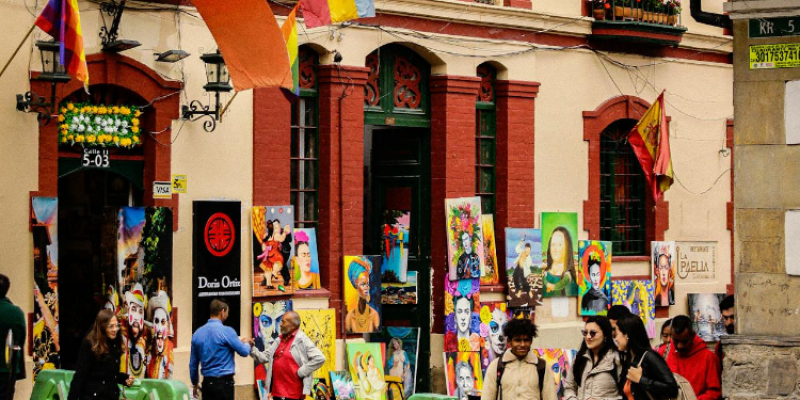
Bogotá sits at over 2,600 meters above sea level, and its cool, consistent climate shapes the rhythm of daily life in ways that surprise many new arrivals. The city runs on a dense calendar of free cultural events, open-air markets, weekly street closures for cyclists, and a nightlife scene anchored in a handful of well-defined neighborhoods. This article covers the main leisure options available to expats across the city, from world-class museums and outdoor spaces to festivals, shopping, and the social networks that make building a life here considerably easier.
Bogotá is a city where entertainment options span a wide spectrum, from colonial heritage sites and contemporary art spaces to a lively café culture and an active music scene. The neighborhoods of Chicó, Rosales, and Usaquén are home to much of the area's upscale dining and social life, while areas like Chapinero offer a more eclectic mix of bars, independent venues, and community-driven spaces. The city blends local Colombian rhythms with international electronic music, and its nightlife, though active, wraps up earlier than in many other major Latin American cities. For expats arriving from larger global capitals, the pace and scale of Bogotá's entertainment scene can feel both manageable and genuinely varied.
Bogotá has a strong concentration of museums and cultural institutions, many of which offer free or low-cost entry. The Museo del Oro (Gold Museum) is one of the city's most visited landmarks. Adult admission is COP 5,000 (approximately USD 1.36), and entry is free every Sunday. The museum holds one of the world's largest collections of pre-Columbian gold artifacts. Weekday mornings tend to offer a quieter experience; Sundays draw significantly larger crowds.
The Museo Botero, located in the La Candelaria neighborhood, offers permanent free admission every day of the week. It houses over 100 original works by Colombian sculptor and painter Fernando Botero, alongside pieces from his private collection that include works by Picasso and Dalí. For visitors interested in contemporary work, the Museo de Arte Moderno de Bogotá (MAMBO) charges COP 8,000 (approximately USD 2.18) for general adult entry. Free entry is available on the last Sunday of each month and on Thursday evenings from 6:00 PM to 9:00 PM.
Good to know:
La Candelaria, the historic center of Bogotá, is walkable and contains several museums and colonial plazas within a compact area, making it practical to combine multiple visits in a single outing.
Join the Bogota community
Get regular tips and advice to make the most of your expat life
Outdoor activities in Bogotá
Bogotá offers a range of outdoor activities suited to its high-altitude, temperate climate. Parque Metropolitano Simón Bolívar serves as the city's primary urban green space, a large park used for jogging, cycling, picnicking, and open-air concerts. It also hosts major public events throughout the year.
One of the most accessible outdoor experiences in the city is La Ciclovía, a weekly event that runs every Sunday from 7:00 AM to 2:00 PM. During this window, the city closes several kilometers of its main roads to motorized vehicles, opening them up for free use by cyclists, runners, and pedestrians across multiple neighborhoods. It is entirely free and requires no registration.
For those looking to leave the urban landscape behind, Cerro Monserrate offers a prominent viewpoint overlooking the city. A round-trip ticket for the funicular or cable car costs COP 25,000 (approximately USD 6.80). A pedestrian trail is also available at no cost, open Tuesday to Saturday from 5:00 AM to 1:00 PM, and Sundays from 5:30 AM to 5:00 PM. The hike involves a significant elevation gain, and those who have recently arrived in Bogotá are advised to allow a few days to acclimatize before attempting it.
Bogotá's main shopping districts are concentrated in the northern part of the city. Zona T (also known as Zona Rosa) and the area around Parque de la 93 are home to upscale retail, international brands, restaurants, and bars. Major shopping centers in this zone include Centro Comercial Andino and Unicentro, both of which offer a full range of fashion, electronics, and food options.
For a different kind of shopping experience, the Usaquén Sunday Market draws both locals and expats every week with a range of artisanal crafts, antiques, and locally made goods. It operates in an open-air format in the charming cobblestone streets of the Usaquén neighborhood and pairs well with a visit to one of the area's many cafés.
Payment practices vary across the city. While many establishments in Zona T and upscale venues readily accept card payments, smaller markets and street vendors typically operate on a cash basis. Carrying some local currency alongside a card remains practical for getting around different parts of the city.
Events and festivals in Bogotá
Bogotá hosts a number of recurring festivals and public events that draw large audiences throughout the year. Festival Estéreo Picnic, the city's largest music festival, takes place annually at Parque Metropolitano Simón Bolívar, typically in March. The event features a mix of international and local acts across multiple stages and operates on a cashless wristband system. Tickets are purchased in advance through ticketing platforms.
Festival Ondas Bogotá is a relatively new outdoor concert series held at Parque Simón Bolívar, typically in February. It offers curated daily performances alongside food and drink experiences. Both events draw significant crowds, and securing tickets early is advisable for either.
Beyond large-scale festivals, the city's cultural calendar is active year-round with free events in public parks, open-air film screenings, and community gatherings tied to the city's network of neighborhood cultural centers. Checking local listings regularly is the most reliable way to stay up to date on current programming.
Nightlife in Bogotá
Bogotá has an established nightlife scene anchored in three main zones: Zona T (Zona Rosa), Parque de la 93, and Chapinero. Each area has a distinct character: Zona T and Parque de la 93 lean toward upscale cocktail bars and mid-to-large clubs, while Chapinero offers a wider mix, including smaller venues and a more diverse crowd.
Cover charges at clubs range from COP 16,000 to COP 50,000 (approximately USD 4.35 to USD 13.61) depending on the venue and the night. A standard cocktail in a Zona T club averages around COP 20,000 (approximately USD 5.44), and a local beer runs about COP 15,000 (approximately USD 4.08). Well-known venues in the city include Theatron in Chapinero, a large multi-room club, and Andrés Carne de Res, located in Zona Rosa on Carrera 14.
Most clubs in Bogotá close by 3:00 AM, which is notably earlier than in many other cities in the region. Arriving before 11:00 PM generally means lower or waived cover charges at many venues. Physical ID is required for entry to late-night venues.
Building a social life in Bogotá as an expat is easier than in many cities of comparable size, partly because the expat community tends to be well-organized and active. Much of the coordination happens through messaging apps rather than formal websites or event platforms. WhatsApp and Telegram groups are widely used for organizing meetups, sports events, and neighborhood-level information sharing.
Fitness-oriented social groups, including running clubs that meet in parks and neighborhoods across the city, offer a practical way to meet people and explore the city simultaneously. These groups typically post schedules and meeting points through their messaging channels.
For day trips from the city, two destinations within roughly 2 hours are popular among expats: the Zipaquirá Salt Cathedral, a subterranean church built inside a salt mine, and Lake Guatavita, a high-altitude crater lake with historical significance tied to the El Dorado legend. Both are accessible by bus or private car and make for manageable weekend outings from the city.
Frequently asked questions about leisure in Bogotá
Weekday mornings from Tuesday to Friday offer the quietest visit. The museum is closed on Mondays. Sundays are free but tend to attract the largest crowds, making the experience more crowded and less comfortable for those who prefer to move through the collection at their own pace.
Yes, a pedestrian trail is available at no cost. It is open Tuesday to Saturday from 5:00 AM to 1:00 PM, and on Sundays from 5:30 AM to 5:00 PM. The trail involves considerable elevation gain, so it is worth allowing a few days in the city to acclimatize before attempting it. The funicular and cable car cost COP 25,000 (approximately USD 6.80) for a round trip.
La Ciclovía is a free weekly event held every Sunday from 7:00 AM to 2:00 PM. The city closes several kilometers of main roads to motorized traffic, opening them to cyclists, joggers, and pedestrians. No registration is required, and it runs regardless of the weather across multiple neighborhoods throughout the city.
No, the Museo Botero offers permanent free entry every day of the week. The collection includes over 100 original works by Fernando Botero as well as pieces from his private collection, including works by Picasso and Dalí. It is located in the La Candelaria neighborhood.
The city's most active nightlife is concentrated in Zona T (also called Zona Rosa), Parque de la 93, and Chapinero. Zona T and Parque de la 93 tend toward upscale venues, while Chapinero covers a broader range of bars and clubs. Most venues close by 3:00 AM.
Most expat social coordination in Bogotá happens through WhatsApp and Telegram groups rather than formal event platforms. Groups covering general expat meetups, running clubs, and neighborhood-specific activities are all common. Asking at local cafés in Chapinero or through contacts made at early events is often the most direct way to get plugged into these networks.
Two popular options within about 2 hours of the city are the Zipaquirá Salt Cathedral, a subterranean church carved into a salt mine, and Lake Guatavita, a high-altitude crater lake with significant pre-Columbian history. Both are accessible by bus or private car and are commonly done as day trips on weekends.
The Museo de Arte Moderno de Bogotá (MAMBO) is the city's main contemporary art museum. Standard adult entry costs COP 8,000 (approximately USD 2.18). Entry is free on the last Sunday of each month and on Thursday evenings between 6:00 PM and 9:00 PM.
ℹ️
We do our best to provide accurate and up to date information. However, if you have noticed any inaccuracies in this article, please let us know in the comments section below.
A journalist, holder of the DALF C1 and C2 and a diploma from the University of Mauritius, I have nearly twenty years of writing experience. After six years in the Mauritian press, I joined Expat.com, where I have been working for over a decade, including five years as editorial assistant, and now as editorial manager.