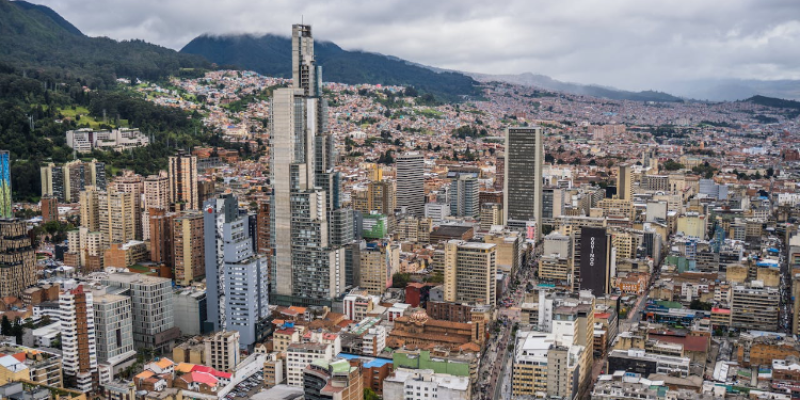
Foreigners can buy residential property in Bogotá with relatively few restrictions, making the city one of the more accessible markets in Latin America for international buyers. The Colombian peso's exchange rate, a range of neighborhoods at very different price points, and a clear legal framework for registering foreign investment all combine to make the process manageable, provided buyers understand the local procedures. This article covers everything from neighborhood price ranges and the step-by-step buying process to transaction costs, mortgage conditions, ongoing ownership taxes, and what foreign sellers need to know when it comes time to exit the market.
Bogotá's residential market has been moving through a selective recovery following the high-interest-rate environment of 2023 and 2024. New housing sales are projected to grow by 11.5% nationally in 2026, supported by easing credit conditions. Property prices across the city rose by roughly 10% to 11% nominally in 2025, pushing the citywide average to approximately COP 10,500,000 per square meter (around USD 2,857).
The market is transitioning toward a balanced to slightly seller-advantaged position in prime transit corridors. Properties currently sit on the market for about 90 days on average across Bogotá, though move-in-ready apartments in high-demand zones near the confirmed Metro Line 1 stations are moving faster, typically between 60 and 75 days.
Foreign buyer activity remains steady, driven in part by favorable exchange rates against major currencies and gross rental yields that attract investors targeting neighborhoods like Chapinero and Teusaquillo, where short-term rental returns outpace traditional long-term leases by a significant margin.
Yes. Any legally capable adult can acquire real estate in Bogotá regardless of nationality or visa status. There are no restrictions preventing a foreigner on a tourist visa from completing a purchase; a valid passport is sufficient to sign the public deed at the notary.
There is, however, one mandatory step specific to foreign buyers that has significant consequences if skipped: all funds transferred into Colombia to buy property must be declared and registered through the Banco de la República (Colombia's central bank) using the Formulario 4, the Foreign Investment Registration form. Failing to register the capital at the time of transfer means the property cannot later be used to support an investor visa application, and proceeds from a future sale cannot be legally repatriated abroad.
Buying property in Bogotá also opens a pathway to Colombian residency. The Type M (Inversionista) Visa requires a minimum real estate investment of 350 times the current Minimum Legal Monthly Wage (SMMLV). With the 2026 SMMLV set at COP 1,750,905, that threshold stands at approximately COP 612,816,750 (around USD 166,752). For immediate long-term residency, the Type R (Resident Investor) Visa requires an investment of 650 SMMLV, which amounts to approximately COP 1,138,088,250 (around USD 309,683) at 2026 exchange rates. Both thresholds are calculated in Colombian pesos based on the SMMLV, so the equivalent in any foreign currency will shift with the daily exchange rate.
Bogotá's residential property market is highly segmented by neighborhood, and the area a buyer chooses will shape both the purchase price and the likely rental yield or resale timeline.
Prime central neighborhoods such as El Retiro, El Nogal, La Cabrera, Chicó, and Rosales are the most established and sought-after among expats. These areas offer proximity to business centers, international dining, and a wide range of amenities, with prices to match.
In the high-growth corridor, the Salitre zone between Teusaquillo and Fontibón and the Colina Campestre area in Suba are attracting strong rental demand in 2026, supported by improving urban connectivity and relatively low resale inventory compared to central districts.
Chapinero Alto and Chapinero Central stand out as up-and-coming mid-range zones, with property price growth estimated at 12% to 14% annually in early 2026, driven by demand from young professionals and remote workers seeking walkable, well-served neighborhoods.
For buyers with tighter budgets, neighborhoods such as Cedritos, Engativá, and Kennedy offer modern two-bedroom units at more accessible price points, primarily appealing to local renters and budget-conscious investors.
Get regular tips and advice to make the most of your expat life
Property prices in Bogotá
The citywide average price per square meter sits at approximately COP 7,300,000 (around USD 1,986), though this figure varies substantially depending on the neighborhood and property type.
In the prime districts of La Cabrera, El Retiro, and El Nogal, prices per square meter regularly range between COP 11,000,000 and COP 15,000,000 (USD 2,993 to USD 4,081) for properties up to ten years old. At the other end of the market, entry-level zones such as Suba, Engativá, and Kennedy average below COP 5,400,000 per square meter (USD 1,469), with realistic starting budgets for a small apartment around COP 211,000,000 (USD 57,414).
By property type, the median apartment pricein Bogotá is roughly COP 870,000,000 (USD 236,734). A studio apartment averages COP 340,000,000 (USD 92,517), while a standard two-bedroom apartment averages COP 770,000,000 (USD 209,523). All price figures are subject to change and should be verified against current listings before making any financial commitment.
Types of property in Bogotá
Apartments and condominiums make up approximately 72% of Bogotá's residential listings, making them the most liquid asset class and the category most favored by banks for financing purposes. They dominate both the rental and resale markets and are the primary focus for most foreign buyers.
New-build apartments carry a premium of roughly 12% over comparable resale properties, reflecting modern amenities, updated building codes, and lower near-term renovation requirements. Developer-direct payment plans on off-plan constructions are a common route for buyers who want to avoid the high local mortgage rates discussed in the financing section below.
The Bogotá market also segments sharply between Social Housing (Vivienda de Interés Social, or VIS), which accounts for around 70% of national volume, and Non-Social Housing (No VIS). Foreign investors and expat buyers focus almost exclusively on the No VIS segment, where quality standards and resale demand are more relevant to their needs.
Standalone houses and townhouse-style properties exist but represent a smaller, generally more expensive segment. They tend to be located in peripheral suburban areas or specific central historical zones and are less commonly targeted by international buyers.
The standard property buying processin Bogotá follows a clear sequence that typically takes between four and eight weeks for a cash purchase.
Property selection and negotiation: Buyers view properties and negotiate on price. Unlike markets where asking prices are largely fixed, properties in Bogotá typically sell below their listed price unless the property is in a hyper-competitive, low-inventory zone such as Chapinero Alto.
Title study (Estudio de Títulos): The buyer's lawyer retrieves the Certificado de Tradición y Libertad, the official ownership history document issued by the government, which traces ownership over the last 20 years and identifies any outstanding mortgages, liens, or legal embargoes affecting the property. This document can be obtained online from the Superintendency of Notaries and Registry (Superintendencia de Notariado y Registro, or SNR) for approximately COP 20,000 to COP 25,000 (USD 5 to USD 7). Skipping this step is widely cited as the most significant mistake foreign buyers make in the Colombian market.
Promise of sale agreement (Promesa de Compraventa): Both parties sign a binding preliminary contract that sets out the timeline, payment schedule, and penalties for non-performance. The buyer typically pays a deposit at this stage, commonly 10% to 20% of the purchase price.
Foreign capital registration: Foreign buyers must channel and register their incoming funds through the Banco de la República using the Formulario 4 before the transaction closes. Without it, the investment cannot support a visa application, and future repatriation of sale proceeds becomes legally complicated.
Notarization (Escritura Pública): The buyer and seller, or their legal representatives acting under a Power of Attorney, sign the final Public Deed before a registered Colombian notary. Buyers who cannot be present in Bogotá can complete the purchase remotely by granting an apostilled Power of Attorney to a trusted local lawyer, who will then sign both the preliminary contract and the final deed on their behalf.
Property registration: The signed deed is registered with the Office of Public Instruments (Oficina de Registro de Instrumentos Públicos). Legal ownership does not transfer until this registration is complete.
Costs of buying in Bogotá
For a standard residential purchase in Bogotá, total transaction costs for the buyer typically range between 2.5% and 4.5% of the purchase price. The main components are as follows.
Transfer and registration tax (Impuesto de Registro): Bogotá applies a combined transfer and registration tax comprising the Impuesto de Registro (approximately 0.67%) and a Beneficencia tax (approximately 1%), totaling roughly 1.67% to 2%, paid entirely by the buyer.
Notary fees: Mandated notary tariffs sit at approximately 0.54% of the declared property value. By standard market practice, this fee is split equally between buyer and seller, meaning the buyer's share is around 0.27%.
Legal fees: Hiring an independent conveyancing lawyer (abogado) to carry out due diligence and manage the closing typically costs between 1% and 2% of the property value, or a pre-agreed flat fee.
Agent commission: Standard real estate agent commissions range from 3% to 5% plus 19% VAT on the service fee. In Bogotá, this cost is almost exclusively borne by the seller, not the buyer.
Luxury stamp duty (Impuesto de Timbre): Properties exceeding 20,000 UVT (approximately COP 996,000,000, or around USD 271,020) are subject to a 1.5% stamp duty. Amounts above 50,000 UVT face a 3% rate. Buyers of lower-value properties are not affected by this tax.
Good to know:
The sale of residential property itself does not attract VAT (IVA) in Colombia. The 19% IVA applies only to the professional service fees of agents and lawyers, not to the property transaction itself.
Financing and mortgages in Bogotá
Securing a local Colombian mortgage as a foreign non-resident is possible in theory, but significantly restricted in practice. Banks, including Bancolombia, Davivienda, and Scotiabank Colpatria, have programs for buyers based abroad, but they strongly favor applicants who already hold a Migrant (M) or Resident (R) visa, a Colombian Cédula de Extranjería (foreign national ID), and established local financial ties.
Foreign buyers who do qualify face strict loan-to-value (LTV) limits of 50% to 70%, meaning a cash deposit of 30% to 50% of the property value is required upfront. The Banco de la República (BanRep) policy rate stood at 9.25% in the first quarter of 2026, and mortgage interest rates for foreign borrowers are elevated further, typically ranging from 11% to 18% effective annual for peso-denominated loans. Mortgages are offered either as fixed-rate peso loans or as variable UVR (Unidad de Valor Real) loans indexed to inflation.
To qualify, banks generally require proof of legal residency, six months of Colombian bank statements, foreign income verification, local tax filings, and mandatory life and property insurance naming the bank as beneficiary. Given these conditions, many foreign buyers opt to purchase outright with cash or use developer-direct payment plans on off-plan properties rather than seek local financing.
Legal considerations in Bogotá
Engaging an independent lawyer registered with the Consejo Superior de la Judicatura is strongly recommended for all foreign property purchases in Bogotá. The lawyer should be retained independently of the seller's agent to ensure that their due diligence is conducted in the buyer's interest alone.
The lawyer's principal tasks include retrieving and analyzing the Certificado de Tradición y Libertad from the SNR, confirming there are no unresolved liens, embargoes, or ownership discrepancies, and overseeing the notarization and registration process. This document is the cornerstone of title verification and should never be skipped.
All international documents used in a property transaction, such as passports or foreign marriage certificates for joint purchases, must carry an apostille. Buyers who are not fluent in Spanish will also need official translations prepared by certified sworn translators (traductores oficiales). These translations typically cost between COP 800,000 and COP 3,000,000 (USD 217 to USD 816), depending on the complexity and volume of documents involved.
Finally, the Formulario 4 registrationwith the Banco de la República is a legal requirement, not an administrative option. Without it, the property cannot be applied toward an investor visa, and the buyer loses the legal right to repatriate proceeds when the property is eventually sold.
Owning property in Bogotá
Once a property is purchased, owners in Bogotá face a set of recurring costs and tax obligations.
The annual property tax (Impuesto Predial Unificado) is levied by the municipality of Bogotá based on the cadastral value of the property. The rate ranges from 0.7% to 1.1%, generating annual bills that typically span from COP 1,500,000 to COP 10,000,000 (USD 408 to USD 2,721) depending on the neighborhood and property value.
Owners in managed condominium buildings must also pay mandatory monthly community fees (administración). These vary widely: basic buildings may charge as little as COP 200,000 (USD 54), while luxury high-rises with 24-hour security, gyms, and elevators can charge over COP 2,000,000 (USD 544).
Foreign property owners who are not Colombian tax residents are subject to a flat 35% withholding tax on gross rental income generated in Bogotá. This is a significant consideration for investors planning to rent out their property while living abroad.
Utility costs in Bogotá are tiered according to the property's socioeconomic stratum (Estrato 1 through 6). Properties in Estrato 5 and 6, which correspond to luxury neighborhoods, pay a surcharge on their utility bills that subsidizes lower-income zones. Buyers in prime areas should factor this into their ongoing cost estimates.
Sellers in Bogotá should budget for total transaction costs of between 4% and 7% of the sale price, covering agent fees, taxes, and notary charges.
The seller bears the real estate agent commission, which ranges from 3% to 5% plus 19% VAT on the service fee. A 1% withholding tax (Retención en la Fuente) on the gross sale value is collected directly by the notary at the time of closing.
Capital gains tax (Ganancia Ocasional) applies to the profit on the sale, calculated as the difference between the sale price and the inflation-adjusted acquisition cost plus any documented improvement expenses. For properties held for more than two years, this profit is generally taxed at a flat 15%. Properties sold within two years by non-residents can face income tax rates of up to 35%, making the holding period a significant variable in investment planning.
Repatriation of sale proceeds requires demonstrating two things to the Colombian authorities: that the original capital was properly registered with the Banco de la República via Formulario 4 at the time of purchase, and that all applicable capital gains taxes have been settled with the DIAN (Colombia's national tax authority). Sellers who did not complete the Formulario 4 registration at the time of purchase will face significant complications at this stage. Maintaining thorough records of any renovations or improvements carried out during ownership is also advisable, as these costs can be deducted to reduce the taxable capital gain.
Yes. A valid passport is sufficient to sign the public deed at the notary, and no residency status is required to complete a purchase. Opening a local Colombian bank account, however, typically requires a Cédula de Extranjería. Buyers without a local account can fund purchases through wire transfers, though this makes the Formulario 4 registration with the Banco de la República especially important to manage correctly.
The Type M (Inversionista) Visa requires a minimum real estate investment of 350 times the current SMMLV. At 2026 rates, this equals approximately COP 612,816,750 (around USD 166,752). The threshold is set in Colombian pesos and adjusts each year when the SMMLV is revised, so the foreign currency equivalent will vary with the exchange rate at the time of purchase.
In Bogotá, the seller is responsible for paying the agent's commission, which typically ranges from 3% to 5% plus 19% VAT on the service fee. Buyers are not generally expected to pay agent fees, though the specific arrangement should always be confirmed in writing before engaging any agent.
It is the official property background document issued by the government through the Superintendency of Notaries and Registry, recording the chain of ownership over the last 20 years and identifying any outstanding mortgages, liens, or legal embargoes on the property. It can be obtained online for approximately COP 20,000 to COP 25,000 (USD 5 to USD 7) and should be retrieved by the buyer's lawyer before any deposit is paid.
Foreign buyers must register incoming capital through the Banco de la República using the Formulario 4 at the time the funds enter the country. This registration legalizes the foreign investment and is a prerequisite for using the property toward a visa application or repatriating the proceeds of a future sale. It should be handled through a regulated Colombian bank or a licensed foreign exchange broker.
Yes. All property owners pay an annual municipal property tax (Impuesto Predial Unificado) calculated at between 0.7% and 1.1% of the property's cadastral value. Owners in managed condominium buildings also pay monthly community fees, which range from around COP 200,000 (USD 54) for basic buildings to over COP 2,000,000 (USD 544) for luxury developments with full amenities.
No. Buyers who cannot travel to Colombia can grant an apostilled Power of Attorney to a trusted local lawyer, who will sign the preliminary contract and the final deed on their behalf. This is a common arrangement for foreign buyers and is fully recognized under Colombian law, provided the Power of Attorney document is properly apostilled before being used.
It is possible but restricted. Most banks require applicants to hold legal residency, local Colombian income, and a local credit history, and they cap financing at 50% to 70% of the property value. Interest rates for foreign borrowers typically range from 11% to 18% effective annual, which leads many foreign buyers to opt for cash purchases or developer payment plans on off-plan projects instead.
ℹ️
We do our best to provide accurate and up to date information. However, if you have noticed any inaccuracies in this article, please let us know in the comments section below.
A journalist, holder of the DALF C1 and C2 and a diploma from the University of Mauritius, I have nearly twenty years of writing experience. After six years in the Mauritian press, I joined Expat.com, where I have been working for over a decade, including five years as editorial assistant, and now as editorial manager.