


 Guide updated by Veedushi Bissessur on 26 October 2026
Brazil is home to 213.4 million people (IBGE, July 2025) and remains the largest economy in Latin America. Around 2 million immigrants from 200 nationalities live in the country in 2026, and dedicated visas for remote workers and retirees make a long-term move more accessible than many expect. This guide covers visas, work, taxes, healthcare, schools, housing and the real cost of settling in.
5 good reasons to move to Brazil
- Latin America's largest economy, with a domestic market of 213 million consumers.
- Dedicated VITEM XIV visas for digital nomads and retirees, with accessible income thresholds.
- A free, universal public health system, the SUS, open to foreign residents.
- No income tax on earnings up to R$ 5,000 a month since 1 January 2026.
- A wide choice of American, British and IB international schools in the main cities.
Your setup journey
Guide in 14 steps. Click any step below to jump directly to the section you need.
01Where to Live in Brazil: São Paulo, Rio, Florianópolis, Curitiba and Brasília
Brazil is vast, and each city offers a very different lifestyle and budget. Here are the five most popular bases for expats, with population figures from IBGE (2025) and rents from Numbeo (2026).
São Paulo
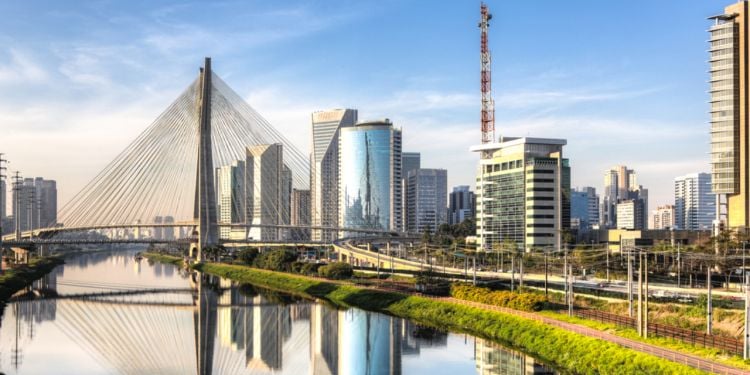
With 11.9 million residents (21.6 million in the metro area), São Paulo is the business and financial capital, home to multinational headquarters around Avenida Faria Lima and Paulista. A central one-bedroom rents for R$ 3,298 and a three-bedroom for R$ 7,605. It has the widest choice of international schools, including Graded, Avenues, St. Paul's, Chapel School and St. Francis College, two airports and top hospitals.
Rio de Janeiro
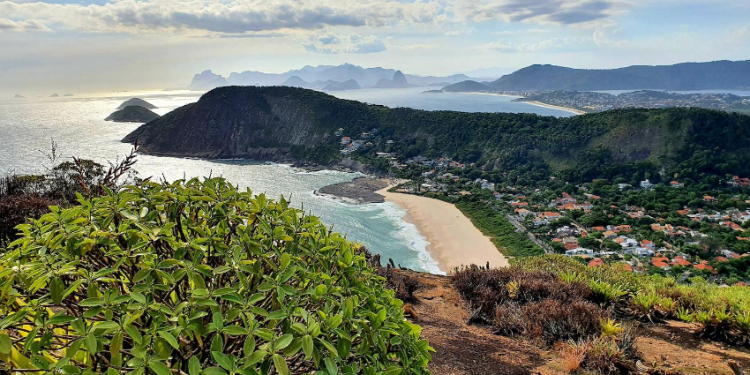
Rio has 6.7 million residents (12.9 million metro) and a strong energy, media and tourism economy. Central rents are higher than in São Paulo, at R$ 4,567 for a one-bedroom and R$ 6,720 for a three-bedroom, but other living costs are 8.2% lower. Families use the Escola Americana do Rio de Janeiro in Gávea and Barra or the British School Rio.
Florianópolis
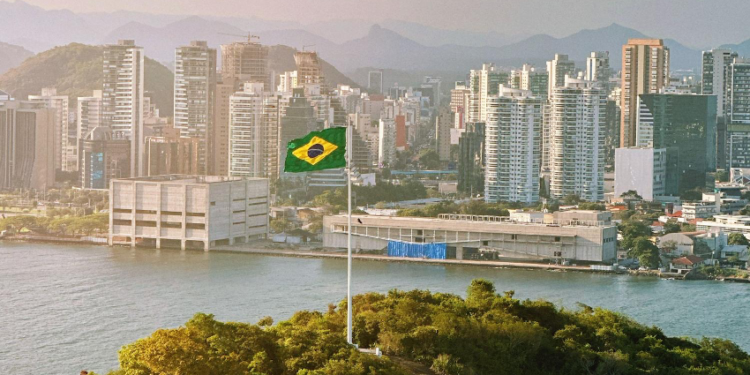
This island capital of 587,486 residents is growing fast, by 1.93% a year. It combines 42 beaches with a lively tech and startup scene, and Lagoa da Conceição is a favourite with digital nomads. A central one-bedroom costs about R$ 3,246, and living costs excluding rent are 9.8% below São Paulo according to Numbeo.
Curitiba
Curitiba, with 1.83 million residents, is known for its organised layout, green spaces, pioneering BRT bus network and temperate climate. A central one-bedroom rents for around R$ 2,165, while São Paulo rents are 61.3% higher (Numbeo, July 2026). It attracts families and retirees.
Brasília
The planned federal capital has 3 million residents and hosts embassies and international organisations. The Escola Americana de Brasília charges about R$ 9,002 a month (2025).
Visit two or three cities before deciding: the right choice depends on your job, budget and schooling needs.
Explore our city guides
02Brazil Visas and Residence Permits: Choosing the Right Route
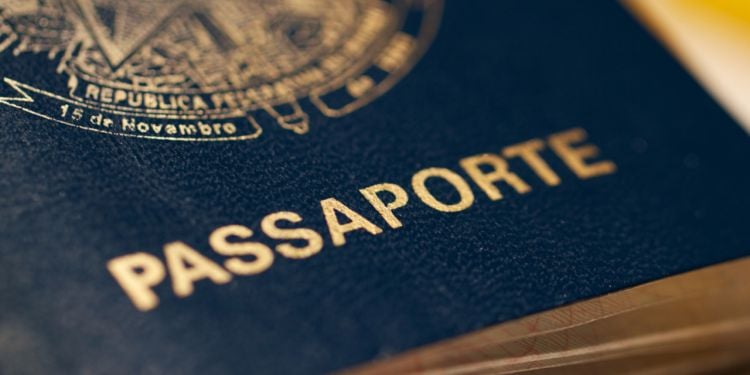
Brazil's immigration rules are set by the Lei de Migração 13.445/2017 and by resolutions of the Conselho Nacional de Imigração. Visas are issued only by Brazilian embassies and consulates abroad, never on Brazilian soil, though some permits can be requested in-country via MigranteWeb.
Short stays and entry rules
Holders of UK and EU passports can visit Brazil visa-free for up to 90 days. Since 10 April 2025, citizens of the United States, Canada and Australia need an eVisa. It costs USD 80.90 and allows stays of up to 90 days per visit. Living or working in Brazil requires a temporary visa.
Main long-term visas
- VITEM XIV for digital nomads: for remote workers paid by foreign employers or clients. You need USD 1,500 a month in income or USD 18,000 in savings. Valid one year and renewable once, it takes 45 to 60 days to process. Working for a Brazilian company is excluded.
- VITEM XIV for retirees and pensioners: requires a monthly transfer of at least USD 2,000 in pension income to Brazil, with no minimum age. The initial stay lasts up to two years.
- VITEM V: the work visa, sponsored by a Brazilian employer through the Ministério da Justiça e Segurança Pública.
- VITEM XI: family reunion, with an initial two-year residence.
- Investor residence: indicative thresholds are R$ 1,000,000 in urban property (R$ 700,000 in the North and Northeast) or R$ 500,000 in a Brazilian company. Confirm current amounts before committing.
Application steps
- Complete the online form on formulario-mre.serpro.gov.br, upload your documents, then print and sign the RER form.
- Prepare a valid passport, an apostilled criminal record and birth certificate, health insurance valid in Brazil and proof of income or a contract.
- Attend your consulate appointment and pay the fee.
- Within 90 days of arrival (30 days for some consulates), register with the Polícia Federal to receive your CRNM residence card.
- Apply for your CPF taxpayer number, ideally at the consulate before you leave.
See the consular pages for the digital nomad and retiree visas. Start gathering apostilled documents early: they are the usual bottleneck.
Discover more






Join the discussion on the forum
03Working and Doing Business in Brazil in 2026
Brazil's job market is at its strongest in more than a decade. Unemployment fell to 5.4% in the quarter ending June 2026, the lowest level since the survey began in 2012. Fluent Portuguese is expected in most roles, and informal work remains widespread.
The labour market
The table below summarises the main employment indicators published by IBGE in 2026. Average earnings are modest, so foreign salaries go further.
Unemployment rate | 5.4% (Q2 2026) |
Employment rate | 58.7% (Nov 2025 to Jan 2026) |
Labour force | 108.7 million (Feb to Apr 2026) |
Informal employment | 37.4% of workers (Q2 2026) |
Average monthly earnings | R$ 3,738 (USD ~740), Q2 2026 |
Minimum wage | R$ 1,621 (USD ~321) per month, 2026 |
Sources: IBGE, PNAD Contínua Q1 2026, IBGE, PNAD January 2026, IBGE, PNAD April 2026, Decreto 12.797/2025
Most salaried jobs follow the CLT regime, which includes a 13th-month salary, 30 days of paid leave with a one-third bonus and employer deposits into the FGTS fund. Many professionals instead invoice through their own company, known as PJ.
Sectors that are hiring
- Agribusiness: soy, coffee, sugar and meat, with Brazil among the top global exporters.
- Energy: offshore oil led by Petrobras, plus wind, solar and green hydrogen in the Northeast.
- Technology and fintech: hubs in São Paulo, Florianópolis, Recife and Belo Horizonte.
- Mining: iron ore and lithium, especially in Minas Gerais.
- Services and language teaching, with steady demand for English teachers.
Starting a business
The Sociedade Limitada, or LTDA, is the most common structure and has no minimum capital. Each partner needs a CPF and a gov.br account to sign electronically. You then register with the state Junta Comercial through Redesim to obtain a CNPJ, secure municipal licences and choose a tax regime such as Simples Nacional, Lucro Presumido or Lucro Real. Expect 2 to 15 working days, and hire a local accountant.
Whether you job hunt or launch a company, Portuguese and a good local network will make the biggest difference.



04Renting a Home in Brazil: Property Types, Neighbourhoods and Leases
Most expats rent when they first arrive, and the rental process has a few local twists worth knowing.
Types of housing
Apartments in a condomínio, a gated building with 24-hour reception and often a pool and gym, are the standard choice in big cities. Families often prefer houses in a condomínio fechado, such as Alphaville near São Paulo. Studios and serviced flats are practical for the first weeks. Always check the monthly condomínio fee and the IPTU property tax, which are usually paid by the tenant on top of the rent.
Popular expat neighbourhoods
- São Paulo: Jardins, Itaim Bibi and Vila Olímpia for business districts; Pinheiros and Vila Madalena for nightlife; Moema, Brooklin and Campo Belo for families near Ibirapuera park; Morumbi for large homes near Graded and Chapel School.
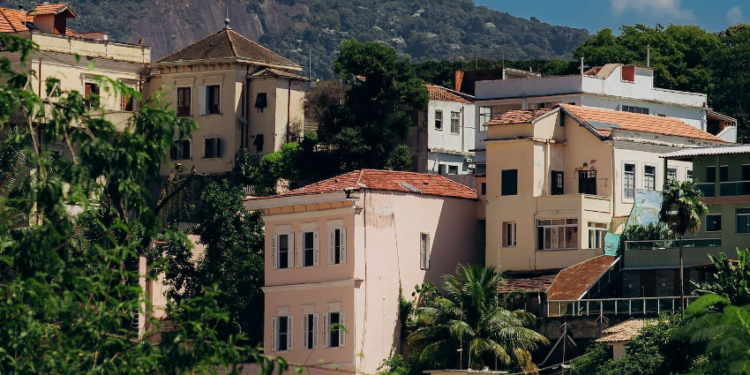
- Rio de Janeiro: Leblon, Ipanema, Gávea and Lagoa on the seafront South Zone; Botafogo and Flamengo for better value with metro access; Barra da Tijuca for modern condominiums, though a car is essential.
Leases, guarantees and prices
Rentals follow the Lei do Inquilinato 8.245/1991, with a typical lease of 30 months. Landlords ask for a guarantee: a local guarantor called a fiador, rent insurance known as seguro-fiança, a caução deposit of up to three months' rent, or a título de capitalização. A CPF is required to sign.
In October 2026, a one-bedroom flat in central São Paulo averaged R$ 3,298 (USD ~653) a month, against R$ 4,567 in Rio. Buyers should budget about R$ 13,560 per m² in central São Paulo, with 20-year mortgage rates of 11.68%, according to Numbeo. Visit before signing, as safety can change from one street to the next.

05Cost of Living in Brazil: Monthly Budgets for Singles and Families
Brazil's economy is growing, but local incomes remain modest: average earnings were R$ 3,738 a month in mid-2026 and the minimum wage is R$ 1,621. Expats paid in foreign currency therefore enjoy strong purchasing power, although private schools and health plans are expensive. Figures below are for São Paulo, based on Numbeo data updated on 22 October 2026, and converted at about R$ 5.05 to USD 1. Living costs in Rio are 8.2% lower excluding rent.
Monthly budget for a single person
This table shows typical monthly costs for one person renting in central São Paulo. The estimate excluding rent covers groceries, eating out and transport.
One-bedroom apartment, city centre | R$ 3,298 (USD ~653) |
Monthly costs excluding rent | R$ 3,625 (USD ~718) |
Utilities for 85 m² | R$ 519 (USD ~103) |
Internet and mobile plan | R$ 194 (USD ~38) |
Public transport pass | R$ 243 (USD ~48) |
Gym membership | R$ 169 (USD ~33) |
Private health plan (indicative) | R$ 500 to 1,500 (USD ~100 to 300) |
Monthly budget for a family of four
For families, housing and education dominate the budget. The figures below assume a three-bedroom apartment and international schooling.
Three-bedroom apartment, city centre | R$ 7,605 (USD ~1,506) |
Three-bedroom apartment, outside centre | R$ 5,064 (USD ~1,003) |
Monthly costs excluding rent | R$ 13,302 (USD ~2,634) |
Two public transport passes | R$ 486 (USD ~96) |
International primary school, per child per year | R$ 83,743 (USD ~16,583) |
Full-day private preschool, per child per month | R$ 2,797 (USD ~554) |
Family health plan | Quote required |
Sources: Numbeo, Cost of Living in São Paulo (22 October 2026), Numbeo, São Paulo vs Rio de Janeiro
A single expat can live comfortably in São Paulo on about R$ 7,000 a month. Families should plan their budget around housing and school fees first.
Join the discussion on the forum
06Healthcare in Brazil: SUS, Private Health Plans and Leading Hospitals
Brazil runs a mixed healthcare system. Everyone on Brazilian soil can use the free public network, while a large private sector serves those who want faster access. Most expats combine both.
The public system: SUS
The Sistema Único de Saúde, created by the 1988 Constitution, is universal and free, much like the NHS in principle. Foreign residents can register for the Cartão SUS with their CPF and proof of address. Emergency care is reliable, but waiting times for specialists and planned surgery can be long, and quality is better in the South and Southeast.
Private health plans
Private plans are regulated by the ANS and cover 52.9 million people (2026). For May 2026 to April 2027, increases on individual plans are capped at 5.11%, but group plans are uncapped and premiums rise with age. As a rough guide, an adult aged 30 to 45 can expect R$ 500 to 1,500 a month (USD ~100 to 300), so always request quotes. Health insurance valid in Brazil is also required for most visa applications.
Leading hospitals and emergencies
- São Paulo: Hospital Israelita Albert Einstein, Hospital Sírio-Libanês, Hospital Alemão Oswaldo Cruz.
- Rio de Janeiro: Hospital Copa Star, Hospital Samaritano.
- Porto Alegre and Belo Horizonte: Hospital Moinhos de Vento, Hospital Mater Dei.
- Emergency numbers: SAMU 192 for ambulances, 193 for the fire brigade and 190 for the police.
Coverage from your home country
US Medicare does not cover care abroad, and NHS entitlement ends once you live outside the UK. Social security agreements cover pensions, not day-to-day medical care, so plan on the SUS, a local plan or international cover. Securing a private plan before arrival keeps your options open (ANS 2026 cap).


07Taxes in Brazil: The 2026 Income Tax Reform, Social Security and Treaties
Brazil's tax system is managed by the Receita Federal. The big news for 2026 is Lei 15.270/2025, which exempts lower incomes and taxes high earners more.
Income tax and tax residency
You become a tax resident from the day you arrive on a residence visa or work contract, or after 183 days in Brazil within 12 months on a temporary visa. Residents are taxed on their worldwide income, and foreign income is declared monthly through the carnê-leão. Since 1 January 2026, income up to R$ 5,000 a month is fully exempt, with a partial reduction up to R$ 7,350. Above that, the progressive scale tops out at 27.5%.
Residents earning more than R$ 600,000 a year now face a minimum effective tax of up to 10%, and dividends above R$ 50,000 a month from one company are taxed at 10%. Non-residents pay tax only on Brazilian income, usually 25% on work income.
Consumption taxes and the VAT reform
Brazil has no single VAT yet. Prices include the state ICMS (generally 17% to 23%), the municipal ISS on services (2% to 5%). A dual VAT is being phased in: CBS and IBS appear on invoices in 2026 at test rates of 0.9% and 0.1%, CBS fully replaces federal levies in 2027, and ICMS and ISS disappear by 2033.
Social security contributions
Employees contribute to the INSS at progressive rates from 7.5% to 14%, capped at a salary of R$ 8,475.55, or a maximum of R$ 988.09 a month in 2026. Employers pay 20% plus an 8% FGTS deposit.
Tax treaties and FATCA
Brazil has around thirty tax treaties, including with Canada, Japan, Portugal, China, Switzerland and Singapore. There is no income tax treaty with the United States, and Brazilian banks report US account holders under a FATCA agreement signed in 2014. The UK-Brazil treaty signed in November 2022 has been ratified by the UK, but HMRC did not list it as in force as of September 2026.
Property owners also pay the annual IPTU and a 2% to 3% ITBI transfer tax on purchases. A Brazilian accountant is worth hiring from your first year.
Discover more


08Retiring in Brazil
Retiring in Brazil is an attractive option for many expatriates due to the country's warm climate, vibrant culture, and relatively affordable cost of living. Brazil offers a specific retirement visa for those who can demonstrate a stable income from pensions, social security, or other retirement funds.
Expats are free to buy property in Brazil, allowing them to settle permanently.
Popular retirement destinations include:
- Florianópolis: offers beaches, good infrastructure, and mild tropical weather.
- Natal: famous for pristine beaches, warm weather year-round, and a relaxed vibe.
- São Paulo: ideal for retirees seeking an active city lifestyle with top healthcare, museums, theaters, and dining.
- Fortaleza: affordable, cultural, and oceanfront
- Rio de Janeiro: offers city life alongside world-famous beaches, vibrant culture, and dining.
- Balneário Camboriú: a luxury beach destination in southern Brazil known for high-end real estate and a lifestyle favored by Brazil's affluent.
- Many retirees come from Portugal, the United States, and Argentina, drawn by both the culture and the relatively lower cost of living.
Discover more

09Studying in Brazil
Brazil is an increasingly attractive destination for international students due to its diverse academic programs, growing research opportunities, and cultural experiences. The country offers competitive tuition fees, a vibrant student life, and the chance to study in one of Latin America's largest economies. Many universities now offer programs in English, particularly at the postgraduate level, making it more accessible for international students.
Brazil's top universities include:
University of São Paulo (USP) – São Paulo: the largest and most prestigious university in Brazil, strong in research and international partnerships.
University of Campinas (UNICAMP) – Campinas, São Paulo state: renowned for engineering, technology, and innovation programs.
Federal University of Rio de Janeiro (UFRJ) – Rio de Janeiro: offers programs across sciences, humanities, and arts.
Federal University of Minas Gerais (UFMG) – Belo Horizonte: known for research in science, technology, and medicine.
Discover more

10Schools in Brazil: Public, International and Bilingual Options
Choosing a school is often the biggest decision for families moving to Brazil. Public schools are free but teach in Portuguese, so most expat families opt for international or bilingual private schools.
The local school system
Schooling is compulsory from 4 to 17. Children move through Educação Infantil, nine years of Ensino Fundamental and three years of Ensino Médio, the stage comparable to high school or sixth form, before sitting the national ENEM exam for university entry. The school year runs from February to December, and public schools accept foreign children.
International schools
The schools below follow American, British or IB curricula and are the most common choices for expat families. Monthly fees exclude enrolment charges.
School | City | Monthly fees |
Graded, The American School of São Paulo | São Paulo | Up to R$ 15,200 (2026) |
Avenues The World School | São Paulo | About R$ 15,000 (2025) |
St. Paul's School (British) | São Paulo | R$ 10,533 to 13,303 (2025) |
Chapel School (American) | São Paulo | R$ 9,495 to 10,773 (2025) |
Red House International School | São Paulo | R$ 8,841 to 10,987 (2025) |
Escola Americana do Rio de Janeiro | Rio de Janeiro | Up to R$ 10,952 (2025) |
Escola Americana de Brasília | Brasília | R$ 9,002 (2025) |
Escola Pan-Americana da Bahia | Salvador | R$ 7,761 (2025) |
Sources: Forbes Brasil school fee surveys (2025 and 2026), Numbeo São Paulo
Bilingual schools
Bilingual schools are regulated by national guidelines adopted in 2020 and are plentiful in state capitals. In São Paulo, St. Nicholas, St. Francis College, Stance Dual and The British College of Brazil are popular, with fees from roughly R$ 4,000 to 13,000 a month depending on the city.
Recognition of foreign qualifications
School records are validated by the Secretaria Estadual de Educação after apostille and sworn translation. University degrees are not recognised automatically: they go through revalidação or reconhecimento at a public university via the Plataforma Carolina Bori. Apply early, as top schools fill quickly.
Discover more

Join the discussion on the forum
11Moving to Brazil: Your Practical Relocation Checklist
A move to Brazil is easier when the paperwork is done in the right order.
- Secure the right visa: apply two to three months ahead.
- Apostille your documents: birth and marriage certificates, diplomas and criminal records, then plan a sworn translation by a tradutor juramentado in Brazil.
- Get your CPF early: without it you cannot sign a lease, open a bank account, buy a SIM card or shop online.
- Register with the Polícia Federal: book online as soon as you land to obtain your CRNM within the deadline.
- Ship your belongings: new residents may import used personal effects duty-free under the Receita Federal's bagagem desacompanhada rules, while importing a used car is heavily restricted.
- Prepare your pets: an international health certificate, valid rabies vaccination and a microchip, checked by VIGIAGRO on arrival.
- Plan for driving: your foreign licence is valid for 180 days of residence, after which you convert it to a CNH at the state DETRAN.
- Open a bank account: with your CPF, passport or CRNM and proof of address, then start using Pix, the instant payment system that runs daily life.
- Book temporary housing: a serviced flat gives you time to build a rental file.
- Pack smart: São Paulo and Rio mostly use 127 V while Brasília, Florianópolis and the Northeast use 220 V, with type N plugs. Households also filter tap water.
Tick these off one by one and your first weeks in Brazil will be about exploring, not queuing.


12Everyday life in Brazil
A strong sense of community and family characterizes daily life in Brazil. Social interactions often occur in public spaces such as parks, cafes, and plazas. The pace of life can vary; urban areas tend to be fast paced, while rural regions offer a more relaxed lifestyle.
Brazilian cuisine is diverse and flavorful, and meals are often shared with family and friends, reflecting the country's emphasis on social connections.
Safety is a consideration in certain areas, and expatriates should stay informed about local conditions. It's advisable to take standard precautions, such as avoiding poorly lit areas at night and securing personal belongings.
Discover more







13Leisure in Brazil: Culture, Sport and Weekend Escapes
Life in Brazil goes far beyond the beach. The big cities offer world-class museums and music, sport is a national passion, and domestic flights put very different landscapes within easy reach.
Culture and festivals
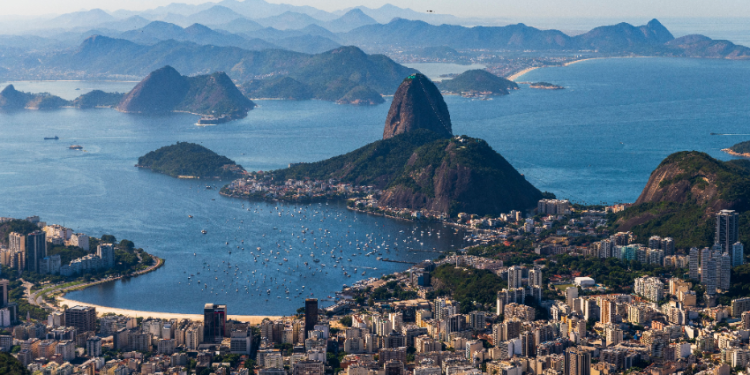
São Paulo is the cultural capital, with the MASP on Avenida Paulista, the Pinacoteca, the Sala São Paulo concert hall and the Bienal de São Paulo in even years. The SESC network runs cultural and sports centres at very low prices. Rio offers the Museu do Amanhã and live samba in Lapa, while Inhotim in Minas Gerais is Latin America's largest open-air contemporary art centre. Highlights include Carnaval in February or March, the June Festas Juninas and New Year's Eve on Copacabana.
Sport and the outdoors
Football rules, with Brasileirão matches at the Maracanã and Morumbi stadiums. Beaches host futevôlei and beach volleyball, Florianópolis and Itacaré are surf spots, and Jericoacoara is a kitesurfing hub. Hikers head to the Chapada Diamantina or the Serra dos Órgãos. A gym membership costs about R$ 169 a month in São Paulo (Numbeo, October 2026),.
Travel within Brazil
Weekends and holidays open up the Iguaçu Falls, the Amazon from Manaus, the Pantanal wetlands, the dunes of Lençóis Maranhenses, Fernando de Noronha and historic Salvador. Paraty, Ilha Grande and colonial Ouro Preto are easy escapes from Rio and São Paulo.
Joining a club, a SESC centre or a sports group is one of the fastest ways to build a social life in Brazil.
Discover more

Join the discussion on the forum
14Brazil in a Nutshell
Brazil rewards those who prepare. Accessible visas for remote workers and retirees, a free public health system, income tax relief since 2026 and a wide range of international schools make it a realistic long-term destination. Costs stay moderate for anyone earning in foreign currency, and cities from São Paulo to Florianópolis offer very different lifestyles. The keys to a smooth start are getting your CPF early, choosing your neighbourhood carefully and learning some Portuguese before you land.
Ready to take the next step? Join the Brazil expat forum on Expat.com to ask questions, swap tips and connect with expats already living in Brazil.
Join the Brazil community
Get regular tips and advice to make the most of your expat life
Essential services for your expat journey








Forum topics on living in Brazil
Discover forums topics on expat life in Brazil: join the conversation, ask your questions, get advice and share your experience.
- Having trouble with credit card and debit card working
- Best Supermarkets and/or Walmart equivalent
- How to check if CRNM is ready for pickup
- Moved to Brazil this year. Here's what I've learnt so far
- Prescription Eyeglasses
- Does Brazil tax Disabled US military benefits
- FAX fix - here's a solution to an old problem
- Bathroom DOs and DON'Ts in Brazil