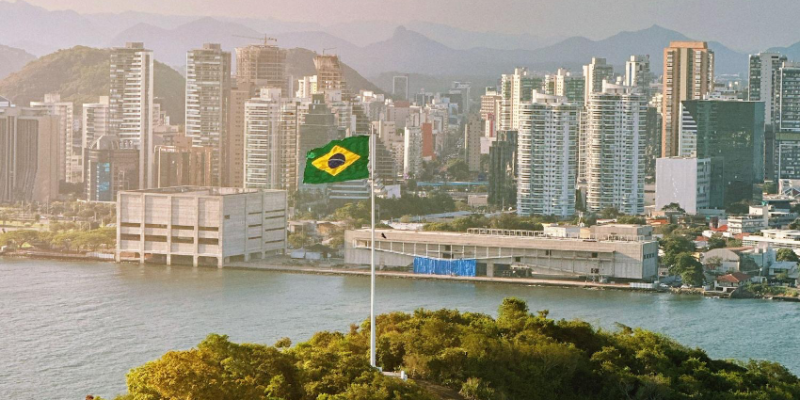
Brazil asks for 4 years of residence completed before you file for naturalization, and decisions take an average of 350 days. The residence period drops to 1 year if you have a Brazilian child, are the spouse or partner of a Brazilian or come from a Portuguese-speaking country, while the extraordinary route asks for more than 15 years. Brazil lets you keep your original nationality, so the check that decides your case is whether your own country does too. Naturalization takes effect only when the grant appears in the federal official gazette.
Brazilian citizenship and permanent residency compared
You can lose your residence authorization if you spend more than 2 years abroad without an acceptable justification. The Federal Police (Polícia Federal, PF) notifies you, asks for your justification and opens a procedure in which you can present a defense. Naturalization is the voluntary acquisition of Brazilian nationality by someone who was not Brazilian at birth, so the choice between that status and your residence authorization depends on how permanently your life is anchored in Brazil.
The authorization lets you live and work in Brazil, temporarily or permanently. Registering it produces your RNM (Registro Nacional Migratório, the national migration registry number) and the biometric CRNM card (Carteira de Registro Nacional Migratório). Public health care, social assistance, social security under the law, public education and labor protections are open to migrants without discrimination on nationality or migration status, so your daily access to these services does not depend on citizenship.
A court can cancel naturalization for fraud in the naturalization process or for an attack on the constitutional order and the democratic state. You can also ask to give up Brazilian nationality yourself, except where that would leave you stateless. The request for voluntary loss of nationality goes electronically to the Ministry of Justice and Public Security (MJSP) through its SEI system (the ministry's electronic process system), with a form, an updated civil record and evidence of another nationality. The decision is published in the Diário Oficial da União (DOU, the federal official gazette).
If you are not ready to naturalize, our article about permanent residence in Brazil covers eligibility for the permit, its maintenance and its renewal.
Need help with immigration or administrative procedures in Brazil?
The Migration Law recognizes four naturalization categories, called ordinary, extraordinary, special and provisional, and each one is open to a different residence history or family tie. Ordinary naturalization is the residence-based category, and its requirements come in the section on residency below. A child born in Brazil to foreign parents is Brazilian from birth, unless the parents are serving their own country in Brazil, in which case no naturalization is involved for a child born here.
Extraordinary naturalization is open to you after more than 15 yearsof uninterrupted indefinite residence in Brazil (residência por prazo indeterminado, the permanent form of residence authorization), provided you have no criminal conviction, unless rehabilitated under the law. The travel cap during those years differs between published descriptions. MJSP's guidance allows 45 months of total travel, while another description allows 90 days a year and 12 months in total. If your own count is close to either limit, ask PF or MJSP to confirm it.
Special naturalization covers the spouse or partner of a Brazilian serving abroad for more than 5 years, and an employee of a Brazilian diplomatic or consular mission for more than 10 years. You need civil capacity (capacidade civil, the legal capacity to act for yourself), the ability to communicate in Portuguese given your conditions, and no criminal conviction, unless rehabilitated under the law. Applications go through the Ministry of Foreign Affairs (Ministério das Relações Exteriores, MRE) or a Brazilian consulate in your country of residence, using the special naturalization service, with a form and evidence of identity, criminal record and language. A marriage contracted abroad must be transcribed in Brazil, and the service is free.
A child who established indefinite residence in Brazil before age 10 can be provisionally naturalized (naturalização provisória) as a minor, through a legal representative. Whoever was naturalized provisionally as a child has to request definitive naturalization expressly within 2 years after turning 18. The file includes a signed request, official identity, federal and state judicial criminal certificates covering residence after majority, evidence of residence and, if the person asks to adapt their name, additional documents.
Good to know:
Brazil has no direct citizenship by investment program. An investment, such as the real-estate investment regulated by Normative Resolution 36, supports a residence authorization, and naturalization then follows its own separate process.
If you were born Brazilian and renounced Brazilian nationality, you can reacquire it (reaquisição) under the law. A person who lost nationality after naturalizing cannot use the reacquisition route.
The years of residence required for ordinary naturalization run from the start of your indefinite residence to the day you file, and the full period must be complete on that day. You also have to meet three other conditions, so the requirements for the ordinary route are:
civil capacity
4 years of residence in Brazil
the ability to communicate in Portuguese, judged given your conditions
no criminal conviction, unless rehabilitated under the law
The 4 years shrink to 1 year if you have a Brazilian child (other than a child naturalized provisionally) or come from a Portuguese-speaking country. They shrink to 2 years if you are a recognized stateless person, if you rendered relevant services to Brazil, or if you have professional, scientific or artistic merit, which MJSP assesses.
Time abroad counts against you at fixed limits. MJSP guidance allows 3 months per required residence year and 12 months total, and Ministerial Ordinance (Portaria) 623 defines sporadic travel as fewer than 90 days per year and no more than 12 months total. If your trips come close to either limit, ask PF or MJSP to confirm your count before you file.
Your residence evidence has to cover every required year, with at least 1 document per year alongside your CRNM, even if the card has expired. Accepted documents include:
utility bills
leases
employer declarations
banking records
medical or educational records
Good to know:
Property you own or possess in Brazil proves residence only when you actually live in it.
Join the Brazil community
Get regular tips and advice to make the most of your expat life
Citizenship by descent in Brazil
A child born abroad to a Brazilian parent becomes Brazilian when the competent Brazilian authority registers the birth, or when the child lives in Brazil and opts for Brazilian nationality after reaching majority. The parent must have been Brazilian at the child's birth, so a child born before a parent naturalizes does not automatically become Brazilian through that parent.
A competent Brazilian consulate can register the child through a process called registro consular de nascimento (consular birth registration). The consular record must then be transcribed (transcrição) at the first civil registry in the parent's Brazilian domicile, or at the Federal District registry if the parent has no Brazilian domicile. The consular birth-registration service is free of charge.
The nationality option (opção de nacionalidade) is personal. The person exercises it after turning 18 and living in Brazil, before the Federal Court (Justiça Federal), and the judgment is then registered in the civil registry. A foreign-born child adopted by a Brazilian and registered at the competent consular office has original Brazilian nationality, under the thesis the Supreme Federal Court (Supremo Tribunal Federal, STF) set in Tema 1253 in March 2026.
Citizenship by marriage in Brazil
If you are the spouse or partner of a Brazilian and the couple is not separated, the residence period within ordinary naturalization drops from 4 years to 1 year. Marriage shortens the route, and you still file an application and still meet the Portuguese-language and criminal-record criteria of ordinary naturalization. Marriage and stable-union (união estável, a recognized partnership) registration are covered in our dedicated article.
Dual citizenship policy in Brazil
Brazil permits dual nationality (dupla nacionalidade) and does not require you to renounce your previous nationality when you naturalize. Since Constitutional Amendment 131 of 2023, acquiring another nationality is no longer grounds for losing Brazilian nationality. The law of the country whose nationality you hold determines your situation, because that country decides whether it accepts a second nationality.
British law permits dual citizenship, so a British citizen who becomes Brazilian keeps British citizenship. British diplomatic help is unavailable in the other country of nationality, Brazil, in that case.
Military enlistment (alistamento militar) can also apply after you naturalize or exercise the nationality option. If the military regulation applies to you, you must enlist within 30 days at the local military service board or at a Brazilian consulate abroad, counted from receiving the certificate or signing the option term. The board or consulate confirms what currently starts that clock and whether an exemption applies. If you already fulfilled military obligations in your former country, you are entitled to a Brazilian certificate of dispensation from incorporation (certificado de dispensa de incorporação, the document that excuses you from military service).
Citizenship test and language requirements in Brazil
Ordinary naturalization requires proof of Portuguese, except if you come from one of the Portuguese-speaking countries MJSP lists. Any one of these documents counts as that proof:
the Celpe-Bras certificate (Certificado de Proficiência em Língua Portuguesa para Estrangeiros, the official Portuguese exam for foreigners, run by INEP, the national education research institute)
the Brazilian education diplomas MJSP specifies
ENCCEJA, the national certification exam for youth and adults
approval by the Brazilian bar (OAB, Ordem dos Advogados do Brasil)
a qualifying Portuguese course for immigrants
public-university recruitment by examination
the specified medical qualification linked to Revalida, the national exam that validates foreign medical diplomas
A distance Portuguese course for immigrants counts only if it includes at least 1 in-person, identity-verified assessment at the provider or at an eligible partner institution. The evaluation of your Portuguese must also take your disability conditions into account.
Naturalization requirements do not include a history or constitution examination, and the law sets no minimum level on the European language scale (CEFR). Extraordinary naturalization requires no proof of Portuguese.
The second Celpe-Bras sitting of the year runs its exams in October in Brazil and in November abroad, with results in December in Brazil and in January abroad. Any accommodation you need has to be requested during the registration period. You can download past Celpe-Bras exam papers to prepare.
Application process for citizenship in Brazil
Foreign documents in your file need a Hague apostille (apostila, the certificate that validates a foreign public document) or, if your country is outside the Hague Convention, legalization by a Brazilian consulate. They also need a translation by a sworn public translator (tradutor público) registered with a Brazilian commercial board. The Mercosur exception (Mercosur is the South American trade bloc whose residence agreement Brazil applies to) waives legalization for residence applications and does not extend to naturalization, so prepare these documents before you open your file.
The Naturalizar-se platform handles the online application, document submission, process tracking and communication with PF and MJSP. You access it with a Gov.br account, the federal government's single sign-on portal. Your steps are:
Get your foreign documents apostilled or legalized, and translated.
Log in to Naturalizar-se with your Gov.br account, complete the application and upload your documents.
Attend the PF appointment, where PF checks your original documents and collects your biometrics.
Answer any request for additional documents within 30 days, a deadline PF or MJSP can extend on a justified request. The requests appear under Minhas Solicitações, the tab of Naturalizar-se where you follow your case and answer them.
Wait for MJSP's decision, published in the DOU.
Surrender your CRNM once the grant is published.
PF reviews your file before the appointment, and PF and MJSP can hold a recorded interview, if needed, to instruct the application. People aged 60 or over, disabled people and other legally listed groups receive priority attendance. Naturalization takes effect when the grant is published in the DOU.
If MJSP refuses your application, you have 10 days from notification to appeal, and the ordinance provides no further administrative appeal after that decision. The Federal Public Defender's Office (Defensoria Pública da União, DPU) assists applicants with appeals. If someone accesses your case on your behalf, they need a power of attorney and the identity documents of both of you.
Processing times and fees in Brazil
The government's naturalization service is free and estimates processing at up to 180 calendar days. The regulating decree sets those 180 days for the decision, counted from receipt of the file (for special naturalization, from receipt by MJSP), and allows a reasoned decision to extend them when further inquiries are needed. Actual waits run longer and can go up to 350 days.
If you choose Celpe-Bras as your proof of Portuguese, you also pay to register at an examination center. The public university UFES (Universidade Federal do Espírito Santo, a Celpe-Bras examination center) advertises BRL 259.00 (USD 51.4) for its center, a figure you can use to budget this step.
Rights and benefits of Brazilian citizenship
Brazil's passport ranked 16th in the Henley Passport Index of January 2026, with 169 destinations accessible without a prior visa. That makes travel the most measurable addition citizenship brings to your permanent residency.
The Constitution prohibits legal distinctions between Brazilian-born and naturalized citizens, except those it lists itself. Eight offices stay reserved for Brazilian-born citizens. The first four are President, Vice-President, president of the Chamber of Deputies and president of the Senate. The other four are justice of the STF, the diplomatic career, officer in the armed forces and Minister of Defense.
Standing for election requires Brazilian nationality and full political rights (direitos políticos). It also requires electoral registration, electoral domicile and party affiliation, with minimum ages set by law. Public positions are open to Brazilians who meet the legal requirements and to foreigners in the cases the law provides.
A Brazilian cannot be extradited, with one exception for naturalized Brazilians, who can be extradited for a common crime committed before naturalization or for proven illicit drug trafficking, as the law provides. Brazilian consular assistance abroad covers cases such as repatriation, imprisonment, hospitalization, death, disappearance and denial of entry involving Brazilians. Under the Mercosur residence agreement, qualifying nationals include original nationals and persons naturalized for at least 5 years, who can reside in another party country subject to its documentary conditions.
The law regulates and limits the acquisition and lease of rural land by foreign individuals and companies, and some cases need authorization from Congress. Transaction procedures are covered in the Accommodation buying article.
Once the grant is published in the DOU, you can apply for a Brazilian passport through PF, whose passport service builds a personalized document checklist based on your profile. An adult passport, issued to a holder over 18, is valid for 10 years. The steps are:
Complete the checklist and gather the documents it lists.
Pay the standard common-passport fee for residents in Brazil, BRL 257.25 (USD 51.1), through the PagTesouro options (the federal government's online payment platform) before the appointment.
Attend your PF appointment.
Collect the passport at the same office within 90 calendar days, since delivery generally takes 6 to 10 working days after the appointment.
You can also leave and enter Brazil with a valid foreign passport together with an accepted state public-security identity card that proves Brazilian nationality. PF does not accept the driving license (Carteira Nacional de Habilitação), professional cards, or a birth certificate as proof. Brazilian minors who travel without one or both parents remain subject to the travel-authorization requirements when they use a foreign passport.
Once naturalized, you have to appear before the Electoral Court (Justiça Eleitoral, the Electoral Justice that runs voter registration) within 1 year of the grant. Electoral registration is mandatory for adults over 18 and optional for illiterate people, people over 70 and those aged 16 to 18. You request it through the Electoral Justice's Autoatendimento (online self-service) system, with an in-person step where required. Brazilian-born and naturalized electors registered abroad vote for President and Vice-President.
Have questions about becoming a citizen of Brazil? Join the Expat.com community to connect with expats who've been through the process.
Frequently asked questions
On the ordinary route you need 4 years of residence, counted from the start of indefinite residence and complete on the day you file. The period drops to 2 years or 1 year in the listed categories, such as having a Brazilian child or coming from a Portuguese-speaking country. The extraordinary route asks for more than 15 years of uninterrupted indefinite residence.
Yes, because the residence period starts counting when your indefinite residence begins and runs until the day you file. All of it has to be complete at filing, so you cannot apply while the required time is still running.
Brazil permits dual nationality and does not ask you to renounce your previous nationality. Whether your other country accepts a second nationality depends on its own law, so read its renunciation and loss-of-nationality rules before you file.
Ordinary naturalization requires proof of Portuguese, unless you come from one of the Portuguese-speaking countries MJSP lists. Accepted proofs include the Celpe-Bras certificate, specified Brazilian diplomas, ENCCEJA, OAB approval and qualifying courses for immigrants. Extraordinary naturalization requires no proof of Portuguese.
No history or constitution examination is among the naturalization requirements. The requirement you do face is proof of Portuguese, which several documents can satisfy, including the Celpe-Bras certificate.
The government naturalization service is free of charge. If you use the Celpe-Bras as your proof of Portuguese, the public university UFES advertises BRL 259.00 (USD 51.4) for registration at its examination center.
The service publishes an estimate of up to 180 calendar days. The average from MJSP's receipt of the file to the published first-instance decision was 350 days in 2024, so plan for close to a year.
A child born in Brazil to foreign parents is Brazilian from birth, unless the parents are serving their own country in Brazil. A child born before a parent naturalizes does not automatically become Brazilian through that parent. A child who established indefinite residence before age 10 can be naturalized provisionally through a legal representative.
Descent runs through a Brazilian parent. A foreign-born child of a Brazilian parent is Brazilian through registration with the competent Brazilian authority, or through residence in Brazil and an option after turning 18. The parent must have been Brazilian when the child was born.
No, marriage does not grant nationality on its own. If you are the spouse or partner of a Brazilian and the couple is not separated, your residence period within ordinary naturalization is 1 year, and you still file an application.
A court can cancel naturalization for fraud in the naturalization process or for an attack on the constitutional order and the democratic state. You can also ask expressly to lose Brazilian nationality, except where that would leave you stateless.
You can appeal a refusal within 10 days of notification, and the ordinance provides no further administrative appeal after that decision. The Federal Public Defender's Office assists applicants with appeals.
ℹ️
We do our best to provide accurate and up to date information. However, if you have noticed any inaccuracies in this article, please let us know in the comments section below.
A journalist, holder of the DALF C1 and C2 and a diploma from the University of Mauritius, I have nearly twenty years of writing experience. After six years in the Mauritian press, I joined Expat.com, where I have been working for over a decade, including five years as editorial assistant, and now as editorial manager.