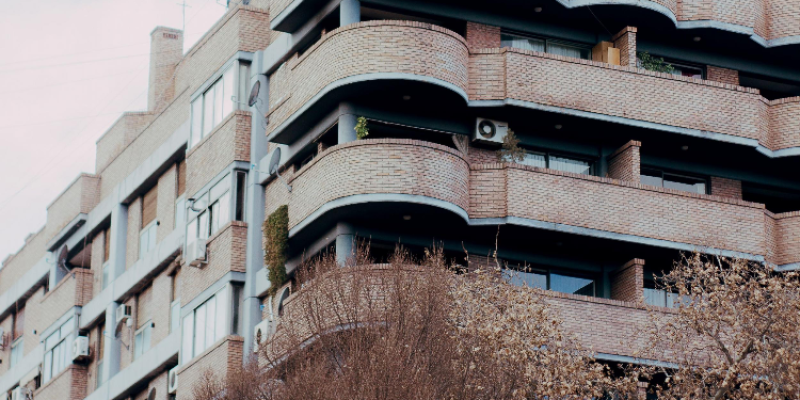
Mendoza has long been associated with vineyards and the Andes, yet for newcomers the city itself is what shapes daily life: a compact, walkable provincial capital with a distinct rental market and a tangle of neighboring municipalities often marketed under the same name. Renting here means navigating a market where contracts are highly negotiable, rent can legally be set in foreign currency, and broker fees of around 2.5% of the contract value are common. Furnished short-stays in the center, regulated through the PAT registration system, give arrivals a soft landing before they commit to a longer lease.
Ciudad de Mendoza, the provincial capital, is a compact urban core ringed by separate municipalities that are often marketed as part of the city but are not. Godoy Cruz, Guaymallén, Maipú, Las Heras, Luján de Cuyo, and Chacras de Coria all have their own administrations, transport networks, and tariff systems. For anyone arriving with appointments, schools, or offices in the capital, the exact address matters: a property listed as "in Mendoza" may actually sit in a neighboring department with different rules and a different commute.
Within Ciudad de Mendoza itself, two areas dominate the expat search. Centro, the grid around Plaza Independencia, is the most walkable part of the city, with cafés, restaurants, plazas, banks, and consulates all within walking distance. It suits newcomers who want to settle quickly without a car, take short-term furnished rentals on arrival, and test the city before committing to a longer lease. The trade-offs are real: summer heat is more intense in the built-up core, with January temperatures often above 35°C, the area is noisier than residential blocks, and the expat ecosystem is smaller than in Buenos Aires.
The Quinta Sección, west of Centro and bordering Parque General San Martín, is the practical residential alternative. It keeps you close to the center but offers quieter streets and direct access to the city's main park. Residents who want greenery, weekend running routes, and a calmer daily rhythm without losing urban convenience tend to gravitate here. Across the city, the general appeal is the same point that draws remote workers and retirees: Mendoza is cheaper and slower-paced than Buenos Aires, with the Andes within easy reach.
The city distinguishes formally between long-term residential rentals and short-stay accommodation, and the distinction shapes what is available, where, and at what price. Hotels, hospedajes, pensiones, residenciales, and alquiler temporario (short-term rental of rooms or apartments) are separate categories under municipal tariff rules, each with its own registration regime.
Short-term furnished rentals must be registered with the city as Propiedades de Alquiler Temporario (PAT), a provincial procedure under Resolución 80/2026 handled through the citizen-services portal. When booking a furnished short-stay, a PAT-registered property indicates the host has met provincial requirements. Furnished houses and apartments are widely available in the capital, with concentrations on Pedro Molina, Pedro del Castillo, and El Challao, as well as along the San Martín and Arístides Villanueva corridors. Daily and weekly bookings are common through listing platforms.
Demand for short-term housing peaks several times a year: Vendimia (the wine harvest in March), the Aconcagua and adventure season from December to February, business travel, and longer stays from remote workers. Booking in advance is essential during these windows, and pricing reflects the seasonality.
Get regular tips and advice to make the most of your expat life
Rental prices in Mendoza
Long-term and short-term rentals operate on very different price scales, and within each segment, location and standard widen the spread. The figures below are recent reference points for Ciudad de Mendoza. Prices shift frequently because of exchange-rate dynamics and the post-DNU rental framework, so always check several current listings before signing.
For long-term unfurnished rentals in Mendoza Centro, monthly rents have been running from ARS 250,000 to ARS 380,000 for a studio (monoambiente), ARS 360,000 to ARS 520,000 for a one-bedroom (2-ambientes), and ARS 480,000 to ARS 700,000 for a two-bedroom (3-ambientes). In the Quinta Sección, the same categories run slightly lower: ARS 230,000 to ARS 360,000 for a studio, ARS 340,000 to ARS 490,000 for a one-bedroom, and ARS 460,000 to ARS 680,000 for a two-bedroom.
Larger or premium central apartments push well above these bands. A two-bedroom with parking in the capital is priced at around ARS 600,000 per month, while a 75 m² three-bedroom apartment on Avenida San Martín is listed at around ARS 1,100,000. On agency websites, a 60 m² one-bedroom in the capital is at around ARS 750,000 and a 180 m² four-bedroom duplex at ARS 950,000.
Furnished short-term rentals cost substantially more. In high season (December to January and February to April), studios have ranged from ARS 600,000 to ARS 900,000 monthly and one-bedrooms from ARS 800,000 to ARS 1,300,000. In low season (May to November, excluding July), studios drop to ARS 500,000 to ARS 750,000 and one-bedrooms to ARS 700,000 to ARS 1,100,000.
Expat-facing references sometimes quote one-bedrooms in the USD 300-700 range, but these often mix Ciudad de Mendoza with surrounding municipalities. Use them for orientation only, and verify the exact municipality before committing.
Good to know:
Furnished short-term rentals typically include kitchenware, linens, internet, and utilities in the headline price; unfurnished long-term rentals do not. The category you book determines what you will need to budget for separately.
Finding accommodation in Mendoza
Most searches start online. The main platforms for Ciudad de Mendoza rentals are Zonaprop's dedicated Ciudad de Mendoza search and Properati, both with filters by neighborhood, size, and price. For furnished and short-stay options, Argentina Turismo and Alquiler Argentina list houses and apartments specifically in Mendoza Capital, with online booking and reviews.
If you go through an agency, the agent should be a licensed broker. Licensed brokers in Mendoza are registered with the Colegio de Corredores Públicos Inmobiliarios de Mendoza, and you can verify any intermediary on the CCPIM registry before paying deposits, reservations, or commissions. Local listings often show honorarios (broker fees) such as 2.5% of the total contract value charged to the tenant, but the exact figure should always be confirmed in writing before signing.
For short-stay bookings, a property registered through the PAT system signals that the host has completed the provincial registration. It is a simple check worth doing on any short-term booking outside major hotel chains.
Foreign nationals who become long-term residents and meet provincial criteria can register through the Instituto Provincial de la Vivienda, which administers programs such as Mendoza Construye Línea I and Mejoro Mi Casa, as well as a "Demanda Habitacional" registration. The IPV explicitly warns against making payments to third parties claiming to facilitate access.
How renting works in Mendoza
Residential leases in Mendoza follow Argentina's Civil and Commercial Code. Under the current framework, the parties freely agree on the rent amount, the adjustment mechanism, and a similar official replacement index if the chosen one ceases publication. Contracts must be in writing, and the code sets out the rights and obligations of tenant and landlord.
Rent may be set in Argentine pesos or in foreign currency, and an entry in the provincial Boletín Oficial has confirmed this currency flexibility in official documents. The implication for newcomers is practical: if you are paid in USD or EUR, you can negotiate a contract denominated in that currency, but the terms must be in the contract itself.
Because post-DNU contracts are highly negotiable, ask for the following in writing before paying anything: the rent currency, the adjustment frequency and index, the deposit, the honorarios, occupancy limits, who pays which utilities and expensas (building maintenance charges), early-exit clauses, the inventory, and refund terms. Local press has noted that brokers observed monthly price adjustments and demand-driven pricing even as supply rose, so the room for negotiation varies from one month to the next.
The choice between informal furnished housing on arrival and a formal long-term lease has downstream consequences. For municipal procedures in Ciudad de Mendoza, accepted proof of address or occupation includes a lease stamped by ATM (the provincial tax authority), a stamped comodato (loan-for-use agreement), a property escritura (deed), or an owner authorization with a copy of the owner's DNI. If you start with a short-stay rental, plan to move to a formal lease before you need paperwork for residency, schools, banks, or utilities in your own name.
Challenges for expats in Mendoza
The most consistent frustration newcomers describe is cost instability: groceries, utilities, and services fluctuate unpredictably, complicating budgeting, especially for residents earning or spending in foreign currency. Treat any monthly cost calculation as a snapshot, not a fixed budget, and rebuild it every few months.
The second is housing access. Local press describe the situation as more properties on offer but more obstacles to closing a deal, with guarantor requirements and documentation norms designed around long-term Argentine residents. Newcomers without a local garante (guarantor with property in the same province) often need to offer alternatives: several months of rent in advance, a higher deposit, a corporate guarantee from an employer, or a contract through an agency that accepts a seguro de caución (rental insurance bond). Furnished short-stay rentals are the standard workaround for the first few months while you build local references and paperwork.
Spanish is the third practical barrier. Daily administration, rental negotiations, and most local services are conducted in Spanish, and English is far less common in Mendoza than in Buenos Aires. Translators and bilingual brokers exist, but expect to handle leases, utilities, and municipal procedures in Spanish or with help.
A fourth, more avoidable issue is confusion between the city and Greater Mendoza. Areas marketed as "Mendoza," such as Chacras de Coria, Luján de Cuyo, Maipú, and Godoy Cruz, are separate municipalities with their own administrations, transport, and pricing. Before signing, confirm that the address is within Ciudad de Mendoza if that is where you will be based.
Utilities in Mendoza are billed separately from rent in long-term contracts and are usually included in the headline price for furnished short-stay rentals. Knowing the providers and the basic structure helps avoid surprises on the first bills.
Electricity is regulated by EPRE Mendoza, which publishes current tariff resolutions and schedules. Recent schedules have set the minimum electricity bill at the equivalent of 250 kWh consumption at the corresponding low-voltage level, so even very low usage will trigger a floor charge. Drinking water and sanitation are provided by AYSAM, with provincial authorities having approved tariff increases of 19.5% for water and sanitation operators generally and 17% for AYSAM in the current cycle.
Natural gas in the Cuyo region is supplied by Distribuidora de Gas Cuyana. Recent residential tariffs for the lowest category have included a fixed charge of around ARS 17,890 monthly and a variable charge of around ARS 400 per m³. Winter consumption rises sharply because Mendoza's continental climate produces cold nights from June to August, so the gas bill in winter is rarely comparable to the summer figure.The
Internet is set up separately by the tenant unless the contract specifies otherwise. In furnished rentals, broadband is typically included; in unfurnished long-term rentals, expect to contract directly with a national provider and schedule installation.
Municipal bills (property-related municipal charges, where applicable) follow the Ciudad de Mendoza calendar of due dates, and residents can sign up for electronic billing and automatic debit through the municipality. This is the most reliable way to avoid missed deadlines if you travel often or are still getting used to local administrative cycles.
ℹ️
We do our best to provide accurate and up to date information. However, if you have noticed any inaccuracies in this article, please let us know in the comments section below.
A journalist, holder of the DALF C1 and C2 and a diploma from the University of Mauritius, I have nearly twenty years of writing experience. After six years in the Mauritian press, I joined Expat.com, where I have been working for over a decade, including five years as editorial assistant, and now as editorial manager.
The guide says approx 9500 Argentinian pesos (ARS) for a 3-bedroom apt. in Mendoza. I'm from Canada, and at the current exchange rate ARS9500 comes to CAD$56.49. This can't be right!