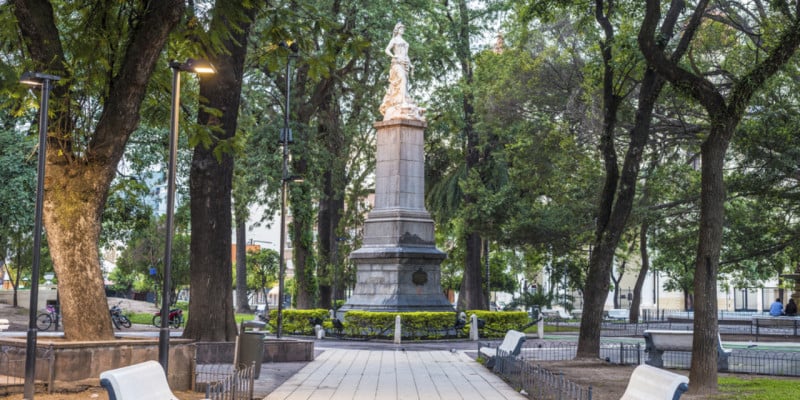
Most people assume that living in a smaller Argentine city means trading cultural richness for affordability, but San Miguel de Tucumán complicates that assumption. As the capital of Tucumán Province and the city where Argentina declared independence on July 9, 1816, it carries a civic identity that shapes daily life in ways that immediately distinguish it from other provincial cities. With a population of 590,342 across 91 km², it operates at a slower, more locally networked pace than Buenos Aires, yet offers year-round cultural programming, two professional football clubs, a food scene centered on the celebrated empanada tucumana, and monthly living costs averaging USD 682 for one person.
San Miguel de Tucumán is the provincial capital of Tucumán Province, covering 91 km² with a population of 590,342 (2022 national census). Its scale puts it in a different category from Buenos Aires: compact enough to navigate without a car, large enough to support a university, two professional football clubs, and a year-round cultural calendar. What distinguishes the city more than its size, however, is its place in Argentine national identity. Independence was declared here on July 9, 1816, earning the city the civic designation "Cuna de la Patria" (birthplace of the nation) and the official status of "Ciudad Histórica." This is not a passive heritage claim; national commemorations, civic rituals, and public life are visibly shaped by this history in ways a newcomer will notice immediately.
San Miguel de Tucumán is divided into 20 official districts, identified by number rather than name on the city's interactive district map. In practice, residents use neighborhood (barrio) names rather than district numbers for everyday navigation and housing decisions.
Average monthly living costs in San Miguel de Tucumán run to approximately USD 682 for one person, placing it among Argentina's more affordable cities and ranking it 7,346th out of 9,294 cities globally.
Breaking down daily costs: a meal at an inexpensive restaurant runs around ARS 14,807 (USD 10), while a three-course dinner for two at a mid-range restaurant costs approximately ARS 74,033 (USD 50). A domestic draft beer is around ARS 1,777 (USD 1.20). Monthly utilities for an 85 m² apartment come to approximately ARS 148,067 (USD 100). The urban bus fare is set at ARS 1,700 (USD 1.15).
Join the San Miguel de Tucuman community
Get regular tips and advice to make the most of your expat life
Climate and weather in San Miguel de Tucumán
A subtropical climate defines daily life in San Miguel de Tucumán: hot, humid summers and mild winters, with the year's rainfall concentrated in the warmer months. In winter (June through August), average maximum temperatures reach approximately 17.6°C and minimums around 8.8°C; June averages around 6 rainy days, making it one of the drier months of the year. Conditions are typically cold and sunny during the first weeks of winter, which residents describe as the most comfortable period for outdoor activity.
The summer months bring intense heat and humidity, along with the city's storm pattern. San Miguel de Tucumán is regularly affected by intense storms typical of its climate, with significant rainfall episodes that require municipal emergency response. Newcomers who have lived in subtropical climates will recognize the pattern; those arriving from temperate regions should prepare for summer heat that residents describe as demanding. The Servicio Meteorológico Nacional publishes seasonal climate bulletins for the region.
Getting around San Miguel de Tucumán
The city's public transport runs entirely on an urban bus network. The official Cuándo SUBO app, integrated into the national SUBE system, provides real-time bus arrival information. The bus fare stands at ARS 1,700 (USD 1.15) per journey, though this is subject to regular revision. The provincial and municipal governments have been reinforcing the network following the withdrawal of national funding, so service generally operates, but local announcements about disruptions are worth monitoring. App-based ride-hailing through Cabify is also available in the city.
Language and communication in San Miguel de Tucumán
Spanish is the sole working language in San Miguel de Tucumán. All municipal services, public signage, healthcare appointments, official documents, and civic communications operate exclusively in Spanish, with no bilingual or multilingual service regime in place. Functional Spanish is a practical prerequisite for comfortable daily life here, not an optional addition.
For newcomers building language skills, weekly multilingual exchange events run through Mundo Lingo Tucumán at Odin Brewery (Santiago del Estero 1086) on Thursday evenings. Informal cultural and language exchange events are also listed periodically for the city, described as open to participants at any level. Private language schools in the city include Interaction English Studio and the Instituto Cultural Argentino de Lenguas Vivas.
Culture and social norms in San Miguel de Tucumán
National history shapes public life in San Miguel de Tucumán more directly than in most Argentine cities. The Casa Histórica de la Independencia, where independence was declared on July 9, 1816, is described by the provincial tourism authority as the most important historical building in Argentina. For residents, this means the city's independence anniversary is not simply a national holiday but a major local civic event, with commemorations that are more prominent and public than in other parts of the country. Respectfully engaging with national symbols and the independence narrative is a basic social expectation that newcomers will encounter early on.
Catholicism shapes the rhythm of public life through its calendar of holidays and feast days, which are observed with public events and family gatherings. Municipal cultural life is institutionally organized through the Secretaría de Cultura de la Municipalidad, which runs year-round programming including walks, workshops, performances, and outdoor events in parks and plazas. The city council approved an ordinance creating an annual Semana Municipal de la Cultura Tucumana, adding a dedicated week of cultural programming to the calendar.
The social scene is built around local cultural forms: peñas (folk music venues), bars, cultural halls, and gastronomy circuits. The Teatro Municipal Rosita Ávila serves as the main formal performance venue. N
Pace of life and work culture in San Miguel de Tucumán
The city operates at a slower and more locally networked pace than Buenos Aires. Strong attachments to family, social circles, and local civic identity are the fabric of daily life; residents who have stayed long-term cite culture, sports, and organized local social life as the principal reasons. The professional environment is Spanish-first, and the labor market is smaller and more sector-specific than in the capital.
The employment situation is a real constraint for foreign job-seekers. The Gran San Miguel de Tucumán metropolitan area was identified as the Argentine agglomeration with the highest rate of people actively seeking employment in the country (Fundación Federalismo y Libertad). This figure covers the wider metropolitan area, but it is indicative of the conditions newcomers will face locally. Arriving without a confirmed role or Spanish proficiency makes local employment very difficult to obtain.
Expats who do best in this city tend to arrive with external income: remote work, a pension, or a secured position with an organization that brought them here.
Food culture in San Miguel de Tucumán
Tucumán's gastronomy is built from ancestral traditions, intergenerational knowledge, and regional products. At the center of this food identity is the empanada tucumana, which carries the same kind of local pride that specific dishes hold in particular cities around the world. A dedicated tourist route for what the city bills as "the best empanada in the world" was launched in San Miguel de Tucumán, cementing the empanada as both a culinary and civic symbol. Locals will have strong opinions about which establishments make the best version, and engaging with that conversation is one of the easier points of social entry for newcomers.
Beyond empanadas, the sánguche de milanesa tucumano (breaded-meat sandwich) is a highlighted provincial gastronomic product. "Sabores Tucumanos" is a distinct category alongside peñas, bars, cultural halls, and shopping circuits, which reflects how integrated food is into the city's social and cultural life rather than existing as a separate dining scene. Restaurant pricing ranges from approximately ARS 14,807 (USD 10) for an inexpensive meal to ARS 74,033 (USD 50) for a mid-range dinner for two; a domestic draft beer costs around ARS 1,777 (USD 1.20).
The city's craft food-and-drink culture is also growing. The annual Birra Fest craft beer festival, held at Parque Avellaneda and co-organized by the municipality and the Asociación de Cerveceros de Tucumán, drew more than 8,000 attendees at its most recent edition, with food trucks, artisans, and live music.
Leisure and social life in San Miguel de Tucumán
San Miguel de Tucumán has an active social and cultural scene, much of which is free or inexpensive to enjoy. Throughout the year, the city hosts open-air concerts, artisan and food markets, guided walks, cultural festivals, dance performances, and family activities in parks, plazas, and public spaces. These events provide an easy way for newcomers to discover the city and meet local residents. Much of this activity takes place in Parque 9 de Julio, the city's largest green space. Popular with walkers, runners, cyclists, and families, the park regularly hosts concerts, sporting events, and outdoor cultural programs, making it one of the city's main gathering places.
Football is another important part of local life. The city's two professional clubs, Atlético Tucumán and San Martín de Tucumán, enjoy passionate local support, and match days bring a lively atmosphere to the surrounding neighborhoods.
Community life also extends beyond the city center. Municipal community centers organize free sports, recreational, educational, and cultural activities throughout the year, offering opportunities for residents of all ages to get involved. Whether you're interested in fitness classes, workshops, or family-friendly events, these programs can be a good way to build connections after arriving.
For those who enjoy arts and culture, San Miguel de Tucumán also offers theatres, museums, live music venues, traditional peñas, and cultural bars where locals gather to enjoy folk music, regional cuisine, and performances. Taking part in these activities is one of the best ways to experience the city's culture and integrate into the local community.
Family life in San Miguel de Tucumán
Education in San Miguel de Tucumán is primarily conducted in Spanish, making language one of the first considerations for families relocating with school-aged children. As the capital of Tucumán Province, the city offers a comprehensive network of public and private schools, but children with little or no Spanish may need time to adapt. Unlike larger international hubs such as Buenos Aires or Mendoza, San Miguel de Tucumán does not have a well-established international school sector, so families seeking English-language or foreign-curriculum education may find more limited options.
Beyond the classroom, San Miguel de Tucumán offers a family-friendly environment with numerous parks, playgrounds, and cultural activities throughout the year. Parque 9 de Julio is one of the city's main green spaces, while municipal community centers (CICs) organize free recreational, educational, and sports activities for residents of all ages.
When choosing where to live, families often prioritize neighborhoods with good public services, convenient transport links, and easy access to schools and everyday amenities. As in any city, researching individual neighborhoods before renting or buying a home is advisable. Families who take part in local activities and build connections within the community often find it easier to settle into daily life.
Safety in San Miguel de Tucumán
San Miguel de Tucumán has a dedicated municipal public safety department that works alongside the provincial police to manage traffic, public spaces, and community safety. The city has expanded its network of surveillance cameras, introduced body cameras for traffic officers, and implemented traffic-calming measures such as speed reducers to improve road safety in busy areas.
As in many Argentine cities, safety varies by neighborhood. Provincial crime reports indicate improvements in some categories of crime, while others remain a concern across Tucumán Province. These figures reflect the province as a whole rather than San Miguel de Tucumán specifically, so they should not be interpreted as describing conditions in every part of the city.
When choosing where to live, it is worth researching individual neighborhoods, visiting them at different times of day, and seeking local advice before signing a lease. Areas with good lighting, regular pedestrian activity, and easy access to shops and public transport are often preferred by newcomers. Taking the usual urban precautions, such as keeping valuables out of sight, remaining aware of your surroundings, and using reputable transport at night, will help you settle into the city with confidence.
Environment in San Miguel de Tucumán
San Miguel de Tucumán offers a good balance of urban green spaces and outdoor recreation, while also facing some environmental challenges typical of subtropical cities. Parque 9 de Julio, one of the largest and most important urban parks in northwestern Argentina, is a popular destination for walking, cycling, sports, and family activities. The municipality has also invested in expanding green spaces and planting thousands of trees as part of its environmental strategy.
Like many cities in the region, San Miguel de Tucumán experiences periods of heavy rainfall, particularly during the warmer months. Intense storms can occasionally cause localized flooding, especially in lower-lying areas, making it worthwhile to consider flood risk when choosing a neighborhood. If you're looking for long-term accommodation, asking about a property's history during heavy rains can be a sensible precaution.
The city is also working to improve its environmental sustainability through initiatives that promote cleaner transport, expand cycling infrastructure, and increase urban resilience. While some of these projects are still being developed, access to parks and outdoor spaces already contributes to a pleasant quality of life for residents.
San Miguel de Tucumán is one of Argentina's more affordable provincial capitals, making it an attractive option for people with income from abroad, remote workers, retirees, or anyone seeking a lower cost of living than in Buenos Aires. Everyday expenses such as dining out, utilities, and public transport are generally modest, while the city's parks, cultural events, live music, football culture, and vibrant food scene offer plenty of opportunities to enjoy local life without spending heavily. Getting around is relatively straightforward thanks to an extensive bus network, ride-hailing services, and digital transport tools.
That said, relocating to San Miguel de Tucumán comes with a few practical considerations. The local job market can be competitive, particularly for newcomers who do not already have a job offer or who are not fluent in Spanish. As in any large city, safety varies by neighborhood, so taking time to research different areas before choosing accommodation is advisable. Heavy rainfall can occasionally lead to localized flooding, particularly in lower-lying districts, making location an important factor when renting or buying a home.
Unlike Argentina's larger international hubs, San Miguel de Tucumán has a relatively small expatriate community and fewer English-language services, so integrating into daily life generally means using Spanish and engaging with local communities. For expats looking for an authentic Argentine city with a rich cultural identity, a lower cost of living, and a strong sense of local community, it can be a rewarding place to settle.
Domande frequenti
Può funzionare per chi lavora a distanza, parla già spagnolo e cerca una base argentina con costi contenuti e vita culturale attiva. Non esistono spazi di coworking confermati né programmi municipali dedicati ai lavoratori a distanza. La serata settimanale di scambio linguistico presso Odin Brewery, in Santiago del Estero 1086, è il punto di socializzazione più accessibile per i nuovi arrivati. Chi si aspetta un'infrastruttura paragonabile a Buenos Aires resterà deluso.
No. Tutti i servizi municipali, i trasporti, l'assistenza sanitaria, le pratiche burocratiche e la vita culturale funzionano interamente in spagnolo. Per soggiorni brevi ci si riesce a cavare; per un trasferimento a lungo termine, la mancanza dello spagnolo crea difficoltà costanti in ogni interazione amministrativa e sociale.
Il costo mensile totale incluso l'affitto è di circa 1.070.000 ARS (circa 628 EUR). La soglia provinciale della povertà per un nucleo familiare si aggira intorno a 1.258.446 ARS (circa 739 EUR). L'inflazione locale è sostenuta: conviene verificare periodicamente le cifre aggiornate presso la Dirección de Estadística de la Provincia de Tucumán.
Non esiste una classifica ufficiale sulla sicurezza quartiere per quartiere. Le operazioni di polizia si sono concentrate nelle ore notturne in alcune zone specifiche come Villa 9 de Julio, Barrio Oeste II e Manantial Sur. Prima di scegliere dove abitare, conviene visitare di persona e chiedere consiglio a residenti del posto.
Un soggiorno di prova prima di un impegno a lungo termine è fortemente consigliato. Le preoccupazioni legate alla sicurezza, il clima estivo intenso, la volatilità dei costi dei trasporti e l'ambiente interamente in spagnolo si valutano meglio dall'esperienza diretta che da una ricerca a distanza. Il trasferimento a lungo termine è più praticabile per chi dispone già di un reddito, conosce lo spagnolo e ha una rete di supporto locale.
Molti nuovi arrivati restano sorpresi dalla profondità del significato storico della città: San Miguel de Tucumán è il luogo in cui l'Argentina dichiarò l'indipendenza il 9 luglio 1816, e questo è vissuto con orgoglio civico reale, non come semplice attrazione turistica. Colpisce anche il carattere fortemente locale della vita quotidiana: nessun servizio municipale in lingue diverse dallo spagnolo e la velocità con cui cambiano le tariffe pratiche, come il già avvenuto aumento del biglietto dell'autobus del 36% in un'unica delibera.
Può esserlo, in particolare per chi è sensibile alle preoccupazioni di sicurezza, ai processi burocratici in spagnolo o all'instabilità dei trasporti. La programmazione culturale gratuita e gli eventi settimanali di scambio linguistico riducono l'isolamento sociale. Il clima estivo, con caldo intenso, umidità e temporali forti, aggiunge una componente di stress fisico che molti nuovi arrivati sottovalutano.
Gli affitti a San Miguel de Tucumán sono i più bassi tra le principali città argentine. Tutta la documentazione contrattuale e le trattative si svolgono in spagnolo. Non esistono requisiti specifici confermati per i cittadini stranieri diversi da quelli applicabili ai residenti locali.
I più evidenti sono: la percezione elevata di insicurezza; un ambiente amministrativo interamente in spagnolo senza servizi municipali in altre lingue; l'inflazione locale sostenuta che richiede un aggiornamento continuo del budget; l'instabilità dei costi e del finanziamento del trasporto pubblico; le estati calde e umide con rischio di temporali intensi e un effetto isola di calore urbana di circa 5°C rispetto alle aree circostanti; l'assenza di una comunità di espatriati strutturata.
L'esperienza punta nettamente verso l'integrazione con la comunità locale. Non esiste un quartiere o una rete di espatriati riconoscibile in città. Poiché tutti i servizi quotidiani e la vita sociale funzionano in spagnolo, chi si ferma più a lungo è portato a costruire relazioni con i residenti. Gli incontri settimanali di scambio linguistico presso Odin Brewery rappresentano un punto di partenza concreto per conoscere sia locali sia altri nuovi arrivati.
ℹ️
We do our best to provide accurate and up to date information. However, if you have noticed any inaccuracies in this article, please let us know in the comments section below.
A journalist, holder of the DALF C1 and C2 and a diploma from the University of Mauritius, I have nearly twenty years of writing experience. After six years in the Mauritian press, I joined Expat.com, where I have been working for over a decade, including five years as editorial assistant, and now as editorial manager.