Living in Washington: the ultimate expat guide
Everything you need to know for a successful life in Washington.
Washington, D.C., the capital of the United States, is a global hub for politics, diplomacy, and international affairs. With a population of approximately 670,000 residents within the city proper and over 6 million in the greater metropolitan area, D.C. offers expats a unique blend of history, culture, and career opportunities. The city is home to world-renowned institutions, free museums, and a highly educated workforce, making it attractive to professionals from around the globe.
A City of Global Influence
Beyond its role as the seat of the U.S. federal government, Washington, D.C. hosts the headquarters of the World Bank, the International Monetary Fund (IMF), and over 175 embassies. This international presence creates a cosmopolitan atmosphere and abundant opportunities for those working in diplomacy, international development, law, and policy.
5 Good Reasons to Move to Washington, D.C.
- World-class career opportunities – Access to federal government positions, international organizations, consulting firms, and leading universities.
- Free cultural attractions – The Smithsonian Institution operates 17 free museums and the National Zoo, making culture accessible to all.
- Highly educated population – Over 60% of residents hold a bachelor's degree, fostering intellectual exchange and networking.
- Excellent public transportation – The Metrorail system connects the city and suburbs, reducing the need for a car.
- Diverse neighborhoods – From historic Georgetown to lively Adams Morgan, there's a community for every lifestyle.
Retiring in Washington, D.C.
Washington, D.C. boasts one of the most diverse and resilient job markets in the United States, driven by the federal government, professional services, healthcare, education, and a growing technology sector. The city attracts ambitious professionals seeking careers with global impact.
Key Industries and Employers
The federal government remains the region's largest employer, with approximately 420,000 federal workers in the D.C. metro area. Major agencies include the Department of Defense, Department of State, Department of Justice, and Department of Health and Human Services. Beyond government, the professional services sector employs over 175,000 people, including consulting giants like Booz Allen Hamilton, Deloitte, and SAIC. The healthcare sector, led by institutions such as MedStar Health and Children's National Hospital, provides thousands of positions for medical professionals.
Work Visas and Permits
International workers typically require an employer-sponsored visa. The most common options include the H-1B visa for specialty occupations, the L-1 visa for intracompany transfers, and the O-1 visa for individuals with extraordinary ability. Processing times vary, so applicants should begin the process well in advance. The U.S. Citizenship and Immigration Services (USCIS) website provides official guidance on visa categories and requirements.
The following table summarizes key employment indicators for Washington, D.C.:
Unemployment Rate (2025) | 5.6% |
Average Hourly Wage | $43.47 |
Median Household Income | $109,700 |
Sources: U.S. Bureau of Labor Statistics, DC Department of Employment Services
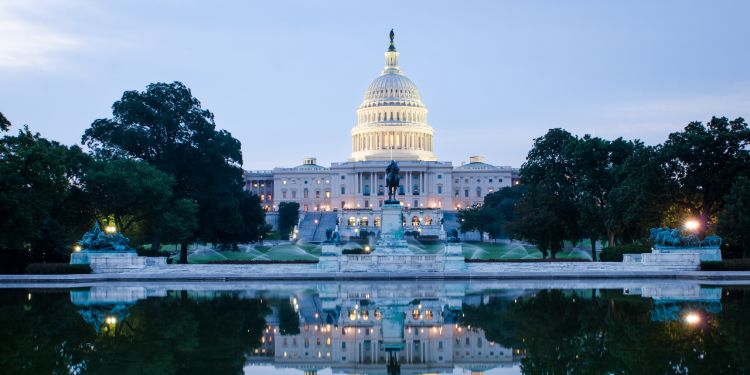
Finding work in Washington D.C.
Washington D.C. is the center of the federal government in the United States and one of its largest urban centers. Government jobs have steadily ...
Higher Education and Universities in Washington, D.C.
Washington, D.C. boasts one of the most diverse and resilient job markets in the United States, driven by the federal government, professional services, healthcare, education, and a growing technology sector. The city attracts ambitious professionals seeking careers with global impact.
Key Industries and Employers
The federal government remains the region's largest employer, with approximately 420,000 federal workers in the D.C. metro area. Major agencies include the Department of Defense, Department of State, Department of Justice, and Department of Health and Human Services. Beyond government, the professional services sector employs over 175,000 people, including consulting giants like Booz Allen Hamilton, Deloitte, and SAIC. The healthcare sector, led by institutions such as MedStar Health and Children's National Hospital, provides thousands of positions for medical professionals.
Work Visas and Permits
International workers typically require an employer-sponsored visa. The most common options include the H-1B visa for specialty occupations, the L-1 visa for intracompany transfers, and the O-1 visa for individuals with extraordinary ability. Processing times vary, so applicants should begin the process well in advance. The U.S. Citizenship and Immigration Services (USCIS) website provides official guidance on visa categories and requirements.
The following table summarizes key employment indicators for Washington, D.C.:
Unemployment Rate (2025) | 5.6% |
Average Hourly Wage | $43.47 |
Median Household Income | $109,700 |
Sources: U.S. Bureau of Labor Statistics, DC Department of Employment Services
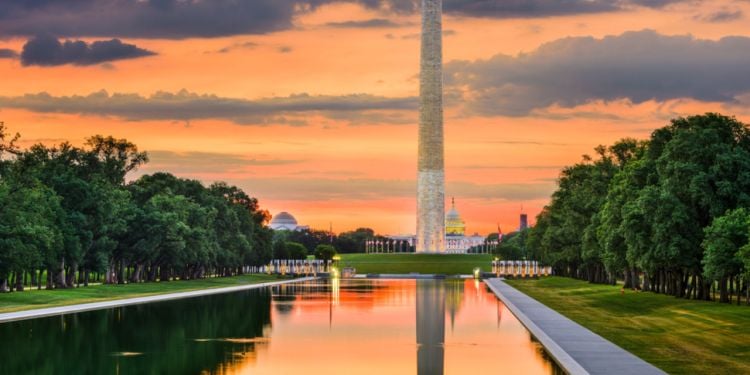
Study in Washington, DC
Located in the District of Columbia, Washington, DC, is the federal capital of the United States. Being the political heart of America and the home ...
Schooling for Children in Washington, D.C.
Families relocating to Washington, D.C. have access to a wide range of educational options, including quality public schools, charter schools, and renowned international schools offering British, French, and International Baccalaureate (IB) curricula.
Public and Charter Schools
DC Public Schools (DCPS) serves over 50,000 students across approximately 115 schools. The system includes selective enrollment schools such as School Without Walls and Benjamin Banneker Academic High School, which consistently rank among the best in the city. Enrollment requires proof of residency and typically opens in December for the following school year. Public education is free for residents.
DC International School is a free public charter school offering the International Baccalaureate (IB) curriculum for grades 6–12. It emphasizes advanced language learning and global citizenship, making it popular with internationally minded families.
International and Private Schools
Washington International School (WIS) offers the IB curriculum from preschool through grade 12. Annual tuition ranges from $32,190 (preschool) to $51,710 (high school). WIS has two campuses and enrolls students from over 90 countries.
British International School of Washington (BISW), part of Nord Anglia Education, follows the English National Curriculum and accepts students ages 2–18. Tuition ranges from approximately $27,000 to $35,000 per year.
Rochambeau, The French International School, offers a French curriculum accredited by the French Ministry of Education. Tuition starts at approximately $28,000 per year. Rochambeau is ideal for French-speaking families or those seeking bilingual education.
Sources: DC Public Schools, Washington International School, British International School of Washington
Housing and Neighborhoods in Washington, D.C.
Washington, D.C. offers diverse housing options, from historic rowhouses to modern high-rise apartments. Rental prices remain among the highest in the United States, though they have stabilized in recent years. Choosing the right neighborhood depends on lifestyle preferences, commute requirements, and budget.
Expat-Friendly Neighborhoods
Georgetown is one of D.C.'s oldest and most prestigious neighborhoods, known for cobblestone streets, upscale boutiques, and waterfront dining along the Potomac River. Popular with diplomats and university affiliates, one-bedroom apartments average $2,800–$3,500 per month. Note that Georgetown lacks a Metro station, though bus service is available.
Dupont Circle is a lively hub offering cultural attractions, embassies, bookstores, and diverse restaurants. The area is walkable and well-connected by Metro. One-bedroom rents average $2,600–$3,000.
Capitol Hill combines historic charm with proximity to the U.S. Capitol and Library of Congress. Known for the famous Eastern Market, this neighborhood attracts professionals and families. Expect one-bedroom rents around $2,500–$3,200.
Adams Morgan appeals to young professionals with its eclectic nightlife, international restaurants, and cultural diversity. Rents are slightly more affordable, with one-bedrooms averaging $2,200–$2,700.
Average Rent Prices (2025)
The table below summarizes typical monthly rents across D.C.:
Studio Apartment | $1,800–$2,100 |
1-Bedroom Apartment | $2,100–$2,700 |
3-Bedroom Apartment | $3,700–$5,000 |
Sources: RentCafe
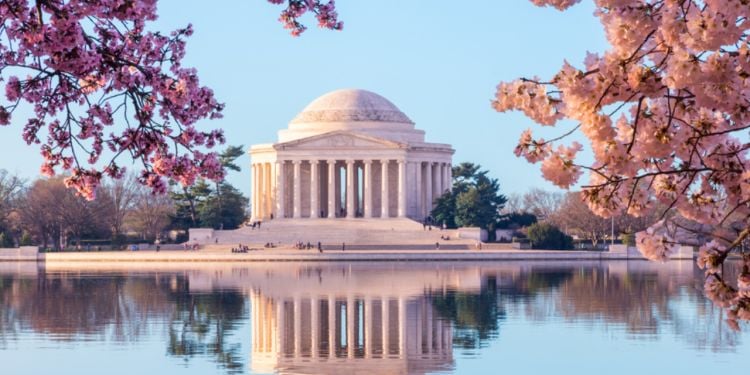
Accommodation in Washington D.C.
Washington is the capital of the United States and the seat of the federal government. One of the country's largest cities, DC is also on the ...
Leisure, Culture, and Things To Do in Washington, D.C.
Washington, D.C. offers an exceptional quality of life with unparalleled access to free world-class museums, historic monuments, green spaces, and a thriving arts scene. Whether exploring American history, attending a concert at the Kennedy Center, or cheering on local sports teams, residents find countless ways to enjoy their free time.
Museums and Cultural Attractions
The Smithsonian Institution operates 17 free museums in the D.C. area, including the National Air and Space Museum, the National Museum of Natural History, and the National Museum of African American History and Culture. Collectively, these museums attract over 30 million visitors annually. The National Gallery of Art, while not part of the Smithsonian, is also free and houses masterpieces from da Vinci to Monet.
The iconic National Mall stretches from the U.S. Capitol to the Lincoln Memorial, featuring monuments to Washington, Jefferson, and Martin Luther King Jr. The National Zoo, home to giant pandas and over 2,000 animals, is free to enter but requires timed passes.
Parks, Sports, and Nightlife
Rock Creek Park, one of the largest urban parks in the United States, offers hiking, cycling, and horseback riding just minutes from downtown. The Georgetown Waterfront provides scenic walks, kayaking, and dining along the Potomac River.
Sports fans can follow the Washington Nationals (MLB), Washington Capitals (NHL), Washington Commanders (NFL), and Washington Wizards (NBA). The Capital One Arena hosts concerts and events year-round.
For nightlife, neighborhoods like Adams Morgan, U Street Corridor, and 14th Street NW offer live music venues, cocktail bars, and international restaurants. The Kennedy Center presents world-class opera, ballet, and orchestral performances.
Sources: Smithsonian Institution, National Park Service – Rock Creek Park
Daily Life in Washington, D.C.
Daily life in Washington, D.C. combines the energy of a major metropolitan area with accessible green spaces, efficient public transit, and a distinct sense of history. Whether commuting to work, running errands, or exploring the city, newcomers quickly adapt to the rhythm of the capital.
Public Transportation
The Washington Metropolitan Area Transit Authority (WMATA) operates the Metrorail and Metrobus systems, serving D.C. and surrounding suburbs in Maryland and Virginia. The Metrorail consists of six color-coded lines connecting 98 stations. Fares are distance-based, ranging from $2.25 to $6.75 during weekday peak hours (before 9:30 p.m.) and $2.25 to $2.50 on evenings and weekends.
Riders pay using a SmarTrip card, which can be purchased at station vending machines or loaded via the SmarTrip app. Monthly unlimited passes are available for frequent commuters. Metrobus fares are a flat $2.25 for local routes and $4.80 for express routes, with free bus-to-bus transfers within two hours.
Lifestyle and Cultural Habits
Washingtonians embrace an active lifestyle, with jogging and cycling popular along the National Mall and Rock Creek Park. The city's Capital Bikeshare program offers over 700 stations for convenient bike rentals. Farmers' markets, including Eastern Market and the Dupont Circle FRESHFARM Market, are weekend staples for fresh produce and artisanal goods.
Dining options span global cuisines, reflecting the city's diverse population. Brunch is a beloved tradition, with neighborhoods like Adams Morgan and Capitol Hill offering popular spots. The city generally operates on a professional schedule, with evening social events and happy hours being common networking opportunities.
Sources: WMATA, Destination DC
Cost of Living in Washington, D.C.
Washington, D.C. ranks among the most expensive cities in the United States, with a cost of living index approximately 47% higher than the national average. Housing accounts for the largest share of monthly expenses, followed by transportation, groceries, and healthcare. However, high salaries and access to free cultural attractions help offset these costs.
Monthly Budget for a Single Person
The following table estimates typical monthly expenses for a single person living in Washington, D.C.:
Expense Category | Estimated Monthly Cost (USD) | Notes |
|---|---|---|
Rent (1-bedroom, city center) | $2,300–$2,700 | Varies by neighborhood |
Utilities (electricity, gas, water) | $150–$200 | Higher in summer/winter |
Groceries | $350–$450 | Cooking at home |
Transportation (Metro pass) | $100–$200 | Monthly unlimited options available |
Health Insurance | $200–$400 | Employer plans reduce costs |
Internet | $60–$90 | High-speed plans |
Total (excluding entertainment) | $3,160–$4,040 |
Monthly Budget for a Family of Four
Families should anticipate higher housing and childcare costs. The following table outlines estimated expenses:
Expense Category | Estimated Monthly Cost (USD) | Notes |
|---|---|---|
Rent (3-bedroom apartment) | $3,700–$5,000 | Family-friendly neighborhoods |
Utilities | $250–$350 | Larger home consumption |
Groceries | $900–$1,200 | Family shopping |
Transportation | $200–$400 | Multiple passes or car costs |
International School (1 child) | $2,700–$4,300 | Annual fees divided by 12 |
Health Insurance (family) | $600–$1,000 | Employer contribution varies |
Total | $8,350–$12,250 |
Sources: Numbeo, MIT Living Wage Calculator
In Short
Washington, D.C. stands out as a destination where history, politics, and international culture converge. Expats relocating here gain access to exceptional career opportunities in government, consulting, international organizations, and technology. The city's free Smithsonian museums, walkable neighborhoods, and efficient Metro system enhance daily life, while diverse communities ensure newcomers feel welcome. Although the cost of living is high, competitive salaries and access to free cultural attractions help balance expenses. Families benefit from reputable international schools, and young professionals thrive in neighborhoods buzzing with restaurants, cafes, and nightlife. Washington, D.C. truly offers something for everyone seeking a dynamic, globally connected city to call home.
Ready to connect with other expats in Washington, D.C.? Join the Expat.com Washington, D.C. forum to ask questions, share experiences, and build your network in the nation's capital.
We do our best to provide accurate and up to date information. However, if you have noticed any inaccuracies in this content, please contact us.


Essential services for your expat journey