Generally, anyone who resides in Canada for more than 183 days in a calendar year may be considered a Canadian tax resident, but other factors such as residential ties (housing, family, etc.) and international tax treaties can also influence this status. If you are considered a Canadian tax resident, you must report all your worldwide income, including income earned abroad.
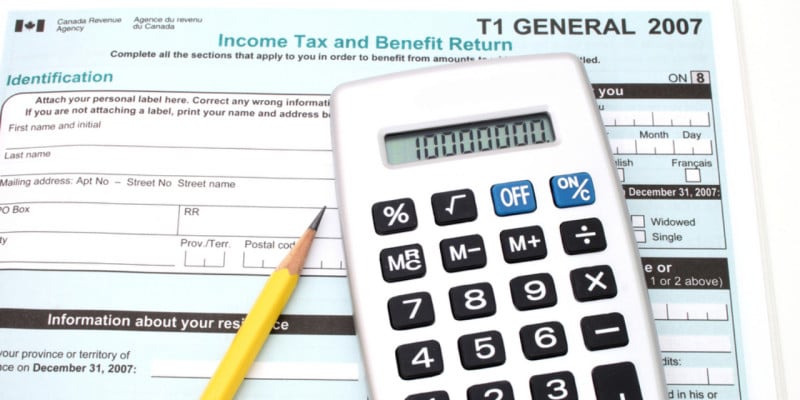
If you're unsure whether you need to file a tax return, you can check your situation on this official page. Every year, employees must submit their tax returns to the government between February 24 and April 30. April 30 is also the deadline to pay your taxes. If you or your spouse or common-law partner is a self-employed worker, the deadline to submit your tax return is extended to June 15. If this deadline falls on a Sunday, it is automatically moved to the next business day, which is Monday. This principle generally applies: any tax deadline that falls on a Saturday, Sunday, or public holiday is moved to the next business day. You will incur interest on taxes owed if you pay your debt late. You will also face a late filing penalty if you have a balance due and submit your return late. The tax return forms are primarily available online on the Canada Revenue Agency (CRA) website. They are sometimes available at certain CRA tax service offices, but the online version is the most accessible and up-to-date.
Tax rates and tax credits vary from one province to another. Quebec applies higher income tax rates than Ontario, with a maximum provincial marginal rate of 25.75%, compared to 13.16% in Ontario. However, once combined with federal rates, the overall marginal rates reach similar levels in both provinces (about 53%), although these rates apply to different income brackets (starting at $119,910 in Quebec, compared to $246,752 in Ontario in 2025). In British Columbia, provincial income tax rates range from 5.06% to 20.50%, with a maximum combined federal-provincial marginal rate reaching about 53.5% for incomes over $259,829. To better understand tax rates in Canada, you can visit this page. Non-residents are taxable on Canadian income and capital gains related to taxable Canadian property.
In Canada, tax is withheld at the source, meaning from your salary. Thus, once your return is filed, the government might refund you if too much was withheld or bill you if not enough was. You might also receive a tax refund.
Good to know:
There are no property taxes or inheritance taxes in Canada.
You can file a tax return even if you have no income. This allows you, for example, to receive a tax refund or reimbursement for your child care expenses. You must also file a tax return to qualify for the Canada Child Benefit, the Goods and Services Tax/Harmonized Sales Tax (GST/HST) credit, and benefits fromprovincial and territorial programs. Finally, your spouse might also receive a larger tax refund. Additionally, you can file your return even if you are no longer in Canada. This is the case, for example, for students and temporary workers.
Before starting your return, you should learn about the updates for the tax period in question, and notably, become familiar with your rights as a taxpayer. Gather all the necessary documents for your return. You should have received most of your slips and receipts by the end of February. If you are employed in Canada, your employer must give you a document called a T4 slip before you can file your return. You must also have a valid Social Insurance Number (SIN). You will not need to send any proof with your return. However, these proofs might be requested later by the CRA. You may not receive your T3 and T5013 slips until the end of March. Receipts for RRSP and PRPP contributions made in the first 60 days of the year may not be received until May. You can obtain a copy of your tax slips for the current and previous years if you have not received them, if they are missing, or if they are lost. You will find all types of tax slips on this page.
You can choose to file your return on your own using software certified by the Canada Revenue Agency (CRA), including CRA-certified tax software for NETFILE, or hire an accountant. Online filing is the fastest and easiest way to submit your tax return. Under certain conditions, you can use the Auto-fill my return tool to simplify the process. Some universities also offer tax clinics where accounting students fill out your tax return for free.
Note:
Without a valid SIN, you cannot file online and must use the paper format. New residents with a SIN can file electronically from their first year.
To find out where to mail your paper T1 return, visit this page. Once your return is sent, make a payment before the deadline or wait for your refund.Several options are available to make a full or partial payment online, by mail, or in person. You can set up a payment arrangement with the CRA and calculate an amount you can afford to pay regularly over a given period.
Online returns are processed within 2 weeks, with refunds issued in 8 business days if using direct deposit. Paper returns take 8 weeks. The Notice of Assessment (NOA) includes the RRSP limit and any corrections made. Once your return is processed, you will receive a Notice of Assessment(NOA) indicating whether you will receive a refund or if you have a balance due. This NOA includes the date your tax return was assessed, as well as details on the amount you owe or will receive as a refund or credit. The NOA also provides the maximum deductible for a Registered Retirement Savings Plan (RRSP) for that year. Your NOA is an important document, so keep it with your tax records. If you need to amend your return after submission, wait to receive your Notice of Assessment. You can request a change to your income and benefit return online or by mail. To receive your refund faster, you can sign up for direct deposit and provide your banking information. You can register for direct deposit through your bank, online via the mobile app or My Account portal, or by calling 1-800-959-7383. Otherwise, you will receive your refund bycheque. Most Canadian residents need to file only one tax returnfor the tax year. The CRA collects taxes on behalf of all provinces, except Quebec. Quebec residents must therefore file two returns: one for theCRA and one forRevenu Québec.
Important:
If you are preparing returns for others, use a separate envelope to mail each person's return. However, if you are filing returns for more than one year for the same person, put them all in the same envelope.
Good to know:
If you are a self-employed worker, you will likely need to pay your taxes in one or more installments. In this case, you must complete the federal formT2125 and the Schedule L (Quebec). The return is due on June 15, but payment must be made by April 30. Instalment payments are required if the balance due exceeds CAD 3,000.
Join the Canada community
Get regular tips and advice to make the most of your expat life
GST/HST in Canada
Canadian residents also pay taxes called Goods and Services Tax/Harmonized Sales Tax(GST/HST). Every time you buy something, these two taxes are added to the displayed price at checkout.
Note:
In Canada, the price shown on tags does not include taxes!
The federal sales tax(GST) is a fixed tax of5%. It applies throughout Canada. Some products and services are exempt, but this tax is usually due. This tax is equivalent to VAT in France.
The provincial sales tax(PST) varies by province. It is the provincial government that decides the rate of this tax and the products it applies to.
In summary, Canadians pay a federal GST (5%) and a provincial tax (PST/QST). The HST combines both taxes in 5 provinces. Prices displayed generally exclude taxes. Nova Scotia reduced its HST to 14% in 2025. You can check the current rates applicable to your province on this page.
Good to know:
Homeowners in Canada must also pay municipal taxes and school taxes. Contact your municipality for more information.
Corporate taxes in Canada
Before starting your business in Canada, you must be aware of the tax provisions regarding GST (Goods and Services Tax) and PST (Provincial Sales Tax). As mentioned above, these are two taxes levied on the sale of goods and services by the federal government and the provincial government, respectively. The Harmonized Sales Tax (HST) combines the PST and the GST. It is collected by the Canada Revenue Agency (CRA) and remitted to the provinces. You must register if you are an entrepreneur with revenue exceeding $30,000 over 12 months. You must remit these taxes to the government administrations.
Important:
Businesses with revenues exceeding CAD 30,000 must register for GST/HST.
It is essential to be informed about the regulations, taxation, business culture in your province, and the potential of your business sector. To do this, you should consider surrounding yourself with people and organizations that can support you throughout the development of your business. The Canada Revenue Agency (CRA) offers free personalized support tosmall business ownersandself-employed workers. The liaison officer service is available across Canada to help you understand your business tax obligations. The visit of a liaison officer is entirely confidential. You should also think about developing your network and promoting your business through a communication and marketing plan.
Almost all corporations in Canada must file a T2 return for each tax year, even if they have no tax to pay. This is also the case for non-profit organizations, tax-exempt corporations, and inactive corporations. Check if your business is affected here. Most of the time, this return is done online. You must send your return within six months of the end of each tax year. You can refer to this page to determine your corporation's tax year. Federal and provincial corporate tax rates are available on the Canadian government website.
We do our best to provide accurate and up to date information. However, if you have noticed any inaccuracies in this article, please let us know in the comments section below.
A journalist turned travel writer, Charlotte has seen almost 30 countries as a digital nomad. She has been settled in Canada for two years (Montréal then Vancouver).
Filling of income tax is a seasonal task yet preparation is done the whole year.
Newcomers must develop the skill in dealing with taxes to avoid cramming and owing the CRA.
CIC and CRA are two agencies we all have to befriend from the start.