

 Guide updated by Asaël Häzaq on 10 December 2025
France has long been a sought-after destination for expats. As one of Europe's most influential and accessible countries, it continues to be a top choice for professionals, retirees and families seeking a new chapter abroad. From the bustling tech scene in cities like Lyon and Toulouse to the historic vineyards of Bordeaux and the vibrant arts community in Paris, there's a place for everyone.
Five compelling reasons to live in France
- Exceptional culture and gastronomy: From world-renowned museums and historic landmarks to its status as a global culinary capital, France offers a feast for the senses.
- High quality of life: The country places a high value on personal time and leisure, with generous annual leave entitlement and a culture that prioritizes well-being.
- Universal Healthcare: The French healthcare system is celebrated for its efficiency and accessibility, with a significant portion of medical costs being reimbursed by the state.
- Stunning landscapes: The diversity of its geography, from the serene beaches of the French Riviera to the majestic peaks of the Alps, offers endless opportunities for outdoor activities.
- Strong social support systems: A robust social safety net includes benefits for families, unemployment support, and a comprehensive pension system.
Your setup journey
Guide in 14 steps. Click any step below to jump directly to the section you need.
01Where to live in France
Choosing where to live in France is one of the biggest decisions you'll make when moving to the country. The right location for you will depend on a number of factors, such as your career and professional goals, the cost of living and desired quality of life. Consider these options:
Major cities
Paris: The capital is a global powerhouse for fashion, finance, and culture, but comes with a notoriously high cost of living.
Lyon & Marseille: These are dynamic urban centers with burgeoning economies in technology and industry. They provide a more affordable alternative to Paris.
Mid-sized cities
Bordeaux & Toulouse: Known for their strong economies and pleasant atmospheres. Bordeaux is a wine industry hub, while Toulouse is a center for aeronautics. Both offer a high quality of life.
Smaller towns & rural areas
Provence & Brittany: Perfect for a tranquil lifestyle. While the cost of living is lower, housing prices can vary widely, particularly in tourist-heavy regions.
Tip:
Consider living on the outskirts of major cities. Areas just outside of Paris, Lyon, or Toulouse often offer more affordable housing and a quieter lifestyle, with excellent public transport links (like the RER or TER trains) that make commuting a breeze.
02Formalities and visas in France
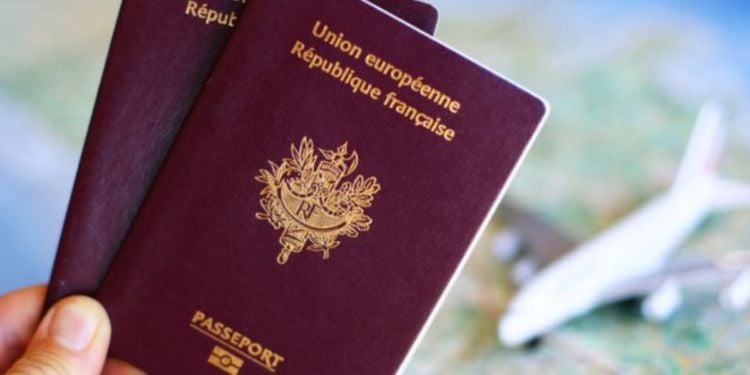
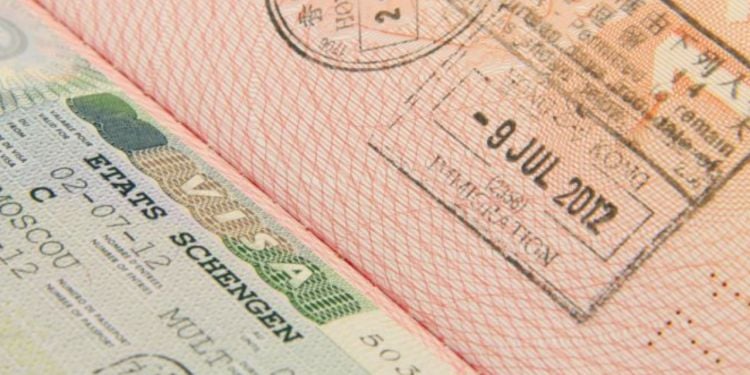
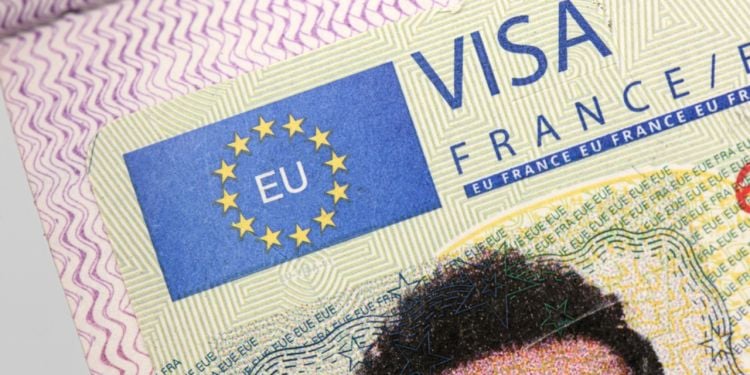
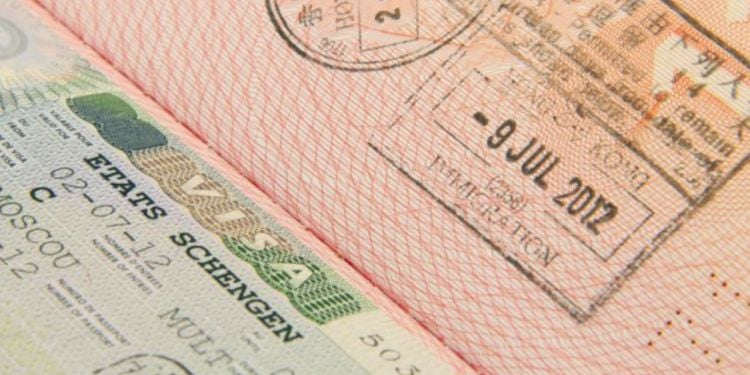
Before you begin planning your move, you will need to determine whether you need a visa for France. This will depend on your nationality and the length and purpose of your stay (such as employment, studies or joining family members).
For EU, EEA, and Swiss citizens: You do not need a visa or a residence permit to live in France, regardless of the length of your stay. You benefit from the freedom of movement. If you plan to reside in France for more than three months, you must, however, meet the conditions for the right of residence (such as being a worker, a student, or having sufficient financial resources and health insurance) to legally stay. While a residence permit (carte de séjour) is not mandatory, you can apply for one if you wish to formalize your legal status.
For non-EU citizens: A visa is mandatory for any stay exceeding 90 days, regardless of the purpose — be it for work, study, or retirement. The most common visa for long-term stays is the Visa de Long Séjour valant Titre de Séjour (VLS-TS). This visa is valid for 4 to 12 months and serves as both a visa and a temporary residence permit. When it expires, you must apply for a carte de séjour (residence permit) with the local prefecture if you wish to remain in France.
Tips:
- Be ready to provide proof of financial stability, such as a bank statement, to demonstrate you can support yourself.
- You will need to attend a biometric appointment to provide fingerprints and a photograph for your residency card.
- Make sure you have certified French translations of all non-French documents.
- Visa processing times can vary, so it is crucial to apply well in advance of your planned move.
Sources:
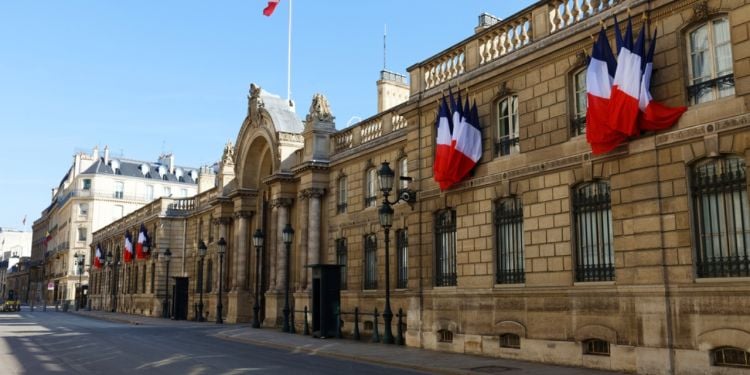
Working Holiday Visa in France for New Zealanders
Working Holiday Visa in France for Argentines
Working Holiday Visa in France for Japanese nationals
Working Holiday Visa in France for Hong Kong nationals
Working Holiday Visa in France for South Koreans

Working Holiday Visa in France for Canadians
Entry requirements for France
Traveling to France

Driving in France
03Working in France
The job market in France is competitive but offers significant opportunities for qualified professionals, particularly in sectors like tech, tourism and engineering.
To land a job in France, you will need to have a French-style CV, a document that typically includes a professional headshot, although a photo is not mandatory. Most non-EU nationals will need a work permit, which is often tied to a specific job offer and requires sponsorship from a licensed French employer.
Major online platforms like Cadremploi and APEC are excellent for finding professional opportunities. France's labor laws provide robust protections for employees, guaranteeing a secure and equitable work environment.
In-demand jobs
Among the most sought-after jobs in France are IT specialists (data analysts, software developers), healthcare professionals (doctors, nurses), engineers (aerospace, mechanical), and professionals in the hospitality and luxury goods industries.
Tips:
- Consider a temporary contract (CDD) to gain local experience and enhance your CV.
- Network actively at professional events and join industry associations.
- Recruitment agencies are a valuable resource for specialized positions.
Facts & figures
Unemployment rate | 7.5% |
Youth unemployment rate | 18.5% |
Average net monthly salary (private sector) | €2,735 |
Data as of September 2025
Sources: French National Institute of Statistics, Trading Economics, Staffmatch




04Accommodation in France
From chic Parisian apartments to charming provincial cottages, France's housing market offers a wide range of options to suit any lifestyle. Renting is a popular first step for newcomers looking for accommodation in France, allowing them to get to know the country and its different regions before making a long-term commitment to a purchase.
The rental process is typically conducted through an agence immobilière (real estate agency), which acts as an intermediary between the landlord and tenant. The standard rental contract is a bail de location, which usually spans one or three years. You will be required to pay a security deposit, generally equal to one or two months' rent, plus the first month's rent upfront.
For those who are ready to buy, France offers a stable real estate market. Foreigners face no restrictions on purchasing property and are afforded the same rights as French citizens, making it an attractive long-term investment.
Tips:
- Choose a regulated agency to ensure the process is legal and transparent.
- Factor in extra costs like utilities, which may not be included in the advertised rent.
- Conduct a detailed inventory before and after your tenancy to avoid disputes over the deposit.
- If you're purchasing a property, budget for additional costs. You will need to account for things like notary fees and taxes, which can add 7-10% to the total cost. These fees are mandatory and handled by the notaire. Note that they can be significantly lower for new builds.
Sources:
Discover more
05Cost of living in France
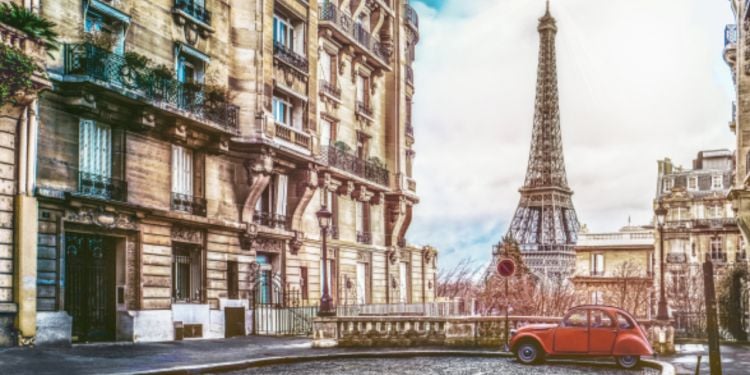
The cost of living in France can be high, particularly in cities like Paris and Nice. However, it is generally considered more affordable than in some other major European capitals, and costs vary significantly by region.
Here is a general breakdown of average monthly expenses for different household types, including rent, to help you manage your budget.
Monthly expenses
Category | Single expat (per month) | Family of four (per month) |
Average total expenses | €1,700 - €2,500 | €2,800 - €4,500 |
Rent (outside Paris) | €700 - €1,200 | €1,200 - €2,000 |
Rent (Paris) | €1,200 - €2,000 | €2,000 - €3,500 |
Utilities | €120 - €200 | €200 - €350 |
Groceries | €300 - €400 | €800 - €1,300 |
Transport | €60 - €120 | €120 - €250 |
Sources: Relocate.me, Digit Insurance, Instarem
Useful link:
06Healthcare in France
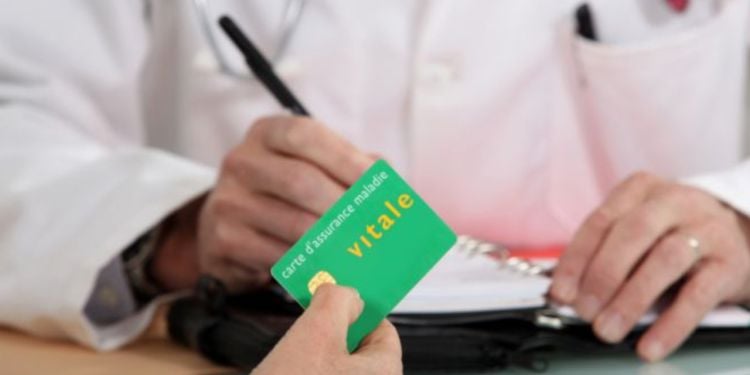
The healthcare system in France is celebrated for its high quality care and efficiency, operating on a dual public-private model. To access state healthcare, expats must register with the Caisse Primaire d'Assurance Maladie (CPAM) to obtain a carte vitale (health insurance card). While a significant portion of costs are reimbursed by the state, many people opt for a mutuelle (complementary private insurance) to cover the remaining costs and provide access to a wider range of services.
What you need to know
- In case of a medical emergency, dial 112 or 15. For non-urgent medical advice, contact your registered GP.
- Some costs, such as dental treatments and prescriptions, may require an upfront payment before partial reimbursement.
- The French system is based on freedom of choice, allowing you to select your own doctors and specialists.
Source:
Ameli - online portal for the French public health insurance system

07Finance and banks in France
France has a well-developed and secure banking system, with a variety of options for both local and international residents. To open a bank account in France, you typically need to present a valid form of identification and proof of address. Many traditional banks require a face-to-face appointment, though some newer, online banks offer a faster and more convenient digital setup.
Tips:
- To open your bank account, you will need your passport, long-stay visa and proof of address (like a utility bill or rental contract).
- Schedule an in-person appointment at your chosen bank branch.
- Ask about all fees, including account maintenance, card fees, and international transfers.
- Bring a French-speaking friend or interpreter to your appointment if needed.
- Familiarize yourself with the tax system. France's tax system is complex. If you are a tax resident (living there for more than 183 days a year), you are typically taxed on your worldwide income. It's crucial to understand these obligations and declare all foreign accounts.
Discover more

Join the discussion on the forum
08Retiring in France
For many, France provides the ideal backdrop for a well-deserved retirement, thanks to its high living standards and celebrated joie de vivre. Retirees from countries like the United Kingdom, the United States, and Germany, as well as other European Union member states, frequently choose France. Whether your dream is a sun-drenched Mediterranean village, a sophisticated regional city like Lyon or Bordeaux, or a tranquil farmhouse in the vine-covered countryside, you will discover a setting that is perfect for your golden years. The mild weather of the Occitanie region and the famed cultural hub of the Loire Valley are perennial favorites.
Major advantages
Health coverage: Access to the national healthcare system Assurance Maladie after a residency period.
Easy travel: Superb public transport, including high-speed rail, for easy travel across Europe.
Good quality of life: A low-stress, leisurely pace of life that prioritizes well-being and social connection.
Important
- Apply for your social security (CPAM) number after three months to access the public healthcare system. This period is waived if you are a retiree who receives a state pension from an EU/EEA member country, Switzerland, or the UK.
- French administration is complex and slow. Be prepared for extensive paperwork and strict deadlines.
- You must prove you can support yourself without working, generally an income above the French minimum wage (around €1,400 per month for a single person).
Source:
Join the discussion on the forum
09Studying in France
Boasting a wide range of world-class universities, France has a reputation for academic excellence that attracts students from every corner of the globe.
Why study in France?
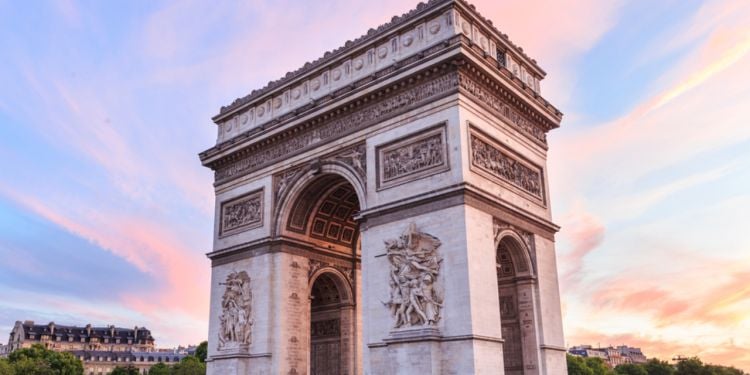
Universities in France are highly regarded for their academic rigor and research contributions, with institutions like the Sorbonne and HEC Paris being globally recognized. For international students wanting to study in France, average tuition fees for public universities range from €2,800 to €4,000 per year for Bachelor's and Master's degrees, respectively. Private institutions can be significantly more expensive.
Tips:
- If your program exceeds three months, you will need a student visa. You must have a formal acceptance from a licensed French educational institution before applying.
- You will need to obtain a Confirmation d'Inscription (a formal letter of acceptance) from your university, which is essential for your visa application, along with your passport and proof of sufficient financial resources.
- Secure your living arrangements well in advance. University housing and private rentals fill up quickly, so begin your search in the spring or early summer.
Discover more
10Education and schools in France
Finding the right schooling for your children is a top priority when moving to France. The French education system offers excellent options, primarily divided into public and private institutions. Public schools are free, secular, and follow the national curriculum. Enrolment for public schools begins at your local Mairie (town hall) and requires proof of residence, your child's birth certificate and health records.
For expats who study in France, international schools are a popular choice. These schools often teach a combination of a foreign curriculum (like the British, American, or IB curriculum) and the French curriculum. While more expensive than private French schools, they cater specifically to expatriate families.
Tips:
- Research transportation options; school buses aren't standard nationwide.
- Inquire about extra-curricular activities (périscolaire) offered outside class time.
- Start the application process as early as possible — ideally months before your move. Delays in gathering or validating paperwork are the single biggest cause of late enrolment.
Sources:
CROUS - services and support for students
Public service information - official website of the French administration
Join the discussion on the forum
11Planning your move to France
Relocating to France is the start of an incredible new chapter and one that requires careful preparation. A well-executed move minimizes stress and avoids bureaucratic hurdles, allowing you to settle in faster. Here are a few pointers:
- Start planning at least six to12 months ahead to handle visa applications, find accommodation, and organize transport.
- Get quotes from reputable international moving companies that have experience with France.
- Declutter and create a detailed inventory of your possessions to simplify packing and reduce costs.
- Keep vital documents, such as passports, visas, and medical records, in a secure and accessible folder.
- Research the customs regulations to understand the process for importing personal goods duty-free.
- Declare any new or restricted items to French customs.
- Use heavy-duty packing materials and clearly label each box with its contents and intended room.
Sources:
Discover more


12Everyday life in France
Beyond the picturesque scenery, the true heart of France lies in its unique customs, from the daily 'bonjour' to the cherished long dinner. Punctuality is appreciated, particularly in professional settings, and a more relaxed pace is common in social situations. The café culture is central to daily life and a wonderful way to immerse yourself in the local community.
The country is generally very safe, with a low incidence of violent crime. However, like any major city, urban areas require a basic level of awareness. Public transport and metropolitan areas are well-maintained and monitored for safety.
Local habits & customs
Greetings: A firm handshake is common in professional settings, and la bise (a light cheek kiss) is a standard greeting among friends and acquaintances.
Dining: Meals, particularly dinner, are a long and cherished social event.
Formality: Using "Monsieur" or "Madame" is a sign of respect, especially with people you do not know well.



13Leisure in France
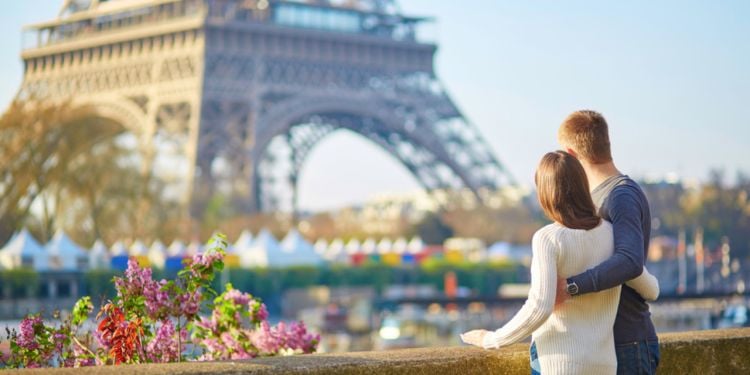
France offers a wealth of leisure activities to enrich your expat experience. From outdoor adventures to cultural pursuits, there is something for every taste. Cycling and hiking are popular national pastimes, with a vast network of trails in areas like the French Alps and the Dordogne. For those who prefer the water, the French Riviera and Brittany coast offer opportunities for sailing, swimming, and other nautical sports.
Culturally, France is a treasure trove. Expats can enjoy world-class theatre in Paris, explore a vast number of museums and galleries, many of which are free for certain age groups, or visit historical landmarks like the Palace of Versailles or a medieval châteaux. The café and bistro culture is at the heart of French social life, providing a perfect setting to connect with friends and local communities.
Source:
Discover more
Join the discussion on the forum
14The essentials to remember
Your move to France is about more than logistics; it's about making a new home and building a support network. Beyond securing housing and visas, do as much as you can to integrate into the community. Learn the language, participate in community events and familiarize yourself with the local culture and customs. Your experience will be greatly enriched by appreciating the nuances of French social life, from daily boulangerie visits to mastering administrative patience.
To delve deeper, read our helpful guides and articles on topics such as finding work, accommodation and healthcare. If you have any questions, feel free to ask our members on the France forum.
Once your plans are complete and the bags are packed, France will be waiting to welcome you.
Join the France community
Get regular tips and advice to make the most of your expat life
Essential services for your expat journey







Forum topics on living in France
Discover forums topics on expat life in France: join the conversation, ask your questions, get advice and share your experience.