Living in Leuven: the ultimate expat guide
Everything you need to know for a successful life in Leuven.
Leuven is a compact, welcoming city located 25 kilometers east of Brussels in the heart of Flemish Brabant. With a population of approximately 104,000 residents and over 50,000 university students, this historic city combines academic excellence with a high quality of life. As the home of KU Leuven, Belgium's largest and oldest university (founded in 1425), and world-leading research institutions like imec, the city attracts talent from over 170 nationalities. Leuven was named European Capital of Innovation and offers a unique blend of medieval architecture, cutting-edge technology, and a famously lively social scene.
Five Good Reasons to Move to Leuven
- Global career opportunities – Major employers include KU Leuven, imec, AB InBev (Stella Artois headquarters), and KBC Group, plus a thriving startup ecosystem.
- Low unemployment – Flanders boasts an unemployment rate of just 3.8%, well below the EU average.
- Excellent connectivity – Reach Brussels in 16 minutes by train, with Brussels Airport only 20 minutes away.
- Bike-friendly living – A pedestrian-friendly city center with a 30 km/h speed limit and extensive cycling infrastructure.
- Rich culture and heritage – UNESCO-listed Grand Béguinage, world-class museums, and the famous Oude Markt, known as the "longest bar in Europe."
Working in Leuven: Opportunities in Tech, Research, and Beyond
Leuven's economy thrives on innovation, research, and technology. The city serves as a hub for high-tech industries, life sciences, and multinational corporations, making it an attractive destination for skilled professionals seeking international career opportunities.
Key Industries and Major Employers
The local job market is driven by several powerhouse institutions. KU Leuven employs thousands across its faculties and research centers. Imec, the world-leading research center in nanoelectronics and digital technologies, employs over 6,500 researchers from more than 90 countries and reported revenue of €846 million in 2022. The city is also home to the global headquarters of Anheuser-Busch InBev, the world's largest brewer, and KBC Group, one of Europe's leading financial institutions. The Leuven MindGate initiative supports startups and entrepreneurs at the intersection of health, high-tech, and creativity.
Work Permits and Employment Conditions
Citizens of EU, EEA, and Switzerland can work freely in Belgium without a work permit. Non-EU nationals require a Single Permit, which combines work and residence authorization. Employers must apply on behalf of the employee through the regional employment office. The permit is typically valid for more than 90 days and can be renewed. Highly qualified workers may benefit from streamlined procedures. Belgium offers a minimum wage of €1,890 per month, with automatic indexation to the cost of living.
The table below provides key employment indicators for the Leuven region.
Unemployment rate (Flanders, 2024) | 3.8% |
Average gross salary (Belgium) | €45,984/year |
Key sectors | Technology, life sciences, finance, brewing |
Sources: Statbel, Statistics Flanders
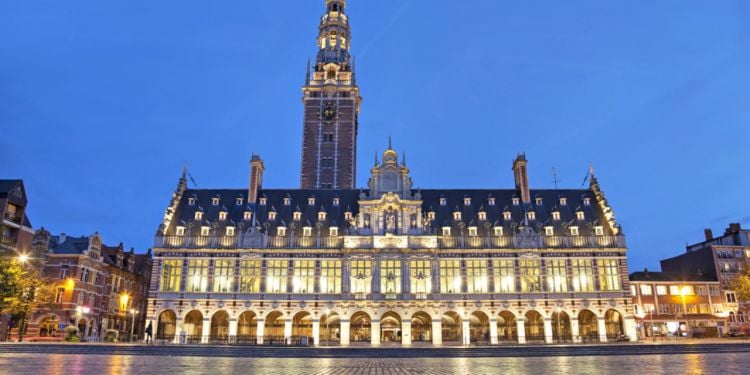
Working in Leuven
Leuven is located within the Flanders region in Belgium. It's a Dutch-speaking city that offers opportunities for expatriates looking for a job.
Higher Education in Leuven: World-Class Universities
Leuven is one of Europe's oldest and most prestigious university cities. The academic environment attracts tens of thousands of international students each year, offering programs in Dutch and English across virtually every field of study.
KU Leuven: Belgium's Top University
KU Leuven (Katholieke Universiteit Leuven) was founded in 1425, making it the oldest Catholic university still in existence worldwide. Today, it ranks among the top 100 universities globally (QS #63 in 2025, THE #45 in 2024) and is consistently named the most innovative university in Europe by Reuters. The university enrolls approximately 58,000 students, with a significant international population. Programs span law, medicine, engineering, business, humanities, and sciences. Many master's programs are taught entirely in English. Admission requirements vary by program, with an overall acceptance rate of approximately 34-73% depending on the level of study.
Tuition Fees and Admission
Belgian universities offer affordable tuition compared to Anglo-Saxon countries. For the 2024-2025 academic year, EU/EEA students pay approximately €980 to €1,157 for a full-time program (60 credits). Non-EU students pay between €3,900 and €4,600 annually, depending on the program. Scholarships and tuition waivers are available, including the Science@Leuven Scholarship offering up to €12,000 for exceptional international students. Additional institutions include UC Leuven-Limburg (UCLL), a university of applied sciences offering practical programs.
For detailed fee information, visit the official tuition calculator on the KU Leuven website.
Schooling for Children: International and Local Options
Families relocating to Leuven will find a well-developed education system with options for both local integration and international schooling. Belgium's education is considered among the best in Europe, as reflected in strong OECD PISA results.
The Belgian School System
In Flanders, education is structured into preschool (ages 2.5-6), primary school (ages 6-12), and secondary school (ages 12-18). Compulsory education begins at age 5 and continues until age 18. Public and government-subsidized private schools are free of charge, though parents may cover costs for materials, trips, and meals. The language of instruction is Dutch. For non-Dutch-speaking children, OKAN classes (Onthaalklassen voor Anderstalige Nieuwkomers) provide intensive language support to help newcomers integrate into the local school system.
International School of Leuven (ISL)
The International School of Leuven offers English-medium education for children aged 2.5 to 12 years. The school follows an internationally recognized curriculum and provides Dutch language classes for cultural integration. Annual tuition is approximately €14,900, with a 10% sibling discount. Employees of partner organizations (City of Leuven, imec, VIB, KU Leuven) receive an additional 10% discount. KU Leuven staff may also qualify for scholarships covering up to 50% of tuition. Note that there is currently no English-language secondary school in Leuven; families with older children often consider international schools in nearby Brussels.
Sources: International School of Leuven, KU Leuven Family Services
Housing and Neighbourhoods: Where to Live in Leuven
The Leuven housing market caters to students, young professionals, and families alike. As a compact city, most areas are within cycling distance of the center, though rental prices and atmosphere vary by neighbourhood.
Popular Neighbourhoods for Expats
Leuven City Centre offers historic charm with easy access to shops, restaurants, and nightlife around the Grote Markt and Oude Markt. Expect higher rents but unmatched convenience. Heverlee, located south of the center, is popular with academics and tech professionals due to its proximity to KU Leuven campuses, imec, and the tranquil Park Abbey. Kessel-Lo, to the east, provides a quieter, family-friendly environment with good schools, parks, and the popular Provincial Domain recreational area. Wilsele and Wijgmaal, north of the center, offer more affordable housing with easy train access.
Rental Prices and Procedures
Rental prices in Leuven have increased in recent years due to high demand. As of 2025, expect to pay approximately €700 to €900 per month for a one-bedroom apartment and €1,000 to €1,400 for a three-bedroom apartment, depending on location and condition. Student rooms in KU Leuven residence halls cost between €419 and €441 per month. Private student rooms average around €350 to €450. Standard rental contracts require a deposit of two to three months' rent, held in a blocked bank account. Tenants typically cover utilities separately. Furnished apartments are available but command a premium.
Sources: KU Leuven Housing, Numbeo

How to find accommodation in Leuven
Between a student atmosphere and a pleasant living environment, Leuven attracts both students and expats coming to work here. Are you looking for ...
Leisure, Culture, and Things to Do in Leuven
Despite its modest size, Leuven punches above its weight in culture, nightlife, and recreational activities. The combination of historic heritage, student energy, and local traditions creates a lively atmosphere year-round.
Museums and Cultural Attractions
M – Museum Leuven is the city's premier art museum, housing over 46,000 works spanning late-Gothic masterpieces to contemporary art. The striking building itself blends modern architecture with historic facades. The Stadhuis (Town Hall), an iconic example of Brabantine Gothic architecture, features 235 statues on its ornate exterior and offers guided tours. The Grand Béguinage, a UNESCO World Heritage Site, is a beautifully preserved 13th-century community now integrated into the university. Park Abbey and the PARCUM Museum offer a peaceful escape with religious art collections and scenic grounds for walking.
Nightlife, Events, and Sports
The Oude Markt is legendary – often called "the longest bar in Europe" – with dozens of pubs, cafés, and terraces packed with students and locals. The Stella Artois Brewery, headquartered in Leuven, offers tours and tastings. Annual events include the Leuven Beer Festival (April-May) showcasing Belgian brewing culture, and Marktrock, a summer music festival. Sports enthusiasts can support OH Leuven (football), the Leuven Bears (basketball), or explore cycling routes through Heverlee Woods and the surrounding countryside. The Kessel-Lo Provincial Domain offers swimming pools, playgrounds, and outdoor activities for families.
Daily Life in Leuven: Transport, Language, and Lifestyle
Daily life in Leuven combines small-town accessibility with the amenities of a European capital nearby. The city's compact size, excellent transport links, and vibrant café culture make it highly livable for expats.
Getting Around
Leuven is a bike-friendly city with dedicated cycling lanes and a 30 km/h speed limit throughout the center. Many residents commute entirely by bicycle. For longer distances, De Lijn operates an extensive bus network throughout the city and surrounding region. A single ticket costs €3, while a 10-ride card (Lijnkaart) costs €15. The train station, located at the edge of the city center, provides frequent connections to Brussels (16-20 minutes), Antwerp, Ghent, and Brussels Airport. Trains run every 15 minutes during peak hours. A ticket to Brussels costs approximately €5-9.
Language and Culture
The official language in Leuven is Dutch, as the city is in Flanders. However, due to the large international community, English is widely spoken, especially in academic and business settings. Learning basic Dutch is appreciated and helps with daily interactions, official paperwork, and social integration. Leuven has a strong café culture; locals gather in the numerous terraces around the Oude Markt and Grote Markt for coffee, Belgian beers, and conversation. Shops are typically open Monday to Saturday, with many closed on Sundays. Weekly markets offer fresh produce and local products.
Cost of Living in Leuven: What to Expect
Leuven offers a moderate cost of living compared to major European cities, though housing represents the largest expense. The city is more affordable than Brussels or Antwerp while providing comparable quality of life.
Monthly Budget for a Single Person
The following table outlines estimated monthly expenses for a single professional living in Leuven.
Rent (1-bedroom apartment, city center) | €800 – €950 |
Utilities (electricity, heating, water) | €120 – €180 |
Groceries | €250 – €350 |
Public transport (monthly pass) | €50 – €70 |
Health insurance | €100 – €150 |
Total (single person) | €1,320 – €1,700 |
Monthly Budget for a Family of Four
Families should plan for higher expenses, particularly for housing and education.
Rent (3-bedroom apartment) | €1,200 – €1,500 |
Utilities | €180 – €250 |
Groceries | €500 – €700 |
International school (1 child, monthly) | €1,240 |
Transport and miscellaneous | €200 – €300 |
Health insurance (family) | €300 – €400 |
Total (family of 4) | €3,620 – €4,390 |
Sources: Numbeo, LivingCost.org
In Short
Leuven offers a rare combination: a historic university town with cutting-edge innovation, a welcoming international community, and an enviable quality of life just minutes from the European capital. Whether you're drawn by career opportunities at world-leading research institutions, seeking an affordable yet culturally rich place to study, or looking for a family-friendly city with excellent schools and green spaces, Leuven delivers. The compact, bike-friendly center, lively café culture, and easy connections to Brussels and beyond make daily life both practical and enjoyable. Ready to start your expat journey in Leuven? Join the Expat.com Leuven forum to connect with fellow expats, ask questions, and share experiences.
We do our best to provide accurate and up to date information. However, if you have noticed any inaccuracies in this content, please contact us.


Essential services for your expat journey