

Living in Surabaya: the ultimate expat guide
Everything you need to know for a successful life in Surabaya.
Surabaya, Indonesia's second-largest city, offers a distinctive blend of rich heritage, economic vitality, and authentic Indonesian culture. Known as the "City of Heroes" for its pivotal role in Indonesia's independence struggle, this East Java capital is home to over 3 million residents and serves as the region's commercial and industrial hub. Unlike the tourist-focused environment of Bali or the corporate intensity of Jakarta, Surabaya provides expatriates with an immersive experience into everyday Indonesian life at a fraction of the cost.
Why Surabaya Stands Out
The city functions as a major port and trading center, often compared to Rotterdam for its commercial significance. With a growing expatriate community working across sectors such as education, healthcare, manufacturing, and hospitality, Surabaya offers genuine cultural immersion while maintaining modern conveniences. The warm, welcoming nature of local residents—described as "sopan dan ramah" (polite and friendly)—creates a comfortable environment for newcomers.
5 Good Reasons to Move to Surabaya
- Affordable cost of living: Living expenses are approximately 20% lower than Jakarta and 60% lower than major Western cities.
- Strategic location: Gateway to East Java's natural wonders including Mount Bromo and access to Bali via direct flights.
- Growing economy: Second-largest port city with strong job opportunities in trade, manufacturing, and services.
- Rich cultural heritage: Historic neighborhoods, diverse culinary scene, and authentic Javanese traditions.
- Safe and friendly: Low crime rates and a welcoming local population make integration easier.
Working in Surabaya: Opportunities in Indonesia's Industrial Hub
Surabaya's economy is driven by a dynamic mix of services, manufacturing, and trade. As East Java's capital and Indonesia's second-largest port city, it offers diverse employment opportunities for qualified professionals. The city serves as a commercial hub not only for East Java but also facilitates trade with Central Java, Kalimantan, and Eastern Indonesia.
Key Employment Sectors
According to BPS Surabaya (August 2024), approximately 76% of employed residents work in the services sector, followed by 23% in manufacturing. Key industries include food and beverage processing, textiles, electronics, and increasingly, the digital economy. Major multinational companies such as Unilever, Coca-Cola, and Samsung have operations in the region. The city launched the Surabaya Digital Valley in 2019, a technology park supporting startups and innovation.
Work Permits and Requirements
Foreign nationals must obtain a KITAS (Kartu Izin Tinggal Terbatas) work permit sponsored by an Indonesian employer. The process involves employer approval through RPTKA from the Ministry of Manpower, followed by VITAS visa issuance. Employers pay a monthly levy of USD 100 per foreign worker. Processing typically takes 4-6 weeks. English teaching, management, and technical specialist roles are common expatriate positions.
The table below summarizes key employment indicators:
Unemployment rate (August 2024) | 4.91% |
City minimum wage (2025) | IDR 4,961,753/month (~USD 310) |
Average net salary | IDR 5,968,000/month (~USD 375) |
Formal employment rate | 61.81% |
Sources: BPS Surabaya, Databoks, Numbeo
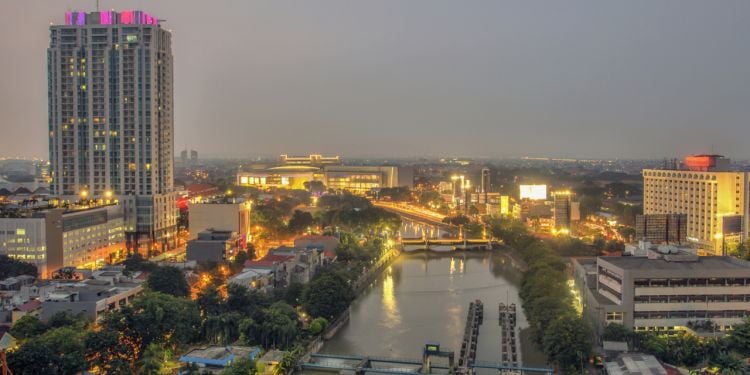
Working in Surabaya
Surabaya may not be the ideal city for tourism in Indonesia, but it has many job opportunities. Here are some tips to learn more about ...
Higher Education in Surabaya: Universities and International Programs
Surabaya hosts some of Indonesia's most prestigious universities, making it an attractive destination for students seeking quality higher education at affordable costs. The city's academic institutions offer programs in Indonesian and English, with growing international student communities.
Top Universities
Airlangga University (UNAIR), established in 1954, is the city's flagship public institution, ranked #308 in QS World University Rankings 2025. It offers programs across three campuses in medicine, dentistry, social sciences, law, economics, and natural sciences. The university's Faculty of Medicine dates back to 1913 and is affiliated with Dr. Soetomo General Hospital, East Java's largest specialized hospital. International undergraduate programs are available with English instruction. Annual tuition for international students starts from approximately USD 1,000.
University of Surabaya (UBAYA), a leading private university founded in 1968, educates 12,000 students across 8 faculties. It holds the highest 'A' accreditation from Indonesia's National Accreditation Board. UBAYA offers dual degree programs with partner universities abroad, allowing students to earn qualifications from both institutions.
Admission and Scholarships
International students typically need IELTS or TOEFL scores for English-taught programs, though Indonesian language courses are available. UBAYA International Scholarship offers full tuition waivers plus a monthly stipend of IDR 2,000,000 (~USD 125). UNESA International Student Scholarship (ISS) covers tuition, dormitory, and language training. Other institutions include Institut Teknologi Sepuluh Nopember (ITS) for engineering and UIN Sunan Ampel for Islamic studies.
Sources: Airlangga University, University of Surabaya, QS World Rankings
Retirement in Surabaya: A Peaceful Indonesian Life
Indonesia offers a dedicated Retirement KITAS/ITAS (C319) visa for foreigners aged 55 and above who wish to spend their retirement years in the archipelago. Surabaya presents an attractive option for retirees seeking affordable living, quality healthcare, and cultural richness without the tourist crowds of Bali.
Retirement Visa Requirements
The retirement visa is available to applicants who can demonstrate: proof of sufficient funds (pension or savings), accommodation arrangements in Indonesia, comprehensive health insurance, and agreement to employ a domestic helper or have local support. Unlike work permits, retirement visa holders cannot engage in paid employment. The visa allows multiple entries via MERP and can be renewed annually. Application is typically made through a licensed retirement agent in Indonesia or at an Indonesian embassy abroad.
Why Surabaya Appeals to Retirees
Monthly living costs for a comfortable retirement range from USD 800-1,200, significantly lower than Western alternatives. The city offers quality private healthcare facilities including RS Premier Surabaya and Siloam Hospitals, with doctor consultations costing approximately USD 15-30. The warm, community-oriented culture, low crime rates, and genuine friendliness make integration easier. Domestic helpers can be employed affordably, and the city provides modern conveniences while maintaining traditional charm.
Sources: Indonesian Immigration, InCorp Indonesia
Schools for Expatriate Children in Surabaya
Surabaya offers several quality educational options for expatriate families, ranging from international schools following Western curricula to national-plus schools blending Indonesian and international standards. While options are fewer than in Jakarta or Bali, the available schools maintain high standards and smaller class sizes.
International Schools
Surabaya Intercultural School (SIS), founded in 1971 by the U.S. Consulate, is the city's premier international school, accredited by the Western Association of Schools and Colleges (WASC). It offers education from preschool (18 months) through Grade 12, following an American curriculum with IB Primary Years Programme elements and Advanced Placement (AP) courses. The student body represents over 25 nationalities, with approximately 218 students enrolled. Annual tuition for 2024-2025 ranges from IDR 75,000,000 (~USD 4,700) for early childhood to IDR 284,000,000 (~USD 17,800) for high school, plus enrollment and building fund fees.
SIS Singapore Intercultural School offers Singapore and Cambridge curricula from preschool through junior college, providing an affordable alternative with both IB and IGCSE pathways. Sekolah Ciputra is the region's only full IB Continuum school, offering all three IB programmes from playgroup to Grade 12.
Enrollment and Considerations
Most international schools follow a two-semester calendar starting in August. Applications should be submitted well in advance as spaces are limited. Entry assessments typically include English proficiency and academic placement tests. Other options include Surabaya European School (IGCSE) and Singapore National Academy.
Sources: Surabaya Intercultural School, U.S. Department of State
Housing and Neighbourhoods in Surabaya
Surabaya's property market offers excellent value compared to Jakarta or Bali, with diverse options from modern apartments to spacious houses with gardens. Rental prices vary significantly by location, with central and western areas commanding premium rates while eastern suburbs remain affordable.
Popular Expatriate Areas
Gubeng is a popular central choice, offering modern amenities, proximity to restaurants, and nightlife options. Citraland in West Surabaya is an upscale, family-friendly development featuring international schools, shopping centers, and high-end housing within a planned community. Pakuwon areas (Pakuwon City, Pakuwon Indah) provide modern living with malls, golf courses, and comprehensive facilities. For those seeking traditional character, the Arab Quarter and Chinatown offer historic architecture and vibrant markets.
Rental Prices and Procedures
Rental agreements typically require one year minimum with payment often made upfront (annually or semi-annually). Negotiation is common, especially for longer leases. Most rentals include basic furnishings; serviced apartments offer utilities and housekeeping. Expats commonly use platforms like Rumah123, 99.co, or local agents.
1-bedroom apartment (city center) | IDR 4,200,000/month (~USD 265) |
1-bedroom apartment (outside center) | IDR 2,530,000/month (~USD 160) |
3-bedroom apartment (city center) | IDR 22,670,000/month (~USD 1,420) |
3-bedroom house (suburban) | IDR 10-20,000,000/month (~USD 630-1,260) |
Sources: Numbeo 2025, Rumah123
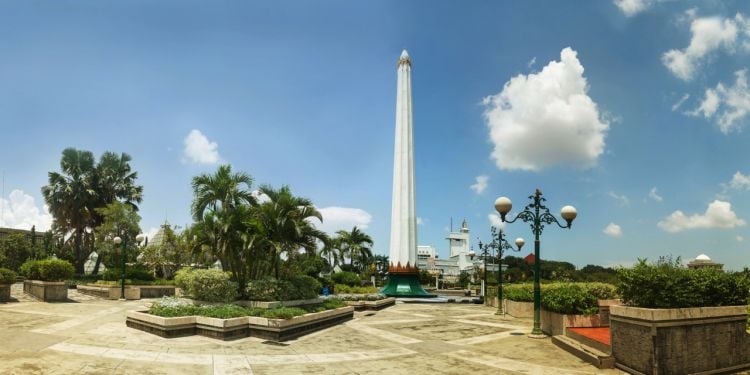
Accommodation in Surabaya
Known as the "City of Heroes" in relation to where the struggle for Indonesian independence began, Surabaya is the second largest ...
Leisure, Culture and Things to Do in Surabaya
Surabaya offers a rich tapestry of historical sites, cultural experiences, and recreational activities. While it may lack Bali's beaches, the city compensates with genuine cultural authenticity, excellent shopping, and easy access to East Java's natural attractions.
Historical Sites and Museums
Tugu Pahlawan (Heroes Monument) stands as the city's iconic landmark, commemorating Indonesia's independence struggle. The adjacent museum houses fascinating exhibits on the 1945 Battle of Surabaya. House of Sampoerna, a beautifully restored Dutch colonial building, combines a cigarette museum with a preserved factory where traditional clove cigarettes are still hand-rolled. Monumen Kapal Selam (Submarine Monument) features a decommissioned Russian submarine you can explore inside. Museum Mpu Tantular showcases East Java's archaeological heritage with extensive collections of ancient relics and traditional artifacts.
Parks, Shopping, and Entertainment
Taman Bungkul is the city's beloved park, offering jogging tracks, playgrounds, food stalls, and weekend community events—perfect for families. For shopping, Tunjungan Plaza is the central landmark, while Pakuwon Mall and Galaxy Mall offer upscale retail experiences. Suroboyo Carnival Park provides family entertainment with rides and attractions. The traditional markets—Pasar Pabean in Chinatown and the Arab Quarter—offer authentic shopping and street food experiences.
Weekend Escapes
Surabaya serves as the gateway to Mount Bromo, accessible via popular midnight tours departing from the city. The charming hill town of Malang is just two hours away, and Bali is reachable by a one-hour flight from Juanda International Airport.
Sources: TripAdvisor, Wonderful Indonesia
Daily Life in Surabaya: Getting Around and Local Culture
Daily life in Surabaya blends modern convenience with traditional Indonesian customs. The city operates at a more relaxed pace than Jakarta, though traffic remains a significant consideration. Understanding local transportation options and cultural norms will help you settle in smoothly.
Transportation Options
Public transport in Surabaya is developing but less comprehensive than Jakarta's system. Suroboyo Bus operates modern routes across the city with 91 stops and accepts electronic payment via QRIS or e-money cards—interestingly, payment via plastic bottles for recycling is also accepted at designated points. Trans Semanggi serves tourist areas with fares starting at IDR 5,000 (~USD 0.30). KAI Commuter trains connect Surabaya to surrounding areas including Sidoarjo, Gresik, and Lamongan.
Most expats rely on ride-hailing apps Grab and Gojek, which offer cars, motorcycles (ojek), and delivery services at affordable rates. Angkot (shared minivans) cover 63 routes but require local knowledge to navigate. Car rental with driver is common for families. An MRT system is currently in the feasibility study phase with potential construction planned for future years.
Cultural Considerations
Surabaya maintains a warm, community-oriented atmosphere. Learning basic Bahasa Indonesia significantly enhances daily interactions—phrases like "terima kasih" (thank you) and "permisi" (excuse me) go far. The city's diverse heritage includes Javanese, Chinese, and Arab influences, visible in its cuisine, architecture, and festivals. Locals are generally patient with foreigners and appreciate efforts to engage with the culture.
Cost of Living in Surabaya: Budget Planning for Expats
Surabaya offers one of Indonesia's most affordable urban living environments, with costs approximately 20% lower than Jakarta and 60% lower than major Western cities. Your budget will depend largely on housing choices and lifestyle preferences, particularly schooling for children.
Monthly Budget: Single Person
The following estimates cover essential expenses for a single expatriate maintaining a comfortable lifestyle:
Category | Monthly Cost (IDR) | Monthly Cost (USD) |
Rent (1-bed, city center) | 4,200,000 | 265 |
Utilities | 1,250,000 | 80 |
Groceries | 2,500,000 | 160 |
Transport | 800,000 | 50 |
Dining/Entertainment | 2,000,000 | 125 |
Health insurance | 1,500,000 | 95 |
Total | 12,250,000 | ~775 |
Monthly Budget: Family of Four
Category | Monthly Cost (IDR) | Monthly Cost (USD) |
Rent (3-bed house) | 15,000,000 | 940 |
Utilities | 2,000,000 | 125 |
Groceries | 5,000,000 | 315 |
Transport | 2,000,000 | 125 |
International school (2 children) | 40,000,000 | 2,500 |
Health insurance (family) | 4,000,000 | 250 |
Leisure/Dining | 3,500,000 | 220 |
Total | 71,500,000 | ~4,475 |
Sources: Numbeo 2025
In Short
Surabaya offers expatriates an authentic Indonesian experience in a thriving commercial hub that combines affordability with modern amenities. The city's welcoming community, rich cultural heritage, and strategic position as East Java's gateway make it ideal for professionals, families, and retirees alike. Whether you're drawn by career opportunities in its growing economy, quality education for your children, or simply seeking a genuine immersion into Indonesian life, Surabaya delivers value and warmth that larger cities often lack. The cost savings compared to Jakarta or Bali allow for a comfortable lifestyle, while easy access to natural wonders like Mount Bromo adds adventure to everyday life.
Ready to connect with others who have made the move? Join the Surabaya expat forum on Expat.com to ask questions, share experiences, and find your community in the City of Heroes.
We do our best to provide accurate and up to date information. However, if you have noticed any inaccuracies in this content, please contact us.


Essential services for your expat journey



