

Living in Pune: the ultimate expat guide
Everything you need to know for a successful life in Pune.
Pune, often called the "Oxford of the East", is India's second-largest city in Maharashtra and the country's seventh most populous metropolitan area with over 7 million residents. Located just 150 km southeast of Mumbai, this vibrant city perfectly blends historical heritage with modern innovation. Pune enjoys a pleasant climate year-round, with mild winters and moderate monsoons, making it one of India's most liveable cities.
The city serves as a major hub for information technology, automotive manufacturing, and higher education, attracting professionals and students from across the globe. With over 500 IT companies, 150+ engineering colleges, and a thriving startup ecosystem, Pune offers exceptional career opportunities in a cosmopolitan environment that remains significantly more affordable than Mumbai or Delhi.
5 Good Reasons to Move to Pune
- Thriving job market – Home to global IT giants like TCS, Infosys, Wipro, and Cognizant, plus automotive leaders including Tata Motors, Bajaj Auto, and Mercedes-Benz.
- Affordable cost of living – Significantly lower expenses than Mumbai or Delhi while offering excellent infrastructure and amenities.
- Educational excellence – World-class universities, international schools, and research institutions attracting global talent.
- Pleasant climate – Enjoys moderate temperatures throughout the year with refreshing monsoons and mild winters.
- Rich cultural heritage – Historic forts, museums, vibrant festivals, and proximity to hill stations and natural attractions.
Working in Pune: Career Opportunities in India's IT and Manufacturing Capital
Pune has emerged as one of India's premier employment destinations, particularly for technology and manufacturing professionals. The city hosts over 500 IT companies and is often referred to as the "IT Hub of Maharashtra", contributing significantly to India's technology exports. Major IT parks including Rajiv Gandhi Infotech Park in Hinjewadi, EON IT Park in Kharadi, and Magarpatta Cybercity employ hundreds of thousands of professionals.
Key Industries and Major Employers
The information technology sector dominates Pune's economy, with global giants such as TCS, Infosys, Wipro, Cognizant, Accenture, Capgemini, IBM, and Tech Mahindra operating large campuses. Hinjewadi's Rajiv Gandhi Infotech Park alone houses over 800 IT companies across its three phases.
The automotive industry represents Pune's second major employment sector. The Chakan-Talegaon industrial corridor, often called the "Detroit of India", hosts manufacturing plants for Mercedes-Benz, Volkswagen, Tata Motors, Mahindra, Bajaj Auto, and Force Motors. The automotive sector contributes significantly to Pune's industrial output and offers opportunities in engineering, manufacturing, and R&D.
Work Permits and Employment Regulations
Foreign nationals seeking employment in India require an Employment Visa (E Visa). This visa is typically granted for one year and can be extended based on continued employment. Applicants must earn a minimum salary of USD 25,000 annually and be employed by a registered Indian company. Upon arrival, workers staying longer than 180 days must register with the Foreigners Regional Registration Office (FRRO) within 14 days.
Unemployment Rate (India) | 4.9% (2024-25) |
Average IT Salary (Entry-level) | ₹300,000 – ₹600,000/year (~USD 3,600 – USD 7,200) |
Average IT Salary (Senior) | ₹1,500,000 – ₹2,500,000/year (~USD 18,000 – USD 30,000) |
Key Sectors | IT Services, Automotive, Manufacturing, Education |
Sources: Ministry of Labour and Employment, Ministry of Home Affairs
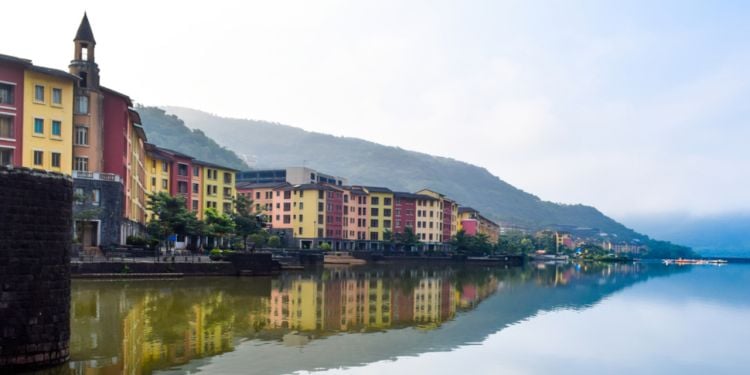
Working in Pune
Pune is the second largest city in the state of Maharashtra, after Mumbai. Considered to be the cultural capital of Maharashtra, the city with its ...
Higher Education in Pune: World-Class Universities and Research Institutions
Pune is renowned as India's premier educational hub, hosting over 150 engineering colleges and numerous prestigious universities. The city produces approximately 50,000 technology graduates annually, feeding directly into its robust IT and manufacturing sectors. International students from over 64 countries study at Pune's universities, attracted by quality education at competitive costs.
Top Universities for International Students
Savitribai Phule Pune University (SPPU), established in 1948, is the city's flagship institution and one of India's premier universities. Spread across 411 acres, it hosts 46 academic departments, 307 research institutes, and 612 affiliated colleges. SPPU is ranked 23rd among Indian universities by the National Institutional Ranking Framework (NIRF) 2024 and welcomes over 300 international students. The university's International Centre assists foreign students with admissions, accommodation, and registration.
Indian Institute of Science Education and Research (IISER) Pune is a premier scientific institution offering integrated master's and doctoral programs in sciences. Known for combining education with cutting-edge research, IISER Pune focuses on biology, chemistry, physics, mathematics, and data science.
Symbiosis International University specifically promotes internationalization, with curricula designed for global students. It offers programs across management, law, media, and technology disciplines.
Tuition Fees and Admission Process
Tuition fees at Pune universities vary significantly by program and institution. Undergraduate programs typically range from ₹43,200 to ₹1,585,000 per year (approximately USD 520 – USD 19,000), while master's programs range from ₹29,000 to ₹630,000 per year (approximately USD 350 – USD 7,600). International students must apply through the respective university's International Centre and obtain a Student Visa before arrival.
Savitribai Phule Pune University | Ranked 23rd in India (NIRF 2024) |
IISER Pune | Premier science research institute |
Symbiosis International | International-focused curriculum |
Vishwakarma University | Engineering and technology focus |
Sources: Savitribai Phule Pune University, IISER Pune
International Schools in Pune: Quality Education for Expat Families
Pune offers a wide selection of international and private schools catering to expatriate families. The city hosts institutions following International Baccalaureate (IB), Cambridge International, and Central Board of Secondary Education (CBSE) curricula, providing continuity for children relocating from abroad.
Top International Schools
Mahindra International School, formerly Mercedes-Benz International School, is one of Pune's pioneering IB World Schools. It offers the Primary Years Programme (PYP), Middle Years Programme (MYP), and Diploma Programme (DP), with a focus on holistic education and global-mindedness.
Symbiosis International School is an established IB school offering comprehensive international education with strong academic results. Indus International School is a residential school spread across 36 acres, housing 350 boarders from over 30 countries. It features an entrepreneurship program and has been ranked #1 for five consecutive years among international day-cum-boarding schools in Maharashtra.
Global Indian International School (GIIS) operates two campuses in Pune – Hadapsar and Balewadi. GIIS follows both CBSE and Cambridge curricula with modern teaching methodologies and comprehensive facilities.
School Fees and Enrollment
International school fees in Pune vary widely based on curriculum and facilities. Annual tuition typically ranges from ₹200,000 to ₹800,000 (approximately USD 2,400 – USD 9,600) for international schools, with additional costs for uniforms, textbooks, transportation, and activities. CBSE-affiliated private schools offer more affordable options ranging from ₹50,000 to ₹200,000 annually.
GIIS Balewadi | ₹85,552 – ₹125,784/year |
GIIS Hadapsar | ₹103,896 – ₹132,608/year |
Premium International Schools | ₹200,000 – ₹800,000/year |
Private CBSE Schools | ₹50,000 – ₹200,000/year |
Sources: GIIS Pune, School admissions offices
Housing in Pune: Neighborhoods and Rental Guide for Expats
Pune offers diverse housing options from modern high-rise apartments to spacious bungalows. Most expatriates prefer to rent rather than buy, with rental prices varying significantly based on location, property type, and amenities. Security deposits typically equal 10 months' rent, paid upfront as an interest-free amount.
Popular Expat Neighborhoods
Koregaon Park is Pune's most prestigious neighborhood, known for upscale restaurants, cafes, and vibrant nightlife. It's home to the Osho International Meditation Resort and attracts many expatriates. Property prices average ₹15,050 per sq ft, with 2-bedroom apartments renting for ₹28,000 – ₹115,000 monthly.
Kalyani Nagar offers modern apartments with excellent connectivity to the airport and IT parks. Located near Koregaon Park, it provides a cosmopolitan atmosphere with shopping, dining, and recreation options. Viman Nagar, close to Pune airport, is popular among IT professionals with good infrastructure and amenities.
Baner and Aundh are family-friendly areas with good schools, hospitals, and shopping centers. These neighborhoods offer modern apartments at more moderate prices while maintaining excellent connectivity to Hinjewadi IT Park. Kharadi, near EON IT Park and World Trade Center, is an emerging hub with contemporary residential developments.
Rental Prices by Neighborhood
For budget-conscious expats, Hadapsar, Wakad, and Pimpri-Chinchwad offer affordable housing with good connectivity. These areas provide 2-bedroom apartments for ₹15,000 – ₹25,000 monthly. Utilities including electricity, water, and internet typically add ₹3,000 – ₹5,000 monthly to housing costs.
1-Bedroom (Koregaon Park) | ₹22,000 – ₹35,000/month |
2-Bedroom (Premium areas) | ₹30,000 – ₹50,000/month |
1-Bedroom (Kothrud/Wakad) | ₹15,000 – ₹22,000/month |
2-Bedroom (Affordable areas) | ₹18,000 – ₹28,000/month |
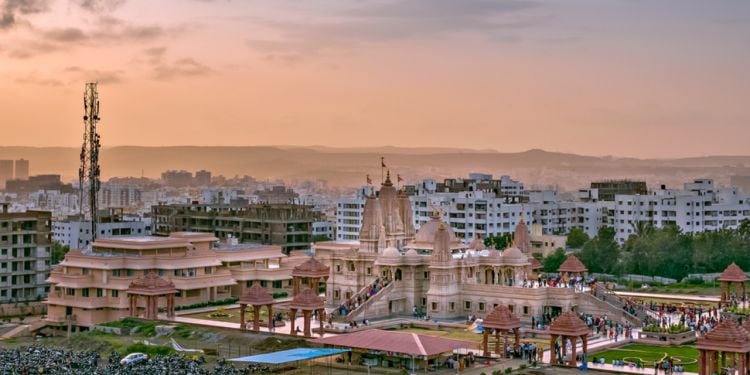
Accommodation in Pune
Pune is the second biggest city of the State of Maharashtra, after Mumbai. A thriving, vibrant metropolis, the city has witnessed considerable ...
Leisure and Culture in Pune: Museums, Parks, and Entertainment
Pune offers a rich cultural tapestry blending historical heritage with modern entertainment. The city hosts numerous museums, historic forts, parks, and a vibrant nightlife scene centered around Koregaon Park. Weekend getaways to nearby hill stations add to the city's appeal for outdoor enthusiasts.
Historical Attractions and Museums
Shaniwar Wada is an 18th-century palace that served as the seat of the Peshwa rulers. The fortress features magnificent gates, rich architecture, and an evening light and sound show narrating Maratha history. Aga Khan Palace, built in 1892, is where Mahatma Gandhi was imprisoned during India's independence movement. The palace now houses a museum dedicated to Gandhi's life and legacy.
The Raja Dinkar Kelkar Museum displays over 20,000 artifacts including musical instruments, weapons, paintings, and household items from various periods of Indian history. The Tribal Cultural Museum showcases the heritage of Maharashtra's 18 indigenous tribes through costumes, crafts, and artifacts.
Parks and Recreation
Osho Teerth Gardens in Koregaon Park offers serene walking paths and meditation spaces. Saras Baug is a 25-acre park featuring an 18th-century Ganesh temple, water features, and picnic areas. Empress Garden, spread over 39 acres, houses over 150 tree varieties and hosts the annual Pune Flower Show.
For adventure seekers, Sinhagad Fort, located 30 km from the city, offers trekking opportunities with panoramic views. Parvati Hill provides accessible hiking with temples and a museum at the summit, overlooking the entire city.
Entertainment and Nightlife
Pune's nightlife centers around Koregaon Park with numerous bars, pubs, and restaurants. Phoenix Marketcity and Amanora Mall offer shopping, dining, and entertainment. Movie tickets cost ₹150 – ₹400, while gym memberships range from ₹1,500 – ₹5,000 monthly. The city hosts cultural festivals including the Ganesh Chaturthi celebrations, one of India's largest religious festivals.
Shaniwar Wada Entry | ₹5 (Indians) / ₹125 (Foreigners) |
Aga Khan Palace Entry | ₹5 (Indians) / ₹100 (Foreigners) |
Movie Ticket | ₹150 – ₹400 |
Gym Membership (Monthly) | ₹1,500 – ₹5,000 |
Sources: Maharashtra Tourism, Pune Municipal Corporation
Daily Life in Pune: Transportation, Culture, and Practical Tips
Daily life in Pune offers a comfortable balance between work and leisure. The city is known for its friendly atmosphere, diverse food scene, and accessible lifestyle. English is widely spoken in business and educated circles, making it easier for international residents to navigate daily activities.
Getting Around Pune
The Pune Metro has transformed urban mobility since its launch in 2022. The network currently spans approximately 33 km with two operational lines: the Purple Line (PCMC to Swargate) and the Aqua Line (Vanaz to Ramwadi). In 2024, the metro served over 4.57 crore passengers. Metro fares range from ₹10 to ₹40 per trip, with 10% weekday discounts and 30% weekend discounts available.
The Pune Mahanagar Parivahan Mahamandal Limited (PMPML) operates an extensive bus network. Monthly passes cost ₹580 – ₹1,500. Auto-rickshaws and ride-hailing services like Ola and Uber are widely available, with base fares starting at approximately ₹20. Many residents rely on two-wheelers due to traffic congestion, though the expanding metro network is reducing road pressure.
Living Essentials
Pune offers numerous supermarkets including Dorabjee's, Big Bazaar, D-Mart, and international stores. Local markets provide fresh produce at affordable prices. The city enjoys reliable electricity (better than many Indian cities) and widespread internet connectivity, with broadband costing approximately ₹500 – ₹1,000 monthly.
Healthcare is accessible with excellent private hospitals including Ruby Hall Clinic, Jehangir Hospital, and Deenanath Mangeshkar Hospital. Basic health insurance costs between ₹1,000 – ₹3,000 monthly, with doctor consultations ranging from ₹300 – ₹1,000 per visit.
Metro Fare Range | ₹10 – ₹40 per trip |
Monthly Bus Pass | ₹580 – ₹1,500 |
Internet (Monthly) | ₹500 – ₹1,000 |
Mobile Services (Monthly) | ₹200 – ₹500 |
Sources: Pune Metro Rail, PMPML
Cost of Living in Pune: Monthly Budget Guide for Singles and Families
Pune ranks as one of India's most affordable major cities for expatriates. According to Mercer's 2024 Cost of Living Survey, Pune ranked 205th out of 226 cities globally, significantly cheaper than Mumbai (136th), Delhi (165th), and Bengaluru (195th). While more expensive than some smaller Indian cities, Pune offers excellent value considering its infrastructure and opportunities.
Monthly Budget for a Single Person
A single professional can live comfortably in Pune on ₹25,000 – ₹45,000 monthly (approximately USD 300 – USD 540), excluding rent. This covers groceries, transportation, utilities, dining out, and entertainment. Adding rent for a 1-bedroom apartment in a mid-range area brings the total to approximately ₹40,000 – ₹65,000 monthly.
Expense Category | Monthly Cost (₹) | Monthly Cost (USD) |
Rent (1-Bedroom, city center) | ₹15,000 – ₹25,000 | ~USD 180 – USD 300 |
Utilities | ₹3,000 – ₹5,000 | ~USD 36 – USD 60 |
Groceries | ₹5,000 – ₹8,000 | ~USD 60 – USD 96 |
Transportation | ₹2,500 – ₹5,000 | ~USD 30 – USD 60 |
Entertainment/Dining | ₹5,000 – ₹10,000 | ~USD 60 – USD 120 |
Total (Single Person) | ₹30,500 – ₹53,000 | ~USD 366 – USD 636 |
Monthly Budget for a Family of Four
Families typically require ₹60,000 – ₹100,000 monthly (approximately USD 720 – USD 1,200) for a comfortable lifestyle, depending on housing choices and schooling preferences. International school fees can significantly increase this budget.
Expense Category | Monthly Cost (₹) | Monthly Cost (USD) |
Rent (3-Bedroom, good area) | ₹30,000 – ₹50,000 | ~USD 360 – USD 600 |
Utilities | ₹5,000 – ₹8,000 | ~USD 60 – USD 96 |
Groceries | ₹12,000 – ₹18,000 | ~USD 144 – USD 216 |
School Fees (per child) | ₹8,000 – ₹65,000 | ~USD 96 – USD 780 |
Health Insurance (Family) | ₹3,000 – ₹8,000 | ~USD 36 – USD 96 |
Total (Family of 4) | ₹60,000 – ₹100,000+ | ~USD 720 – USD 1,200+ |
Sources: Numbeo, Mercer Cost of Living Survey 2024
In Short
Pune stands out as an exceptional destination for expatriates seeking career opportunities in India's thriving IT and manufacturing sectors. The city offers a unique combination of professional growth, affordable living costs, quality education, and rich cultural experiences. With its expanding metro network, excellent healthcare, and cosmopolitan neighborhoods like Koregaon Park and Kalyani Nagar, Pune provides a comfortable lifestyle for individuals and families alike.
Whether you're drawn by job opportunities at global tech giants, pursuing higher education at world-class universities, or seeking a balanced lifestyle in one of India's most liveable cities, Pune welcomes newcomers with warmth and opportunity. To connect with fellow expatriates, share experiences, and get practical advice from those who have made Pune their home, join the Pune forum on Expat.com.
We do our best to provide accurate and up to date information. However, if you have noticed any inaccuracies in this content, please contact us.


Essential services for your expat journey



