

The Fight Against Drugs in Dominican Republic
There is news almost every day about drug seizures and it is perhaps appropriate to start a thread highlighting the efforts of the current government in the fight against drugs today on June 26th, "International Day Against Illicit Trafficking and Drug Abuse".
In another thread @polo1club asked opinions of biggest fears relocating to DR and his wife had crime at the top of her list apparently. I am equally concerned that crime is showing recent signs of growth and most violent crime and opportunist robberies has it's roots in the drug trade in DR which is currently being targeted. I hope DR does not descend as some other Latin American Countries have.
Here is a translated article from El Caribe this morning from the head of DNCD, which might reassure one of the actions of the current government:
On combating drug trafficking, president DNCD assures that unprecedented figures are exhibited
The President of the National Directorate for Drug Control (DNCD) , Vice Admiral José M. Cabrera Ulloa, said that regarding the fight against illicit drug trafficking, the Dominican authorities can show unprecedented figures in the last 20 months.
Cabrera Ulloa told elCaribe that the DNCD works very closely and in coordination with the Attorney General's Office, the Armed Forces, intelligence agencies and international cooperation, for which a series of joint strategies are being implemented that have given very satisfactory results in the persecution. and combat drug trafficking.
“The DNCD receives unprecedented support from the central government and state security agencies. That support, added to other confidential measures, have been vital to confront national and international drug trafficking networks, ” explained the headline.
Cabrera Ulloa explained that the attempts to use the country for drug trafficking have increased, as have the occupations of drug shipments on coasts, ports, airports and other points.
“The response capacity of the authorities is evident in the improvements of the interdiction operations against the scourge, where in these 20 months more than 52 thousand kilograms (52 tons of drugs) have been seized, more than 40 thousand detainees, 93 for One hundred Dominicans, the rest foreigners, 367 weapons of different calibers, 4,322 vehicles, 71 million pesos and more than eight million dollars, aircraft seized and more than 90 extradited,” he said.
"International Day Against Illicit Trafficking and Drug Abuse"
Through resolution A/RES/42/112, of December 7, 1987, the United Nations General Assembly declared June 26 as the International Day for the Fight against Drug Abuse and Trafficking, to give a a sign of its determination to strengthen the activities necessary to achieve the goal of an international society free of drug abuse.
Drug trafficking and abuse represent a major obstacle to development. Drug use causes numerous health risks, and care for drug addicts is often insufficient.
The World Health Organization (WHO) defines drugs as any psychoactive substance that, once inside a living organism, “can modify its perception, mood, cognition, behavior or motor functions”. This includes alcohol, tobacco and solvents, and excludes medicinal substances without psychoactive effects.
Here is another article in Diario Libre this morning which is more sobering and shows much is need to be done for the youth affected by drugs in DR:
Hogar Crea warns of an increase in drug use, mainly in minors
He complains about the little help they receive from the Government
The center has 1,500 admitted patients and 25 children between the ages of 8 and 16.
After the COVID-19 pandemic in the Dominican Republic, the Hogar Crea addiction prevention, treatment, assistance and investigation center detected that cases of addiction due to drug use in men and women doubled.
When commemorating this June 26 the International Day of the Fight against Drugs , the director of the institution, Julio Manuel Díaz Capellán , affirmed that drug addiction problems in the country have grown considerably.
He argued that the non-profit institution is working on the quota, because it does not have spaces to serve the innumerable number of people who arrive with this addiction problem. He adds that the relatives of the sick are "extremely poor" and cannot afford their recovery expenses.
Mr. Díaz Capellán complained that the State has abandoned them, that it ignores the situation and that with its negligence what is expected is that " Hogar Crea " will disappear.
“We don't even have beds, the boys have to wait for a quota to be able to enter, that's how we are working and the State ignores all this. This has to change because if not, Hogar Crea will disappear,” said Díaz Capellán.
The head of the institution understands that the drug, far from disappearing and diminishing, is growing, and that the worst thing is that its progress has the legitimate support of the authorities.
Currently the NGO has 1,500 men and women in the process of recovery throughout the country, while in the Baluarte de La Vega residence they have about 25 minors with addiction problems between the ages of 8 and 16.
Hogar Crea yesterday made a flower offering in front of the Altar of the Homeland for the International Day Against Drugs and to raise awareness about the problem that these substances represent in society.
For the institution, drug use at any age can cause addiction, however, research indicates that the younger they begin to take drugs, the more likely they are to suffer consequences.
Hogar Crea says that drug use at a young age is a strong indicator of future problems, including addiction.
The institution records that the patients they receive are between 90.36% male , while 9.63% female.
However, there is an increase in income from marijuana consumption with 65.22%, 25% declaring themselves a regular hookah consumer. Ecstasy, which is defined as a designer drug, is located with a greater increase in incidence with 10.61%.
He also appreciates that addicts use multiple substances in combination. Among them, cocaine, crack, marijuana and alcohol are presented as the main drugs of consumption in patients who have requested admission, "this explains the high addictive power of these substances, for which we have noticed a decrease in the use of heroin in comparison with the year 2020” , indicates a report from the center.
The Hogar Crea report specifies that the largest number of young people who start their consumption are in the range 11 to 20 years.
👍1 member reacted to this post
See also
- Useful contact information in the Dominican Republic - Guide
- Dominican Republic Taxes - 5 Replies
- Medication in Dominican Republic - 60 Replies
- Carnival in Dominican Republic - 1 Reply
- Driving in the Dominican Republic - 25 Replies
- Mortgages in the Dominican Republic - 1 Reply
- Healthcare in Dominican Republic - 2 Replies
The air force and military are in focus as being involved in the drug import trade in DR. This is one such case this past week:
The Navy and the Army of the Dominican Republic confirmed that two of their members are involved in a shootout where 237 packets of cocaine were seized in Juan Dolio and offered their identities.
In the case of the Navy, it is Frigate Captain Kelvin Agustín Mejía Herrera (ARD), who, according to the Navy statement, was serving outside that institution. ................
Whilst on the streets this government is arresting many and confiscating drugs etc.:
Authorities have taken more than 144 thousand grams of drugs from the streets, according to DNCD
The National Drug Control Directorate (DNCD) assured today that together with members of the Public Ministry, they took more than 144 thousand grams of different drugs from the streets in operations carried out throughout the national territory.
In details, the institution reported that 3,250 operations and raids were carried out and 67,501 grams of cocaine were seized.
In addition, 74,922 marijuana, 25 vegetable plants, 1,830 crack and 538 ecstasy pills, for a total of 144,254 grams.
It also reported that 2,333 people were arrested and 12 firearms, 35 knives and 14 communication radios were seized.
Also, 119 scales, 10 cars, 168 motorcycles, 1,244,899 Dominican pesos and more than eight thousand dollars.
The operations against micro-trafficking were concentrated in the provinces of La Altagracia, the National District, Greater Santo Domingo, Santiago, and San Pedro de Macoris.
Also in La Romana, Azua, Peravia, San Francisco de Macorís, María Trinidad Sánchez, La Vega, Espaillat, Barahona, San Juan, Pedernales, among others.
The Public Ministry and the DNCD additionally assure that during this year, they have taken 828,788 grams of different narcotics from the streets and have arrested some 11,900 violators of Law 50-88, on drugs and controlled substances.




Wow, wonder what they will do with all the cars and motorcycles and money that has been seized. Whenever I leave the airport in Punta Cana, there are always dogs that sniff our purses before we board our plane.

Maybe they will Auction off the cars and bikes
So the government’ will collect more money and give it to drug treatment institutions
Drugs are the biggest single problem with poyential to damage the country. It is the root cause of most crime.
Did you note the drug problem in La Altagracia that is the East Coast? They are aware there are some tourists who come and want drugs locally to enhance their vacation. Sad. Because it enhances the problem.

smoke and mirrors! Nothing ever changes...get used to the way it is and be happy.
👍1 member reacted to this post
Don’t count anything out … remember Columbia changed a lot since the 80’s
42 years ago! I'll be dead before it changes here! That is if I don't hold my breath...
👍2 members reacted to this post
The curious drug seizures that occurred in June
The President of the Republic, Luis Abinader, has made the fight against drug trafficking one of the main pillars of his administration, and he emphasized this point with an announcement early last month.
That day the president assured that in the last 20 months the same quantity of drugs has been seized as that confiscated during the 16 years that the Dominican Liberation Party (PLD) was in power.
And, as a sign of the increase in seizures, during that June the National Directorate for Drug Control (DNCD) reported at least eight operations where they seized various packages of illegal narcotics.
However, among these cases, some stood out for the originality of the alleged criminals at the time of hiding illicit substances, in an attempt to make them go unnoticed when they were sent out of the country.
An example of this was reported on June 10 by the DNCD, after seizing two packages of cocaine that were hidden inside two electric stoves, at the International Airport of the Americas (AILA).
According to a statement issued by the anti-narcotics entity, the agents were working in the area of one of the terminal's warehouses, when a canine unit alerted of foreign substances in two boxes that would be sent to Miami.
Upon opening the boxes to find out their contents, the authorities found two electric stoves inside which the packages of cocaine weighing 490 grams were hidden.
“The stoves were sent by a woman with an address on the edge of the Las Américas highway, Santo Domingo Este, and would be received by a man, a resident of Park Terrace, Bridgeport, United States,” the letter detailed.
Five days later, and in the same AILA, the authorities seized more than a kilo of cocaine hidden in the tubes of two beach chairs. As in the previous case, the agents on duty detected the suspicious package and began the inspection protocol.
Later they opened a box and found two beach chairs inside, whose tubes were filled with cocaine, weighing approximately one kilo, according to the analysis of the National Institute of Forensic Sciences (Inacif).
Similarly, the chairs were intended to be sent to Miami, in the name of a woman residing in the municipality of Baní, and would be received by a man on Greenwood Street, Dorchester, United States.
Eat bags
One day before Abinader's announcement, the DNCD arrested a Dutch-Dominican in the AILA who ingested 99 bags of drugs, presumably cocaine or heroin.
The 43-year-old man was arrested before boarding a flight to Belgium, and after initiating the protocol for these cases, foreign substances were detected in his body.
Then the presence of suspicious images in his stomach was confirmed, for which he was immediately transferred to the Central Hospital of the Armed Forces, where after several days he expelled 99 bags of the substance, with a preliminary weight of 1.2 kilograms.
They arrest two Dominicans and intercept a boat with 481 packages of alleged cocaine in Barahona
The National Drug Control Directorate (DNCD), the Dominican Republic Navy, the Air Force and State intelligence agencies seized another 481 packages, presumably cocaine, off the coast of the Barahona province.
According to a press release, after sighting a speedboat, (type Go Fast), the authorities set up "a surveillance and monitoring operation throughout the coastline of that province, having air and maritime units to intercept and capture the occupants of the boat, which would have arrived in the country from South America.”
The authorities intercepted a boat of about 23 feet in length, several nautical miles east of the coast of the municipality of Paraíso, where they arrested two men, of Dominican nationality, and seized 16 sacks containing the 481 packages of the substance.
Although the DNCD did not report the names of the detainees, they are being made available to the Public Ministry of the province of Barahona.
"In the joint operation, it was also possible to occupy a 75-horsepower outboard motor, 10 jugs of fuel, a tarp, edible water, among other evidence," reported the DNCD.
So far this year 2022, the Dominican authorities have caught 19,049 kilograms (19 tons) of different drugs , most of the confiscated narcotics, more than 90 percent, corresponds to cocaine.
The 481 packages are being sent under chain of custody to the National Institute of Forensic Sciences (INACIF), which will determine the exact type and weight of the substance in its analysis.
The US recognizes the government of President Abinader in the fight against drug trafficking; 2021 seizures up 116% over 2020
The United States Department of State recognized President Abinader's government for its fight against drug trafficking and other illicit activities, and for demonstrating "a political will to reduce the flow of drugs into the country."
The report highlights the considerable increase of 116% in seizures of illicit substances during the first nine months of 2021, compared to the same period in 2020.
These considerations are reflected in the report on the International Strategy for the Control of Narcotics and Money Laundering , corresponding to the year 2022, and which evaluates the actions framed in the past year 2021.
They were made known through an official communication issued by the Embassy of the Dominican Republic in the United States, addressed to the Minister of Foreign Affairs, Roberto Álvarez.
The International Strategy for the Control of Narcotics and Money Laundering indicates that “the interdiction efforts of the Dominican Republic demonstrate the institutional capacity and political will to reduce the flow of drugs into the country ”. In addition, it describes the nation as a transit country for drugs whose main destinations are the United States and Europe.
Among the initiatives highlighted in the report, launched by the Dominican Republic, are the certification of the Port of Caucedo under the US Container Security Initiative, the efforts of the National Drug Council to reduce demand during 2021 and the entry into force of the community police.
This is also demonstrating "a strong commitment to strengthen efforts to build a coherent and multifaceted drug control program that contains cooperation between national security forces and greater regional cooperation."
Higher drug seizures in 2021 than in 2020
The report indicates that between the months of January and September 2021, some 14.36 metric tons of drugs were seized in the country, which represents an increase of 116% compared to 2020, despite “the operational challenges experienced during the pandemic ”.
The aforementioned quantity of drugs seized would have an estimated value of 430,730,250 dollars.
Another of the points referred to by the State Department is the fight against corruption, referring to the Attorney General's Office as an independent body, and recognizing the efforts of President Abinader's administration to combat illicit activities between judicial entities, military and law enforcement.
Similarly, they recognize the initiatives for the professional development of the members of the Dominican Navy, receiving assistance and training from the United States to improve communications, coordination and strengthen maritime capabilities by deepening knowledge of maritime law, inspections of boarding, search, rescue and port security.
The Dominican Republic also stands out for being one of the most active partners of the United States in extraditions, under a treaty that entered into force in December 2016, updating the previous one in force since 1909.
Strengthen the fight against money laundering
Among the points to be strengthened to improve the fight against illicit activities, such as money laundering, the State Department points out threats such as the informal economy, weak financial controls, and currency transactions that involve profits from international drug trafficking.
👍1 member reacted to this post
The daily purge nationally continues......
Police arrest two men in SDE, occupy 784 portions of drugs and firearms
Police officers from the Department of Robbery Operations and Investigations based in the Detachment of the Los Mina sector, arrested two men in flagrante delicto carrying out a transaction of money and narcotic substances, seizing 784 portions of different types of drugs, two firearms, ammunition, among other effects.
They are Octavio Martínez Sánchez (A) Chocholo , 25, and Estiben de los Santos Moronta , 18, who were captured by the acting agents who were on duty in their areas of responsibility, specifically on Las Américas avenue, near the municipality of Boca Chica, Santo Domingo province.
According to the preliminary report, the police members received the alert that on 2nd Street, in the Valiente sector, of the aforementioned municipality, there were two people, one of them with a backpack, who were carrying out a transaction of money and narcotic substance. , so they immediately moved to the aforementioned address, spotting the two men already mentioned.
Martínez Sánchez ( A ) Chocholo was seized with a backpack containing 551 portions and a bale of a vegetable, presumably marijuana; 233 portions of a rocky material presumably crack; two portable radios, two scissors, a pistol charger, a communication radio charger, a war-type pistol, serial No. M00598 and the sum of 27,900 pesos in cash.
While De Los Santos Moronta had a Pietro Berreta brand pistol, caliber 9mm, serial No. M59836Z, with its charger and five capsules, without any documents to support its legal possession, it was seized from his right belt .
Both men will be sent to the National Drug Control Division (DNCD), in Santo Domingo Este, for the corresponding purposes of the place.
More 'smoke and mirrors'....
Authorities incinerate 765 kilograms of various drugs
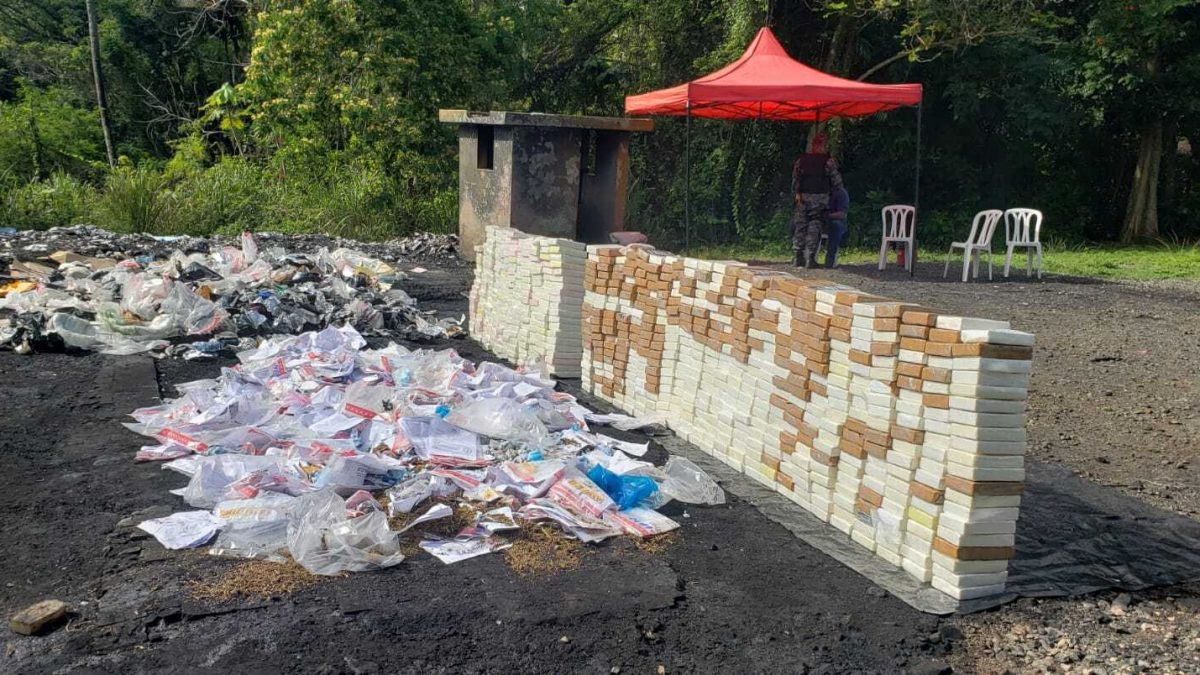
The Public Ministry, through the National Institute of Forensic Sciences (Inacif) , incinerated another 765 kilograms of different drugs , with 98.02% corresponding to cases of cocaine.
In a press release, the institution reported that a total of 765.83 kilos of narcotic substances were eliminated, which were occupied by the Public Ministry and the National Drug Control Directorate (DNCD) in different operations carried out throughout the country.
The burning included 750.70 kilograms of cocaine, with 98.02%, and 13.78 kilograms of marijuana, equivalent to 1.80%. Also 1.02 kilograms of ecstasy, for 0.13%, and 0.33 of crack, which represent 0.04%.
In addition, the authorities incinerated 258 grams of other substances, which, after submitting them to the corresponding analysis, were negative for drugs.
The occupations of narcotics and other substances were carried out in the National District, Santo Domingo, Barahona, San Pedro de Macorís, Monseñor Nouel, Puerto Plata, La Romana, Santiago, Duarte, La Altagracia and La Vega, among other locations. .
The act of incineration was carried out in the compound of the Army of the Dominican Republic, in the Pedro Brand municipality, Santo Domingo province, with the presence of representatives of the bodies in charge of combating drug trafficking and the health area.
An Inacif report highlights that so far this year 22.12 tons of different drugs have been incinerated, as part of the joint actions of the Public Ministry and the DNCD in the fight against drug trafficking.
They find several marijuana plants in La Altagracia during operations
In addition, they seize more than 3,500 grams of different drugs
Agents from the National Drug Control Directorate (DNCD) and members of the Public Ministry carried out 15 raids and several interdiction operations, carried out this week in the La Altagracia province .
The authorities confiscated more than 3,500 grams of different drugs, as well as several marijuana plants , which were cultivated by several individuals in a house in that demarcation.
They arrested 10 people and seized 965 grams of cocaine , 2,495 grams of marijuana , 89 grams of crack , 56 of hashish and 28 ecstasy pills , for a total of 3,605 grams of controlled substances.
In addition, 33 marijuana plants were seized , in a small crop equipped with lamps and evaporators, lights, thermometers, air conditioners and fans.
Scales, plasticizers, scissors, several rulers and several plastic pots with unknown substances were also found.
The neighborhoods of the province of La Altagracia , which were intervened in this operation against drug micro-trafficking, were Chilo Poueriet, Las Malenas, Juan Pablo Duarte, Villa María, Nazaret, San Pedro, Mamá Tingo, Los Sotos, Villa Cerro, among others
Actually this is all good news if you want a decrease in crime......and drug abuse in DR.
DNCD seizes 806 packets of cocaine in San Pedro de Macorís
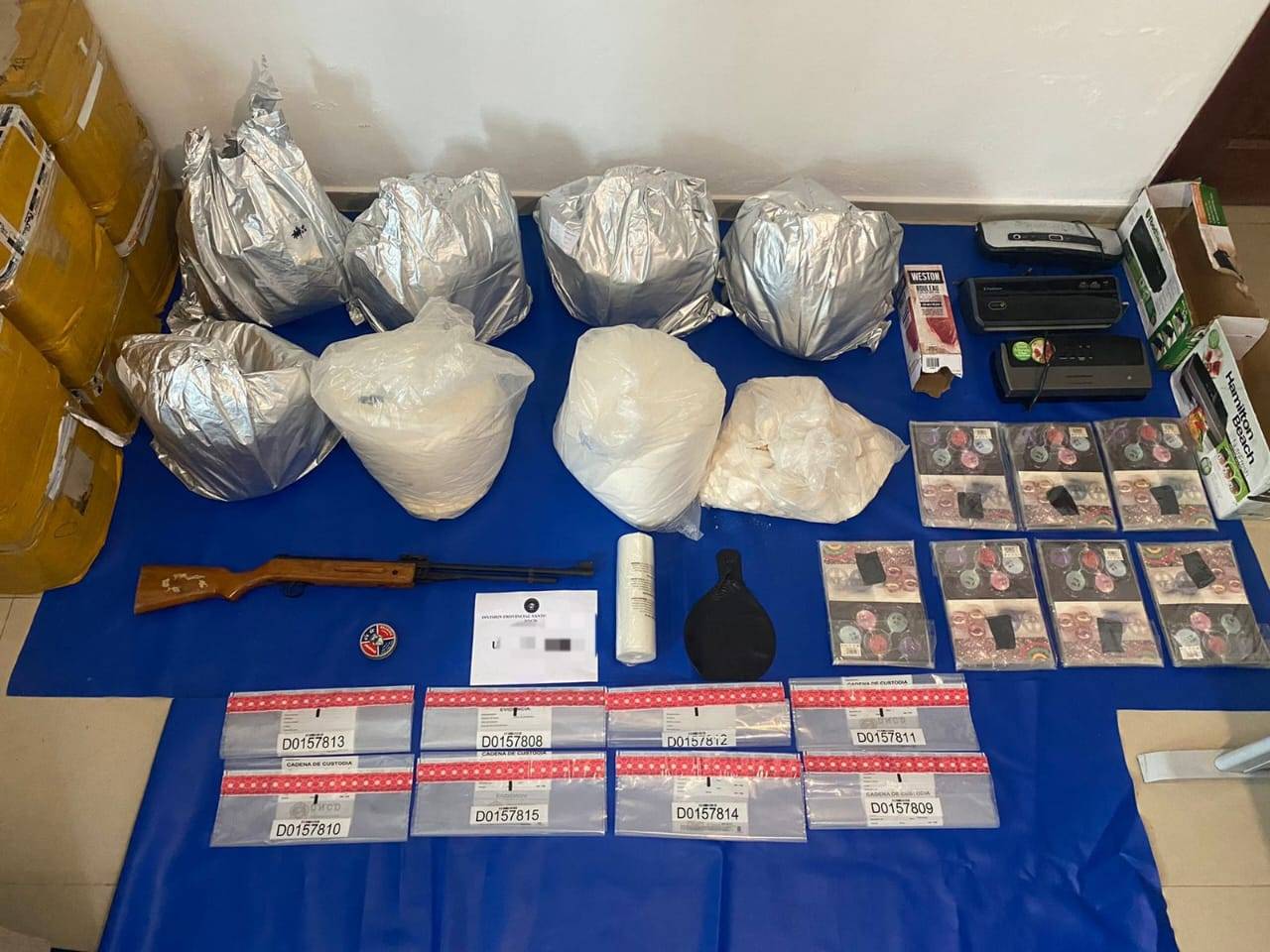
In a joint interdiction operation, by air, sea and land, which lasted just over 15 hours, the National Drug Control Directorate (DNCD) , members of the Dominican Republic Navy, the Air Force, State intelligence agencies and members of the Public Ministry, seized 806 packages presumably cocaine in San Pedro de Macorís.
The authorities, after receiving an alert from intelligence agencies, activated the tactical and reaction teams and began a follow-up and pursuit operation against several individuals on board a speedboat (Edwardian type), who intended to introduce an undetermined amount of controlled substances to Dominican territory.
Several hours after the operation began, the naval and air units managed to intercept, several nautical miles south of the coast of San Pedro de Macorís, a 27-foot long vessel, where they arrested three Dominicans and occupied 28 bales. containing the 806 packages of a substance presumed to be cocaine..........
They confiscate more than 120 thousand grams of cocaine and levamisole in SDE
The National Directorate for Drug Control (DNCD) and members of the Public Ministry dismantled a center for the collection, preparation and distribution of narcotics, where they seized more than 120 thousand grams of cocaine and levamisole, as part of the reinforcement of interdiction operations. , against the micro-trafficking of controlled substances.
Levamisole is a substance used as an adulterant and frequently appears in cocaine, crack, and other narcotic substances.
The DNCD agents , following intelligence reports, together with several prosecutors, intervened in a residence on César Nicolás Penson street in the Valiente sector, Santo Domingo Este municipality, where they seized several cardboard boxes and other utensils to prepare and distribute substances. controlled.......
More....
Video: They stop three and intercept boat with 329 packages presumably cocaine
The National Directorate for Drug Control ( DNCD ) reported that they confiscated 329 packages, presumably cocaine, in the midst of a maritime and land interdiction operation carried out on the coast of the province of Barahona........
AUTHORITIES INCINERATE MORE THAN 900 KILOGRAMS OF DRUGS
They seize portions of drugs, cash and arrest several people in Puerto Plata
Administrator of the Jaragua National Park denounces threats after an operation by the Navy in Oviedo
The agency has burned ranches located on a beach where people would be going to look for cocaine
They order the extradition of a Dominican accused of intent to distribute and import cocaine into the US.

The war on drugs has failed miserably. It can never be "won". There is too much money to be made because certain drugs are illegal. All this is pointed out in the daily news with how many drug busts there are and how government officials are frequently involved in the drug business.
Legalize, regulate and tax all drugs and treat the addicts for the medical conditions they have. Addiction is a medical condition. I know, the DR is a long way from doing that.
👍1 member reacted to this post
Correct. It can never be won until such time the major consuming nations do something radical. That is the root of the problem.
The smaller transit nations such as DR suffer disproportionally because the drugs are deliberately infiltrated into those societies too and corrupt.
The best those small nations can do is to try to strangle the supply routes, starve the drug cartel intermediaries of laundered money and go after corrupt military, police and politicians aiding the process.
DR did very little for decades. It is active now again and whilst it will not solve the core problem of demand elsewhere and inevitable continued supply through this small country, it can damp down the crime here that comes with drugs.
I would say that the war on drugs as it is being fought for decades now can never be won.
Keeping such drugs illegal makes the business far too profitable.
Portugal is one of the few countries taking an approach that makes more sense.
👍1 member reacted to this post
Correct. It can never be won until such time the major consuming nations do something radical. That is the root of the problem.The smaller transit nations such as DR suffer disproportionally because the drugs are deliberately infiltrated into those societies too and corrupt.The best those small nations can do is to try to strangle the supply routes, starve the drug cartel intermediaries of laundered money and go after corrupt military, police and politicians aiding the process.DR did very little for decades. It is active now again and whilst it will not solve the core problem of demand elsewhere and inevitable continued supply through this small country, it can damp down the crime here that comes with drugs.- @lennoxnev
If and only if the major drug consuming nations legalized, regulated and taxed all currently illegal drugs while treating the addicts for the medical problem it is, the situation will never change. The failed war on drugs makes it far too profitable.
There is nothing small countries like the DR can do because no matter how much they fight to arrest drug traffickers and replace bad police or government officials, the profits are so high that the new people are always corrupted. Someone will always step in to take over because the profits are so high. These are the stories that we read about at least every week in the DR and in North America where I am from originally.
It is the definition of insanity to keep doing the same wrong things and expecting the results to change. The war on drugs is such an insane thing. It can never be won. Portugal is the only country I have heard of that has taken an approach that works better. There is no perfect solution, but their approach seems far better than what we see done here and in North America.


Correct. It can never be won until such time the major consuming nations do something radical. That is the root of the problem.- @lennoxnev
Duterte got the user number down well over 50% by killing as many dealers as he could find.
A load of other crime rates, theft, mugging, etc, fell as well. Yes, a few thousand dealers died, but that meant a lot more users didn't and drug related crime died with them.
You decide for yourself about the rights and wrongs.
👍1 member reacted to this post
Daily reporting of drug seizures and money laundering cases in DR:-
They catch two men in the National District with 23 packages of presumably cocaine
DNCD arrests man in SDE with four kilos presumably cocaine
They occupy 13 packages presumably cocaine in a wheelchair
IT IS COCAINE LOAD OF 250 PACKAGES SEIZED IN LA ALTAGRACIA
594 PACKAGES SEIZED IN CAUCEDO IS COCAINE
PACKAGES OCCUPIED IN BARAHONA IS COCAINE
AUTHORITIES DO NOT GIVE IN; THEY TAKE OVER 222 THOUSAND GRAMS OF DRUGS FROM THE STREETS
THREE ARRESTED AND SEIZED BOAT WITH 359 PACKAGES PRESUMABLY COCAINE
money laundering
Operation FM: 42 apartments seized in Santiago and San Francisco
They will submit to justice seven foreigners imprisoned in Puerto Plata for introducing a stash of dollars into the country.
[Assumptions]... I seldom pay attention to what I read. It's what you don't read that you need to pay attention to...
I seldom pay attention to what I read. It's what you don't read that you need to pay attention to...Moderated by Bhavna 4 years ago
Reason : Be careful with assumptions about authorities
We invite you to read the forum code of conduct
Reason : Be careful with assumptions about authorities
We invite you to read the forum code of conduct
👍2 members reacted to this post
DR has a huge problem with drugs being a transit country for drugs coming from Colombia and Venezuela and now affecting the Dominican population with use. The confiscation of drugs will not stop the activity with the money involved but what is the alternative to stop DR descending into chaos as has been happening in some Central American countries?
So the fresh ideas of the new Colombian President Gustavo Petro are perhaps relevant to DR for what is becoming a global failure of the war on drugs.
Not wanting to open a debate on the issue, but this 'failure' has been mentioned by posters above and is an informative read from a country from which much of the cocaine originates.
Colombia | What are Gustavo Petro's ideas to change drug policy?
"It is time for a new international convention that accepts that the war on drugs has failed completely," said Gustavo Petro on Sunday the 7th in his first speech as the new president of Colombia.
Drug use and how to confront drug trafficking were part of the Colombian electoral campaign and Petro spoke more than once about his vision of the subject. Upon assuming the government, he said that he hopes that his administration will be remembered because he bet on life and peace. And that peace implies changes in "the policy against drugs for a policy of strong prevention of consumption in developed societies."
The Intersectoral Drug Policy Team, which worked on the transition of government, prepared a document in which they make a diagnosis of the current situation in the country regarding the issue and propose a series of recommendations to the new government, among which are "to the criminalization of the drug policy and of the communities that produce ancestral plants”, promoting a risk and damage reduction policy, as well as a series of institutional changes.
“Colombia will globally propose the review and rethinking of drug policy derived from international conventions , without detriment to its sovereign actions for internal regulation. This task, which seeks to abolish the prohibition of global and legal drug trade and change the paradigm of war, is proposed to begin by making common cause with the other Latin American producer, marketer and consumer countries affected by international production and trade, today restricted, cocaine and cannabis”, states in the report that summarizes Petro's vision on the subject.
The team proposed holding a continental forum in which the presidents of Bolivia, Peru, Colombia, Chile, Argentina, Brazil, Venezuela, Honduras and Mexico participate, "to design a path of change towards peace in the global paradigm on prohibited drugs." .
This change of approach proposed by the Petro administration is closely followed by the United States , a strategic partner of Colombia on the issue. On Tuesday, the government of Joe Biden approved a decree that renews cooperation plans with Colombia on anti-drug policy and the fight against drug trafficking.
Meanwhile, the senator of the US Republican Party, Ted Cruz, warned that if Petro "reverses cooperation in drug trafficking" it will "ensure that he does not obtain more money for anti-narcotics" from his country. “I am not interested in giving anti-American leftists taxpayer aid dollars,” Cruz said.
This Wednesday, Petro spoke of the subject during an activity with mayors. “ What happens if cannabis is legalized in Colombia, without licenses? Like planting corn, like planting potatoes and we will see if that is exported and we earn a few dollars because in half of humanity it is legal. What, is it going to be the Canadian multinational that keeps the dollars and makes the cannabis plantations? Or are they going to be the cannabis farmers of Cauca? Why can't they?” he wondered.
He added that when the time comes, "many people will have to be released from prison because they have simply been criminalized for something that is legal in much of the United States."
Criminalization
In the document, prepared by technicians close to Petro, it is pointed out that the drug institutions have a high degree of "dispersion" and that the Ministry of Defense is the largest beneficiary of the budget, which shows the "concentration of politics in the punitive actions”.
In addition, they affirm that the government of Iván Duque "continued the policy of criminalizing coca consumers and growers for cocaine and cannabis," in contravention of constitutional and jurisprudential mandates.
The technicians of the incoming government affirmed that the Duque administration lied to them on some issues and there are even possible acts of "corruption", which were not detailed.
In addition, the team worked with experts and officials from the governments of Bolivia, Peru, and Uruguay to analyze possible institutional changes.
Proposals
In the recommendations, it is proposed to formulate a new drug policy that is governed by principles such as the prevalence of human rights, the participation of communities affected by prohibition, not criminalizing small producers and consumers, making plants sacred and have a transversal policy with public health, ethnic, gender, environmental and territorial approaches.
In institutional matters, it is proposed to unify the coordination of the policy in the Presidency of the Republic.
It is also proposed to “ stop the criminalization of the drug policy and of the communities that produce ancestral plants ; as well as consumers of psychoactive substances, as well as forced manual eradication and aerial and ground spraying with glyphosate.”
Another measure involves seeking to "strengthen comprehensive evidence-based preventive programs that facilitate and expand consumer access to risk and harm reduction actions."
All this new approach must start from "environmental respect" that is in synergy with agrarian reform and land adaptation. It is also proposed to allocate resources for research and technological development for the industrialization of ancestral plants (such as the coca leaf or ayahuasca) and other alternative developments.
Probably all staged to make the police look like they are doing something...- @DominicanadaMike
More of your usual usual negativity about things DR.
some say negativity, some say reality...Think positive Lennox...it's reality.
👍1 member reacted to this post
More of DominicanadaMike's' 'smoke and mirrors' just reported now:
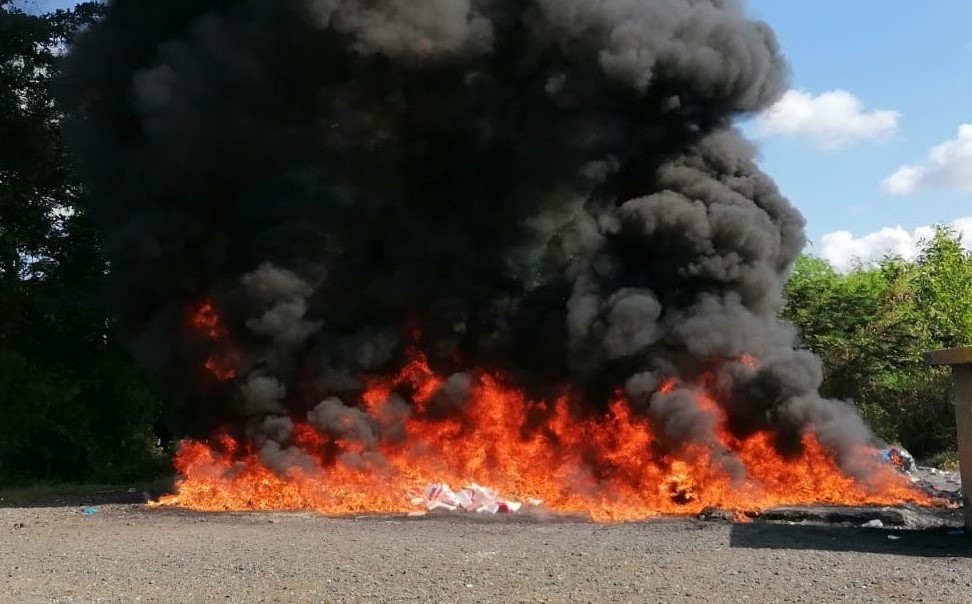

The expert body highlighted that this year the authorities have destroyed with fire more than 25 tons of narcotic substances
SANTO DOMINGO (Dominican Republic) .- The authorities incinerated this Thursday more than a ton of drugs, seized by representatives of the Public Ministry and the National Drug Control Directorate (DNCD) as part of the plan they jointly execute against drug trafficking.
The National Institute of Forensic Sciences (Inacif), coordinated by the senior management of the Public Ministry, explained that the institutions burned a total of 1,161.38 kilograms that were part of 643 cases of drug occupation.
He specified that the majority corresponded to cocaine, with a total of 879.27 kilograms, equivalent to 75.71%, followed by levamisole, with 169.03 kilograms, which represents 14.55%, and marijuana 112.56 kilograms, for 9.69%.
Of crack, they destroyed 221 grams, with 0.019%; tramadol, 157 grams, for 0.013%; methamphetamine, 125 grams, with 0.01%, and ecstasy, 13 grams, for 0.001%.
The narcotics were seized in different sectors of the National District, Santo Domingo, La Altagracia, San Juan, Santiago Rodríguez, and Dajabón, as well as in Puerto Plata, Montecristi, Peravia, Duarte, La Vega and Monseñor Nouel and other locations.
The institution explained that in this Thursday's procedure 344 grams of other substances retained in the operations and arrests were also incinerated and that, after analysis, they were negative for drugs.
Representatives from different state security and health institutions participated in the event, which took place like every Thursday at the Dominican Republic Army (ERD) compound, in the Pedro Brand municipality, Santo Domingo province.
In a press release, Inacif highlighted that so far this year, as a result of the joint actions of the Public Ministry with the anti-narcotics body, a total of 25,503 kilograms of different prohibited substances have been burned.
Drug dealers kill their customers as a routine part of their work.
They also kill those in rival supply chains, and anyone else who they feel may be any sort of threat, including one of expat.com's senior members.
Now toss in secondary crimes committed by the dealers' weak minded customers in order to fund their silly habit.
The war on drugs will always fail because way too many people bleat on about these mass murders' human rights, but totally ignore the human rights their victims never got.
I'm not radical on many issues, but I think Duterte was a little soft on drug dealers. I believe human rights are earned by being decant members of society, not universal freebies to be used as a safety net by nasty little toads.
Others may disagree with my opinion
👍1 member reacted to this post

Everyone gets to have their opinion Fred.- @planner
Mine is based on personal observation and experience. I'll expand on that when I'm on something with a proper keyboard.



Hello everyone,
Please note that I have removed some off-topic posts from this thread.
Regards,
Bhavna
👍1 member reacted to this post
For those that are interested in continuing to read about the almost daily actions of the government authority DNCD against drug trafficking through and in DR please use the attached link:
I am out of this because new local rules say I can't report such positive news for Dominicans.
Essential services for your expat journey

Choose the best health insurance
Protect your health and get easy access to treatment for expats in Dominican Republic.

Plan your international move
Facilitate your move to the Dominican Republic by getting a quote from our top rated movers.

Open a bank account that suits you
Discover the best international banks to manage your money securely.

International life insurance
Simple term-life insurance covering you & your family across borders
Other discussions on living in Dominican Republic
- Most common scams in Dominican Republic
- Macao Hills - Avalon
- Intercultural relationships in Dominican Republic
- ferry from florida to the DR?
- Anti Sex Tourism Raids in Sosua - will they work? Who knows
- Medication in Dominican Republic
- Universal vs Humano experience and some questions
- Air Conditioner
- Rude & Disrespectful Folks in Punta Cana
- Noise and the DR - Be Warned
- Cheapest way to send a 42 inch flat screen tv
- Sleeping medication
- Bringing a 30year old vehicle to the D R I have been told you can.
- LAS TERRENAS OR CABARETE
- Where to buy ATV/Side by Side in Las Terrenas - new and used
- HELP: Met someone in the DR and I don't know what his intentions are
- Dangerous animals and insects in DR
- Dating a Dominican Girl
Further reading
Death in the Dominican Republic
What customs and procedures are common when dealing with death in the Dominican Republic? Find more about it in ...
Education in the Dominican Republic
This article will cover the Dominican Republic's educational system, including public schools attended by 80% ...
Birth in the Dominican Republic
This article provides some information about the culture and the customs of Dominicans when giving birth and ...
Living and accommodation on the South Coast of the Dominican Republic
Along the south coast of the Dominican Republic, going from East to West, you will find the sugar town of La ...
Living and accommodation in the up and coming Southwest of the Dominican Republic
Barahona, for some, might be Santa Cruz de Barahona, is the biggest city in this region. However, not yet a ...
Working in Las Terrenas
Are you looking forward to settling in Las Terrenas? Here are some tips to help you find a job in this major ...
Setting up a business in the Dominican Republic
The Dominican Republic has indeed been attracting foreign investment over the past few decades, with notable ...
Driving in the Dominican Republic
What is driving like in the Dominican Republic and how do you obtain a driving license? Find out all about it in ...