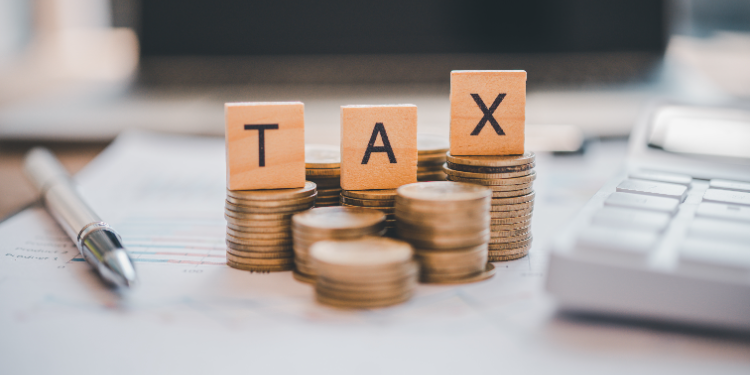
Living in a country without paying taxes: a dream for many expats who choose their destination specifically based on its tax policies. But does a truly "zero tax" country for foreigners actually exist? And what hidden financial risks should you watch out for?
Moving abroad to pay less tax: you're not the first person to consider it. The idea appeals to a growing number of would-be expats, particularly those with significant wealth. Governments know this, and many are actively competing to attract foreign residents.
The United Arab Emirates (UAE), Qatar, Kuwait, Saudi Arabia, Oman, Bahrain, the Cayman Islands, the British Virgin Islands, Brunei, Vanuatu, Saint Kitts and Nevis, and the Bahamas are among the countries that levy no personal income tax. In plain terms: your income won't be taxed in these destinations.
A few notable exceptions
Monaco: no personal income tax... except for French people.
Saudi Arabia: the income tax exemption applies to foreign workers employed in the Kingdom, particularly those working in healthcare, oil, gas, construction, and education. Their salaries are fully exempt from tax.
Bermuda: employees keep their full salary, but employers must pay a payroll tax on those wages.
Get regular tips and advice to make the most of your expat life
Tax exemptions: What exactly is covered?
Wealthy expats are drawn to these countries for good reason: their tax policies allow residents to avoid a wide range of levies. These include income tax, capital gains tax (on profits from property sales or stock market assets), inheritance tax (heirs pay nothing), and wealth tax (expats' assets are exempt). Expats who own a business may also be able to avoid corporate tax.
Of course, the specifics depend on each country's rules. Vanuatu, for example, imposes no personal income tax, capital gains tax, inheritance tax, or corporate tax. Qatar has no personal income tax, but the federal government does levy a 10% corporate tax on profits earned locally by foreign companies.
Moving to a tax-friendly country: Watch out for financial risks
Relocating to a so-called "tax haven" is not without risk. A tax exemption in your new country of residence doesn't free you from your obligations elsewhere, particularly toward your home country.
Tax residence and taxation
Moving abroad doesn't automatically change your tax residence. If your tax residence remains in your home country, you'll continue paying taxes there, including income tax if your home country applies it. To prevent double taxation, many countries have signed tax treaties. It's strongly advisable to consult an international tax specialist to clarify which income will be considered "foreign-sourced" versus "locally sourced," and what tax treatment will apply in each case.
Inheritance tax can still apply after you move abroad
The tax residence of your heirs can also affect inheritance tax liability, even when you're living abroad. For instance, an heir who is not a tax resident in their home country may still owe taxes in both their home country and the country where the deceased was living. It all depends on the tax treaties in place between the two countries. Without such a treaty, the expat's estate may be taxed twice.
Exit tax
Offloading your assets before moving abroad may not be the smart move you think it is. Some countries impose an exit tax on unrealized capital gains (on shares, company stakes, and similar assets), even before those assets have been sold. This tax is specifically designed to catch would-be expats who might otherwise try to sidestep their tax obligations.
This is the question every savvy expat looking to optimize their finances should be asking: Does "zero income tax" hide other costs? The reality, as you might expect, is sometimes less idyllic than the brochure. Financial risks are real and warrant careful consideration, especially for expat entrepreneurs and investors.
VAT and excise duties: Which countries apply them?
Moving to a tax-friendly country doesn't mean you'll never pay taxes again. Some of the most popular expat "tax havens" do impose indirect taxes that everyone must pay: value-added tax (VAT) and/or excise duties on specific consumer goods.
Since 2018, the UAE has charged a 5% VAT along with excise duties on sugary drinks, energy drinks, and tobacco. The government does, however, allow possible VAT refunds for eligible foreign nationals.
Several other Gulf countries have also introduced VAT:
Saudi Arabia: 15% since July 1, 2020, with excise duties ranging from 50% to 100%. These apply notably to carbonated drinks (50%), energy drinks (100%), and tobacco products.
Oman: 5% since 2021, with excise duties of 100% on tobacco and tobacco-related products, energy drinks, pork products, and alcohol. Sugary drinks are taxed at 50%.
Bahrain: 10% since January 1, 2022, with excise duties of 100% on tobacco and energy drinks, and 50% on sugary drinks.
The Bahamas, Vanuatu, and Monaco also apply standard VAT rates of 10%, 15%, and 20%, respectively. After briefly lowering its VAT rate to 13% in February 2025, Saint Kitts and Nevis returned to a 17% rate effective July 2025.
Kuwait, Brunei, the Cayman Islands, the British Virgin Islands, and Qatar, on the other hand, do not have VAT. Qatar did pass VAT legislation in 2018, with implementation expected in 2026, but no firm effective date has been confirmed.
Taxes levied on foreign companies
Some countries do tax foreign businesses. These include the UAE, Andorra, Bahrain, Monaco, Saint Kitts and Nevis, and Qatar. That said, these same countries often maintain an overall tax environment that remains attractive to expat investors and entrepreneurs, despite those levies. Free zones designed specifically for foreign companies are a prime example. In Qatar, foreign companies established within a free zone are exempt from tax for 20 years. Monaco levies a 25% corporate tax on foreign companies that generate more than 25% of their revenue outside the principality. Since 2023, the UAE has imposed a 9% corporate tax on foreign companies' profits exceeding 375,000 UAE dirhams (approximately $102,110).
Freelance web writer specializing in political and socioeconomic news, Asaël Häzaq analyses about international economic trends. Thanks to her experience as an expat in Japan, she offers advices about living abroad : visa, studies, job search, working life, language, country. Holding a Master's degree in Law and Political Science, she has also experienced life as a digital nomad.