

Living in Prague: the ultimate expat guide
Everything you need to know for a successful life in Prague.
Prague stands as one of Central Europe's most attractive destinations for those looking to relocate abroad. The Czech capital combines medieval charm with modern infrastructure, offering excellent public services, affordable living costs compared to Western European cities, and a thriving international community. With unemployment at just 2.7%, a robust job market, world-class universities, and efficient public transport, Prague provides solid foundations for building a new life abroad.
The city's compact size means most neighborhoods remain accessible within 30 minutes by metro or tram. English is widely spoken in business districts and international settings, though learning Czech basics helps with daily interactions. From Art Nouveau buildings in Vinohrady to modernized districts like Karlín, housing options suit diverse preferences and budgets.
5 good reasons to move to Prague
- Strong job market with competitive salaries, especially in IT, finance, and engineering sectors
- Affordable cost of living with average monthly expenses significantly lower than London, Paris, or Berlin
- Excellent public transport system connecting all districts efficiently for just 550 CZK monthly
- Rich cultural scene with over 100 museums, historic theaters, and year-round festivals
- Central European location providing easy travel access to Vienna, Berlin, Munich, and other major cities
Working in Prague
Prague's economy continues to attract international talent with its combination of competitive salaries, low unemployment, and opportunities across multiple sectors. The Czech capital serves as a regional hub for multinational corporations, technology startups, and financial services, creating diverse employment options for skilled professionals.
Job market and key industries
The employment landscape in Prague remains remarkably strong. According to the Czech Statistical Office, the unemployment rate stood at just 2.7% in March 2025, among the lowest in Europe. This tight labor market means employers actively seek qualified candidates, particularly those with language skills and international experience.
Prague's economy centers on several thriving sectors. Information technology dominates the job market, with major tech companies like Microsoft, Oracle, and IBM maintaining large operations alongside a vibrant startup ecosystem. Financial services also play a crucial role, with numerous banks and insurance firms headquartered in the city. Manufacturing and automotive remain important, with companies like Škoda Auto contributing to regional employment. The business services sector, including shared service centers and consulting firms, continues expanding rapidly.
Average salaries in Prague substantially exceed the national average. Data from the Czech Statistical Office shows the average gross monthly wage in Prague reached 62,307 CZK (approximately USD 2,580) in the second quarter of 2025, representing a 5.7% real increase after inflation compared to the previous year. This figure is 33.1% higher than the national average. Skilled professionals in IT, engineering, and management often earn significantly above this benchmark.
Work permits and employment requirements
Employment regulations vary based on nationality. EU/EEA citizens enjoy freedom of movement and require no work permit, though they must register their residence if staying longer than 30 days. Non-EU nationals need an employee card or long-term residence permit for employment purposes. The employee card combines work and residence authorization in a single document, valid for up to two years.
Application processes typically take 60 to 90 days, requiring an employment contract, proof of accommodation, and health insurance. Many international companies assist with visa processing. The Czech labour market also recognizes Blue Card holders, offering streamlined procedures for highly skilled workers from outside the EU.
Employment indicator | Prague | Czech Republic |
Unemployment rate (2025) | 2.7% | 4.3% |
Average gross monthly salary | 62,307 CZK (~USD 2,580) | 46,924 CZK (~USD 1,945) |
Key employment sectors | IT, finance, business services, engineering | Manufacturing, automotive, agriculture |
Sources: Czech Statistical Office (CZSO)
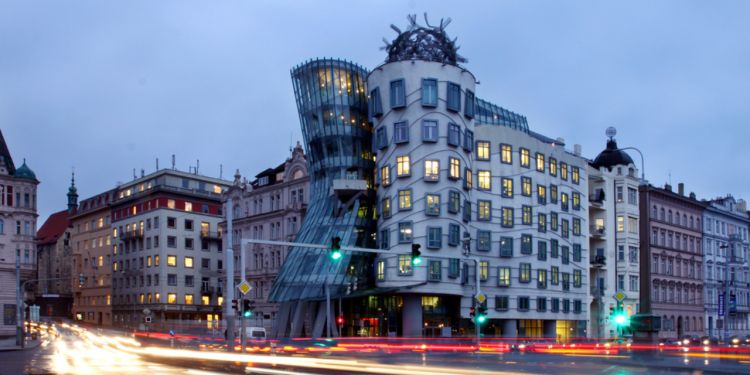
Working in Prague
Finding a job in Prague should not be too complicated – then again, there are a few specifics ...
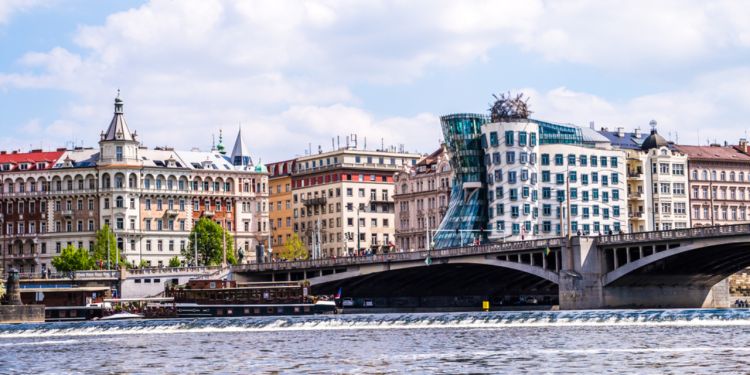
The labour market in Prague
The labour market in the Czech Republic and especially Prague is doing well. For several years, the ...
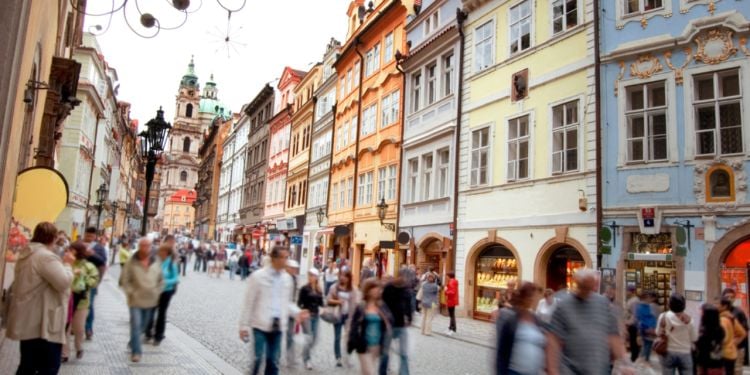
The work culture in Prague
As everywhere else, the workplace etiquette differs from company to company. In Prague, there is a ...
Higher Education & Universities
Prague hosts some of Central Europe's most prestigious universities, combining centuries of academic tradition with modern research facilities. International students from over 150 countries study in the Czech capital, attracted by quality programs, reasonable tuition fees, and the opportunity to earn degrees recognized throughout Europe and beyond.
Major universities and programs
Charles University, founded in 1348, ranks as the oldest university in Central Europe and remains the country's premier institution. With 17 faculties spread across Prague and other cities, Charles University enrolls more than 50,000 students, including over 11,000 international students. The university offers programs in medicine, law, natural sciences, social sciences, humanities, and mathematics. Charles University ranks 242nd globally in the QS World University Rankings and maintains partnerships with leading institutions worldwide.
The university provides numerous English-taught programs at bachelor, master, and doctoral levels. The Faculty of Medicine offers full medical degree programs in English, while the Faculty of Social Sciences provides international relations, economics, and media studies courses. Programs in Czech language remain tuition-free for EU citizens, while English-language programs typically cost around EUR 7,000 annually at undergraduate level.
Czech Technical University (CTU), established in 1707, stands as Europe's oldest technical university. With 18,000 students across eight faculties, CTU excels in engineering, architecture, information technology, and natural sciences. The university ranks 420th globally and maintains strong industry partnerships with companies like Toyota, Siemens, and Škoda-Volkswagen. CTU's Faculty of Information Technology has gained particular recognition, ranking among the top 250 globally for computer science.
Admission and enrollment
Application procedures vary by institution and program. Most universities accept applications through online portals between November and February for programs starting in September. Requirements typically include secondary school certificates (apostilled and translated), motivation letters, and proof of English proficiency (minimum TOEFL iBT 72 or IELTS 5.5 for Charles University). Some programs require entrance examinations in specific subjects.
Processing times range from two to four months. Students accepted to programs must obtain a long-term visa for study purposes, requiring proof of accommodation, health insurance (minimum EUR 30,000 coverage), and sufficient financial means (approximately EUR 500 per month). The Czech Republic's student visa allows part-time work during studies.
Additional information: Charles University, Czech Technical University
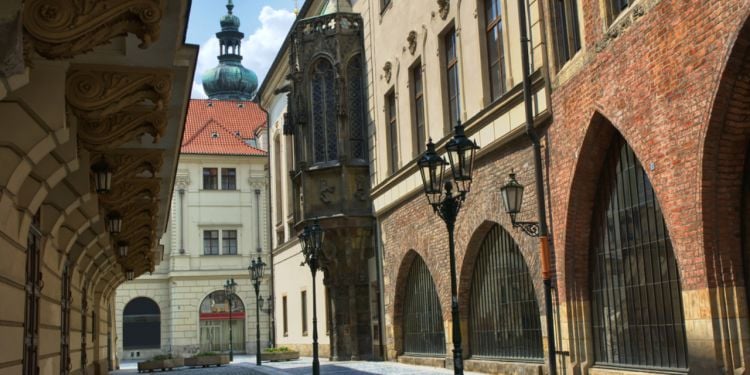
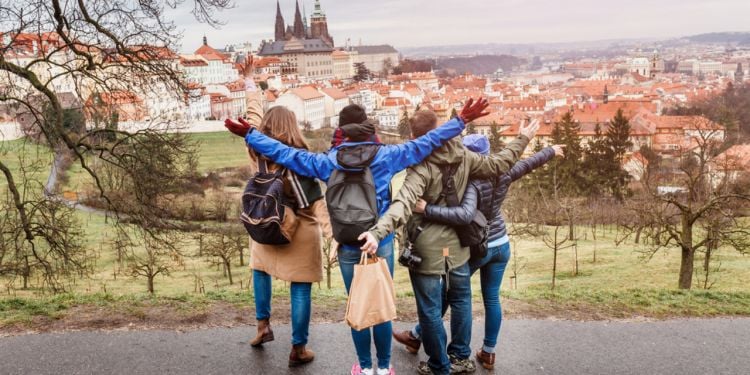
Schooling for Children
Prague provides diverse educational options for families with children, from Czech public schools to international institutions following British, American, or International Baccalaureate curricula. The city hosts over 20 international schools, ensuring parents can find programs matching their children's educational background and future plans.
International schools and curriculum options
Prague British International School (PBIS) stands as one of the city's leading institutions, serving students from ages 2 to 19. Part of the Nord Anglia Education network, PBIS follows the English National Curriculum through primary years, then offers Cambridge IGCSE and International Baccalaureate Diploma Programme (IBDP) at secondary level. The school achieved a 100% IBDP pass rate in 2023 with an average score of 34 points. Annual tuition ranges from 329,000 CZK to 657,000 CZK (approximately USD 13,600 to USD 27,200) depending on grade level. The school offers discounts for siblings (5% for second child, 10% for third and subsequent children).
International School of Prague (ISP) caters to students from early childhood through grade 12, following an American-based curriculum with IB Primary Years Programme and IB Diploma Programme. Annual fees range from approximately 330,000 CZK to 709,500 CZK, with additional capital assessment fees and newcomer fees for new students. ISP operates from a modern campus in Prague 6 and maintains accreditation from international educational bodies.
Deutsche Schule Prag serves the German-speaking community, offering education from kindergarten through Abitur. Annual tuition runs from 198,750 CZK to 226,450 CZK, making it a more affordable option while maintaining high academic standards. The school teaches primarily in German but includes Czech language and culture in its curriculum.
Enrollment and admission procedures
Most international schools accept applications year-round but recommend applying several months before the intended start date due to limited spaces. Application processes typically include submission of previous school records, language assessments, and interviews with both students and parents. Many schools require English proficiency testing for non-native speakers.
Waiting lists exist for popular schools, particularly for younger grades. Application fees range from 9,000 CZK to 15,000 CZK. Schools often request deposit payments upon acceptance to secure places. Some institutions provide bus transportation services for additional fees (typically 35,000 to 50,000 CZK annually).
Public Czech schools offer free education but conduct classes primarily in Czech. Some Prague schools provide preparatory Czech language programs for foreign children. The Czech education system includes primary school (grades 1-9) and secondary education (gymnasium or vocational schools).
Additional information: Prague British International School, International School of Prague
Housing & Neighbourhoods
Prague's housing market offers diverse options across well-connected neighborhoods, from historic Art Nouveau apartments to modern developments. Understanding district characteristics and rental procedures helps newcomers find suitable accommodation in this city where demand consistently exceeds supply.
Popular neighborhoods for expats
Vinohrady (Prague 2) consistently ranks as the top choice among international residents. This prestigious district features elegant 19th-century architecture, tree-lined streets, and numerous parks including Riegrovy Sady. The area centers around náměstí Jiřího z Poděbrad square, home to farmers markets and surrounded by cafés and restaurants. Vinohrady offers excellent metro connections (Line A), international schools nearby, and a thriving expat community. The neighborhood maintains a cosmopolitan atmosphere while retaining Czech character.
Žižkov (Prague 3), bordering Vinohrady, provides a more affordable alternative with similar architecture and amenities. This bohemian district hosts numerous pubs, restaurants, and cultural venues. Žižkov attracts younger professionals and students with its creative atmosphere and vibrant nightlife. The neighborhood includes three metro stations on Line A and features the iconic Žižkov Television Tower.
Karlín (Prague 8) has transformed into a modern business district following extensive redevelopment. The area features contemporary apartments, office complexes, and new restaurants and cafés. Karlín appeals to professionals working in nearby business centers and offers good value compared to central districts.
Dejvice (Prague 6) serves as a residential area popular with families and diplomats. The district provides proximity to international schools, green spaces, and Prague Castle. Neighborhoods like Bubeneč and Nebušice offer quieter, more suburban environments with detached houses and villas.
Housing types and rental process
Prague's housing stock includes several distinct types. Činžák buildings, constructed in the 1920s-1930s, feature high ceilings and period details but may lack elevators. Panel buildings (paneláky) from the communist era provide affordable options in outer districts. Modern developments offer contemporary amenities but command premium prices.
According to Numbeo data from November 2025, average monthly rents for unfurnished apartments are:
1-bedroom apartment in city center | 25,703 CZK (~USD 1,065) |
1-bedroom apartment outside center | 20,093 CZK (~USD 832) |
3-bedroom apartment in city center | 51,000 CZK (~USD 2,112) |
3-bedroom apartment outside center | 34,265 CZK (~USD 1,419) |
Source: Numbeo Prague
Rental procedures typically require first month's rent plus security deposit (usually one to two months' rent) upfront. Landlords often request employment contracts and proof of income. Utilities (electricity, gas, water, internet) typically add 4,000 to 7,000 CZK monthly. Most leases run for one year with options to renew. Real estate agents charge fees equivalent to one month's rent. Furnished apartments cost approximately 20-30% more than unfurnished ones.
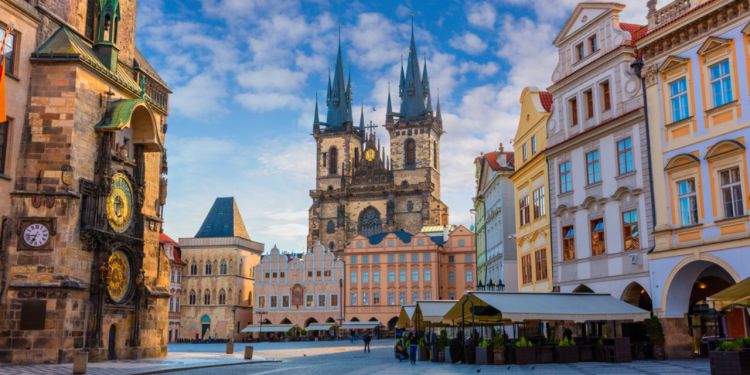
Popular neighbourhoods in Prague
Are you relocating to Prague and you are wondering which part of the city is the best for you? In ...
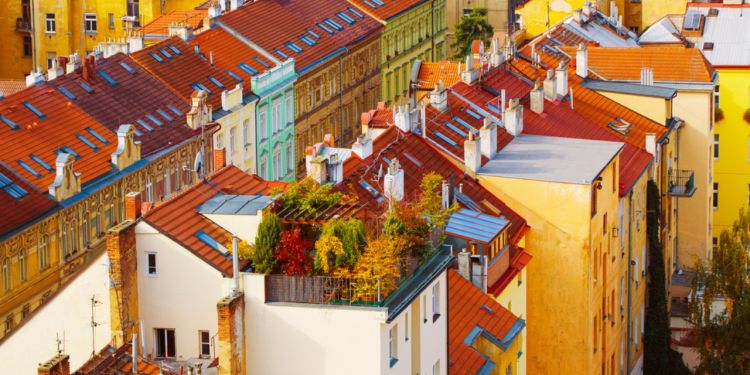
Buying property in Prague
The Czech economy is stable and growing, and the unemployment rate is very low. It is one of the ...
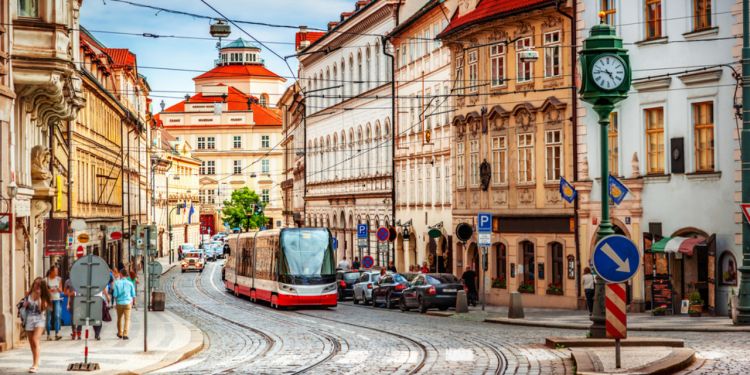
Accommodation in Prague
As a city rich in history and known for its vibrant nightlife, Prague is a popular tourist ...
Leisure, Culture & Things To Do
Prague's cultural richness extends far beyond its famous castle and bridges. The city offers an extraordinary range of museums, theaters, concerts, and outdoor activities that engage residents year-round, from classical music performances to contemporary art exhibitions and seasonal festivals.
Museums and cultural institutions
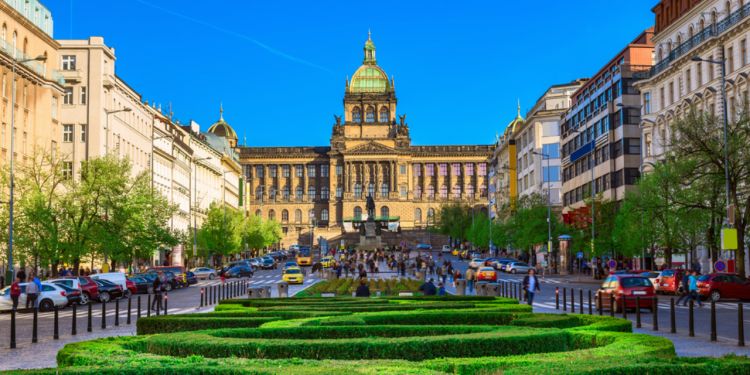
The National Museum, reopened after extensive renovation in 2018, dominates the upper end of Wenceslas Square. This Neo-Renaissance building houses collections spanning Czech history, natural sciences, and archaeology. The museum complex includes both historical and new buildings connected by an underground corridor featuring multimedia exhibitions. Admission costs approximately 300 CZK for combined entry to current exhibitions.
The National Gallery Prague operates multiple venues across the city. The Veletržní Palace in Holešovice showcases 19th-21st century Czech and international art, including works by Picasso, Van Gogh, and Czech artists like Alfons Mucha. The gallery's other locations include the Schwarzenberg Palace, Kinský Palace, and Convent of St Agnes, each featuring distinct collections from medieval art to contemporary works.
The Jewish Museum Prague comprises several historic synagogues and the Old Jewish Cemetery, documenting centuries of Jewish heritage in the city. The museum provides profound insights into Central European Jewish history and culture. Combined tickets grant access to all sites for 350 CZK.
DOX Centre for Contemporary Art in Holešovice presents cutting-edge exhibitions and installations from international artists. The center's distinctive airship addition makes it architecturally notable beyond its exhibitions. The Museum of Communism offers sobering perspectives on life under totalitarian rule from 1948 to 1989, featuring authentic objects and recreated rooms.
Entertainment and outdoor activities
Prague's classical music scene flourishes with performances at the Rudolfinum, home to the Czech Philharmonic Orchestra, and the Municipal House with its stunning Art Nouveau Smetana Hall. The National Theatre stages opera, ballet, and drama productions. Tickets range from 300 to 1,500 CZK depending on seating and performance type.
The city's parks provide extensive recreational opportunities. Stromovka, Prague's largest park, attracts cyclists, runners, and families with its ponds and tree-lined paths. Petřín Hill offers panoramic city views from its observation tower (modeled after the Eiffel Tower) and features rose gardens and mirror maze. Vyšehrad fortress combines history with scenic riverside views and hosts summer concerts.
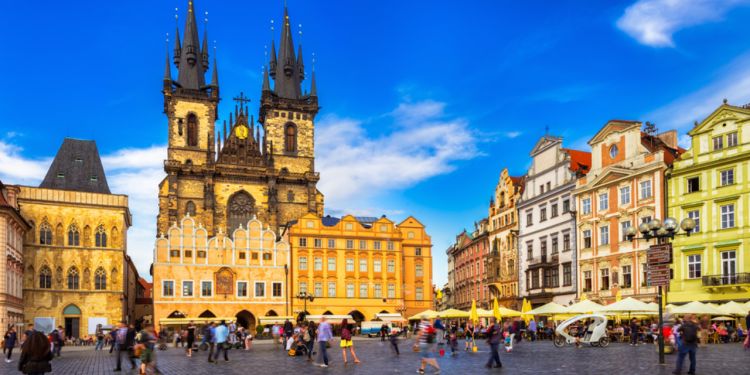
Prague hosts numerous festivals throughout the year. Prague Spring International Music Festival (May-June) draws classical music enthusiasts worldwide. Signal Festival (October) transforms city squares and buildings into open-air galleries of light art. Christmas markets in Old Town Square and Wenceslas Square operate from late November through early January, offering traditional crafts and Czech holiday specialties.
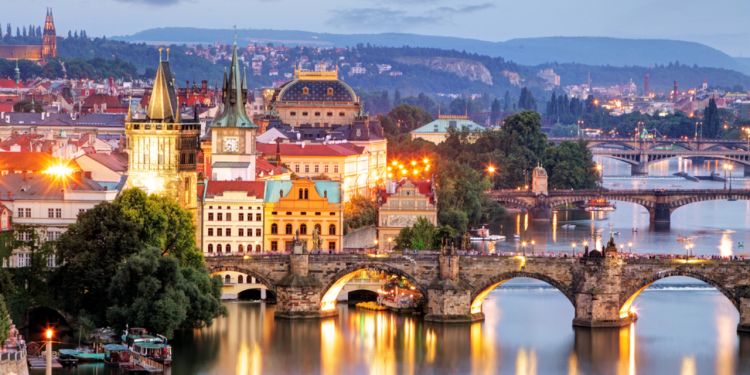
The Vltava River enables various water activities. Paddle boats and regular boat tours operate from spring through autumn, providing unique perspectives on Prague's architecture. Several islands in the river, particularly Střelecký Island and Žofín Island, host cafés and outdoor events during summer months.
Things to do in Prague alone, with your partner or with friends
It does not matter if you moved to Prague alone, with family, or beloved partner. The city has a ...

Sports in Prague
Indulging in sports can be a great opportunity for meeting new people, losing weight or relaxing ...
Eating out in Prague
When walking around Prague, you will see restaurants, cafes, and pubs on each corner. The choice is ...
Daily Life
Prague combines efficient infrastructure with rich cultural traditions, creating a comfortable environment for daily living. From reliable public transport to diverse dining options and recreational activities, the city provides practical amenities that support both work and leisure.
Transportation and getting around
Prague's integrated public transport system ranks among Europe's best, operated by Dopravní podnik (DPP). The network includes three metro lines (A-green, B-yellow, C-red), extensive tram routes, and bus services covering all districts. Metro trains run every 2-4 minutes during peak hours and operate from 5:00 AM to midnight. Night trams and buses provide service from midnight to 4:30 AM with 30-minute intervals.
Ticket options include 30-minute tickets (30 CZK), 90-minute tickets (40 CZK), and 24-hour passes (120 CZK). Long-term residents benefit from monthly passes at 550 CZK or annual passes at 3,650 CZK, providing unlimited travel across all transport modes. Tickets must be validated in yellow machines when boarding trams/buses or entering metro stations. Inspectors conduct regular checks with fines of 1,000 CZK for traveling without valid tickets.
The Lítačka card and mobile app simplify ticket purchasing and validation. Most trams and buses accept contactless payment cards for direct ticket purchase. The system covers trips to Prague Airport via buses 100 and 119, making airport access convenient and economical.
Lifestyle and cultural habits
Czech culture values punctuality, direct communication, and personal space. Shops and businesses typically open from 9:00 AM to 6:00 PM on weekdays, with shorter Saturday hours and Sunday closures for smaller establishments. Larger shopping centers remain open seven days weekly until 9:00 PM or later.
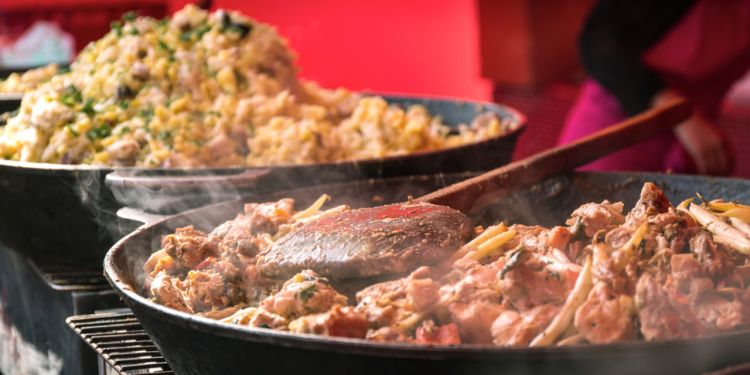
Dining customs include substantial lunch as the main meal, typically served from noon to 2:00 PM. Traditional Czech cuisine features dishes like svíčková (beef sirloin with cream sauce), guláš (goulash), and knedlíky (dumplings). The city's restaurant scene has expanded dramatically, offering international cuisines from Asian to Mediterranean. A meal at an inexpensive restaurant costs approximately 220 CZK, while mid-range establishments charge 1,200 CZK for two people.
Czech Republic ranks as the world's largest beer consumer per capita, and Prague's pub culture forms an essential part of social life. Traditional hospody (pubs) serve locally brewed beers, with a pint costing 50-70 CZK. Cafés serve as popular meeting spots, offering coffee for 70-80 CZK.
Prague residents make extensive use of parks and outdoor spaces, particularly during warmer months. Petřín Hill provides walking paths and city views, while Stromovka Park attracts cyclists and joggers. The Vltava River offers opportunities for riverside walks and summer boat trips.
Discovering Prague
Prague and the Czech Republic is considered as the heart of Europe. Have you just relocated to the ...
Adjusting to the local culture in Prague
Settling down anywhere in the world can take you some time. How difficult is it to adjust to the ...

Developing your social circle in Prague
You just settled down in the city and do not know anybody yet. What is the best place where to meet ...
Cost of Living
Prague offers relatively affordable living costs compared to Western European capitals while maintaining high-quality services and amenities. Understanding typical expenses helps plan budgets effectively and ensures comfortable living standards.
Monthly expenses for singles and families
Based on Numbeo data from November 2025, monthly costs vary depending on lifestyle choices and housing location. The tables below outline typical expenses for different household types:
Expense category | Monthly cost (single person) |
Rent (1-bedroom, city center) | 25,703 CZK (~USD 1,065) |
Utilities (electricity, heating, water, internet) | 7,900 CZK (~USD 327) |
Groceries and household items | 8,000 CZK (~USD 331) |
Public transport (monthly pass) | 550 CZK (~USD 23) |
Mobile phone plan | 647 CZK (~USD 27) |
Dining out and entertainment | 5,000 CZK (~USD 207) |
Fitness/gym membership | 1,507 CZK (~USD 62) |
Total estimated | 49,307 CZK (~USD 2,042) |
Single person monthly budget in Prague
Expense category | Monthly cost (family of four) |
Rent (3-bedroom, city center) | 51,000 CZK (~USD 2,112) |
Utilities (electricity, heating, water, internet) | 10,500 CZK (~USD 435) |
Groceries and household items | 18,000 CZK (~USD 746) |
Public transport (2 monthly passes) | 1,100 CZK (~USD 46) |
International school (1 child, average) | 40,000 CZK (~USD 1,657) |
Preschool (1 child) | 21,283 CZK (~USD 881) |
Dining out and entertainment | 10,000 CZK (~USD 414) |
Health insurance (supplemental) | 3,000 CZK (~USD 124) |
Total estimated | 154,883 CZK (~USD 6,415) |
Family of four monthly budget in Prague
Source: Numbeo Prague, November 2025
Practical cost considerations
Grocery shopping at local supermarket chains like Albert, Lidl, or Tesco keeps food costs manageable. Basic items include milk (27 CZK per liter), bread (33 CZK per loaf), and eggs (81 CZK for 12). Farmers markets in Vinohrady and other neighborhoods offer fresh produce at competitive prices.
Healthcare costs remain moderate for residents with Czech health insurance. Private health insurance for expats typically costs 1,500 to 3,000 CZK monthly per person. Cinema tickets cost 250 CZK, while museum admissions range from 150 to 400 CZK. Many cultural institutions offer free admission one day monthly.
In short
Prague successfully combines historical charm with modern infrastructure, creating an appealing environment for those considering relocation. The city offers competitive salaries, particularly in technology and business services sectors, alongside living costs that remain manageable compared to Western European capitals. World-class universities like Charles University and Czech Technical University provide excellent educational opportunities, while numerous international schools ensure quality options for families with children.
The Czech capital's efficient public transport system, rich cultural scene with over 100 museums and regular festivals, and diverse neighborhoods from elegant Vinohrady to creative Žižkov accommodate different lifestyles and preferences. Central European location enables easy travel to Vienna, Berlin, and other major cities. While learning Czech improves daily interactions, English proficiency in business districts and international settings facilitates adjustment. Prague's combination of affordability, opportunity, and quality of life continues attracting international residents seeking new experiences in Central Europe.
Connect with others who have made Prague their home and share experiences on the Expat.com Prague forum. The community provides practical advice, local insights, and support for navigating life in the Czech capital.
We do our best to provide accurate and up to date information. However, if you have noticed any inaccuracies in this content, please contact us.


News & testimonies

Working in Czechia: What the labor code reform means for you
A sweeping overhaul of the Czech Labor Code—known as the Flexible Work Amendment—is set to reshape how employees are hired, paid, and dismissed. Taking effect in June 2025, the reform targets both local and international workers. If you've recently relocated for work or are planning a move to Czechia, here's what you need to know.

Kevan in Brno : "The Czech Republic has a lot to offer"
When he arrived in Czech Republic from Canada, where his girlfriend lives, Kevan didn't know that the country will be his new home. Living there since 2004, now in Brno, the second largest city, the canadian gives us his vision of this country of Central Europe.

Adventurings
I'm Cynthia from Seattle, WA, U.S.A. Moving to the Czech Republic happened a bit by accident. I took my teaching course in Prague at the end of 2012 and ending up sticking around Czech Republic afterwards - where I still am today!
Essential services for your expat journey