Living in Cebu: the ultimate expat guide
Everything you need to know for a successful life in Cebu.
Cebu, known as the Queen City of the South, is one of the Philippines' most dynamic destinations for expatriates. Located in the Central Visayas region, this island province blends urban development with stunning natural beauty. As the country's oldest city, Cebu offers rich colonial history alongside modern infrastructure, international schools, and a thriving business district. With English widely spoken throughout the city, expats find integration remarkably smooth.
5 good reasons to move to Cebu
- Affordable cost of living – Monthly expenses for a single person average around USD 800–1,200, significantly lower than Western cities.
- English proficiency – The Philippines ranks among Asia's top English-speaking nations, making daily life and business seamless.
- Tropical climate – Enjoy year-round warm weather with temperatures between 23°C and 33°C.
- Strategic location – Mactan-Cebu International Airport connects to major Asian cities with direct flights.
- World-class beaches and diving – Access pristine islands, coral reefs, and marine sanctuaries within hours.
Working in Cebu
Cebu has emerged as a major economic hub in the Philippines, attracting foreign professionals across multiple industries. The city's Business Process Outsourcing (BPO) sector is particularly strong, with IT Park and Cebu Business Park hosting numerous international companies. Other key sectors include tourism, manufacturing, shipping, and education.
Work permits and visas
Foreign nationals seeking employment must obtain a 9(G) Pre-Arranged Employment Visa. This requires a job offer from a Philippine-registered company and an Alien Employment Permit (AEP) from the Department of Labor and Employment. Processing typically takes 2–3 months. The visa is initially valid for one year and renewable annually.
Employment overview
The table below shows key employment indicators for Cebu:
Average monthly salary (net) | PHP 21,760 (~USD 380) |
Key industries | BPO, IT, Tourism, Manufacturing, Shipping |
Major business districts | IT Park, Cebu Business Park, Mactan Export Zone |
Sources: Numbeo 2025, Bureau of Immigration Philippines
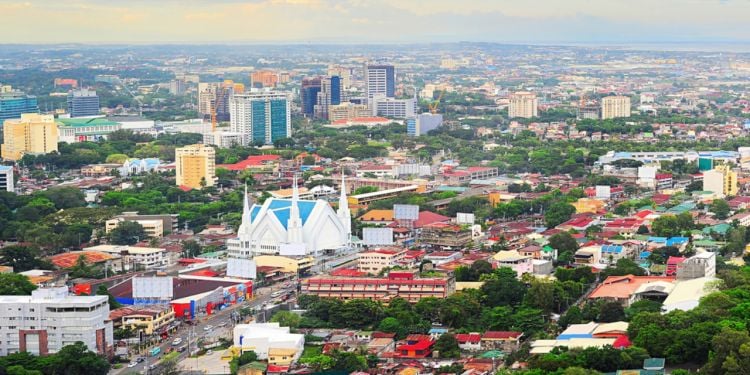
Work in Cebu
What are the career prospects for expats in Cebu? How to proceed to find a job there? What is the work culture and dress code? How to apply for a job ...
Higher Education & Universities
Cebu hosts several reputable universities offering programs for international students. The city's academic institutions provide quality education at affordable tuition rates compared to Western universities, with instruction primarily in English.
Top universities in Cebu
The University of San Carlos (USC), founded in 1783, is a prestigious private Catholic research university offering undergraduate and graduate programs across multiple disciplines. University of Cebu provides affordable degree programs including law, with its School of Law ranking among the top in the country. Cebu Normal University is a public institution recognized as a Center of Excellence in Nursing and Teacher Education. Southwestern University PHINMA offers health sciences and medical programs.
International programs and tuition
Annual tuition for international students ranges from PHP 100,000 to PHP 400,000 (~USD 1,750–7,000) depending on the program. Many universities offer exchange programs and partnerships with institutions in the United States, Japan, and Korea.
Sources: University of San Carlos, University of Cebu
Retirement in Cebu
The Philippines actively welcomes retirees through the Special Resident Retiree's Visa (SRRV), administered by the Philippine Retirement Authority. Cebu is a popular retirement destination thanks to its affordable living costs, quality healthcare, and beach lifestyle.
SRRV requirements
Applicants must be at least 50 years old (or 35 for former Filipino citizens). The SRRV Classic requires a time deposit of USD 10,000 with proof of a monthly pension of at least USD 800 (single) or USD 1,000 (couple). Without pension proof, the deposit increases to USD 20,000. The deposit may be converted into real estate investment after 30 days.
Benefits and healthcare
SRRV holders enjoy indefinite stay with multiple entry privileges, exemption from exit clearance fees, and access to PhilHealth coverage. Cebu has quality private hospitals including Cebu Doctors' University Hospital and Chong Hua Hospital. Private health insurance is recommended for comprehensive coverage.
Sources: Philippine Retirement Authority
Schooling for Children
Expatriate families will find quality international education options in Cebu. Schools follow various curricula including International Baccalaureate (IB), American, British, and Singaporean systems, ensuring continuity for globally mobile families.
International schools
Cebu International School (CIS) is the only IB Continuum school in Cebu, offering the Primary Years, Middle Years, and Diploma Programmes. Accredited by CIS and WASC, it serves students from over 20 nationalities. Singapore School Cebu follows the Singaporean curriculum with Cambridge IGCSE and IB Diploma options. Bright Academy offers a U.S.-based curriculum, while Maria Montessori International School provides progressive, child-centered education.
Fees and enrollment
Annual tuition at international schools typically ranges from PHP 200,000 to PHP 500,000 (~USD 3,500–8,750). Enrollment requires academic transcripts, health records, and passport copies. Most schools begin enrollment for the academic year starting in August.
Housing & Neighbourhoods
Cebu offers diverse housing options from modern high-rise condominiums to houses in gated subdivisions. Rental prices remain significantly lower than Manila, making comfortable living accessible for most expatriate budgets.
Popular expat neighbourhoods
IT Park is the most modern district, ideal for digital nomads and young professionals with 24/7 amenities. Lahug offers a mix of condos and houses near universities and hospitals. Banilad is family-friendly with proximity to international schools. Mactan Island appeals to those seeking beachfront resort-style living, while Cebu Business Park provides upscale urban convenience.
Average rental prices
1-bedroom apartment (city center) | PHP 28,750 (~USD 500) |
1-bedroom apartment (outside center) | PHP 15,600 (~USD 275) |
3-bedroom apartment (city center) | PHP 52,500 (~USD 920) |
3-bedroom apartment (outside center) | PHP 30,000 (~USD 525) |
Sources: Numbeo 2025
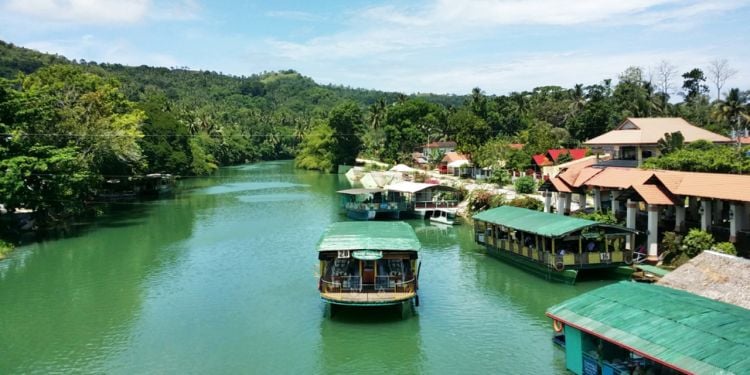
Accommodation in Cebu
Located in the Visayas region, 750 km from Manila and West of the Negros Island, Cebu is one of the major Philippine provinces. In shape, it is a ...
Leisure, Culture & Things To Do
Cebu offers a rich blend of history, nature, and adventure. From colonial landmarks in the city to world-class diving sites, there is something for every interest and lifestyle.
Historical and cultural attractions
Magellan's Cross, planted in 1521, marks the arrival of Christianity in the Philippines. The adjacent Basilica del Santo Niño, founded in 1565, is the oldest church in the country. Fort San Pedro, built in 1738, now houses a museum with Spanish colonial artifacts. The Heritage of Cebu Monument on Colon Street depicts key moments in local history.
Nature and adventure
Kawasan Falls in Badian offers canyoneering adventures through turquoise waters. Moalboal is famous for its sardine run and sea turtle sightings. Oslob provides whale shark encounters (arrive early to avoid crowds). Malapascua Island attracts divers seeking thresher sharks. The annual Sinulog Festival in January celebrates Santo Niño with vibrant street parades and cultural performances.
Sources: Guide to the Philippines
Daily Life
Daily life in Cebu balances tropical ease with modern convenience. The city offers extensive shopping malls, diverse dining options, and a warm, welcoming local culture. Expats quickly adapt to the relaxed pace while enjoying urban amenities.
Transportation
Jeepneys are the iconic local transport, with fares starting at PHP 13–15. Grab ride-hailing is widely used, with city trips costing PHP 150–500. MyBus provides air-conditioned routes connecting the airport, SM City, Ayala Center, and IT Park for PHP 25–50. White metered taxis start at PHP 45 plus PHP 13.50 per kilometer. Angkas motorcycle taxis offer faster transit during rush hours.
Lifestyle and culture
Cebuanos are known for their hospitality and strong family values. Shopping malls like Ayala Center Cebu and SM City Cebu serve as social hubs. The local cuisine features fresh seafood and the famous Cebu lechon (roast pig). Most residents speak both Cebuano and English, making communication straightforward for expatriates.
Cost of Living
Cebu offers an affordable lifestyle compared to other major Asian cities. The cost of living is approximately 14% lower than Manila and significantly cheaper than cities like Singapore or Hong Kong. Below are estimated monthly budgets.
Monthly budget for a single person
Rent (1-bedroom, city center) | PHP 28,750 |
Utilities (electricity, water, internet) | PHP 7,500 |
Groceries | PHP 12,000 |
Transport | PHP 3,000 |
Dining and leisure | PHP 10,000 |
Total | PHP 61,250 (~USD 1,070) |
Monthly budget for a family of four
Rent (3-bedroom, city center) | PHP 52,500 |
Utilities | PHP 12,000 |
Groceries | PHP 25,000 |
International school fees (monthly) | PHP 35,000 |
Transport and leisure | PHP 20,000 |
Total | PHP 144,500 (~USD 2,530) |
Sources: Numbeo 2025
In short
Cebu combines tropical island living with urban convenience, making it an appealing destination for expatriates seeking affordability, adventure, and a welcoming community. With English widely spoken, excellent international schools, and a low cost of living, families and professionals alike find it easy to settle. Whether you're drawn by career opportunities in the BPO sector, retirement under sunny skies, or access to world-class beaches and diving, Cebu delivers. The city's rich history, warm culture, and growing infrastructure make daily life both comfortable and engaging. Ready to make the move? Join the Expat.com Cebu forum to connect with fellow expats, ask questions, and share experiences.
We do our best to provide accurate and up to date information. However, if you have noticed any inaccuracies in this content, please contact us.


Essential services for your expat journey