You have arrived in Peru and quickly realize that leisure here is structured around a calendar you did not expect: free museum Sundays, a national Independence Day that shuts down the country for two days, and a food culture where a three-course set lunch costs around USD 4. For expats settling in Lima, Cusco, or Arequipa, navigating that calendar, knowing which events are free, which heritage sites require booking months in advance, and where to meet people outside of work, makes a real difference to daily life.
Peru's state museum network spans more than 50 institutions administered by the Ministerio de Cultura (Ministry of Culture), ranging from Lima's Museo Nacional de Arqueología, Antropología e Historia del Perú to the Museo Tumbas Reales de Sipán in Lambayeque and the Museo de Sitio de Chan Chan in La Libertad. For residents, the most practical entry point into this network is the Museos Abiertos program: on the first Sunday of every month, all Ministry of Culture-administered museums, archaeological zones, and historic sites open free of charge, with workshops, guided visits, artisan fairs, and artistic presentations included. A single edition can bring more than 100 free cultural activities across the country.
Beyond the first Sunday, additional free-entry days apply year-round. International Museum Day (May 18) opens all 55 ministry-administered museums to national and foreign visitors at no cost, with more than 50 free activities spread across regions. Each museum also has its own anniversary or inauguration date on which free entry applies for residents and nationals. The Ministry of Culture publishes a weekly Agenda Cultural covering all ministry-led museum, heritage, and arts events across the country; checking it before the week starts is the most reliable way to plan free outings without buying tickets in advance.
Permanent free entry applies year-round to children and adolescents aged 3 to 17, older adults, and persons with disabilities who are Peruvian or foreign residents. This means the museum network functions as a genuinely zero-cost family destination on any day of the week, not just on Sundays.
The Lugar de la Memoria, la Tolerancia y la Inclusión Social (LUM) in Lima operates Tuesday through Sunday, 10:00 a.m. to 6:00 p.m., with free entry every day of the year. Its programming includes drawing workshops, live music, and intergenerational activities for children, adolescents, and adults, making it a reliable free cultural destination in the capital at any time of year.
Lima's performing-arts scene centers on the Teatro Municipal de Lima and the Gran Teatro Nacional, which together host opera seasons and international productions. Theater tickets at mid-sized venues such as Teatro Barranco start around PEN 40 (approximately USD 11). Tickets for live performances can be purchased through the local event-ticketing platform Passline.
The Zona Arqueológica Caral, managed by the Ministry of Culture, offers a calendar of guided visits and cultural activities at the sites of the Caral civilization, accessible for free on the first Sundays of each month under the Museos Abiertos program. The Centro Cultural Inca Garcilaso in Lima hosts exhibitions and cultural exchange events that promote Peruvian arts, including contemporary Amazonian art. The Istituto Italiano di Cultura di Lima also runs a public events calendar open to all Lima residents, including exhibitions sponsored by the Italian Ministry of Foreign Affairs.
Peru's national holiday calendar shapes the rhythm of public life and the timing of major cultural events. The country's primary civic celebration is Fiestas Patrias on July 28 and 29, marking Independence Day with parades, fireworks, and large public gatherings. Most businesses close across the country for the full long weekend; transport and accommodation to popular destinations such as Cusco and Machupicchu sell out well in advance, so planning trips around this period requires booking early.
The standout cultural event for residents based near Cusco is Inti Raymi, the Inca Festival of the Sun, which takes place in June as part of the broader Fiestas del Cusco program. The Ministry of Foreign Trade and Tourism (MINCETUR) officially promotes Inti Raymi and the Fiestas del Cusco to both domestic and international visitors; the EMUFEC (Empresa Municipal Fiestas del Cusco) publishes the official event sequence and dates each year.
In Lima, the Festival Internacional de Cajón y Percusión, organized by the Ministry of Culture, takes place at the ministry's San Borja headquarters each year in late July to early August. Programming is entirely free and includes concerts, masterclasses, talks, a cultural entrepreneurship fair, and a Gran Cajoneada, a collective open-air percussion session open to all ages, with artists from Peru and neighboring countries participating. It is the largest free music-learning event in Lima's annual calendar and a natural entry point for expats interested in Afro-Peruvian music traditions.
For large ticketed events, the Fiestas Patrias long weekend also brings major private music festivals to Lima. Tickets for these events are sold through commercial platforms such as Ticketmaster Perú. The clearest way to distinguish free from ticketed events is to check whether the organizer appears on gob.pe: public ministry and municipal events routinely state ingreso libre (free admission) or gratuita directly in their announcements, while large private concerts use commercial ticketing platforms.
Regional festivals beyond Lima and Cusco are worth tracking for residents outside the capital. The Semana Turística de los Chachapoya in Chachapoyas (Amazonas region) in late May to mid-June showcases ancestral rituals and intangible cultural heritage of the Amazonas region. Puno hosts Expo Pucaré in July, combining livestock, agroindustrial products, and local crafts. The Festival del Cacao y Chocolate in Bagua (Amazonas) in June brings together producers offering cacao, specialty coffee, honey, and crafts; regional food festivals of this type are typically free or low-cost to enter and organized by municipal or regional bodies. In La Libertad, the city of Trujillo runs free municipal food events, including a recurring gastronomic fair organized by the Municipalidad Provincial de Trujillo.
Join the Peru community
Get regular tips and advice to make the most of your expat life
Outdoor activities in Peru
Peru's protected natural areas are managed by SERNANP (Servicio Nacional de Áreas Naturales Protegidas por el Estado) under the national SINANPE system, which covers 15 national parks, 9 national sanctuaries, 4 historical sanctuaries, 18 national reserves, and 6 protected forests. This gives residents access to the coast, the highlands, and the Amazon ecosystems from a single country.
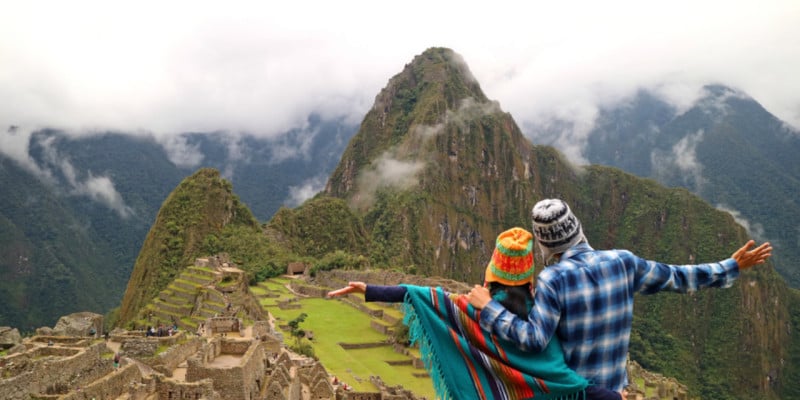
The most visited destination in the system is the Llaqta Inka de Machupicchu (Machu Picchu), and it requires advance planning. Entry tickets must be purchased through the official portal tuboleto.cultura.pe. Daily quotas apply per route: routes 1, 2, and 3 on the Red de Caminos Inka carry 500 spaces per day, and route 5 carries 250. In high season, dates fill up months in advance, so booking early is not optional. From May 2026, SERNANP added a conservation fee to the cultural-site entry ticket: PEN 11 (approximately USD 3) for foreign visitors and PEN 5 for Peruvian visitors.
Parque Nacional Huascarán in Ancash is a UNESCO World Heritage site protecting the world's highest tropical mountain range, with Mount Huascarán at 6,768 meters and 27 snow-capped peaks above 6,000 meters. It is Peru's primary destination for high-Andes trekking and mountaineering, with glacial lakes and high plateaus accessible to properly equipped visitors. Altitude is the key safety consideration: the park ranges from approximately 2,500 meters to 6,768 meters, and anyone arriving from Lima at sea level needs adequate acclimatization time before trekking at elevation.
Parque Nacional del Manu, in Cusco and Madre de Dios, spans more than 1,716,000 hectares, ranging from roughly 350 meters to above 4,000 meters in altitude. UNESCO describes it as globally renowned for terrestrial biodiversity; access is limited, and the park is largely roadless, so visits require planning through authorized operators rather than independent arrival.
Parque Nacional Cordillera Azul, co-managed by SERNANP and CIMA in San Martín, Loreto, and Ucayali, maintains 99.96% of its Amazonian territory in conservation and hosts jaguars, spectacled bears, tapirs, and the endemic scarlet-banded barbet. It represents the deeper Amazon category: remote but officially accessible with appropriate planning. Other accessible Amazon and highland reserves include Pacaya Samiria, Allpahuayo Mishana, and the Junín and Pampa Galeras Bárbara d'Achille reserves, all promoted for long-weekend visits during national holidays.
Peru's Pacific coast beach season runs from January to March, when coastal areas attract large numbers of visitors. Water quality varies across locations; the national Verano Seguro plan, operated by the Policía Nacional del Perú from January 1 each year, covers security and accident prevention along coastal beaches.
Nightlife and entertainment in Peru
Nightlife inPeru is most concentrated in Lima, where the districts of Miraflores, Barranco, and San Isidro form the main corridor for restaurants, bars, live music, and late-night dining. Barranco in particular has an active boutique scene that combines live music venues, independent bars, and arts spaces within walking distance. Cusco and Arequipa have smaller, tourism-driven bar and live-music scenes concentrated near their central plazas. Lima's large private event venues operate under the Ministry of Interior security and inspection oversight.
Restaurants and dining out in Peru
Lunch is the main meal of the day in Peru, served between 1:00 p.m. and 3:30 p.m. The most affordable sit-down option is the menú del día (set lunch), a fixed-price meal including a starter, a main, and a drink, available at neighborhood restaurants, huariques (small local eateries), and market restaurants throughout the country. In Lima, a set lunch outside tourist zones costs around PEN 10 to PEN 18 (approximately USD 3 to USD 5). A meal at an inexpensive à la carte restaurant runs around PEN 12 (approximately USD 3). A three-course dinner for two at a mid-range restaurant costs around PEN 100 total (approximately USD 29).
Beyond the menú del día restaurant and the huarique, the city has criollo restaurants such as El Bolivariano in Pueblo Libre, multi-concept food halls such as Popurrí on Paseo Begonias in San Isidro (14 gastronomic concepts across 2,000 square meters), and nikkei venues combining Japanese technique with Peruvian produce. Active dining districts include Surquillo, Miraflores, San Isidro, Barranco, and Pueblo Libre. Surquillo has grown into a notable food destination in its own right.
Peru's novoandina cuisine recovers pre-Hispanic food customs and native ingredients, incorporating dishes such as quinoa risotto, grilled alpaca, carapulcra of yuca and dried potato, and fish escabeche. Chifa (Peruvian-Chinese) and nikkei (Peruvian-Japanese) are major fusion traditions with dedicated restaurants across Lima. Vegetarian and vegan options exist in Lima and Cusco through dedicated venues; outside specialist restaurants, confirming dietary requirements directly with each restaurant is advisable, as vegan, gluten-free, and allergy-safe menus are not universally standard.
Tipping is discretionary in Peru, not legally required. A tip of 5 to 10% is appreciated for good service at restaurants where no service charge is already included. Higher-end and tourist-facing restaurants sometimes add a service charge; when it is already included, additional tipping is optional. At local neighborhood restaurants, markets, and street-food stalls, tipping is not a standard expectation. Reservations are strongly advisable at high-demand Lima restaurants; walk-in is the norm at local menú restaurants and huariques. Cards are commonly accepted at higher-end and tourist-facing restaurants, but cash remains essential for markets, small local eateries, and street-food purchases.
Shopping in Peru
Shopping centers in Lima and major Peruvian cities open every day from 10:00 a.m. to 10:00 p.m. Mercados de abasto (traditional public markets) are the everyday fresh-food shopping destination found across all cities and neighborhoods, and the Ministry of Production (PRODUCE) is actively modernizing them in partnership with institutions including PUCP, making them more organized while preserving their role as the primary fresh-food option for most households.
The main official discount shopping events are CyberWow, Peru's e-commerce sale event held twice a year (typically in April and mid-year), with hundreds of sellers across electronics, fashion, travel, and local products, and the Fiestas Patrias long weekend in late July, which generates major retail and travel promotions across physical and online stores.
Fitness and wellness in Peru
Gym membership in Peru is affordable relative to most expat origin countries. Smart Fit Perú's standard monthly plan runs around PEN 119.90 (approximately USD 35). A mid-range option, Point Fit, was available at a promotional rate of PEN 149 (approximately USD 43). At the neighborhood gym level, some Lima venues list as low as PEN 70 (approximately USD 20) for three sessions per week, or PEN 10 (approximately USD 3) for a single session. Smart Fit's premium brand, Bio Ritmo, operates two Lima locations (El Polo/Surco and Santa Cruz/Miraflores), with expansion planned. Bio Ritmo locations include specialized rooms for pilates, yoga, and cycling, plus wet areas with sauna and Turkish bath.
Free public fitness is available through the Instituto Peruano del Deporte (IPD), which runs free mass-participation and recreational programs including Gimnasia Laboral, Actívate con el IPD, Vida Activa, and Deporte Inclusivo. The IPD reached nearly 50,000 participants through these programs. The VIDENA sports complex in Lima also offers public membership access. Yoga and boutique wellness are concentrated in Lima's coastal districts; Barranco has an active boutique fitness scene combining yoga, pilates, and surf conditioning.
Spanish classes for foreign residents are offered by several institutions in Lima. Hispana Escuela de Español in Miraflores specializes in Spanish and Latin American culture for foreign residents and adapts programs to individual schedules. The Centro de Idiomas at the Universidad Nacional Mayor de San Marcos (UNMSM) offers a Spanish curriculum starting at the basic level, and the PUCP Programa de Español para Extranjeros runs semester-format classes capped at 15 students. These three options cover a range of scheduling and commitment levels, from individual-pace tuition to structured academic semesters.
Municipal and university cultural workshops across Lima districts offer an affordable way to pick up a new skill alongside local residents. The Municipalidad Distrital de San Isidro runs paid cultural workshops with registration via WhatsApp. The Municipalidad de Santiago de Surco offers theater, marinera norteña, violin, cajón, K-pop, dance, and visual arts through its Teatro Municipal de Surco and Surco Studio. The Municipalidad Distrital de Santa Anita runs cultural and sports workshops for all ages. These district programs are announced on gob.pe and represent the most accessible entry point for affordable hobby classes in the capital.
For hands-on cooking, Peruvian cuisine classes are available in Arequipa and Cusco. Peruvian Cooking Experience operates at Casa de Avila Hotel in Vallecito, Arequipa, with colonial-garden cooking sessions adaptable to vegetarian diets. Taste Peru in Cusco (Nueva Baja 482) offers ceviche and Peruvian recipe classes in the city center.
The Festival Internacional de Cajón y Percusión (Ministry of Culture, San Borja, Lima, late July to early August each year) offers free public masterclasses in Afro-Peruvian music and percussion, along with concerts, talks, and the Gran Cajoneada, open to all ages. It is the largest free music-learning event in the Lima calendar and is worth checking dates for each year.
Language exchange meetups are active in Lima and suit expats looking for social contact alongside practice. Mundo Lingo Lima holds free weekly social language events and has a large membership base on Meetup. Urban Language Exchange meets on Wednesday, Thursday, and Saturday evenings in Miraflores and Barranco. Gringo Tuesdays Language Exchange in Miraflores runs recurring sessions listed on Eventbrite. Meetup and Eventbrite are the two main platforms for finding ongoing hobby groups, social meetups, and tech communities in Lima.
Social clubs serving Lima's international community include the Rotary Club de Lima (contact: rotaryclublima@live.com), ClubMet (the Municipalidad Metropolitana de Lima's recreation, sport, and culture club), the Lima International Community (specifically oriented to international residents), the Centro Cultural de España en Lima, and the Istituto Italiano di Cultura di Lima.
Family activities in Peru
Children and adolescents aged 3 to 17, older adults, and persons with disabilities enter all Ministry of Culture-administered museums free every day of the year, not just on first Sundays. This permanent benefit applies to foreign residents as well as Peruvians, making the national museum network a consistently free destination for families with children, regardless of the day or season.
On the first Sunday of every month, the Museos Abiertos program adds workshops, guided visits, artisan fairs, and participatory experiences across 13 regions. A single edition has brought more than 90 free activities nationwide, spanning a wide age range. The LUM (Lugar de la Memoria, la Tolerancia y la Inclusión Social) in Lima runs regular intergenerational workshops and art activities for children, adolescents, and adults, with free entry every day (Tuesday through Sunday, 10:00 a.m. to 6:00 p.m.).
The Ministry of Environment's Ecoaventuras program combines science, biodiversity, and cultural education for children and adolescents, including free sessions such as a planetarium visit at the Instituto Geofísico del Perú that covers Andean cosmology and astronomy. The Chan Chan archaeological site near Trujillo in La Libertad offers family-oriented programming during Museos Abiertos, including free workshops in Chimú iconography painting, model-making, and leather crafts inspired by Chimú designs, making it a practical day trip that combines heritage with hands-on activities for children.
The practical framework for short breaks from Peru's three main expat bases varies considerably depending on where you live. From Lima, the Caral Archaeological Zone on the central coast is a verified day-trip option, free on the first Sunday of each month under the Museos Abiertos program. The Caral zone includes sites at Caral, Áspero, Vichama, and Peñico and organizes guided Raymi cultural visits aligned with its annual calendar.
From Cusco, the Sacred Valley and Machupicchu are the primary short-break options. Entry to the Llaqta Inka de Machupicchu and the Inca Trail requires advance purchase of timed tickets through the official portal; daily quotas fill quickly in high season, so planning several months in advance is practical rather than precautionary. From May 2026, a SERNANP conservation charge of PEN 11 (approximately USD 3) applies to foreign visitors in addition to the site entry ticket.
From Arequipa, the Colca Canyon corridor is the primary regional excursion, and one of MINCETUR's three officially recognized secure tourism corridors alongside Lima/Callao and Cusco/Machupicchu. Tours and transport can be arranged locally or in advance through operators.
MINCETUR's 14 officially recognized Pueblos con Encanto (charming towns) provide a useful framework for weekend getaways across the country. Destinations on the list include Ollantaytambo (Cusco), Huancaya (Lima), Oxapampa, Pozuzo, and Villa Rica (Pasco), Lamas (San Martín), Yanque and Sibayo (Arequipa), Chacas and Chavín de Huántar (Áncash), Quinua and Sarhua (Ayacucho), and Malabrigo and Cascas (La Libertad). PROMPERÚ's southern destination promotion highlights Apurímac, Arequipa, Ayacucho, Cusco, Madre de Dios, Moquegua, Puno, and Tacna as priority tourism regions; travel deals for these routes are aggregated on the official Y Tú Qué Planes platform.
Meeting people and socializing in Peru
Building a social life in Lima as a newcomer is easier with a few targeted starting points. The Lima International Community is an English-friendly social network specifically for international residents; it is the most directly relevant first stop for newly arrived expats seeking connections across nationalities in Lima.
Meetup and Eventbrite both list active Lima groups spanning language exchange, technology communities, social dining, and hobby interests, and both platforms are free to browse. Language exchange events including Mundo Lingo Lima, Urban Language Exchange, and Gringo Tuesdays run weekly or recurring sessions in Miraflores and Barranco; they are free or low-cost to attend and combine language practice with socializing. For residents outside Lima, Cusco and Arequipa have smaller international communities organized around tourism-facing social events and expat meetups.
Good to know: Municipal cultural workshops run by Lima district governments are genuinely mixed in attendance, drawing local residents rather than exclusively expats. Joining one is a practical way to meet Peruvians around a shared activity rather than within a closed expat circuit.
Peru's free-access system works through recurring program dates and permanent category exemptions rather than a purchased city pass, so knowing the triggers is more useful than looking for a single discount card.
The most consistent free-day trigger is the Museos Abiertos first Sunday of every month: all 50-plus Ministry of Culture-administered museums and archaeological sites open free of charge, with additional workshops and activities included. Marking the first Sunday of each month as a standing free cultural outing covers a wide range of destinations across the country at zero cost. International Museum Day on May 18 each year extends free entry to all national and foreign visitors at all 55 administered museums.
The permanent category exemptions are also worth keeping in mind year-round. Children and adolescents aged 3 to 17, older adults, and persons with disabilities enter Ministry of Culture museums free every day of the year. Teachers are included in first-Sunday free-access programming at state-administered archaeological monuments, museums, and historic places. At Parque de Las Leyendas, Lima's zoological park, adults aged 60 and older pay a reduced entry of PEN 4.00 (approximately USD 1), and student groups from Peruvian public and private institutions pay PEN 5 (approximately USD 1). Accredited official tourism guides enter for free.
For free public cultural events more broadly, checking whether the organizer appears on the official government website is the most reliable filter: ministry and municipal events routinely state ingreso libre or gratuita in their announcements. The Ministry of Culture's weekly Agenda Cultural and the LUM monthly agenda are the two most consistent sources of free Lima cultural programming.
For domestic travel deals, the official Y Tú Qué Planes platform (PROMPERÚ) aggregates verified travel and activity offers across Peru; during the Fiestas Patrias period, it listed more than 400 offers.
For online shopping, CyberWow runs twice yearly (typically April and mid-year) across electronics, fashion, travel, and local products. For paid heritage visits, always buy Machupicchu tickets directly through the official portal rather than through resellers.
Frequently asked questions
Peru's leisure life centers on food, cultural heritage, nature trips, festivals, and outdoor travel. Lima offers dining, bars, live events, and coastal activities. Cusco, Arequipa, and the Sacred Valley are the strongest bases for heritage and hiking. The Ministry of Foreign Trade and Tourism (MINCETUR) identifies three key secure tourism corridors: Lima-Callao, Cusco-Machu Picchu, and Arequipa-Colca. The Rutas del Pisco program also promotes wine-and-pisco tourism across Lima, Ica, Arequipa, Moquegua, and Tacna.
Peru offers coastal, Andean, and Amazonian ecosystems, all accessible to visitors. Options include Inca Trail trekking, high-Andes hiking in Huascarán National Park (home to the world's highest tropical mountain range, with Mount Huascarán at 6,768 m), Amazon nature travel in Manu National Park, Colca Canyon excursions, and Pacific coast beaches. The key practical constraint is advance ticketing: the Inca Trail and Machu Picchu require booking through the official Ministry of Culture portal, often months in advance during high season, as daily quotas apply per route.
Nightlife is most developed in Lima, with Miraflores, Barranco, and San Isidro as the main active districts for restaurants, bars, live music, and late-night dining. Cusco and Arequipa have smaller, tourism-driven bar and live-music scenes concentrated near central plazas. Expats should expect the widest variety in Lima; smaller cities are more compact and casual.
A local set lunch (menú del día) costs around PEN 10-18 (USD 3-5) in neighborhood restaurants. A meal at an inexpensive à la carte restaurant runs approximately PEN 12 (USD 3). A three-course dinner for two at a mid-range restaurant costs around PEN 100 total (USD 29). In tourist-heavy areas such as Aguas Calientes near Machu Picchu, prices are significantly higher, with mains at tourist restaurants running PEN 40-90 (USD 12-26).
The best options depend on your base city. From Lima, the Caral archaeological sites on the central coast are a strong option and are free on the first Sunday of each month as part of the Museos Abiertos program. From Cusco, the Sacred Valley and Machu Picchu corridor is the primary day-trip and short-break framework, requiring advance tickets through the official Ministry of Culture ticketing portal. From Arequipa, the Colca Canyon is the primary regional excursion. MINCETUR's three secure tourism corridors, Lima-Callao, Cusco-Machu Picchu, and Arequipa-Colca, are the validated starting framework for planning trips.
Inti Raymi in Cusco, held in June, is the standout cultural festival for newcomers and is officially promoted by MINCETUR. Fiestas Patrias on July 28 and 29 is Peru's national Independence Day holiday, with parades, fireworks, and major events nationwide. The Festival Internacional de Cajón y Percusión, held in late July and early August at the Ministry of Culture headquarters in Lima, is the largest free music-learning and concert event in the Lima calendar, organized by the Ministry of Culture. For regional experiences, the Fiestas del Cusco program is published by the Empresa Municipal Fiestas del Cusco (EMUFEC).
Gym costs in Peru are relatively affordable. Smart Fit's standard monthly plan runs around PEN 119.90 (USD 35). Neighborhood gyms can cost as little as PEN 70 (USD 20) for three sessions per week. Free public options are available through the Instituto Peruano del Deporte (IPD), which runs free mass-participation programs, including Gimnasia Laboral, Actívate con el IPD, Vida Activa, and Deporte Inclusivo. The VIDENA sports complex in Lima also offers public membership access.
Tipping is discretionary in Peru, not mandatory. A 5-10% tip is appreciated for good service when no service charge is already included. Higher-end and tourist-facing restaurants sometimes add a service charge; when it is included, additional tipping is optional. At local neighborhood restaurants, markets, and street-food stalls, tipping is not a standard expectation.
ℹ️
We do our best to provide accurate and up to date information. However, if you have noticed any inaccuracies in this article, please let us know in the comments section below.
A journalist, holder of the DALF C1 and C2 and a diploma from the University of Mauritius, I have nearly twenty years of writing experience. After six years in the Mauritian press, I joined Expat.com, where I have been working for over a decade, including five years as editorial assistant, and now as editorial manager.