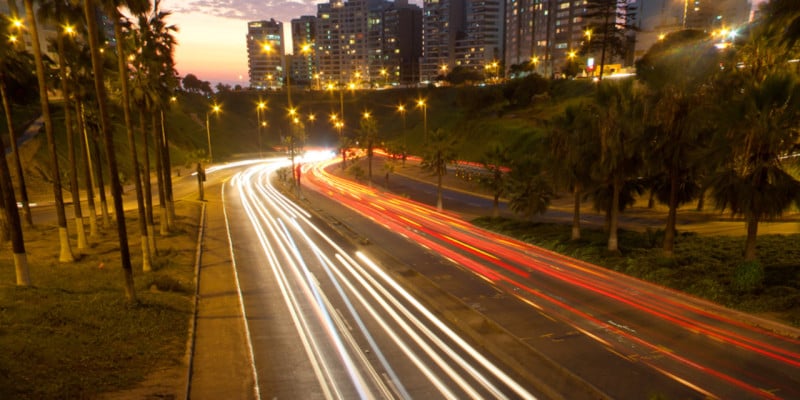
What does getting around Peru look like once the initial excitement of arrival fades and the daily commute begins? The answer depends almost entirely on where you settle. Lima and Callao are the only cities in the country with a dedicated metropolitan transport authority, the Autoridad de Transporte Urbano para Lima y Callao (ATU), backed by two metro lines, a bus rapid transit network, and a rapidly expanding fleet of formal buses. Outside the capital, cities depend on intercity coaches, taxis, and informal services that vary considerably in reliability and safety. For expats in Lima's central and coastal districts, a car is rarely necessary; for anyone living elsewhere in Peru, planning daily mobility carefully from the start makes a real practical difference.
The divide between Lima and everywhere else is the single most important thing to understand about getting around Peru. Lima and the neighboring port city of Callao are the only cities with a dedicated metropolitan transport authority: the Autoridad de Transporte Urbano para Lima y Callao (ATU), which oversees an integrated network of metro lines, a bus rapid transit system, authorized corridors, and feeder buses. Outside the capital, cities rely on a mix of intercity buses, taxis, and informal services whose reliability and safety vary considerably from place to place.
The Ministerio de Transportes y Comunicaciones (MTC) has launched a national reform to modernize urban transport across all Peruvian cities by integrating routes, ordering services, and improving road safety. In Lima and Callao specifically, that effort has already added more than 700 new buses to the fleet as feeder units connecting neighborhoods to the Metro and Metropolitano trunk lines. A reserved bus lane, the Carril Bus Rosado, now runs between Lima and Callao, permitting only authorized buses, cústers (minibuses), combis, and taxis; colectivos (informal shared vehicles) are excluded. The Peruvian government has also issued emergency legislation specifically to guarantee the continuity of formal public land passenger transport in Lima and Callao, which signals how actively the authorities are working to keep the network running. Outside Lima, the reform is a work in progress rather than a finished system.
Línea 1del Metro de Lima y Callao is the backbone of the city's rail network: a 34.6 km elevated line with 26 stations running from Villa El Salvador in the south to Bayóvar in the northeast, carrying more than 600,000 passengers daily. It operates Monday to Saturday from 5:00 a.m. to 10:00 p.m. and Sundays from 5:30 a.m. to 10:00 p.m. On weekdays during peak hours, trains run every 3 minutes; off-peak intervals stretch to around 6 minutes, and on Sundays and public holidays early in the day they can reach 15 minutes. Payment requires the Tarjeta adulto, a stored-value card that costs PEN 5.00 (USD 1.47) to acquire at station ticket windows; the fare per trip is PEN 1.50 (USD 0.44).
Línea 2 is an underground service whose first operating section connects Evitamiento/Óvalo Santa Anita, Colectora Industrial, Hermilio Valdizán, and Mercado Santa Anita. It runs every day of the year from 6:00 a.m. to 11:00 p.m. Línea 2 uses a different payment card: the Tarjeta Interoperable de Transporte (TIT), which is now mandatory on this line and is sold at station ticket offices and automatic vending machines at the five operating stations. Cash is not accepted on Línea 2. The current section represents only the initial phase of a longer cross-city route that remains under construction.
Good to know:
Students enrolled in Peruvian higher education institutions can access a statutory half-fare (medio pasaje) on eligible services, capping the student fare at no more than 50% of the regular fare. Eligibility requires a valid SUNEDU university card (carné universitario), obtained through SUNEDU's issuance process.
Join the Peru community
Get regular tips and advice to make the most of your expat life
Buses in Peru
The centerpiece of Lima's bus network is the Metropolitano, a bus rapid transit (BRT) system managed by ATU whose trunk line connects major districts along a dedicated corridor. Complementary to it is the Red Corridor (Corredor Rojo), a network of card-based formal bus routes distinct from older informal minibus services. To encourage connected journeys, ATU offers a promotional integrated fare of PEN 2.43 (USD 0.72) that covers travel on two Red Corridor services using a single payment at authorized transfer stops. The Metropolitano card and Lima Pass are the standard payment instruments for these services. Both cards cost PEN 4.50 (USD 1.34) to acquire, and the same fee applies for replacement if lost or damaged. They can be topped up virtually using the Yape or Plin digital wallets, but after a virtual top-up, the balance must be activated by tapping the card at one of the 65 validation totems located across the 43 Metropolitano trunk stations before it becomes usable for boarding.
ATU is currently piloting the TIT on regular public bus routes with the goal of eventually extending a single card across all conventional buses and the Metro and Metropolitano systems. New buses entering the Lima fleet include digital wallet collection systems, and cash payments on formal buses are being progressively phased out under the Reglamento del Sistema de Recaudo Único (unified electronic fare-collection regulation). In practice, riders may still need more than one card depending on which lines they use, since the full single-card rollout is not yet complete.
For intercity bus travel, three major operators serve Peru's main cities. Oltursa connects Arequipa, Cusco, Chiclayo, Trujillo, Piura, Tacna, and other destinations on air-conditioned coaches with onboard bathrooms, entertainment, and GPS tracking. Cruz del Sur is a long-established operator with online ticket sales, and Transportes Linea specializes in Lima and northern Peru with more than 60 points of sale. All three allow online booking. The Lima-to-Cusco route illustrates the scale of intercity travel in Peru: the journey takes approximately 21 to 24 hours overnight, with afternoon departures from Lima arriving in Cusco the following morning, and fares starting at around PEN 140 (USD 41) for a reclining-seat service.
Before booking intercity travel, the Viaje Seguro app, developed by the road transport regulator Sutran for the MTC, shows georeferenced authorized terminals and route stations nationwide. Peru has 724 authorized terminals and route stations across the country, with Lima (107), Piura (86), Áncash (79), Arequipa (48), and Huánuco (45) among the most served. Using authorized operators and terminals reduces safety risk on longer routes.
Trains in Peru
Trains in Peru operate on specific concessioned corridors rather than as an everyday commuter system. The most practical route for expats to know is the Cusco-to-Aguas Calientes corridor serving Machu Picchu, operated by PeruRail and Inca Rail. The Ferrocarril Central Andino runs on the central highland railway. Urban rail in Lima and Callao is handled separately by the Metro.
PeruRail tickets must be booked in advance through the PeruRail tickets page or the PeruRail eTicket app (available on Android and iOS), which displays the virtual ticket and payment receipt without requiring a printed document. Booking ahead is strongly advised, as capacity on the most popular services sells out quickly.
River transport in Peru
In Peru's Amazon region, where roads do not exist between many communities, river transport is the practical equivalent of a bus service. Consorcio Fluvial del Amazonas (CONFLUAM), operating under the FERRY Amazonas brand, runs regular passenger services connecting Iquitos with Indiana, Pebas, San Pablo, and Caballococha along the Bajo Amazonas. The standard fare is PEN 250 (USD 70). Tickets and schedules are available through CONFLUAM. For anyone settling in the Loreto region, river transport is a core part of daily mobility.
Tickets and passes in Peru
Lima and Callao currently use three overlapping payment cards, and understanding which card applies to which service saves considerable frustration at turnstiles. The Tarjeta adulto is required on Metro Línea 1 and costs PEN 5.00 (USD 1.47) to acquire. The Metropolitano card and Lima Pass cover the Metropolitano BRT and complementary corridors, and cost PEN 4.50 (USD 1.34) each. Thes can be topped up through the Yape or Plin mobile wallets, though the balance must then be activated at a validation totem before use. The TIT is mandatory on Metro Línea 2 and is being piloted on regular bus routes as part of the network-wide move toward a single interoperable card. A full unified card system across all modes is the government's stated goal, but it is not yet in place.
Students enrolled in Peruvian higher education can obtain a preferential Metropolitano or Lima Passcard granting the statutory half-fare on the Metropolitano, complementary corridors, and the Red Corridor's promotional, integrated, and general fare structures. The card costs PEN 4.50 (USD 1.34) and is obtained through the ATU medio pasaje process. As new buses enter the Lima fleet with digital-wallet payment systems, cash is being progressively removed from the formal network, so arriving with one of the stored-value cards is increasingly necessary for day-to-day travel.
Taxis in Peru
Street taxis in Lima are not metered. The fare is agreed upon by the driver and passenger before the trip begins, so always confirm the price before getting in. For app-based services, the fare is shown before confirming, which is why many residents prefer them over hailing a vehicle from the street.
An authorized taxi in Lima and Callao can be identified by a taxi roof sign (for independent taxis), retroreflective sheets on both rear sides, a yellow-band license plate, at least four doors, and a maximum of eight seats. Passengers can verify a vehicle's authorization by entering the plate number in ATU's Consulta de Vehículos Autorizados tool, and a driver's authorization by entering their DNI (national ID number) in ATU's Consulta de Credencial system, both accessible through the ATU portal. Taking a moment to verify before boarding is a practical precaution.
Payment via Yape QR or mobile number transfer is widely accepted by Lima taxi and ride-hailing drivers as an alternative to cash. Passengers with the Yape app can make a payment by scanning the driver's QR code or entering the driver's mobile number directly. App-based platforms support in-app card or digital-wallet payment, depending on the driver and platform settings.
Ride-hailing and apps in Peru
Four ride-hailing platforms operate in Lima and are the most practical options for newcomers: Uber, Cabify, DiDi, and inDrive. All four show the fare before the trip is confirmed, which removes the need to negotiate in Spanish at the roadside. Uber, Cabify, and DiDi apply dynamic pricing: fares rise during peak demand, heavy traffic, rain, airport congestion, and major events. inDrive works on a different model: the passenger proposes a price and nearby drivers accept or make a counteroffer, which can make fares more predictable when demand is high. Checking prices across multiple apps before confirming is a practical habit in Lima during rush hour.
In-app card payment is available on all four platforms. Cash is accepted on some rides, particularly on inDrive and for some drivers on other platforms, but payment options vary by driver. All four platforms operate airport pickups from a designated zone inside Jorge Chávez International Airport rather than at curbside taxi counters. Off-peak fares to Miraflores via ride-hailing typically run PEN 40 to PEN 70 (USD 11 to USD 19), though surge pricing during busy periods can raise the cost significantly.
Driving in Peru
A private car is not essential for day-to-day life in Lima's central and coastal districts, including Miraflores, San Isidro, Barranco, and Surco, where the Metro, Metropolitano, complementary corridors, and app-based ride-hailing cover most journeys. A car becomes more practical for families living in outer districts, expats with regional work responsibilities, or anyone settling in a city outside Lima where public transport coverage is thinner. Urban driving in Lima involves regular traffic-control operations, temporary circulation restrictions in the historic center, roadworks, and event-related diversions. Always check current conditions before driving through central districts, as access rules in the Centro Histórico are subject to change.
Fuel in Peru is sold by the US gallon (galón). In Lima, Gasohol Regular runs approximately PEN 15.12 per galón (USD 4.45), and Gasohol Premium approximately PEN 16.18 per galón (USD 4.76). Prices vary by station and change regularly. The free Facilito app from Osinergmin (the national energy regulator) shows current fuel, LPG, and electricity prices at formal service stations nationwide, making it straightforward to compare prices before refueling. Parking availability varies by district and can change during municipal events and traffic-management periods; in central Lima, building parking is more reliable than street parking.
Cycling infrastructure in Lima and Callao is developing but not yet continuous across the city. The most practical feature for commuters is the bicycle parking (cicloparqueaderos) available at three Metropolitano stations: Matellini, Plaza de Flores, and Naranjal, with a combined capacity for more than 170 bicycles. These enable intermodal trips in which riders cycle to a Metropolitano station and continue by transit, which is useful in districts where cycling lanes do not extend all the way to the destination.
Peruvian law requires cyclists on public roads to wear a fastened helmet at all times. Retroreflective clothing is also required when riding at night. Cyclists must use the ciclovía (dedicated cycle lane) where one exists; where no cycle lane is present, they may ride on the right side of the road in line with the bicycle transport regulation. Road-sharing awareness between drivers and cyclists is an active safety training topic in Lima, meaning both groups are still adjusting to shared-road norms.
Walking in Peru
Walkability in Peru varies sharply by city and by district. In Lima, Miraflores and Barranco offer the most consistent pedestrian experience: dense services, a maintained coastal walkway (the malecón), restaurants, parks, and access to formal transit. Use caution at large avenue crossings, where traffic volumes are high. Cusco's historic center, centered on Plaza de Armas and the San Blas neighborhood, is compact and walkable with major sites within reach on foot, but the altitude of 3,400 m, uneven cobblestone paving, and crowding during peak tourism seasons all warrant some adjustment time. Arequipa's historic center concentrates colonial streets, civic spaces, and services centrally but requires awareness of the strong midday sun and busy road crossings. Trujillo's colonial center similarly keeps plazas, services, and cultural sites close together, though conditions outside the center become more dependent on local lighting and neighborhood context.
Pedestrian infrastructure quality is uneven across Peru. Improvements are most consistent around formal transit corridors in Lima and Callao. On ordinary streets, sidewalk conditions, curb ramps, and crossing quality vary by district and should be assessed on arrival, especially for residents with reduced mobility.
Walking conditions are also seasonally variable. In coastal Lima, winter months bring the garúa, a persistent sea mist that keeps skies grey and surfaces damp. In Andean cities, the rainy season, which runs roughly from November to March, makes streets slippery and can cause localized flooding. CENEPRED, Peru's national disaster risk authority, monitors rainfall hazard nationally and publishes current risk scenarios that are worth checking before traveling to highland areas during the wet season.
Foreign government travel advisories flag crime and civil unrest as relevant safety factors in Peru, with specific higher-risk zones outside established urban and tourist districts. For day-to-day walking in Lima and other major cities, choosing routes through well-known commercial areas, avoiding displaying phones or valuables in public, and checking for demonstrations or roadblocks before heading out are practical precautions recommended by multiple governments.
Mototaxis and local transport in Peru
Outside Lima, in smaller cities, market towns, and peripheral urban areas, the most common short-distance vehicle is the mototaxi: a three-wheeled motorcycle taxi officially recognized under Peruvian transport law. Mototaxis are not found in central Lima districts but are a normal part of daily mobility across much of the rest of the country. Drivers are required to hold valid medical and psychological certifications, and the MTC has held formal consultations with the national mototaxi operators' association on sector regulation. Fares are not nationally regulated and are negotiated before boarding. The same rule applies to taxis and locally arranged transport more broadly across Peru: always agree on the price before getting in. At airports and interurban bus terminals, local rules may fix certain fares; elsewhere, negotiation is standard.
Jorge Chávez International Airport (LIM), located in Callao, is Peru's main international and domestic hub and the entry point for most expats arriving in the country. It handles more than 6 million passengers per quarter, split between international and domestic travelers, and connects Lima to Cusco, Arequipa, Trujillo, and other regional cities. Passengers connecting between domestic flights at Jorge Chávez no longer pay the TUUA (terminal use fee) for the domestic connection leg, benefiting nearly 1 million passengers per year.
The most affordable option for reaching Miraflores from the airport is the Airport Express Lima, the official airport bus service. It runs directly to four stops in Miraflores: Larcomar/Marriott, the Av. Larco tourist information center, Parque Kennedy, and Hotel Boulevard. The regular fare is PEN 20 per person (USD 5.90); a group discount of PEN 15 per person (USD 4.40) applies when two or more passengers travel together. Advance reservations are available online for both directions. A second public bus option, AeroDirecto, also provides a more economical connection to the new terminal as part of Lima and Callao's authorized urban transport network.
Authorized taxi counters are located in both the domestic and international arrivals areas. Airport staff direct passengers to an exclusive parking zone inside the terminal, and the counters issue a QR code that matches each passenger to a specific vehicle. Official counter fares for common city transfers run approximately PEN 70 to PEN 100 (USD 21 to USD 30), quoted at the counter rather than metered. Ride-hailing apps (Uber, Cabify, DiDi, and inDrive) pick up from a designated zone inside the terminal, not at the taxi counters. Off-peak app fares to Miraflores typically fall in the PEN 40 to PEN 70 range (USD 11 to USD 19), though surge pricing during busy periods can close the gap with official taxis considerably. For pre-booked premium transfers, the airport offers Taxi Remisse VIP in executive vehicles with dedicated booking.
Have questions about getting around Peru? Join the Expat.com community to connect with expats who live there and can share practical advice from their day-to-day experience.
It depends on where you are. In Lima and Callao, use the formal network: Metro Línea 1 for the north-south corridor, the Metropolitano and complementary corridors for cross-city trips, and Uber, Cabify, DiDi, or inDrive for door-to-door trips. Avoid unlicensed street taxis; verify authorization via ATU's online tools or use an app where the fare is shown upfront. For intercity travel, book in advance with authorized operators such as Oltursa, Cruz del Sur, or Transportes Linea. In smaller cities and towns, mototaxis (three-wheeled motorcycle taxis) cover short distances.
In Lima and Callao, the formal network, including the Metro, Metropolitano, and authorized corridors, is the most reliable option; the government issued an emergency decree to guarantee the operational continuity of these services. Informal buses and street transport are less predictable. Outside Lima, reliability varies widely by city and operator; using authorized intercity companies listed on the Viaje Seguro app reduces risk on longer routes.
Metro Línea 1 costs PEN 1.50 per trip (approximately USD 0.44). Red Corridor bus journeys on an integrated fare cost PEN 2.43 (approximately USD 0.72). The Metropolitano and Lima Pass cards cost PEN 4.50 (approximately USD 1.34) to acquire. Intercity buses start at around PEN 140 (approximately USD 41) for an overnight seat on a Lima-Cusco bus. The Amazon river ferry between Iquitos and Caballococha costs PEN 250 (approximately USD 70) for the standard fare.
In Lima, ride-hailing apps such as Uber, Cabify, DiDi, and inDrive are widely available and the safest option: fares are shown before confirmation, and payment can be made in-app. Street taxis exist but are not metered, and not all are authorized; always verify authorization through ATU's online tools or use an app. Yape QR payment is widely accepted by Lima drivers as an alternative to cash.
From Jorge Chávez International Airport, the Airport Express Lima bus runs directly to four stops in Miraflores for PEN 20 per person (PEN 15 per person when two or more travel together, approximately USD 6 and USD 4 respectively). Authorized taxi counters in arrivals charge around PEN 70 to PEN 100 (approximately USD 21 to USD 30) to central destinations. Ride-hailing apps pick up from a designated zone inside the terminal and typically cost PEN 40 to PEN 70 (approximately USD 11 to USD 20) off-peak to Miraflores, though surge pricing can raise the cost during busy periods.
Not in Lima's central and coastal districts such as Miraflores, Barranco, San Isidro, and Surco, where the Metro, Metropolitano, corridors, and app-based taxis cover most journeys. A car is more practical for families in outer districts, expats with regional work responsibilities, or anyone settling outside Lima, where public transport coverage is thinner. Urban driving in Lima involves heavy traffic, periodic restrictions, and parking challenges; many expats in central districts find ride-hailing more practical than owning a vehicle.
On Metro Línea 2, the Tarjeta Interoperable de Transporte (TIT) is mandatory; cash is not accepted. On the Metropolitano and corridors, stored-value cards are required; these can be topped up via Yape or Plin mobile wallets without queuing at a station, though the balance must be activated at a validation totem before travel. New buses entering the Lima and Callao fleets include digital wallet collection systems. Cash is still accepted on many older bus routes, but the network is moving progressively toward card-only payment.
For ride-hailing: Uber, Cabify, DiDi, and inDrive all operate in Lima. For card top-ups: Yape and Plin work for Metropolitano and Lima Pass virtual recharges. For fuel prices: the Facilito app from the energy regulator Osinergmin shows current prices at service stations nationwide. For intercity safety: Viaje Seguro, developed by Sutran for the Ministry of Transport, lists authorized terminals and route stations across Peru. For train bookings: the PeruRail eTicket app, available on Android and iOS, manages tickets for PeruRail services, including the Machu Picchu route.
ℹ️
We do our best to provide accurate and up to date information. However, if you have noticed any inaccuracies in this article, please let us know in the comments section below.
A journalist, holder of the DALF C1 and C2 and a diploma from the University of Mauritius, I have nearly twenty years of writing experience. After six years in the Mauritian press, I joined Expat.com, where I have been working for over a decade, including five years as editorial assistant, and now as editorial manager.