

Living in Ecuador: the ultimate expat guide
Everything you need to know for a successful life in Ecuador.
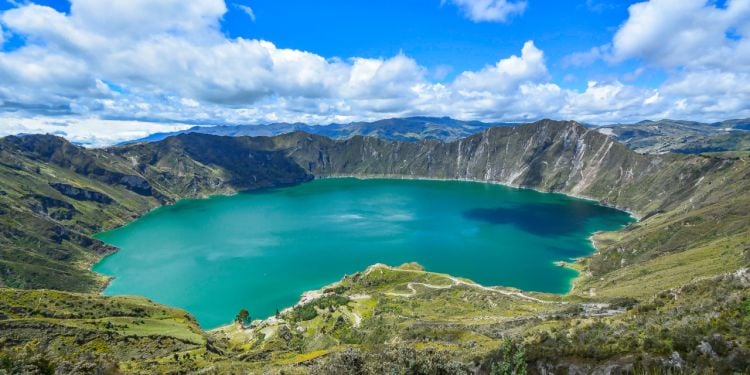
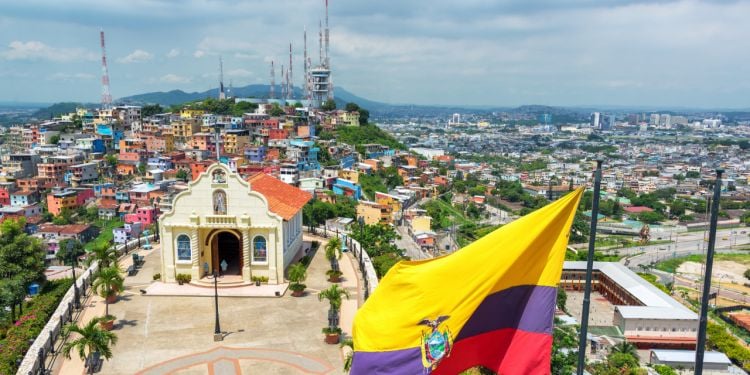
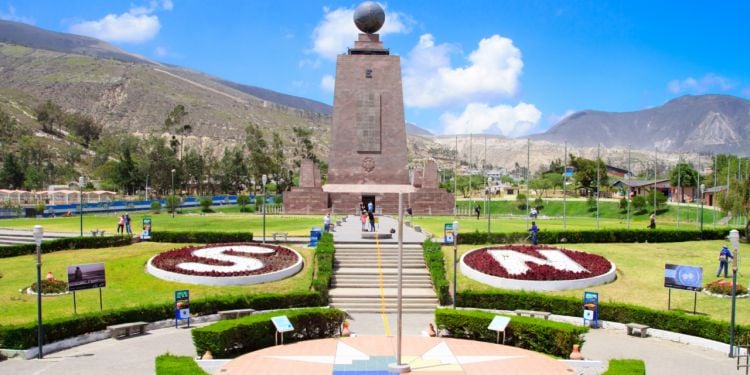
Spanning from the Pacific to the Amazon, Ecuador features an incredible variety of climates, landscapes, and cultures across its small territory. With Andean volcanoes, tropical beaches, and Amazonian forests, this country traversed by the equatorial line attracts expats in search of diversity and quality of life. Its exceptional biodiversity, preserved heritage, and the warm welcome from its people make it a pleasurable destination where integration comes easily.
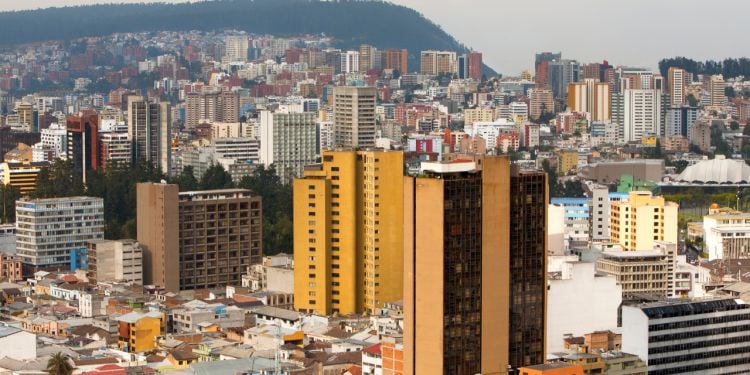
Ecuador is home to approximately 18.2 million inhabitants, including around 2,500 French expats. These expatriates primarily reside in Quito, Cuenca, and Guayaquil. The country draws numerous expats from across the globe with its affordable cost of living, pleasant climate, and relatively political stability, providing a serene lifestyle under the tropics.
5 great reasons to choose Ecuador
- Attractive cost of living: daily expenses, housing, and services are generally cheaper than in Europe or North America.
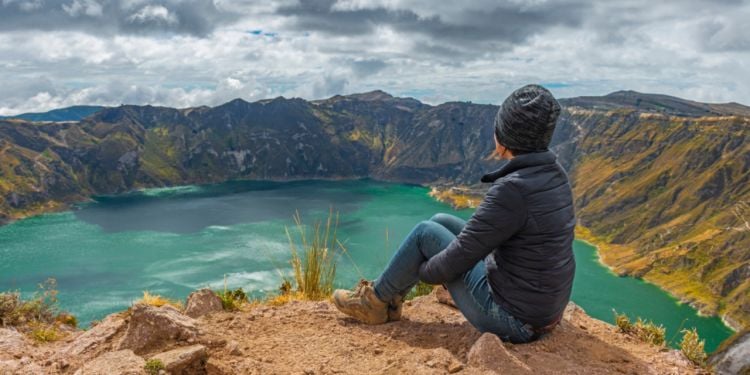
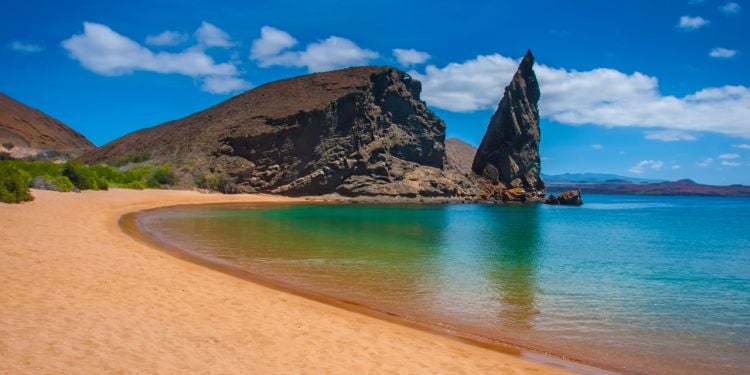
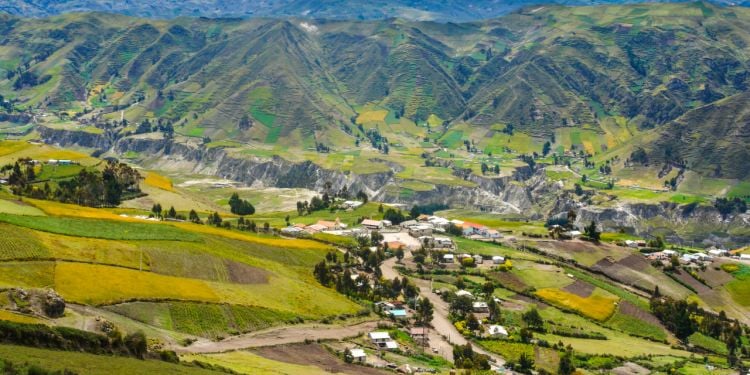
- Unique geographical diversity: from the Pacific Ocean to Andean peaks, Amazon rainforest, and the Galápagos Islands, the country offers stunning and varied landscapes.
- Mild climate year-round: especially in Quito and Cuenca, where temperatures remain stable without a harsh winter.
- Modern healthcare system: major cities have well-equipped hospitals and access to reasonably priced healthcare services.
- Balanced lifestyle: with nature, stable climate, and an affordable cost of living, Ecuador offers an environment that fosters a good balance between work and personal life.
The Expat.com guide has been designed to assist you in preparing your move to Ecuador under the best conditions. Here you will find all the essential information: visas, employment, housing, healthcare, daily life, and local integration.
Official language: Spanish | Local currency: US Dollar (USD) | Time difference with France: -6 hours in winter, -7 hours in summer | Flight duration Paris - Quito: approximately 12 hours |
Formalities and visas in Ecuador
Moving to Ecuador involves a few administrative steps, which vary based on the length and purpose of your stay. The entry requirements are generally straightforward, and the procedures are well defined.
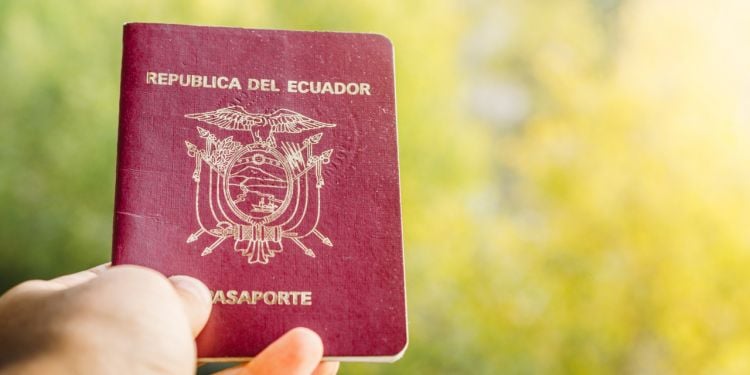
For a short stay (less than 90 days), French and European nationals are visa-exempt. You simply need to present a valid passport that is valid for at least six months beyond your date of entry and a return ticket. Since May 2018, having medical insurance covering the entire duration of your stay is mandatory, even if it is not always checked upon arrival.
If you plan to settle long-term, a residence visa is required. Several categories exist depending on your profile: work visa, retirement visa (Rentista), investor visa, or digital nomad visa. The application should be made to the Ministry of Foreign Affairs and Human Mobility, preferably before you depart.
Since May 2022, France and Ecuador have signed an agreement for a Working Holiday Permit (WHP). This free visa allows young people aged 18 to 30 to stay in the country for up to 12 months to travel and work. The annual quota is set at 300 spots.
🔑 Useful tips
- Start your application process several months ahead of your departure, especially for residence visas.
- Make sure your passport is stamped upon entry, particularly when crossing by land.
- Prepare your essential documents (diplomas, civil status certificates, criminal record checks) along with certified translations if necessary.
- For the WHP, submit your application at the beginning of the year, as quotas are updated each January 1st.
🗺️ Go further
General visa requirements in Ecuador
Ecuador's visa policy, one of the world's most lenient, makes it easy for tourists from almost all ...
Permanent Residency in Ecuador
Ecuador is calling and you are ready to go and experience all that this gorgeous country has to ...
The Working Holiday Visa for Ecuador
Ecuador is truly a paradise for adventure and nature lovers, and thanks to the Working Holiday Visa ...
Working in Ecuador
The Ecuadorian economy offers a variety of opportunities, but the job market remains competitive for expatriates. Positions are primarily reserved for Ecuadorians, and foreigners are required to have a work visa. Key sectors include oil and gas, agriculture and fishing (bananas, cocoa, shrimp), as well as technology, which is rapidly growing in Quito and Guayaquil. Tourism, construction, and education also provide job opportunities. Proficiency in Spanish is essential in most sectors, although knowledge of English is valued in international companies.
Starting a business in Ecuador is accessible for foreigners, with increasing support from authorities to promote entrepreneurship. Major cities have coworking spaces and incubators to assist entrepreneurs. However, administrative processes can be lengthy, and obtaining financing can be limited.
In-demand profiles:
- Specialists in the oil, gas, and petrochemical sectors
- Agriculture and agribusiness professionals
- Web developers, IT engineers, and cybersecurity experts
- Tourism and hospitality professionals
- Qualified teachers and researchers
💡 Key points
- The job market favors locals, but specialized profiles are still sought after.
- The affordable cost of living allows for a good standard of living, even with a local salary.
- Entrepreneurship is encouraged, despite some bureaucratic hurdles.
- Networking in person remains the best way to secure a job.
Unemployment rate: 4.5% (2025) | Legal working hours: 40 hours per week | Minimum wage: 460 USD/month (approx. 425 €) | Income tax: progressive from 5% to 37%, exemption up to 11,902 USD/year (approx. 11,050 €) | Corporate tax: 25% (general rate), VAT at 15% |
📍 Further resources
Studying in Ecuador
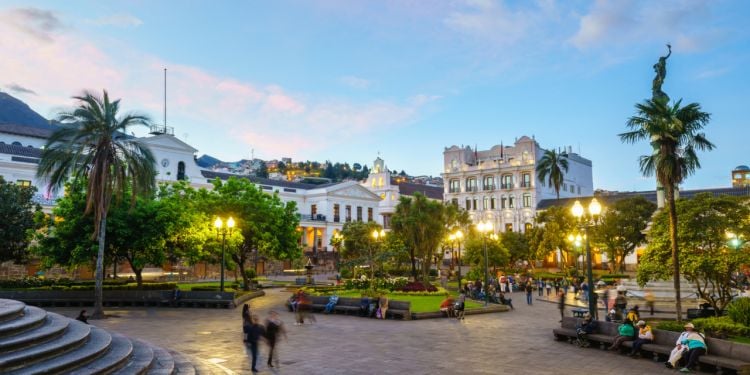
Ecuador is increasingly attracting international students with its accessible and diverse higher education options. The country is home to 59 universities, comprising 33 public and 26 private institutions spread throughout its territory. Among the most renowned are the San Francisco University in Quito, the Catholic University of Ecuador, and the Andean University Simón Bolívar, all recognized for their high-quality programs and international partnerships.
Why study in Ecuador?
Universities in Ecuador offer a wide range of programs, primarily in Spanish, across various fields such as science, health, engineering, business, and social sciences. The country also captivates with its rich cultural and geographical diversity, providing a unique experience among the Andes, the Amazon rainforest, and the Pacific coast. Tuition costs are affordable: public universities are free or very low-cost, while private institutions charge between 2,000 and 6,000 USD per year (approximately 1,900 to 5,700 €) depending on the course and level of study.
💡 Our tips
- Plan for your student visa application if your program lasts longer than 90 days.
- Consider a housing budget, as university residences are quite limited.
- Check the recognition of your diplomas with the SENESCYT before enrolling.
- Improve your Spanish proficiency, as most courses are taught in this language.
Study in Ecuador
Need to learn Spanish? Want to attend a high school, a university, or trade school in the Andes? Come to Ecuador and attend one of the many Spanish ...
Retiring in Ecuador
Ecuador consistently ranks among the top destinations for foreign retirees. The country attracts many with its affordable cost of living, stable climate year-round, and geographic diversity that spans from the Andes mountains to the Pacific coast. Cities such as Cuenca, known for its rich historical heritage, and Vilcabamba, famously dubbed the valley of longevity, are especially appreciated for their peaceful surroundings and active international community.
Retiring in Ecuador requires obtaining a Rentista visa, available to those receiving a monthly pension of at least 1,380 USD (approximately 1,300 €).
3 major advantages
- Attractive cost of living: overall expenses are about 37% lower than in France.
- Benefits for seniors: those aged 65 and over receive a 50% discount on cultural and sporting events, international flights, and some utility bills (water, electricity).
- Accessible healthcare system: private medical coverage costs between 60 and 180 USD per month (approximately 55 to 170 €), providing good quality care in larger cities.
💡 Things to know
- The legal retirement age is set at 65 years in the Ecuadorian system.
- The official currency is the US dollar (USD). Prices are therefore stable, but expatriates receiving their income in euros need to be aware of currency fluctuations.
- French pensions are not taxed locally, but remain subject to French taxation.
- For a comfortable living standard, expect to budget between 1,500 and 2,000 USD per month (approximately 1,400 to 1,900 €), depending on the region and lifestyle.
Finance and banks in Ecuador
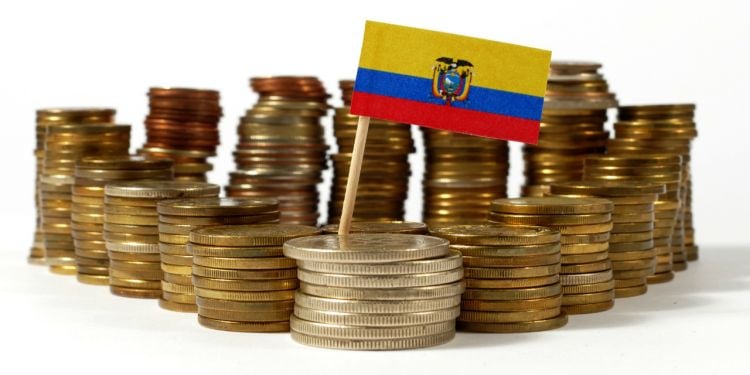
Effectively managing your budget is essential for a successful expatriation. Ecuador uses the United States dollar (USD) as its official currency, ensuring monetary stability and making local transactions easier. While the cost of living is attractive, good financial planning is necessary to adapt to the local banking and tax system.
💡 Our tips
- Open a local bank account as soon as you arrive to simplify your transactions. Major banks include Banco Pichincha, Banco del Pacífico, and Banco Guayaquil.
- Register with the Servicio de Rentas Internas (SRI) for your tax obligations, bringing your visa or passport along with proof of residence.
- The income tax is progressive, ranging from 5% to 37%, with an exemption for income up to 11,902 USD per year (approximately 11,200 €). Tax returns must be filed between February and March.
- The Franco-Ecuadorian tax treaty helps to avoid double taxation on income.
- Generally, opening a current account requires either a permanent residency status or a property investment in the country.
📍 To learn more
Health care in Ecuador
The Ecuadorian healthcare system is built on two pillars: the public and the private sectors, accessible to all residents, including expatriates.
- The public sector: managed by the Ministry of Public Health (MSP) and the Ecuadorian Social Security Institute (IESS), offers universal coverage at a low cost. Enrollment in IESS is mandatory for employees and optional for the self-employed and retirees. The contribution is around 17% of the gross salary, shared between the employer and employee. This provides access to public hospitals and clinics across the national network. Medical care is very affordable: a consultation with a general practitioner costs between 5 and 10 USD (~5 to 9 €), a consultation with a specialist ranges from 10 to 25 USD (~9 to 24 €), and a complication-free delivery costs about 500-800 USD (~475 to 760 €). However, waiting times can be long, and facilities may be limited outside major cities.
- The private sector: it attracts the majority of expatriates due to the quality of infrastructure and speed of service. Many doctors have training from Europe or the United States, and most speak English. Fees vary by clinic: a generalist consultation costs between 25 and 35 USD (~24 to 33 €), a specialist consultation can range from 30 to 80 USD (~28 to 75 €), and a cesarean delivery can go up to 3,000 USD (~2,850 €). It is highly recommended to get private health insurance to cover these expenses; local plans typically range from 60 to 180 USD per month (~55 to 170 €) depending on the chosen profile and coverage.
💡 Good to know
- No vaccinations are required for travelers coming from Europe, but yellow fever vaccination will be mandatory as of May 2025 for travelers from Brazil, Colombia, Peru, or Bolivia, and is strongly recommended for stays in the Amazon region.
- Vaccinations for hepatitis A, typhoid, and rabies are advised depending on the duration and region of your stay.
- Malaria is present below 1,500 meters altitude, especially in the Amazon, but Quito, Guayaquil, and the Galapagos Islands are not affected.
📍 Additional resources

Healthcare in Ecuador
Ecuador, as a fast-developing nation, has laws that are constantly evolving, but one thing is certain: the ongoing changes are almost always for the ...
Education and schools in Ecuador
In Ecuador, education is mandatory from ages 5 to 14, consisting of a ten-year fundamental education divided into three cycles (elementary, middle, and high school), followed by the bachelor's degree (equivalent to high school) which spans three years. Public schools are free, and wearing a uniform is compulsory in all institutions across the country. Many expat families often opt for private or international schools that offer bilingual education and internationally recognized programs.
Types of educational institutions:
- Local Public Schools: Free for residents, these schools primarily teach in Spanish. The quality can vary significantly between major cities (Quito, Guayaquil, Cuenca) and rural areas. These schools are less frequented by expatriates but remain an option for families seeking complete immersion in Ecuadorian culture.
- Local Private Schools: They provide education in Spanish or bilingual (Spanish-English), featuring modern facilities and superior support. Monthly fees range from 300 to 1,500 USD (approximately 280 to 1,400 €), depending on the school's reputation and the services provided.
- French Schools: Ecuador is home to three schools accredited by AEFE. In Quito, the Lycée franco-équatorien La Condamine offers a complete curriculum from preschool through high school. In Cuenca, there are two partner institutions: the French School of Cuenca, which offers primary education in a French-speaking and multicultural environment, and the Lycée français Louis Godin, providing bilingual secondary education. French families may qualify for scholarships based on their income.
- International Schools: Highly sought after by expats, these schools follow British, American, or International Baccalaureate (IB) curricula. Some of the most well-regarded include the Academia Cotopaxi American International School in Quito, the American School of Guayaquil, and Colegio Alemán Humboldt in Guayaquil. Annual fees range from 3,600 to 18,000 USD (approximately 3,400 to 17,000 €) depending on the grade level and facilities.
💡 Practical tips
- Plan for registration, especially in French and international schools, as spots can be limited.
- Check the language requirements, as some schools expect a minimum level of Spanish or English.
- Be prepared for additional costs such as uniforms, school supplies, and transport, which are often not included in the registration fees.
Accommodation in Ecuador
Renting remains the preferred option for newcomers wanting to explore different neighborhoods. Just for your information, a studio in Quito typically rents for between 300 and 450 USD per month (around 280 to 420 €), while a three-bedroom apartment can cost between 750 and 1,000 USD (approximately 700 to 940 €) depending on the area and level of comfort. Downtown, apartments are more common, while houses are mostly found in the suburban residential areas. Leases generally last for one year and require a security deposit equal to one to two months' rent. Rental agreements must be written in Spanish, and the usual notice period is one month.
Property purchases are open to foreigners without any restrictions. Prices can vary significantly by location, ranging from 60,000 to 200,000 dollars (around 55,000 to 185,000 €) for a family home. To find a property, keep an eye out for "Se vende" signs on the streets, check out local Facebook groups, or enlist the help of a real estate agency. When buying, a notarized translation may be required for official documents.
📍 Additional resources

Moving to Ecuador
An international move to Ecuador requires careful planning and organization. Several elements must be prepared in advance to make your settling-in process smoother and avoid customs complications:
- Compare quotes from international moving companies and purchase insurance for your belongings.
- Prepare a detailed, valued, dated, and signed inventory of your personal effects in two copies: this document is mandatory for customs clearance. Personal belongings imported as part of a relocation are exempt from customs duties, provided they are used and declared as such. However, any new item may be subject to taxation.
- Gather your essential documents (passport, visa, diplomas translated into Spanish, civil status documents, employment contract, residency change certificate, driver's license). Some documents will need to be legalized.
- Check the electrical compatibility of your devices. Ecuador uses 110-120V with a frequency of 60 Hz, compared to 220-230V and 50 Hz in France. A transformer will be necessary for French equipment.
- If you travel with a pet, ensure you’ve completed all required veterinary and administrative procedures before you depart.
📍 To explore further


Leisure in Ecuador
Ecuador offers a wide variety of leisure activities that expatriates find enticing on a daily basis. With mountains, the Amazon rainforest, and the Pacific coast, the country provides a pleasant balance between urban life and nature. In major cities like Quito and Guayaquil, residents enjoy international restaurants, cinemas, theatres, and modern shopping malls, along with a lively nightlife. Local markets, abundant in crafts and fresh produce, are an integral part of daily life. With an affordable cost of living, it’s easy to frequently indulge in cultural, sports, and gastronomic outings.
Must-see experiences:
- Hiking in the Andes and exploring accessible volcanoes like Cotopaxi or Chimborazo, which are popular weekend spots for locals.
- Water sports along the Pacific coast (surfing in Montañita, diving, sailing...), accessible year-round.
- Local festivals and celebrations, such as Inti Raymi or the Fiesta de la Mama Negra, reflect Ecuador's rich cultural heritage and friendly atmosphere.

Leisure activities in Ecuador
You have made it to Ecuador, now what is there to do in your free time? A lifetime in Ecuador isn't enough time to take it all in: the food, the ...
Everyday life in Ecuador
Living in Ecuador means embracing a relaxed lifestyle, shaped by the national motto "Ama la vida" ("love life"). Family is at the heart of Ecuadorian society, with shared meals and social moments highly valued. Lunch, typically enjoyed between 2 PM and 3:30 PM, is the main meal of the day, while dinner, generally lighter, is often served later in the evening.
Things to note:
- Safety requires a reasonable level of vigilance, particularly in Quito and Guayaquil. Authorities have increased police presence in busy areas and implemented new surveillance measures.
- Public transport is affordable, with a bus fare costing less than 1 USD in major cities. Official yellow taxis and apps such as Uber are widely used and considered reliable.
- Internet and mobile phone services are stable in the major cities (Quito, Guayaquil, Cuenca). A mobile plan with calls and data costs between 11 and 16 USD per month (approximately 10 to 15 EUR), and 4G coverage reaches about 95% of the country. For fixed internet access at home, expect to pay around 30 to 40 USD per month (approximately 28 to 38 EUR), depending on the provider and connection speed.
- WhatsApp is the most commonly used app for both personal and professional communication, helping users avoid call and SMS charges.
📍 Going further

Cost of living in Ecuador
Ecuador is one of the most affordable countries in South America, with a cost of living roughly 37% lower than that of France. A single person can live comfortably on 800 to 1,500 USD per month (approximately 740 to 1,390 €), while a family of four might require 2,300 to 4,600 USD (around 2,130 to 4,280 €), depending on lifestyle and the city chosen.
Here are some estimated monthly benchmarks to give you a clearer picture of the cost of living in Ecuador:
For a single person | For a family of 4 | |
Food | 150 to 250 USD (approximately 140 to 235 €) | 400 to 600 USD (approximately 375 to 560 €) |
Bottled Drinking Water | 10 to 20 USD/month (approximately 9 to 19 €) | 10 to 20 USD/month (approximately 9 to 19 €) |
Utilities (water, electricity, internet, phone...) | 50 to 80 USD (approximately 47 to 75 €) | 80 to 120 USD (approximately 75 to 115 €) |
Healthcare (excluding insurance) | 30 to 60 USD/month (approximately 28 to 56 €) | 70 to 120 USD/month (approximately 65 to 112 €) |
Leisure & Entertainment | 50 to 100 USD (approximately 47 to 94 €) | 150 to 250 USD (approximately 140 to 235 €) |
Education (if children) | / | 250 to 850 USD/month per child (approximately 235 to 800 €) |
Rent | 300 to 450 USD/month (approximately 280 to 420 €) for a studio in central Quito | 750 to 1,000 USD/month (approximately 700 to 940 €) for a three-bedroom apartment in central Quito |
Transport | 20 to 40 USD/month (approximately 19 to 37 €) | 60 to 100 USD/month (approximately 56 to 94 €) |
Subscriptions (gym, clubs, streaming platforms...) | 30 to 60 USD (approximately 28 to 56 €) | 50 to 100 USD (approximately 47 to 94 €) |
Imported Goods (organic products, cheeses, wines...) | 50 to 100 USD (approximately 47 to 94 €) | 120 to 200 USD (approximately 112 to 188 €) |
Domestic Help (common for families in Ecuador) | / | 120 to 250 USD/month (approximately 112 to 235 €) |
Income Tax | progressive rate of 0% to 37%. Exemption up to 11,902 USD/year (approximately 11,050 €) | progressive rate of 0% to 37%. Exemption up to 11,902 USD/year (approximately 11,050 €) |
Key takeaways
Prepare for your administrative tasks: suitable visa (work, Rentista, PVT), translation of your documents, opening a bank account, and private health insurance.
Take the time to consult our informative articles, particularly those on employment, housing, retirement, and health in Ecuador.
Feel free to ask your questions on the Ecuador forum, where the expatriate community shares advice and experiences.
To integrate yourself, learn Spanish, explore local customs, and enjoy a relaxed pace of life, amidst mountains, ocean, and tropical forests.
Moving to Ecuador means choosing a welcoming country with an affordable cost of living and stunning nature. Good preparation is key to ensuring your success. We hope this Expat.com guide has provided you with the essential information to organize your move and fully enjoy your new life in Ecuador.
We do our best to provide accurate and up to date information. However, if you have noticed any inaccuracies in this content, please contact us.


News & testimonies
Danica in Cuenca: "Ecuadorians are very family, community, and church oriented"
Danica comes from Canada. She has stayed in the USA and in Mexico for several years before traveling Europe. Retired, she now lives in Ecuador with her husband. In this Interview, she talks about her everyday life in Cuenca.

Mike in Cuenca: "The Ecuadorian lifestyle is quite easy-going"
Mike comes from British Columbia, Canada. He moved to Cuenca almost two years ago with his cat. Former Internet engineer, he now enjoys the easy-going local lifestyle along with his girlfriend's family and friends.

CC in Quito: "The people are extremely friendly"
US national, CC used to work in the media and casino gaming. In June 2013, he relocated in Quito as a real estate investor. He particularly enjoys the local weather, gardens and parks.

Louis: "I was attracted to Cuenca by nature"
Louis comes from the USA. He moved to Ecuador more than two years ago after spending some time in Costa Rica, Colombia and Peru. Retired, he is now enjoying a relaxed lifestyle in Cuenca.