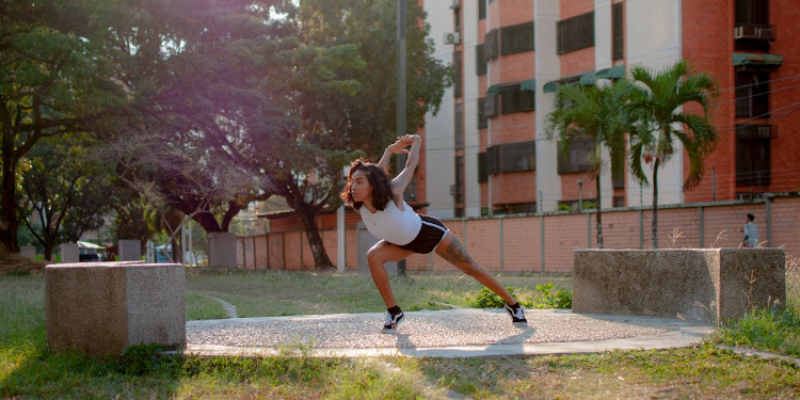
Football fills stadiums in Bogotá and Medellín every weekend, cycling is woven into the national identity, and a Sunday morning in any major Colombian city means streets closed to traffic and opened to runners, walkers, and riders. Colombia offers a wide range of ways to stay active and connect with local life, whether you are joining a neighborhood futsal game, signing up for a PADI course on the Caribbean coast, or tackling one of the Andes' legendary road climbs. This article covers the sports culture, facilities, costs, and practical steps you need to get moving in Colombia.
Football sits at the center of Colombian sports life, drawing passionate participation at every level from professional stadiums to concrete neighborhood courts. But the country's sporting identity extends well beyond the pitch. Cycling holds a place of great national pride, shaped by decades of Colombian climbers excelling in European Grand Tours and reinforced by a mountainous landscape that makes the country a natural training ground. Roller speed skating is another discipline in which Colombia consistently competes at the top of international world championships, reflecting a level of specialization that surprises many newcomers.
The traditional national sport, tejo, offers a different kind of experience. Played in teams, it involves launching metal discs at a clay-covered board fitted with small explosive targets. It is social, loud, and often enjoyed alongside beer, making it a genuine window into Colombian leisure culture rather than a spectator event. The Colombian government actively supports sports participation through the Ministry of Sports and municipal recreation institutes, which fund public facilities, youth programs, and community leagues across the country. Following local football or engaging with the cycling calendar are among the more effective ways for expats to connect with Colombian social life.
Professional football matches are the dominant spectator events in Colombia, with regional rivalries generating intense crowd energy. In Bogotá, the Nemesio Camacho El Campín Stadium serves as the home ground for both Independiente Santa Fe and Millonarios F.C. The stadium complex is currently undergoing a major renovation under a public-private partnership, with an investment of around COP 2.4 billion (USD 604 million), modernizing a venue that has been active for over 85 years while adding cultural and entertainment areas to the site.
In Medellín, the Atanasio Girardot stadium regularly hosts matches between Atlético Nacional and Independiente Medellín, a local derby that generates some of the most charged atmospheres in South American club football. Tickets for major derby matches sell out quickly, so buying through official club websites well in advance is the most reliable approach. Using public transport on match days is strongly recommended, as traffic around both stadiums becomes extremely congested.
Get regular tips and advice to make the most of your expat life
Gyms and fitness centers in Colombia
Two commercial gym chains dominate the Colombian fitness market: Bodytech and Smart Fit. Bodytech operates at a mid-range to premium level. Their off-peak "Hora Naranja" plan starts at around COP 205,000 (USD 55.76) monthly, while a three-month contract costs approximately COP 265,000 (USD 72.08) monthly. Smart Fit takes a budget-friendly approach: the base "Smart" plan runs COP 89,900 (USD 24.45) monthly, and the multi-club "Black" plan is COP 119,900 (USD 32.61) monthly. Short-term expats often prefer Smart Fit's Black plan or a month-to-month arrangement to avoid lock-in contracts, so read cancellation terms carefully before committing.
For a more affordable public option, Bogotá's District Institute of Recreation and Sports (IDRD) operates public gyms within its Centros de Felicidad (CEFE) network. Monthly rates at these facilities are COP 78,435 (USD 21.33) for men and COP 54,947 (USD 14.94) for women. Access and session reservations can be booked through the "Vive" mobile app or the IDRD Citizen Portal, making it straightforward to secure a spot without visiting in person.
Running and jogging in Colombia
One of the most practical and social ways to run in Colombia is through the Ciclovía initiative. Every Sunday and on public holidays, major city roads in Bogotá and Medellín are closed to motorized traffic from 5:00 AM to 1:00 PM, creating expansive, car-free corridors for joggers, walkers, and cyclists. The Ciclovía is a genuine institution in Colombian urban life, and joining it on a Sunday morning is one of the easiest ways to experience the city at street level while getting a workout in.
In Bogotá, Parque de la 93 and El Virrey Park are popular green spaces used regularly for running and physical activity. El Virrey Park, in particular, is well regarded within the local running community for its safe environment and tree-lined paths. Both locations are accessible throughout the week, not only on Ciclovía days.
Swimming in Colombia
Public swimming infrastructure in Colombia is well developed and accessible in both Bogotá and Medellín. In Bogotá, the Simón Bolívar Aquatic Complex, managed by the IDRD, includes a 25x50 meter Olympic pool, a 5-meter deep diving pool, and dedicated children's training pools. It is one of the most complete public aquatic facilities in the country.
In Medellín, the municipal recreation department INDER operates free public swimming pools at the Estadio and Belén complexes. Accessing these pools requires prior user registration and session booking through the "Simon 2.0" digital platform; free slots fill up quickly, so reserving well in advance is essential. For those who want paid access with more scheduling flexibility, the Liga de Natación de Antioquia offers entry to the Belén Olympic pool through an annual membership of approximately COP 85,000 (USD 23.12), followed by the purchase of session passes.
Good to know:
Swimming caps and fitted lycra swimwear are universally required at municipal pools across Colombia. Board shorts are not permitted at any public facility.
Team sports in Colombia
Microfútbol, the Colombian variant of indoor soccer or futsal, is practically universal across the country. Amateur leagues and informal pickup games take place daily on concrete courts in neighborhoods across all major cities. Joining a local game is generally welcomed, as long as players respect the informal etiquette of pickup play. It is also one of the most direct ways to build relationships with Colombian neighbors and colleagues outside of a formal social setting.
Beyond microfútbol, free public pickup games for basketball, volleyball, and soccer take place regularly at municipal sports complexes. In Medellín, the Atanasio Girardot sports campus serves as a central hub for this kind of community activity, with facilities open to residents throughout the week.
Racquet sports in Colombia
Padel has grown rapidly in popularity across Colombian cities. Premium indoor facilities such as La Pala Club de Pádel in Bogotá have opened to meet rising demand. Court reservations and partner matchmaking for padel are largely centralized through the Playtomic mobile app, which functions as the standard booking tool for racquet sports in the country. Downloading the app before arriving is a practical first step for anyone who wants to play regularly, as it also connects players looking for partners and allows participation in local tournaments.
Martial arts and combat sports in Colombia
Boxing has a strong cultural presence in Colombia, particularly in the northern Caribbean coastal regions. The sport receives sustained support at both the amateur and Olympic levels, and Colombia regularly produces competitive fighters who perform on the international stage. Expats relocating near coastal cities like Barranquilla will find a range of boxing clubs and skilled trainers available for all experience levels.
Golf in Colombia
Golf access in Colombia remains limited to a relatively small pool of players. Most quality 18-hole courses operate within private country clubs that require paid memberships. In Medellín, private clubs such as El Rodeo charge monthly membership dues of approximately COP 660,000 (USD 179.52) per person, in addition to substantial initiation fees.
Expats on shorter assignments have a couple of alternatives. Some private clubs offer temporary two-month memberships on request, which can be arranged directly with the club. Several five-star luxury hotels also maintain agreements with private golf clubs, allowing guests to book tee times without full membership. For expats on a short corporate posting, coordinating through a hotel concierge is often the most practical route to access a course without committing to a long-term membership.
Water sports in Colombia
The Caribbean coast is the center of water sports activity in Colombia. Scuba diving is well established around Taganga, near Tayrona National Park, and around the Rosario Islands near Cartagena. A full PADI Open Water certification course in Taganga costs approximately COP 1,995,000 (USD 542.64) at Poseidon Dive Center, while an introductory one-day "Discover Scuba Diving" session runs around COP 580,000 (USD 157.76). Several dive centers in Taganga and Cartagena offer instruction in multiple languages, which makes completing a certification course straightforward for non-Spanish speakers.
Jet ski rentals are also widely available along the beaches of Cartagena, bookable directly from popular beach zones in either 30- or 60-minute blocks, making them a flexible option for a single afternoon without any prior registration.
Winter sports in Colombia
Colombia has no domestic snow sports facilities. The tropical climate rules out resort skiing entirely. That said, the high-altitude Andean peaks offer an extreme alternative: glaciated summits like Nevado del Tolima (5,220 meters) and the high-altitude Sumapaz Páramo attract experienced mountaineers seeking treks in icy conditions. This is not recreational skiing but serious alpine terrain requiring specialized gear and preparation. Expats seeking traditional winter sports will need to travel internationally. Colombia does maintain an Olympic presence in winter disciplines, fielding a delegation to the 2026 Winter Olympics in Milano-Cortina with athletes competing in skeleton and cross-country skiing.
Outdoor and adventure sports in Colombia
Colombia draws serious road cyclists from around the world, largely because of routes that are impossible to replicate elsewhere. The Alto de Letras is a defining example: an 80-kilometer paved climb that transitions from tropical lowlands to high-altitude páramo above 3,600 meters, widely recognized as the longest paved ascent in the world. Tour operators offer dedicated cycling expeditions ranging from three-day express formats to fifteen-day "Escarabajo" immersions that traverse the Colombian coffee region and the Andes, with full mechanical support and logistical backup included. Booking through an established operator is strongly recommended for the altitude management protocols alone.
For those who prefer trails on foot, organized hiking and trekking groups run weekly excursions into the mountainous terrain surrounding cities like Medellín and the Aburrá Valley. These groups offer a structured way to explore the landscape while connecting with other active residents, and they typically require no more than basic fitness and appropriate footwear to join.
Sports for children in Colombia
Municipal recreation departments in Colombia invest meaningfully in youth programming. In Medellín, INDER operates "Ludotekas": structured play and recreation areas designed specifically for children under 10. These facilities are placed in public parks and near schools, providing supervised recreational programming that complements formal education. For expat families settling in Medellín, the Ludotekas offer a safe, community-based environment where younger children can socialize and be active without the need for private club memberships or additional costs.
The Media Maratón de Bogotá is Colombia's flagship running event, carrying a World Athletics Label and attracting over 40,000 runners from across the globe. The race offers both 10K and 21K distances and typically takes place in late July each year. Registration fills up months in advance, so signing up early through the official event website is essential. Starting wave spots are particularly competitive.
On the cycling calendar, the Vuelta a Colombia is the marquee professional race, followed closely by mass-participation amateur events like the "Giro de Rigo" gran fondo, which draws large fields of recreational cyclists across the country. These events run throughout the year and offer both spectator opportunities and, for the amateur events, direct participation options for expats who want to ride alongside Colombian cyclists on closed or partially closed roads.
Frequently asked questions about sports and fitness in Colombia
Football is the most popular sport in Colombia for both watching and playing, followed closely by road cycling and roller speed skating. Familiarity with local football clubs or the achievements of Colombian cyclists tends to be a reliable conversation starter with locals.
At budget chains like Smart Fit, monthly plans range from COP 89,900 (USD 24.45) to COP 119,900 (USD 32.61). Mid-range to premium gyms like Bodytech charge between COP 205,000 (USD 55.76) and COP 265,000 (USD 72.08) monthly, depending on the plan chosen. Public IDRD gyms in Bogotá offer lower rates still, starting below COP 80,000 (USD 21.73) monthly.
You need to register on INDER's "Simon 2.0" digital platform before you can reserve a lane at the free public pools at the Estadio and Belén complexes. Free slots fill quickly, so booking as early as possible is advisable. Bring fitted lycra swimwear and a swimming cap, as these are strictly required at all public facilities.
The race typically takes place in late July each year and features both 10K and 21K distances. With over 40,000 participants, starting wave spots fill months in advance, so registering through the official website as soon as entries open is the best approach.
The Ciclovía is a weekly public initiative in Bogotá, Medellín, and other Colombian cities where major roads are closed to motorized traffic every Sunday and public holiday from 5:00 AM to 1:00 PM. No registration is needed: simply show up and use the open corridors for running, cycling, or walking. It is free and open to everyone.
Yes, padel has grown rapidly in Bogotá and other major cities. The Playtomic app is the standard tool for booking courts and finding opponents at clubs like La Pala Club de Pádel. Downloading the app before you arrive makes it much easier to get games organized quickly.
Most quality courses are operated by private country clubs that require paid memberships, including initiation fees that can be significant. However, some clubs offer temporary two-month memberships on request, and several five-star hotels have arrangements that allow guests to access courses without a full membership. Speaking to a hotel concierge is often the most practical route for short-term stays.
Yes. The Caribbean coast, particularly around Taganga near Tayrona National Park and the Rosario Islands near Cartagena, has well-established dive centers offering PADI certification courses. A full Open Water course at Poseidon Dive Center in Taganga costs around COP 1,995,000 (USD 542.64). Several centers offer instruction in multiple languages.
The Alto de Letras is an 80-kilometer paved road cycling ascent in the Colombian Andes, widely regarded as the longest paved climb in the world. It rises from tropical lowland valleys to páramo terrain above 3,600 meters. Tour operators offer fully supported multi-day expeditions to tackle it, providing mechanical assistance and altitude management protocols for participants.
Colombia has no ski resorts or snow sports facilities. High-altitude trekking on glaciated peaks like Nevado del Tolima is available for experienced mountaineers, but this involves serious alpine conditions rather than recreational skiing. Expats looking for traditional snow sports will need to travel internationally.
ℹ️
We do our best to provide accurate and up to date information. However, if you have noticed any inaccuracies in this article, please let us know in the comments section below.
A journalist, holder of the DALF C1 and C2 and a diploma from the University of Mauritius, I have nearly twenty years of writing experience. After six years in the Mauritian press, I joined Expat.com, where I have been working for over a decade, including five years as editorial assistant, and now as editorial manager.