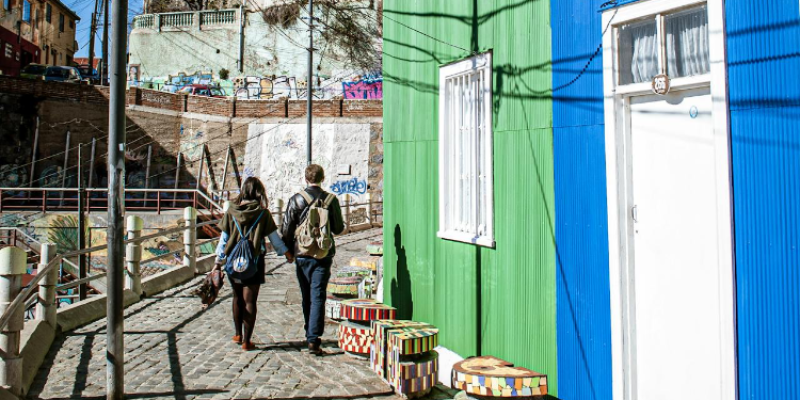
Forty-two hills tumbling down to the Pacific, walls covered in murals, and a port city that has absorbed waves of immigrants for two centuries: Valparaíso is unlike anywhere else in Chile. For expats weighing up a move here, that distinctiveness cuts both ways. The city offers an affordable, culturally rich lifestyle that Santiago simply cannot match, but it also comes with steep terrain, rising urban crime, and a bureaucratic reality that rewards those who invest time in learning Spanish. This article covers everything that shapes daily life in Valparaíso, from choosing the right neighborhood to understanding the climate, the food scene, the expat community, and the honest trade-offs that come with living in one of South America's most visually striking port cities.
Valparaíso, known locally as "Valpo," sits on Chile's Pacific coast about 90 minutes west of Santiago and is home to roughly 280,000 residents. The city is built across more than 40 steep hills, known as cerros, that rise dramatically from a flat commercial waterfront. Winding staircases, colorful hillside homes, and the city's iconic historic funicular elevators, called ascensores, define its physical character in a way that no other Chilean city comes close to replicating.
The city's significance runs deep. Valparaíso was designated a UNESCO World Heritage site in 2003 for its historic urban layout and late 19th-century architecture, a legacy of its golden age as a major merchant port connecting Europe and the Americas. That heritage drew artists, intellectuals, and bohemian figures over generations, including Nobel laureate Pablo Neruda, who made it one of his homes. Today, the same energy draws expats, digital nomads, and artists who find in Valparaíso an authenticity that more polished cities cannot offer.
For those who want a slightly different base while staying connected to Valparaíso's culture, the adjacent city of Viña del Mar offers flatter terrain, more modern amenities, and a resort-town feel as part of the Greater Valparaíso metropolitan area.
Cerro Alegre and Cerro Concepción consistently rank as the most sought-after areas for expats. These neighboring hillside districts offer restored heritage architecture, ocean views, and a concentration of cafés, galleries, and boutique hotels where English is readily understood. Rents here reflect the premium: a one-bedroom apartment typically costs between CLP 550,000 and CLP 650,000 per month (roughly USD 610 to USD 720), which is 10% to 30% higher than comparable units elsewhere in the city.
Cerro Bellavista attracts artists and remote workers drawn to its cultural credibility. It is home to the Parque Cultural de Valparaíso and La Sebastiana, Pablo Neruda's former hillside residence and now a museum, which gives the neighborhood a particular creative and literary atmosphere.
The flat lower city, known as El Plan, is the commercial and port heart of Valparaíso. Rents here are significantly lower, ranging from CLP 180,000 to CLP 350,000 per month (approximately USD 200 to USD 390), making it attractive to students and budget-conscious expats. The trade-off is a grittier street environment that requires more awareness, particularly after dark.
For families or those who prefer newer construction, the inland suburban area of Curauma, near Placilla, offers modern condominium developments, car-friendly infrastructure, and more space than the cerros provide. Meanwhile, many expats choose to live across the municipal border in Viña del Mar's districts of Reñaca and Jardín del Mar, which offer better street lighting, modern amenities, and proximity to international schools.
Budget-conscious options on the hills include Cerro Placeres, where rental demand is driven partly by students from the nearby Federico Santa María Technical University, and Cerro Esperanza.
Good to know:
Rent contracts across Valparaíso are commonly denominated in UF (Unidad de Fomento), Chile's inflation-adjusted unit of account, rather than fixed Chilean peso amounts. This means your monthly rent in pesos will adjust automatically in line with national inflation.
Join the Valparaiso community
Get regular tips and advice to make the most of your expat life
Cost of living in Valparaíso
Living costs in Valparaíso run roughly 25% to 30% below those in Santiago, which makes it one of the more affordable options for expats arriving from Western Europe or North America, even though Chile as a whole sits at the higher end of the Latin American cost spectrum.
A single expat maintaining a comfortable lifestyle, including rent in a premium cerro neighborhood, utilities, groceries, dining out, and private health insurance, should budget around CLP 1,700,000 per month (approximately USD 1,970). A more modest setup, renting in a less central area and managing expenses carefully, is achievable on CLP 1,100,000 to CLP 1,300,000 per month (roughly USD 1,270 to USD 1,500).
On the day-to-day level, Numbeo data for the Valparaíso region shows that basic monthly utilities for a standard apartment average CLP 99,729, while unlimited broadband costs around CLP 20,375. At local markets, a liter of milk runs about CLP 1,173, a dozen eggs around CLP 3,523, and a mid-range bottle of domestic wine costs roughly CLP 5,812. A meal at an inexpensive restaurant averages CLP 9,200, while a three-course dinner for two at a mid-range restaurant comes to around CLP 40,655.
Chile's inflation rate has stabilized and is converging toward a 3% to 3.5% target, meaning everyday costs are no longer rising as unpredictably as in recent years. This makes budgeting more straightforward for newly arrived expats than it was previously.
Climate and weather in Valparaíso
Valparaíso has a Mediterranean climate: warm, dry summers and mild, slightly wetter winters. Summer runs from December through February, bringing daytime highs of 21°C to 24°C (70°F to 75°F) and virtually no rainfall. Winter, from June through August, is the wettest season, with daytime highs dropping to 14°C to 15°C (around 59°F) and nighttime lows of 7°C to 9°C (45°F to 48°F).
One climate factor that surprises many newcomers is the persistent coastal humidity, which averages between 72% and 82% year-round. Combined with constant salt air from the Pacific, this creates ongoing wear on buildings and requires a dedicated maintenance budget for anyone renting or owning property on the hillsides.
During the peak summer months, the UV index regularly reaches extreme levels of 11 or 12, making high-SPF sun protection a daily necessity rather than an occasional precaution. Despite the warm summer temperatures, the Pacific Ocean remains cold year-round due to the Humboldt Current, with water temperatures peaking at only around 17.5°C (63.5°F) in February.
Most homes in Valparaíso lack central heating, which means winter nights indoors can feel uncomfortably cold despite the relatively mild outdoor temperatures.
Getting around Valparaíso
The primary public transit backbone is the Metro Valparaíso, known locally as the Merval, a commuter rail line covering 43 kilometers from the Puerto station in Valparaíso through Viña del Mar, Quilpué, and Villa Alemana to Limache. Fares are zone- and time-based, ranging from CLP 410 to CLP 864 for a full rush-hour journey, and the system uses contactless card scanning on entry and exit.
On the hillsides, the historic funicular elevators (ascensores) remain the most practical and atmospheric way to move between the cerros and the flat city below. Around 5 to 7 ascensores operate reliably, including Concepción, El Peral, Reina Victoria, and Artillería, with single rides costing between CLP 300 and CLP 500. No multi-ride discount passes exist for the funiculars. The flat El Plan district is highly walkable, while the cerros require either using the funiculars or climbing long, steep staircases on foot. Historic electric trolleybuses also run through the downtown avenues, serving as both a practical transport option and a piece of living urban history.
A car is largely unnecessary and can be a burden in the hillside neighborhoods, where streets are narrow, steep, and parking is scarce.
Language and communication in Valparaíso
Spanish is the official language, and daily life in Valparaíso demands a solid working level of it. Chilean Spanish is notoriously fast-paced: terminal consonants are frequently dropped, and the language is laced with a wide vocabulary of local slang known as chilenismos. Even fluent Spanish speakers typically need a period of adjustment before they feel fully comfortable navigating Chilean speech.
English is understood in the galleries, boutique hotels, and upscale cafes of Cerro Alegre and Cerro Concepción, which eases the early transition for non-Spanish speakers. Beyond those zones, however, navigating bureaucracy, negotiating rental contracts, and integrating into daily neighborhood life all require Spanish. The Pontificia Universidad Católica de Valparaíso (PUCV) offers Spanish-language immersion and Latin American studies programs for foreign students, with intensive courses running year-round.
Culture and social norms in Valparaíso
Valparaíso has a fiercely independent cultural identity. The city considers itself Chile's bohemian capital, and residents take genuine pride in preserving its gritty, layered character. In the 1990s, a grassroots movement successfully campaigned to protect the city's street art, staircases, and heritage infrastructure from commercial redevelopment, and the legacy of that effort is visible everywhere. Street art in Valparaíso is not tolerated vandalism; it is internationally celebrated and actively encouraged by local cultural institutions.
The city's social fabric carries the imprint of heavy 19th-century immigration from Britain, Germany, Italy, Spain, and France. This multicultural foundation shaped everything from the architecture to civic institutions, including the founding of the city's early fire brigades by immigrant communities. That layered heritage gives Valparaíso a cosmopolitan feel that is unusually deep for a city of its size.
The city marks the calendar with major public events. The New Year's Eve fireworks display over the bay draws crowds from across Chile and is one of the country's most celebrated events. The Carnival of Valparaíso in February adds a vibrant street festival to the summer calendar.
Pace of life and work culture in Valparaíso
The rhythm of Valparaíso moves at a noticeably slower pace than Santiago's high-pressure corporate environment. The city has the relaxed cadence of a coastal port town, and that tone permeates both professional and social life. Remote workers and digital nomads find it a comfortable fit: broadband speeds of 60 Mbps and above are standard, and a strong café culture supports a daytime working lifestyle across the cerros and El Plan alike.
For those working locally, professional salaries in Valparaíso range broadly from CLP 1,200,000 to CLP 3,500,000 gross per month (approximately USD 1,390 to USD 4,050). Entry-level roles accessible to expats, such as hospitality work or language teaching, typically pay between CLP 800,000 and CLP 1,500,000 gross monthly (around USD 925 to USD 1,735).
Food culture in Valparaíso
As a working port city, Valparaíso has built its culinary identity around the sea. Fresh seafood is the cornerstone of the local food scene, and the Mercado Puerto in El Plan is the place to experience it at its most affordable and authentic: seafood empanadas, fresh ceviche, and grilled fish prepared with minimal fuss. Traditional Chilean dishes are equally present, including cazuela (a hearty meat and vegetable stew) and charquicán, alongside high-quality Chilean beef.
The restaurant range stretches from street food vendors in the flat lower city to more refined seafood and steak restaurants perched in the cerros with views over the bay. Wine culture is woven into daily life here: Valparaíso sits at the edge of Chile's renowned wine regions, and a good bottle of domestic mid-range wine costs less than CLP 6,000 (around USD 7) at a local market, making quality wine an everyday, affordable pleasure rather than an occasional indulgence.
Leisure and social life in Valparaíso
The city's arts infrastructure is substantial for its size. Museums, independent galleries, and theaters are spread across the hillside neighborhoods, and La Sebastiana, Pablo Neruda's former home-turned-museum, draws both locals and visitors. Weekend leisure during the warmer months frequently involves catching the Merval train along the coast to the beaches of Viña del Mar, Reñaca, or Concón.
Nightlife is active but concentrated. Students and young professionals favor the bars and clubs around Avenida Brasil in El Plan, while expats tend to gather at craft breweries and rooftop bars in Cerro Alegre and Cerro Concepción, which combine social atmosphere with panoramic ocean views. Outdoor options in the wider region include hiking coastal trails, surfing, and day trips to the nearby Casablanca Valley for wine tasting.
Family life in Valparaíso
Valparaíso's physical terrain creates genuine practical challenges for families with young children. Steep staircases, narrow hillside streets, and limited flat space make the cerros difficult to navigate with strollers, and the city lacks the smooth suburban infrastructure that families often prioritize. As a result, many expat families choose to base themselves in Curauma or across the border in Viña del Mar and Reñaca, where the terrain is flatter and day-to-day logistics are more manageable.
There are no major international or bilingual schools within Valparaíso's city limits. Expat families rely on schools clustered in Viña del Mar and Reñaca. The most established options include Colegio Alemán de Valparaíso, which offers the International Baccalaureate program, The Mackay School (founded in 1857 and known for its bilingual British-influenced curriculum), and Saint Peter's School. Annual tuition fees at top private bilingual schools in the Greater Valparaíso area typically range from CLP 5,500,000 to CLP 9,000,000 (approximately USD 6,400 to USD 10,400), excluding initial enrollment fees. Competitive waitlists at the most prestigious schools in the area mean early applications are strongly advisable.
Safety in Valparaíso
Safety in Valparaíso requires more active awareness than the city's bohemian image might suggest. The city holds a moderate-to-low safety index rating overall, but conditions vary sharply by area and time of day. Some streets transition from safe to risky within a short walk, which makes neighborhood knowledge genuinely important for daily life.
The most common risks for expats are pickpocketing in tourist corridors, opportunistic theft targeting rental cars (including a scam involving staged tire punctures), and isolated muggings on poorly lit hillside paths at night. Cerro Alegre and Cerro Concepción are generally safe during daylight hours, but the port area around Plaza Sotomayor, peripheral hillside neighborhoods such as Glorias Navales, and steep unlit staircases warrant caution after dark.
A broader concern across Chile has been a rise in organized crime activity, which has driven up the national violent crime rate and increased vigilance requirements across the country's major cities, including Valparaíso. Political demonstrations occur periodically, particularly around the Congress building and central plazas, and some have involved clashes with riot police. In an emergency, the local police (Carabineros) are reachable by dialing 133.
Environment in Valparaíso
Valparaíso's position directly on the Pacific coast delivers a steady ocean breeze that keeps air quality significantly better than the heavy smog regularly trapped in the Santiago basin. For expats sensitive to air pollution, this is a genuine quality-of-life advantage of coastal living.
The trade-off is wildfire risk. The steep, arid hills surrounding the Greater Valparaíso area are highly susceptible to severe summer wildfires, which have prompted embassy alerts regarding air quality drops and evacuation protocols. This is a seasonal environmental reality that residents, particularly those on the outer hillsides, need to factor into their planning.
Public green space within the cerros is limited. The Parque Cultural de Valparaíso provides a vital community park, and the ongoing transformation of Parque Barón will eventually add a 400-meter green corridor along the waterfront. For property owners, the combination of high coastal humidity and persistent salt air creates maintenance costs that are above the Chilean national average, typically running between 0.8% and 1.2% of a property's value annually.
Expat community in Valparaíso
Valparaíso, together with neighboring Viña del Mar, hosts one of the largest and most active expat communitiesin Chile, attracting remote workers, artists, retirees, and university students from across the world. The community tends to concentrate in the cafés and galleries of Cerro Alegre and Cerro Concepción, creating a social environment where international residents mix closely with Valparaíso's local arts scene.
Integration tends to go well for expats who invest in learning Spanish. Those who live primarily within the premium cerros without engaging with wider city life risk slipping into an insular expat bubble that keeps them removed from the working-class port culture that defines much of what makes Valparaíso distinctive. Expat meetups and language exchanges take place regularly in Viña del Mar and Valparaíso, providing practical entry points for newcomers looking to build connections.
Valparaíso offers a genuinely compelling combination of affordability, cultural depth, and coastal access, but it is not a city that suits everyone. Being clear about both the advantages and the real challenges before committing to a move will make the transition far smoother.
Advantages:
Living costs are significantly lower than in Santiago or most Western cities, with comfortable lifestyles achievable on modest budgets.
The bohemian cultural scene, UNESCO-protected architecture, street art, and creative community create an inspiring daily environment.
Coastal breezes deliver better air quality than Santiago, and easy Merval train access connects residents to Pacific beaches year-round.
Chile's wine regions are practically on the doorstep, making high-quality wine an affordable everyday pleasure.
Rental contracts denominated in UF provide protection against currency devaluation, giving long-term residents a degree of financial stability.
Challenges:
The steep, staircase-heavy terrain is physically demanding and largely inaccessible for people with mobility issues. Historic funiculars are prone to maintenance closures.
Crime has risen noticeably across Chile in recent years, and Valparaíso requires higher vigilance regarding petty theft, street mugging, and home security than the city's artistic reputation might suggest.
The damp, salty coastal climate demands continuous property maintenance, and winter nights indoors can be uncomfortably cold in homes that lack central heating.
No major international schools exist within the city itself, pushing families toward neighboring municipalities and adding commuting complexity.
Chilean Spanish is particularly challenging even for fluent Spanish speakers, and full integration requires a genuine commitment to language learning.
Frequently asked questions about living in Valparaíso
The Unidad de Fomento (UF) is a unit of account used across Chile that adjusts daily in line with national inflation. Most long-term rental contracts in Valparaíso are priced in UF rather than fixed Chilean peso amounts. In practice, this means the peso value of your monthly rent rises automatically to match inflation, keeping real housing costs stable over time rather than eroding landlords' returns. Understanding the current UF value is a standard part of navigating the local rental market.
A single ride on one of Valparaíso's historic funicular elevators costs between CLP 300 and CLP 500 (approximately USD 0.35 to USD 0.55). There are no multi-ride passes or daily discount tickets available, so each journey requires a separate payment. Around 5 to 7 funiculars operate reliably on a daily basis, including Concepción, El Peral, Reina Victoria, and Artillería.
No major international or bilingual schools are located within the Valparaíso city limits. Expat families rely on schools in the neighboring districts of Viña del Mar and Reñaca, including Colegio Alemán de Valparaíso (offering the IB program), The Mackay School, and Saint Peter's School. These schools are accessible by public transport or car, but they do involve a daily commute from the city's hillside neighborhoods.
Walking at night in Valparaíso calls for considered judgment about location. The hillside tourist zones, such as Cerro Alegre, are relatively safer during the day, but poorly lit staircases, the port area around El Plan, and Plaza Sotomayor carry a higher risk of opportunistic crime after dark. Using ride-hailing apps to travel at night is a practical and widely used alternative to walking unfamiliar routes after dark.
For most expats living in the historic hillside neighborhoods, a car is more of a burden than a benefit. Streets in the cerros are extremely narrow and steep, and parking is very scarce. The Merval commuter train, buses, trolleybuses, and funicular elevators together provide adequate coverage for daily commuting and access to nearby coastal towns. A car becomes more relevant for families based in suburban areas like Curauma, where car-friendly infrastructure is standard.
Chilean Spanish is widely considered one of the most difficult regional varieties for non-native speakers, characterized by fast delivery, dropped consonants, and extensive local slang. English is usable in the tourist-oriented galleries and hotels of Cerro Alegre and Cerro Concepción, but handling bureaucracy, signing leases, and building genuine social connections all require a working level of Spanish. The Pontificia Universidad Católica de Valparaíso offers intensive Spanish programs for foreigners throughout the year.
The city's position directly on the Pacific coast subjects buildings to persistent high humidity, often above 80%, and constant exposure to corrosive salt air. This combination accelerates structural wear, paint deterioration, and metal corrosion at a rate faster than in inland cities. Property owners typically need to budget between 0.8% and 1.2% of a property's value annually for maintenance, which is above the Chilean national average.
The steep, arid hills surrounding Valparaíso are highly susceptible to severe summer wildfires, and major fires have affected residential hillside areas in recent years. Residents living on the outer cerros should familiarize themselves with evacuation routes and local emergency alerts. Embassy advisories have been issued during active fire seasons regarding both air quality and evacuation procedures, so monitoring official channels during the summer months is a practical precaution.
ℹ️
We do our best to provide accurate and up to date information. However, if you have noticed any inaccuracies in this article, please let us know in the comments section below.
A journalist, holder of the DALF C1 and C2 and a diploma from the University of Mauritius, I have nearly twenty years of writing experience. After six years in the Mauritian press, I joined Expat.com, where I have been working for over a decade, including five years as editorial assistant, and now as editorial manager.