Valparaíso is a port city shaped by the Pacific, and its food scene reflects that geography at every turn. Fresh seafood pulled daily from the ocean, bold Chilean comfort dishes, and a thriving café culture spread across its colorful hillside neighborhoods give the city a culinary identity that is hard to find anywhere else in Chile. Lunch is the anchor of the day here, the evening meal starts late, and the local wine flows easily thanks to the nearby Casablanca Valley. This article covers everything expats need to know to eat well in Valparaíso: from the dishes to seek out on arrival to where to shop, how much to budget, and how to navigate delivery apps and dietary needs.
Food culture in Valparaíso
Valparaíso's food identity is inseparable from its status as a working port city and UNESCO World Heritage site. The local gastronomy draws heavily on fresh Pacific seafood sold at port-side markets, combined with Chilean agricultural staples like corn, potatoes, and beef that have fed the city for generations. Eating here is a social ritual as much as it is sustenance, and understanding the rhythm of mealtimes is one of the first practical adjustments expats need to make.
Lunch (almuerzo) is the main meal of the day, typically served between 1:00 PM and 3:30 PM. Restaurants fill up fast during this window, and many offer a set midday menu that represents the best value of the day. Dinner (cena), by contrast, runs late: locals rarely sit down to eat before 8:30 PM, and on weekends the city's social life, bars, and kitchens stay active well past midnight. Expats used to early dinners often find the adjustment takes a few weeks, but quickly appreciate the slower, more social pace of evenings.
Valparaíso's proximity to the Casablanca Valley also shapes everyday eating. High-quality local wines, particularly crisp whites that pair naturally with the city's seafood, are both affordable and widely available. Wine is a routine accompaniment to meals rather than a special-occasion drink.
Local specialties in Valparaíso
Several dishes are so closely associated with Valparaíso that eating them here feels genuinely different from encountering them elsewhere in Chile. Chorrillana is the most iconic: a sharing plate of French fries piled high with sliced beef, sautéed onions, spicy sausage, and fried eggs, traditionally credited to the local restaurant J.Cruz. It is filling, unpretentious, and central to the city's food culture.
Along the waterfront, machas a la parmesana showcase the Pacific's best. These surf clams are baked in their shells with parmesan cheese, butter, and a splash of white wine, and ordering them at a coastal spot near the port is one of the essential Valparaíso experiences. Caldillo de congrio, a hearty conger eel soup made with tomatoes, onions, garlic, and cream, has its own cultural weight: Chilean poet Pablo Neruda dedicated an ode to this dish, and it remains a staple of the city's restaurant menus.
For something more portable, empanadas de pino are baked pastry turnovers filled with ground beef, onions, raisins, a black olive (which contains a pit, so bite carefully), and a slice of hard-boiled egg. The related pastel de choclo layers a sweetcorn crust over a similar meat filling and is baked in a clay dish, producing a sweet-savory pie that is a staple at traditional family tables. Before any meal at a local restaurant, a bowl of pebre typically arrives alongside fresh bread: a condiment of chopped tomatoes, onions, cilantro, garlic, and mild chili that functions as both a dip and a palate opener.
No introduction to local food culture is complete without the Pisco Sour, Chile's signature cocktail. Made from pisco (a grape-based brandy), lemon juice, simple syrup, and a frothy egg white top, it appears on virtually every bar and restaurant menu in the city and is an easy way to start any evening out.
Types of dining in Valparaíso
The city's steep topography has produced a genuinely varied dining landscape. Rooftop and terrace restaurants built onto the hillsides (cerros) offer panoramic views of the port and the Pacific and typically serve contemporary Chilean and seafood dishes at mid-range to upscale prices. These spots are popular for weekend dinners and often require a reservation.
At the other end of the spectrum, picadas are the backbone of everyday eating in Valparaíso. These informal, budget-friendly eateries serve large portions of homestyle Chilean cooking: thick cazuela stews, fried fish, and generous plates of rice and beans at prices that make them accessible to everyone. They are where locals actually eat during the week, and they offer some of the most satisfying meals in the city.
Valparaíso also has a thriving café and pastry shop (pastelería) culture, particularly concentrated in the artistic hill neighborhoods. Specialty coffee, alfajores (dulce de leche cookies), and torta de milhojas (a thousand-layer cream cake) are fixtures at the city's independent cafés, many of which double as art spaces or bookshops.
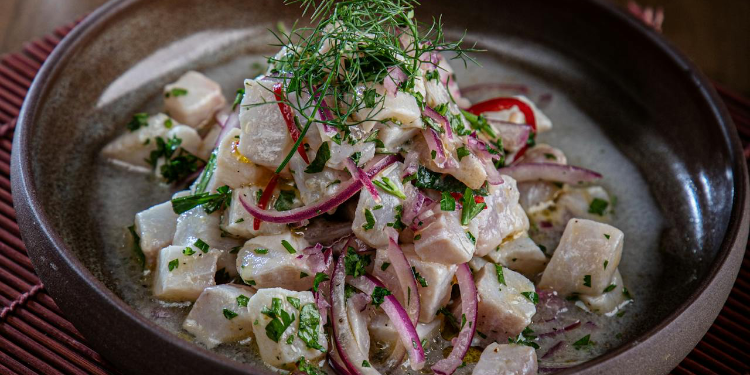
Street food is quick and widely available. Empanada stands are everywhere, and carts selling completos, the Chilean hot dog loaded with avocado, tomato, and mayonnaise, are a cheap and filling option at any time of day. For the freshest possible seafood, the stalls at Caleta Portales near the water serve ceviche and grilled fish directly from the morning's catch, in an informal open-air setting that is entirely unpretentious.
Neighborhoods for food in Valparaíso
Cerro Alegre and Cerro Concepción form the center of the city's contemporary dining scene. These mural-covered hill neighborhoods concentrate the highest density of trendy cafés, boutique bistros, and mid-range international restaurants. The cooking here ranges from creative Chilean fusion to Italian and Japanese, and the streets are walkable and lively at most hours. Most expats discover their regular spots in these two cerros within their first weeks in the city.
Plaza Aníbal Pinto, located in the lower flat part of the city known as el plan, anchors the nightlife and casual dining district. The square and surrounding streets are home to historic bars, including Bar Cinzano, and a cluster of affordable restaurants that stay open late and cater to a mixed crowd of locals and visitors.
Playa Ancha offers a quieter, more residential food experience. Its traditional bakeries, neighborhood lunch spots, and family-run eateries reflect a neighborhood that still operates largely on local rhythms rather than tourist traffic. It rewards the effort to explore beyond the better-known hills.
For seafood specifically, Caleta Portales is the destination. The waterfront restaurants and raw bars here focus entirely on the daily catch, and the setting along the coast makes it a natural lunch stop for expats who live in or pass through the city's western neighborhoods.
International cuisine in Valparaíso
Peruvian cuisine has the strongest international presence in Valparaíso, as it does across Chile more broadly. Numerous restaurants serve authentic ceviche, lomo saltado, and their own versions of the Pisco Sour, and the quality tends to be high. Italian food also has deep roots in the city, a legacy of significant immigration waves in the late 19th and early 20th centuries. Restaurants such as Pasta e Vino on Cerro Concepción offer rich, traditional dishes that have earned a strong following.
Sushi is extremely popular, though expats should be aware that Chilean adaptations are common: deep-fried rolls coated in panko crumbs, heavy use of cream cheese, and avocado in most varieties. Purists may find the local style takes adjustment, but it has its own appeal and is widely available at all price points. Spanish tapas and paellas can be found at specialty restaurants serving both the local Spanish community and the broader dining public.
The range of other international cuisines is more limited. Authentic Asian options beyond Japanese-style sushi and Middle Eastern food are harder to find in Valparaíso than in Santiago. Expats with specific cravings for those cuisines may need to visit the capital or source ingredients themselves.
Grocery shopping in Valparaíso
The main supermarket chains in the city cover most everyday needs. Jumbo offers the widest selection of imported and international products, including European cheeses, specialty condiments, and a broader wine range, at a premium price. Lider (owned by Walmart) is reliable, well-stocked, and more affordable, and is the default choice for everyday shopping for many expats. Santa Isabel and Unimarc round out the major chains and are found across most neighborhoods.
For budget-conscious shoppers, discount chains have expanded significantly in the Valparaíso region. Super 10 (part of the SMU group, which opened its first Valparaíso-region location in 2024) and Alvi offer bulk and everyday items at lower prices, though the product range is more limited than at the larger chains.
The best place to buy fresh fruit and vegetables is at the ferias libres, the open-air local markets that operate on specific days in various neighborhoods throughout the city. Prices are significantly lower than at supermarkets, produce is seasonal and often locally grown, and vendors frequently give a small amount of extra produce for free to regular customers, a custom known as "yapa." Finding your local feria and its schedule is one of the most practical steps a new expat can take.
Typical monthly grocery costs for a single person run around CLP 220,000 (approximately USD 231). Individual items give a sense of the price level: a liter of milk costs around CLP 1,150 (USD 1.20), and a kilo of local cheese around CLP 9,900 (USD 10.37). Online grocery ordering is well-established, with PedidosYa Market and Jumbo Prime offering home delivery across most of the city.
Good to know:
For imported goods such as European cheeses or specialty condiments, Jumbo carries the largest selection in the city, though prices reflect import costs and are considerably higher than for locally produced equivalents.
Eating out costs in Valparaíso
Valparaíso is affordable by most international standards, and eating out regularly is within reach across most budgets. At the lower end, a meal at an inexpensive picada or a menú del día (the workday set lunch, typically including soup or salad, a main course, and a drink) costs between CLP 5,000 and CLP 8,500 (approximately USD 5.25 to USD 8.90). The menú del día is the single best-value option in the city for a full, satisfying midday meal.
A three-course dinner for two at a mid-range restaurant in Cerro Alegre typically runs from CLP 30,000 to CLP 45,000 (approximately USD 31.50 to USD 47.25). Fine dining at upscale rooftop restaurants with ocean views starts at around CLP 25,000 (approximately USD 26.25) per person, before wine.
Good to know:
A 10% suggested gratuity (propina sugerida) is automatically added to bills at table-service restaurants under Chilean labor law (Article 64). Customers have the legal right to accept or decline it, but accepting is strongly customary, and servers rely on it as a meaningful part of their income. When you pay by card, the server will ask "¿Incluye propina?" before processing the transaction. Recent legislation has restricted automatic tip additions to genuine table-service venues, meaning fast food counters and bakeries cannot apply the charge.
Dietary requirements in Valparaíso
Valparaíso's bohemian neighborhoods have made space for plant-based dining more readily than most Chilean cities. Vegetarian and vegan options are increasingly available in Cerro Alegre and Cerro Concepción, where several cafés and restaurants cater specifically to plant-based diets. Outside these areas, in traditional picadas and neighborhood restaurants, the picture changes considerably. Chilean homestyle cooking relies heavily on animal fat (manteca) and chicken broth, including in dishes that appear vegetarian, such as beans, humitas, and some stews. Communicating dietary needs clearly and directly in Spanish is essential when eating outside the main expat-friendly neighborhoods.
Gluten-free awareness has grown noticeably in recent years. Jumbo and Santa Isabel both carry dedicated "libre de gluten" sections with certified pastas, breads, and snacks. Smaller neighborhood stores are less consistent, so stocking up at a larger supermarket is the practical approach for those with celiac disease or gluten intolerance.
Halal and kosher options are very limited in Valparaíso. Expats who require certified halal or kosher products generally need to source them in Santiago or adapt by focusing on fish and vegetarian alternatives locally. This is worth planning for before arrival, particularly for those whose religious dietary requirements are strict.
Food delivery in Valparaíso
The food delivery market in Valparaíso is mature and well-developed. PedidosYa is the dominant platform, with the largest network of registered restaurants in the city. Uber Eats and Rappi are both widely available and competitive, and all three platforms support international credit cards, which makes them immediately usable for newly arrived expats.
Coverage is strong across el plan and the main cerros. Very steep or remote hillside addresses may experience longer delivery times or reduced driver availability, particularly during peak hours, so it is worth checking coverage for your specific address when you arrive.
Standard delivery fees range from CLP 1,000 to CLP 3,000 (approximately USD 1.05 to USD 3.15). All three major apps offer monthly subscription services that provide free delivery on eligible orders: PedidosYa Plus, Uber One, and Rappi Pro. Each costs around CLP 7,990 per month, which pays for itself quickly for regular users. Beyond restaurant meals, these platforms also deliver groceries, pharmacy items, and alcohol, often within 30 minutes.
Tipping delivery drivers through the app at checkout is customary. The standard range is CLP 500 to CLP 1,500 (approximately USD 0.53 to USD 1.57), and drivers appreciate it.
Dining etiquette in Valparaíso
Valparaíso has a famously relaxed, bohemian atmosphere that extends to how people dress and behave at restaurants. Even at fine dining spots on the hills, smart-casual clothing is entirely appropriate, and formal wear is rarely seen. There is no need to overthink presentation for a night out.
Reservations are strongly recommended for dinner on Friday and Saturday evenings, particularly at restaurants with sea-view terraces in Cerro Alegre and Cerro Concepción. These spots fill up fast at peak hours, and walking in without a booking on a weekend night often means a long wait or no table at all.
One practical habit to know: waitstaff will not bring the bill to your table until you ask for it. This is standard practice throughout Chile and is not an oversight. To pay, catch the server's attention and ask for "la cuenta, por favor." Bills are generally paid collectively or split evenly among the table; asking for itemized individual bills is uncommon and can cause confusion, so it is easier to settle among yourselves first and pay as a group.
At the table, it is customary to keep your hands visible above the table while eating. Bread served before a meal is typically broken into small pieces rather than bitten into whole: a small but noticeable local habit that marks you as attentive to local customs when you follow it.
Frequently asked questions about food in Valparaíso
Is tap water safe to drink in Valparaíso?
Tap water in Valparaíso is treated and biologically safe to drink, regulated under Chilean standard NCh 409. However, it is sourced from the Aconcagua River and is heavily chlorinated, giving it a high mineral content and an unpleasant taste. Many expats use water filters or buy bottled water for everyday drinking and cooking, not out of safety concerns but purely for taste.
Do I need to tip at restaurants in Valparaíso?
Tipping is not legally mandatory, but a 10% suggested gratuity is automatically added to the bill at table-service restaurants by law. Accepting this charge is strongly customary, and servers rely on it as a significant part of their income. Before processing your card, the server will ask whether you want to include it.
What time do restaurants serve dinner?
Dinner service starts late in Valparaíso. Tourist-focused spots may open around 7:00 PM, but locals typically do not sit down to dinner before 8:30 PM or 9:00 PM. On weekends, kitchens at popular restaurants generally stay open until at least 11:00 PM.
What is a menú del día?
A menú del día is a budget-friendly set lunch offered by many restaurants during the workweek. It typically costs between CLP 5,000 and CLP 8,500 (approximately USD 5.25 to USD 8.90) and includes a starter (usually soup or salad), a main course, a drink, and sometimes a small dessert. It is the best-value way to eat a full meal in the city.
Are credit cards accepted in restaurants?
Credit and debit cards are widely accepted across Valparaíso through the local Redcompra payment system, including at small cafés and bakeries. Carrying some cash in Chilean pesos is still advisable for street food vendors, feria libre stalls, and tipping delivery drivers, as these are often cash-only transactions.
Which food delivery apps work in Valparaíso?
PedidosYa is the most widely used app with the largest restaurant network in the city. Uber Eats and Rappi are also well-established and widely available. All three support international credit cards, which makes them practical from the moment you arrive.
Where can I find imported groceries in Valparaíso?
Jumbo is the best option for imported goods, including European cheeses, specialty condiments, and a broader range of international brands. The selection is the widest available in the city, though prices are higher than at local chains like Lider or Santa Isabel, reflecting import costs.
Do waitstaff in Valparaíso speak English?
In the expat-friendly hill neighborhoods of Cerro Alegre and Cerro Concepción, many servers speak basic to fluent English. In traditional picadas, market stalls, and neighborhoods outside the main tourist zones, Spanish is essential. Learning basic food vocabulary in Spanish before you arrive will make a noticeable difference to your daily experience.
We do our best to provide accurate and up to date information. However, if you have noticed any inaccuracies in this article, please let us know in the comments section below.