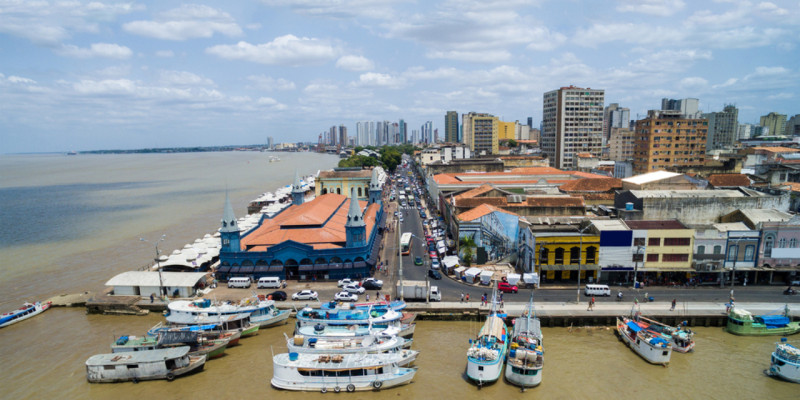
In Belém, free time can take you from the historic center's museums and markets to forest parks, riverside restaurants, and live music. Some outings need a boat trip or an advance booking; others are free to join. Whether you're settling in alone or with family, the city's workshops, cultural gatherings, and recurring festivals offer ways to enjoy your time here and meet people.
Belém's historic center brings together churches, palaces, markets, and old two-story houses. You can explore it on foot, taking one small area at a time. Cidade Velha and Campina make up the protected historic core. Around Praça Frei Caetano Brandão, the Forte do Presépio and the buildings of the Feliz Lusitânia complex introduce the city's history, with the waterfront and Ver-o-Peso market nearby.
The Forte do Presépiohouses archaeological objects, ceramics, and remains from the site that trace Belém's development and encounters between Indigenous peoples and colonizers. Outside, the route takes you past ramparts and cannons overlooking Guajará Bay. Nearby, the Museu do Círio explores the traditions surrounding the Círio de Nazaré festival through votive offerings, mantles made for the Virgin's image, and toys made from miriti, a lightweight material from a local palm. Admission is free, and you can learn about the festival even when the processions aren't taking place.
Paintings, sculptures, drawings, photographs, and furniture form the collection at the Museu de Arte de Belém (MABE). The museum occupies Palácio Antônio Lemos on Praça Dom Pedro II, so the building itself is part of the visit. Admission is free for everyone. Opening hours are Tuesday through Friday, 9 a.m. to 4:30 p.m., and Saturday and Sunday, 9 a.m. to 1 p.m.
For a performance, theTheatro da Paz on Praça da República hosts concerts and stage productions. Built during the rubber boom, it retains chandeliers, painted decoration, and patterned wooden floors. You can also see the theater on a guided tour lasting about 45 minutes. A tour ticket costs BRL 10 (approximately USD 1.85). The local currency is the Brazilian real (BRL). Individual tours are free on Wednesdays. Tours leave hourly in the morning and afternoon from Tuesday through Friday, and in the morning on weekends. Tickets are sold at the box office, subject to available places.
The Museu das Amazônias (MAZ) at Porto Futuro II looks at the region's geology, peoples, knowledge, and biodiversity. Its permanent exhibition, “Amazônias no Plural,” uses projections, sound, and interactive displays. Entry is free, but you need to book ahead through the museum's Sympla ticket page. Regular opening hours are Thursday through Tuesday, 10 a.m. to 6 p.m., with last admission at 5 p.m. Organized groups must request a visit at least a week in advance by emailing atendimento.maz@idg.org.br.
You can walk, cycle, skate, or skateboard along four kilometers of prepared paths at Parque Estadual do Utinga. Park admission is free, and you can explore the open areas independently. It opens from 6 a.m. to 5 p.m., Wednesday through Monday, and closes on Tuesdays for maintenance. Guided outings, some sports activities, and parking cost extra. Operators within the park also offer canoeing and stand-up paddleboarding.
Utinga is also home to Ponto de Apoio, which runs free rides on adapted cycles for people with disabilities or reduced mobility. Volunteers operate the cycles, allowing people to take part even if they can't pedal a conventional bike. Sessions are held periodically. For upcoming opportunities to join, contact the project organizers at +55 91 98515-3693.
Beside the Guamá River in Cidade Velha, Mangal das Garças combines gardens, birds, and exhibits about Amazonian nature. Walking around the park is free. Staffed attractions, including the butterfly enclosure, lighthouse, and navigation memorial, have separate admission charges. The full-price ticket for an individual attraction is BRL 9, approximately USD 1.65. The park opens Tuesday through Sunday, 8 a.m. to 6 p.m.
Across the Guamá, Combu Islandoffers a day out among riverside forest, waterfront restaurants, and places to learn about cacao production. Choose the restaurant, producer visit, or guided activity you want to reach before boarding. Shared boats leave from the tourist river terminal at Praça Princesa Isabel in Condor.
The return crossing to Combu costs approximately BRL 24 per person, or USD 4.40; children age 5 and under travel free. Boats don't follow a fixed timetable and usually wait for a small group before leaving. Tell the driver which restaurant or landing you're heading to. For the trip back to Belém, you board from the pier at the place you've visited. Weekends and holidays are busier, and fewer boats run after 6 p.m., so discuss your return with the restaurant or boat driver.
For freshwater beaches, Mosqueiro is about 70 kilometers from central Belém via the PA-391 road, roughly a two-hour drive or bus ride. Farol and Chapéu Virado are among its beaches, with waterfront walks and restaurants nearby. This is more of a beach outing than Combu, where visits center on the forest and riverside establishments.
The wettest months in Belém are December through May. Rainfall eases between June and November, although showers continue and the weather stays hot. An early walk at Utinga followed by a museum during the hottest part of the day gives you time outdoors and under cover. River excursions need more flexibility around the weather than a walk along the quays.
Join the Belém community
Get regular tips and advice to make the most of your expat life
Shopping in Belém
Ver-o-Peso is both an everyday market and a place to discover regional ingredients. Its different sections sell fish, Amazonian fruit, cassava flour, tucupi, herbs, plants, and crafts. The Feira do Açaí and fish deliveries connect the market directly to boats arriving from the rivers. Browsing is free; food and purchases are paid for separately.
For everyday retail, Rua Conselheiro João Alfredo in the old commercial center has shops and street vendors selling clothes, shoes, accessories, and household appliances. It has a different focus from the city's specialist craft shops. Boulevard Shopping Belém, on Avenida Visconde de Souza Franco, brings together chain stores, restaurants, and a movie theater. Stores generally open Monday through Saturday from 10 a.m. to 10 p.m.; Sunday and holiday hours follow a separate schedule.
The Sunday fair on Praça da República usually runs from 8 a.m. to 2 p.m., with crafts, plants, and regional sweets. At Espaço São José Liberto, Casa do Artesão sells ceramics, objects made from plant fibers, jewelry, and accessories. The complex also houses a gemstone museum, so a shopping visit can include a look at stones and jewelry making.
For ceramics inspired by Marajoara and Tapajônica designs, head to Paracuri in Icoaraci, where pottery is made and sold. Several workshops and shops line Travessa da Soledade, while the Paracuri craft fair is on Praça São Sebastião. Icoaraci is about 20 kilometers from central Belém and has a bayfront with restaurants. You can buy directly from artisans and take a waterfront walk, which takes longer than traveling to downtown shops.
Events and festivals in Belém
The second Sunday in October is the main procession day of the Círio de Nazaré, a religious and cultural celebration honoring Our Lady of Nazareth. The procession travels from Sé Cathedral to the Nazaré sanctuary. Family traditions, food, and crafts, including miriti toys, are also part of the celebrations. Watching the processions from public spaces doesn't require a ticket; private services and associated performances have their own arrangements.
TheArraial do Pavulagem organizes street processions known as Arrastões, with percussion, dancers, stilt walkers, and festive ox figures. The season generally runs from June into early July. Preparatory workshops teach the activities that make up the procession and give participants a way to join the Batalhão da Estrela, the group performing in the parades. The institute announces registration, and workshop places are limited. You don't need to enroll in a workshop simply to follow the procession in the street.
The Psica festival brings together Amazonian music, artists from elsewhere in Brazil, and Black and grassroots music scenes. Held in December, it includes large ticketed concerts. Venues, any free days, and ticket categories depend on the edition. Reduced-price and solidarity tickets have conditions or documentation requirements of their own; they aren't interchangeable with full-price tickets.
Between the larger festivals, Estação das Docas has music inside its former warehouses and entertainment along the waterfront. “Pôr do Som” accompanies sunset, while dance and carimbó performances take place on announced dates. The Sesc Pará Ticketeria also lists cultural activities, separating free-entry programs from events that require registration. Filter by location to find Belém venues, since the listings cover other cities in Pará as well.
Nightlife in Belém
Restaurants, bars, and music at Estação das Docas offer one way to begin an evening before heading to a concert. In Umarizal, you'll find venues combining drinks and live bands. O Velho Moinho, on Travessa 14 de Março, is a beer-focused bar and restaurant that hosts concerts and DJs. Performers and admission arrangements change from one night to the next, so the show listings are more useful for choosing a musical night out than the bar's general opening hours.
In Icoaraci, Espaço Cultural Coisas de Negro holds Sunday gatherings around carimbó, the drum-led music and dance of Pará. Musicians, dancers, and audiences come together at this venue dedicated to popular culture. Some evenings are free, and others charge admission. Since Icoaraci is well outside the center, allow for the journey there and back when planning the evening.
Family activities in Belém
The Museu Paraense Emílio Goeldi's zoobotanical park combines Amazonian animals and plants with science in a wooded urban setting. Younger children can spend the visit watching the animals and looking at the vegetation. It opens Wednesday through Sunday, 9 a.m. to 4 p.m. A full-price ticket costs BRL 3 (approximately USD 0.55). Children under 12, visitors over 60, and people with disabilities enter free. Students need a student identification card accepted by the museum to receive the discounted rate.
At Mangal das Garças, Ecoarte offers free creative activities for children every week, often on Sunday mornings in the amphitheater. Workshops use natural materials and themes drawn from the environment and the culture of Pará. Ecoarte is separate from the paid attractions: a family can enjoy the park and workshop without buying tickets for the butterfly enclosure.
For rainy days, MAZ has indoor displays with sound, images, and interactive activities, with free advance booking. Boulevard Shopping has a paid movie theater and also advertises children's events, some of them free. Age guidance depends on the film or workshop. At Estação das Docas, “Teatro ao Pôr-do-Sol” is a free children's arts program held on dates announced by the venue.
Arts workshops give you a chance to work on something alongside the same people over several sessions.Curro Velho and Casa da Linguagem, both run by the Pará Cultural Foundation, offer courses in visual arts, dance, theater, photography, crafts, and writing. Curro Velho is on Rua Professor Nelson Ribeiro in Telégrafo; Casa da Linguagem is on Avenida Nazaré. Sign up at the office of the venue where your chosen workshop is taught.
Registration for a workshop cycle costs BRL 20 (approximately USD 3.65) for the general public, university students, and private-school students. Exemptions include children under 12, people with disabilities, adults aged 60 and over, and pupils attending public elementary or secondary schools. Required documents and minimum ages depend on the participant's category and the workshop. Subjects and registration dates change with each cycle.
Sesc Ver-o-Peso also holds exhibitions and activities involving photography and other creative work. Its ticketing page distinguishes drop-in cultural events from workshops requiring registration. If you want to take part in the city's street celebrations, the Arraial do Pavulagem workshops combine learning, rehearsals, and group preparation. Joining means following the season's schedule, rather than only turning up on parade day.
Frequently asked questions
You can explore the historic center's museums, walk or cycle at Utinga, visit Mangal das Garças, browse markets, and attend live music. Combu offers a day trip across the Guamá with riverside restaurants and cacao-related visits, while arts workshops let you take part in local life.
Forte do Presépio explores the city's history, Museu do Círio explains the traditions of Nazaré, and MABE combines art collections with the architecture of Palácio Antônio Lemos. Theatro da Paz has performances and guided tours. Museu das Amazônias offers interactive exhibitions with free advance booking.
Utinga has paths for walking, cycling, skating, and skateboarding, along with paid activities offered by operators. Mangal das Garças has gardens and birds. You can also cross to Combu for riverside outings or travel by road to Mosqueiro's freshwater beaches.
Ver-o-Peso sells food and regional products, while Rua João Alfredo has everyday shops and street vendors. Boulevard Shopping combines stores, dining, and movies. For crafts, try the Praça da República Sunday fair, Casa do Artesão at São José Liberto, or the pottery workshops in Paracuri, Icoaraci.
The Círio de Nazaré's main procession takes place on the second Sunday in October. Arraial do Pavulagem's street processions generally run from June into early July. Psica brings Amazonian and other Brazilian music scenes together in December. Estação das Docas and Sesc offer smaller cultural events between the major festivals.
Options include restaurants and music at Estação das Docas, live bands and DJs at venues in Umarizal, and Sunday carimbó gatherings at Coisas de Negro in Icoaraci. Admission prices and performers vary by event; some carimbó evenings are free.
The Goeldi Park combines animals, plants, and science. Full admission is BRL 3 (about USD 0.55), and children under 12 enter free. Mangal's Ecoarte workshops are free, and MAZ has indoor interactive displays with free advance booking. Children's performances at the Docas and movies at Boulevard Shopping provide other options.
Casa do Sol offers in-person yoga classes taught by Liliam Alves, with morning and evening sessions. Massage practitioners also take individual appointments. Walking in the gardens at Mangal das Garças or along Utinga's paths is a free option for gentle activity.
Curro Velho and Casa da Linguagem run arts workshops over several sessions. Sesc has creative activities and cultural gatherings. Arraial do Pavulagem offers seasonal workshops and rehearsals.
You can enter Utinga, walk around Mangal das Garças, and visit MABE for free. MAZ is free with advance booking, and individual tours of Theatro da Paz are free on Wednesdays. Markets and fairs can be browsed without paying, with purchases and meals charged separately. Some children's programs and cultural events are also free.
ℹ️
We do our best to provide accurate and up to date information. However, if you have noticed any inaccuracies in this article, please let us know in the comments section below.
A journalist, holder of the DALF C1 and C2 and a diploma from the University of Mauritius, I have nearly twenty years of writing experience. After six years in the Mauritian press, I joined Expat.com, where I have been working for over a decade, including five years as editorial assistant, and now as editorial manager.