

Living in Rosario: the ultimate expat guide
Everything you need to know for a successful life in Rosario.
Rosario is Argentina's third-largest city, home to approximately 1.6 million residents in the greater metropolitan area. Located in the province of Santa Fe, along the western bank of the Paraná River, this dynamic city blends rich history with modern urban living. Known as the "Cradle of the Argentine Flag" and birthplace of global icons Che Guevara and Lionel Messi, Rosario offers expatriates an authentic Argentine experience without the overwhelming scale of Buenos Aires. The city serves as Argentina's main agro-industrial hub and features a thriving cultural scene, beautiful riverfront parks, and a welcoming atmosphere for newcomers.
5 Good Reasons to Move to Rosario
- Affordable cost of living – Rent and daily expenses are significantly lower than in Buenos Aires, making it attractive for those seeking quality of life on a budget.
- Vibrant cultural scene – World-class theaters, museums, and a thriving arts community rival the capital's offerings.
- Riverside lifestyle – Over 8 kilometers of waterfront parks, beaches, and recreational areas along the Paraná River.
- Strong economy – Home to the world's largest soybean processing complex and a diversified job market.
- Manageable size – Large enough for opportunities but small enough to navigate easily and build community.
Working in Rosario: Opportunities in Argentina's Economic Powerhouse
Rosario serves as the economic heart of the Santa Fe province, contributing over 50% of the province's gross product. The city's strategic location along the Paraná River has made it a global hub for agricultural exports, particularly soybeans and their derivatives. Beyond agriculture, Rosario offers employment opportunities across diverse sectors including technology, services, education, and healthcare.
Key Industries and Employment Sectors
The agro-industrial sector dominates Rosario's economy. The Greater Rosario area hosts the world's largest soybean oil industrial complex, with major companies like Bunge, Cargill, and Louis Dreyfus operating port terminals and processing plants. The city also has a growing technology sector, with software development and IT services expanding rapidly. Other significant employers include universities, hospitals, financial services, and retail. The city's port handles approximately 80% of Argentina's cereal and oilseed exports, creating numerous logistics and trade-related positions.
Work Permits and Employment Requirements
Foreign nationals seeking employment in Argentina typically require a Temporary Residence Visa (23A), valid for one year and renewable. The employing company must be registered with Argentina's National Immigration Office (DNM) and authorized to hire foreign workers. Upon arrival, employees must obtain a DNI (National Identity Document) within 90 days and register for a CUIL (tax identification number). Citizens of MERCOSUR countries benefit from simplified procedures under regional agreements.
The table below summarizes key employment indicators for the Greater Rosario area:
Unemployment Rate (Greater Rosario) | 6.0% (Q4 2024) |
Key Export Sectors | Soybean processing, grains, vegetable oils |
Average Monthly Salary (Professional) | USD 400–800 |
Sources: INDEC (National Statistics Institute), Municipality of Rosario
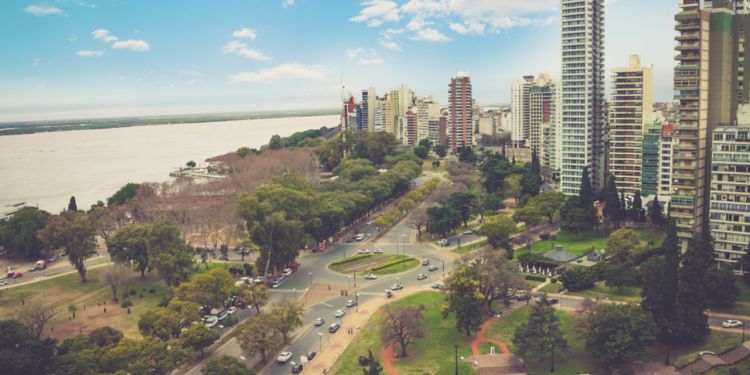
Find a job in Rosario
Rosario's labor market is very open to expatriates. You can find a job in various sectors if you are moving there.
Higher Education in Rosario: Universities and Academic Programs
Rosario is one of Argentina's premier university cities, attracting students from across Latin America. The city hosts several prestigious institutions offering undergraduate and graduate programs, many of which welcome international students. Higher education in Argentina's public universities is tuition-free for all residents, including foreigners, making it an exceptional destination for academic pursuits.
Major Universities
The Universidad Nacional de Rosario (UNR) is the city's flagship institution, founded in 1968. It ranks among the top 1,200 universities globally according to QS World University Rankings 2026. UNR enrolls approximately 86,000 undergraduate and 15,000 graduate students across 12 faculties, covering fields from medicine and engineering to humanities and architecture. The university operates through the PRAELEH program for Spanish language certification and welcomes international students through its Internationalization Area.
Other notable institutions include Universidad Austral (private, with business and medical programs), Universidad Católica Argentina (Catholic institution), and Universidad Abierta Interamericana. Several institutions offer programs in English or bilingual formats at the graduate level.
Admission Requirements for International Students
Non-Spanish-speaking students must demonstrate B2 level Spanish proficiency for undergraduate programs and C1 level for thesis defense at graduate level. International credentials require apostille certification and official translation. Students from countries requiring visas must obtain authorization from the National Directorate of Migration before enrolling. UNR issues a "Request to Enter the Country" certificate for immigration purposes.
Public University Tuition (UNR) | Free for all students |
Private University Tuition (Annual) | USD 1,000–5,000 |
Spanish Proficiency Required | B2 (undergraduate), C1 (graduate thesis) |
Sources: Universidad Nacional de Rosario, QS World University Rankings
Schooling for Children: Education Options for Expat Families
Argentina offers compulsory education from age 5 to 18, with a well-established public school system and numerous private alternatives. While Rosario does not have the concentration of international schools found in Buenos Aires, families can choose from quality bilingual private schools that combine the Argentine curriculum with English instruction. The country boasts a 98% adult literacy rate, reflecting its strong educational tradition.
School Types and Options
Public schools in Argentina are free for all residents, including foreign nationals. However, instruction is entirely in Spanish, and classes typically run half-day sessions (8am–12pm or 1pm–5pm). For expat families, private bilingual schools offer the best balance, providing Argentine curriculum requirements alongside significant English instruction. These schools generally feature longer school days, more extracurricular activities, and are accustomed to welcoming international families. Monthly tuition at private schools in Rosario ranges from USD 200 to USD 600, significantly lower than Buenos Aires equivalents.
Enrollment and Academic Calendar
The Argentine school year follows the Southern Hemisphere calendar, running from late February to mid-December. Enrollment typically occurs between October and December for the following year. Required documents include apostilled academic transcripts, vaccination records, a valid passport, and proof of residence. Foreign documents must be translated by a certified sworn translator (traductor público). While dedicated international schools are limited in Rosario, families requiring American, British, or IB curricula may consider the international schools in Buenos Aires, which is approximately 4–5 hours away by bus.
Public School Tuition | Free |
Private Bilingual School (Monthly) | USD 200–600 |
School Year | Late February to mid-December |
Sources: Argentine Ministry of Education, Expat Arrivals
Housing and Neighborhoods: Where to Live in Rosario
Rosario offers diverse housing options at prices considerably lower than Buenos Aires. The rental market includes modern high-rise apartments in the city center, charming older buildings in historic neighborhoods, and family homes in residential suburbs. Most expatriates find accommodation through local real estate websites like ZonaProp and MercadoLibre Inmuebles, or through Facebook groups dedicated to expat housing.
Popular Neighborhoods for Expats
Centro places you at the heart of Rosario's commercial and cultural life, with easy access to restaurants, shops, and the riverfront. Pichincha is the city's trendy neighborhood, known for its historic warehouses converted into bars, restaurants, and galleries—ideal for those seeking vibrant nightlife and a bohemian atmosphere. Fisherton in the north offers a quieter, more residential feel with tree-lined streets and proximity to the airport. Puerto Norte is a modern development featuring new apartment buildings with river views, pools, and gyms. For families, Alberdi and areas near Parque Independencia provide green spaces and a neighborhood atmosphere.
Rental Prices and Procedures
Rental contracts in Argentina typically require a local guarantor (garante) or a bank guarantee, which can be challenging for newcomers. Many landlords now accept payment in US dollars due to currency instability. Furnished apartments for short-term stays are more readily available through platforms like Airbnb. Long-term rentals are usually unfurnished. Utilities (electricity, gas, water, internet) typically add USD 50–100 monthly to rental costs.
1-Bedroom Apartment (City Center) | USD 250–400/month |
3-Bedroom Apartment (City Center) | USD 450–700/month |
1-Bedroom Apartment (Outside Center) | USD 150–300/month |
Sources: Numbeo, ZonaProp
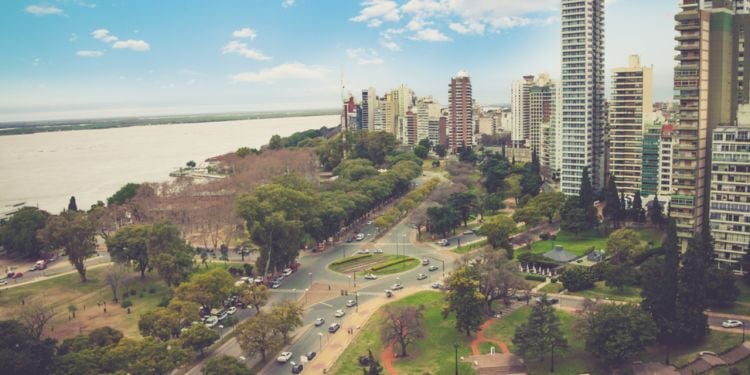
Accommodation in Rosario
Your search for accommodation in Rosario can be quite easy. The city has a wide variety of housing options from which you can choose.
Leisure, Culture and Things to Do in Rosario
Rosario punches above its weight in cultural offerings, with world-class theaters, diverse museums, and a vibrant nightlife scene concentrated in the Pichincha district. The city's riverside location provides ample opportunities for outdoor recreation, from sandy beaches to island excursions on the Paraná Delta.
Museums and Cultural Attractions
The Monumento a la Bandera (National Flag Memorial) is Rosario's iconic landmark, commemorating the site where Argentina's flag was first raised in 1812. The tower offers panoramic city views, and the daily flag-raising ceremony at 8:15am draws visitors year-round. MACRO (Museum of Contemporary Art) occupies a striking converted grain silo along the riverfront, showcasing Argentine artists across ten floors with rooftop city views. The Museo Municipal de Bellas Artes Juan B. Castagnino houses over 4,000 works and is considered one of Argentina's finest art collections outside Buenos Aires. Teatro El Círculo, opened in 1904, is a beautifully preserved opera house hosting concerts, ballet, and theatrical performances.
Outdoor Activities and Nightlife
The Costanera stretches 8 kilometers along the Paraná, offering bike paths, parks, and weekend flea markets. Boat services from Estación Fluvial transport visitors to delta islands with sandy beaches and picnic areas—particularly popular from November to March. Parque Independencia is the city's largest green space, featuring a rose garden, children's playground, and home to Newell's Old Boys football stadium. For nightlife, the Pichincha neighborhood comes alive after 10pm with craft breweries, wine bars, and live music venues housed in restored brick warehouses.
Daily Life in Rosario: Getting Around and Local Culture
Daily life in Rosario moves at a relaxed pace compared to larger metropolises. The city is highly walkable in its central areas, and the riverfront lifestyle encourages outdoor activities. Understanding local customs—like the afternoon siesta and late dinner times—helps newcomers adapt quickly to the Argentine rhythm of life.
Public Transportation
Rosario's public transport system operates 24 hours a day, 365 days a year through an extensive bus network. The city uses the MOVI card, a rechargeable contactless card for bus fares and the public bicycle system. Bus tickets cost approximately USD 0.30–0.50 per ride, with discounts for multiple trips. The SUBE card, Argentina's national transport card, is also accepted in Rosario and can be used in other cities like Buenos Aires. Taxis are affordable and readily available, while ride-sharing apps operate throughout the city. For longer distances, Rosario has an international airport (Islas Malvinas) with domestic connections and a modern bus terminal linking to Buenos Aires (4–5 hours) and other major cities.
Lifestyle and Cultural Norms
Argentines typically eat dinner late, often after 9pm, and restaurants fill up around 10pm on weekends. Mate, the traditional herbal tea, is a cornerstone of social life—sharing mate is a sign of friendship and hospitality. Sundays are family days, and many shops close. The city converts Boulevard Oroño and riverside streets into pedestrian and bicycle zones on Sunday mornings from 8:30am to 12:30pm. Spanish is essential for daily life, though younger generations often speak some English. Banking hours are typically Monday to Friday, 10am to 3pm, and many transactions still require cash.
Cost of Living in Rosario: Budget Planning for Expats
Rosario offers one of the most affordable cost-of-living profiles among major Argentine cities. Rent prices are approximately 60% lower than Buenos Aires, and everyday expenses from groceries to dining out remain budget-friendly. The fluctuating exchange rate can benefit those earning in foreign currencies, though it requires careful financial planning.
Monthly Budget for a Single Person
The following table provides estimated monthly costs for a single person living a moderate lifestyle in central Rosario:
Category | Estimated Cost (USD) |
Rent (1-bedroom, center) | USD 300–400 |
Utilities (electricity, water, gas, internet) | USD 50–90 |
Groceries | USD 150–250 |
Public Transport | USD 20–40 |
Dining Out & Entertainment | USD 100–200 |
Private Health Insurance | USD 30–80 |
Total (Single Person) | USD 650–1,060 |
Monthly Budget for a Family of Four
Families will find Rosario accommodating, with costs scaling reasonably for larger households:
Category | Estimated Cost (USD) |
Rent (3-bedroom, center) | USD 500–700 |
Utilities | USD 80–120 |
Groceries | USD 400–550 |
Public Transport | USD 50–80 |
Private School Fees (2 children) | USD 400–1,000 |
Family Health Insurance | USD 100–200 |
Leisure & Entertainment | USD 150–300 |
Total (Family of Four) | USD 1,680–2,950 |
Sources: Numbeo, Expatistan
In Short
Rosario offers expatriates an authentic Argentine experience at a fraction of Buenos Aires prices. The city combines economic opportunity—particularly in agro-industry and emerging tech sectors—with genuine cultural richness and riverside charm. While Spanish is essential for daily life and dedicated international schools are limited, families and professionals will find a welcoming community, excellent public universities, quality healthcare, and an enviable quality of life. The manageable city scale makes it easy to build connections, while the vibrant cultural scene ensures there's always something to explore. Whether you're drawn by career opportunities, affordable living, or the laid-back riverside lifestyle, Rosario rewards those who take the time to discover its many layers. Connect with others making the move at the Expat.com Rosario forum to share experiences and get advice from fellow expatriates.
We do our best to provide accurate and up to date information. However, if you have noticed any inaccuracies in this content, please contact us.


Essential services for your expat journey



