Buenos Aires eats late, eats often, and treats the table as a social institution. Dinner rarely starts before 21:00, merienda bridges the long afternoon, and historic cafés sit under formal heritage protection alongside chef-driven openings in Chacarita and Palermo. Beyond the asado and parrilla reputation, the city's food identity runs through pizzerías, bodegones, indoor markets, immigrant neighbourhoods like Barrio Chino and Barrio Coreano.
Buenos Aires is internationally recognized as a major Latin American dining destination, with an identity rooted in asado and parrilla culture alongside a broader contemporary restaurant scene. The 2025 MICHELIN Guide Buenos Aires & Mendoza describes grilled meat as part of Argentina's culinary DNA while listing 1 Two-MICHELIN-Star restaurant and 9 One-MICHELIN-Star restaurants within the joint guide scope, alongside Bib Gourmand and Recommended venues. Note that this count covers both Buenos Aires and Mendoza, not the city alone.
Dining is a social habit in Buenos Aires: porteños "love to eat out," and the landscape combines historic cafés, steakhouses, modern restaurants, international cuisine, and puertas cerradas (closed-door restaurants run from private homes). Dense restaurant zones include Palermo Soho, Palermo Hollywood, Puerto Madero, Las Cañitas, and San Telmo.
The city eats late. Restaurants typically open for lunch service, close in the afternoon, and reopen for dinner. Merienda, a late-afternoon snack of coffee and pastries, is named as a traditional daily moment in cafés, bridging the long gap between lunch and a 9 pm-or-later dinner.
Coffeehouse culture is treated as civic heritage. A 2026 city government resolution validated a consolidated catalog of Cafés, Bares, Billares y Confiterías Notables under city heritage laws, formally recognizing traditional cafés and bars as protected cultural venues rather than purely commercial spaces.
Several foods function as everyday porteño staples rather than tourist set-pieces. Fugazzeta, fugazza, and fainá are central pizza styles, and the city government frames fugazzeta as "one of the most beloved classics of local gastronomy." The official Fugazzeta Fest is structured as a circuito barrial across multiple pizzerías in La Boca rather than a single ticketed venue, which reflects a common local habit: sampling a classic slice style across different neighborhood pizzerías, often treating it as a casual meal rather than formal dining.
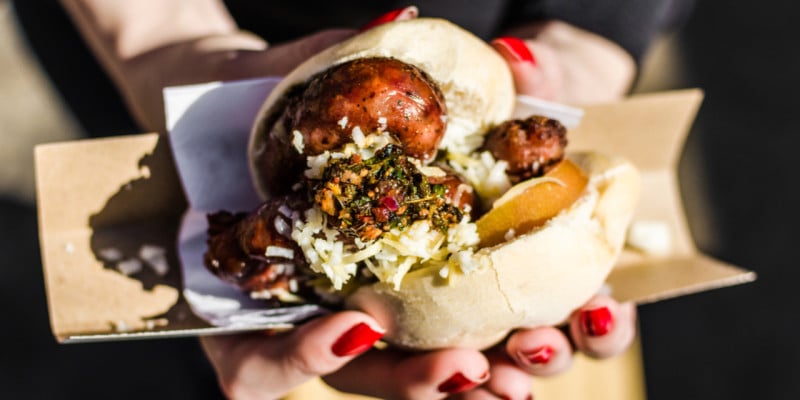
Empanadas and choripán are staples encountered most often through markets and neighborhood spots rather than curbside stalls. Casual eating in Buenos Aires is strongly tied to indoor markets, pizzerías, parrillas, and neighborhood food circuits, rather than an always-on street-stall culture.
Where to find everyday specialties
Mercado de San Telmo (Defensa 963, San Telmo): Monday to Sunday, 09:00–20:00; free entry. A one-stop location to eat empanadas, choripán, shawarma, raclette, and Argentine wine, reflecting how local food identity blends immigrant and porteño influences.
Mercado de Belgrano (Av. Juramento 2527): fresh produce stalls Monday to Saturday, 08:30–20:00; gastronomic outlets Monday to Sunday, 11:00–24:00.
Mate remains a cultural ritual deeply rooted in Argentine sociability, framed by the national Ministry of Culture as a daily practice tied to identity and shared time, and it appears in Buenos Aires daily life accordingly.
Join the Buenos Aires community
Get regular tips and advice to make the most of your expat life
Types of dining in Buenos Aires
Buenos Aires keeps a famously late table. Lunch typically runs 13:00–15:00, merienda roughly 17:00–19:00, and dinner from around 21:00 until midnight or later. Restaurants commonly close between lunch service and dinner service, which is one reason cafés and merienda remain such a strong daily anchor.
Fine dining and upscale restaurants
The MICHELIN Guide lists 52 selections for Ciudad Autónoma de Buenos Aires, including 3 one-star restaurants in the city. Sought-after venues are reservation-sensitive, particularly on Friday and Saturday nights after 21:00. Some restaurants take reservations by phone or Instagram direct message rather than only through booking platforms, so newcomers should be ready to use those channels.
Casual restaurants and everyday dining
Bodegones, which are hearty, classic neighborhood comfort-food restaurants, coexist with newer, design-forward reinterpretations of the same tradition. The dining scene blends everyday local institutions with modern culinary experimentation rather than separating them. Pizzerías are part of fast, informal eating: it is common for locals to eat a slice standing at the counter (de parado) alongside sit-down parrillas and bodegones.
Cafés, bakeries, and notable bars
Bares Notables recognizes more than 80 notable bars, cafés, and confiterías as protected venues. Cafés function as cultural institutions for meetings, lingering conversations, and the late-afternoon merienda, not just takeaway coffee.
Food markets and gastronomic hubs
Indoor markets serve as practical hubs that combine browsing, prepared food, and grocery shopping. The Mercado de San Telmo anchors a tourism-heavy, food-rich daytime scene. Patio de los Lecheros operates on a food-hub model with multiple vendors and casual gatherings.
Fast food and chains
Global chains such as McDonald's are present across the city, and quick commerce is part of daily eating for some residents. App-based delivery is mainstream through PedidosYa and Rappi, with Rappi marketing supermarket delivery in minutes through its Turbo service.
The best food neighborhoods in Buenos Aires
Dining in Buenos Aires is not concentrated in a single restaurant district. Several barrios function as distinct culinary hubs, each with its own profile.
Palermo (Soho and Hollywood)
Palermo is the densest restaurant zone, spanning all price tiers. Palermo Soho leans toward cafés, third-wave coffee, and shops; Palermo Hollywood concentrates restaurants and bars. Expect more visitors, trend-focused venues, and tighter competition for prime-time tables.
Chacarita
Chacarita has emerged as a pace-setting modern gastronomy hub, associated with chef-driven openings and natural wine bars. Expect smaller rooms and a higher likelihood of needing reservations at newer spots, especially on weekends.
Villa Crespo
Villa Crespo is widely associated with long-running immigrant cuisines, particularly Armenian cuisine, and is known for strong value-for-money dining. It is a practical area for hearty group dinners and casual nights out, with bodegones and neighborhood parrillas rather than gourmet versions.
Belgrano and Barrio Chino
Barrio Chino within Belgrano, bounded by Arribeños, Mendoza, Juramento, and Montañeses, combines restaurants, supermarkets, and casual stalls and signals a common local dining rhythm: for dinner, most restaurants open around 20:00. The Mercado Belgrano operates as an emblematic neighborhood market combining produce and gastronomy, with gastronomic outlets running late.
San Telmo
San Telmo functions as a daytime market and casual eating neighborhood, anchored by the historic Mercado de San Telmo from 1897.
International cuisine in Buenos Aires
Buenos Aires is a metropolis of bars and restaurants spanning traditional bares notables, contemporary fine dining, and global trends including plant-based cuisine.
East Asian cuisine
Chinese, Taiwanese, and broader East Asian options concentrate in Barrio Chino in Belgrano. The area's identity is tied to immigration from China, Japan, and Thailand. Belgrano Chinatown has diversified in recent years, with passages and alleys offering mixed-format street food including ramen, ceviche, and specialty coffee, indicating fusion rather than strict single-cuisine separation.
Korean cuisine
The recognized Korean hub is Barrio Coreano in Flores, centered on Avenida Carabobo between Av. Eva Perón and Av. Castañares.
Peruvian cuisine
Peruvian cuisine has grown strongly in its contemporary form, with at least 130 Peruvian restaurants spread across many parts of the city, from Abasto to Pompeya, Liniers to the Congress area, and Belgrano to Puerto Madero.
Grocery shopping in Buenos Aires
Grocery shopping in Buenos Aires typically combines three layers: supermarket stock-up trips often timed to bank or app discount days; frequent small purchases at local verdulerías, carnicerías, and panaderías; and trips to city-run markets for fresh produce and prepared foods.
Major supermarket chains
Chains in daily use include Coto, Carrefour, Día, Jumbo, Disco, and Vea, with smaller Express and Market formats for close-to-home basics. Price comparison across these chains is active and updated daily, consistent with shoppers chasing promotions and splitting purchases by category.
Online grocery shopping and delivery
The Carrefour app supports online shopping with coupons usable in-store and online, and offers Entrega Inmediata, home delivery, branch pickup, and Drive, subject to coverage zones. A minimum purchase amount of ARS 10,000 applies (subject to change). Disco's online store advertises same-day delivery and prompts customers to schedule delivery days.
Good to know:
Carrefour's in-store service specifies that credit cards must be issued in Argentina and cannot be prepaid. This is a meaningful constraint for newcomers relying on foreign cards during their settling-in period.
Municipal markets
Mercado Belgrano (Juramento 2527): Monday to Saturday, 08:30–14:00. Stalls include queserías, pescadería, carnicerías, pollerías, panaderías, vegan options, dietéticas, and pasta shops.
Mercado San Nicolás (Av. Córdoba 1750): Monday to Saturday, 08:00–18:00, with rotiserías, queserías, carnicerías, pollerías, pescaderías, and verdulerías. The Mercado a la Canasta pickup basket model operates here.
Mercado Bonpland (Bonpland 1660): Tuesday, Wednesday, Friday, and Saturday, 10:00–17:00, with an emphasis on organic, regional, and farm products.
International and specialty groceries
For Asian ingredients and imported packaged goods, Arribeños street in Belgrano's Barrio Chino concentrates supermarkets carrying both Western and Asian products. Specialty stores such as Tina & Co. in Belgrano offer curated imported products and beers.
Discount culture
Grocery budgeting in Buenos Aires is heavily promotion-driven. Banks and payment apps offer time-limited discounts tied to specific weekdays for shopping, for example, a Banco Hipotecario partnership offering 25% off at Jumbo, Disco, and Vea through MODO, with a monthly cap. Many residents plan grocery runs around the bank and app discount calendars.
Eating out costs in Buenos Aires
Prices in Buenos Aires can shift quickly. The city's CPI basket explicitly tracks Restaurantes y hoteles, and the IPCBA inflation bulletin consistently shows monthly variation in this category. Therefore, expect menus to be updated frequently.
Everyday dining feels moderate when local habits are adopted — the menú ejecutivo, neighborhood cafés, and bodegones — while trendy or tourist-heavy zones such as Palermo and Recoleta feel markedly pricier.
Indicative per-person ranges
Neighborhood bodegón or pizzería: roughly ARS 15,000–50,000 per person (approximately USD 11 to USD 35).
Mid-range à la carte restaurant: ARS 30,000–100,000 per person (approximately USD 21 to USD 70). Wide dispersion reflects neighborhood, wine choices, and tourist versus local positioning.
Traditional parrilla: ARS 80,000–300,000 per person.
Alta cocina: ARS 150,000–800,000 per person, with top-end global-name venues cited in the range of ARS 400,000–2,000,000 per person.
Tipping
A tip of around 10% is customary, often left in cash even when cards are accepted. The cubierto or servicio de mesa is a cover charge, not a tip. These are separate concepts and should be read carefully on the bill. Voluntary service charges are sometimes added automatically, so check the bill before adding an extra tip.
Dietary requirements in Buenos Aires
Buenos Aires offers strong practical coverage for vegetarian, vegan, and gluten-free diets. Halal and kosher options are available through specific certified venues and community directories rather than mainstream restaurants.
Vegetarian and vegan options
Plant-based dining is publicly visible and actively marketed. The city has hosted vegan festivals, and VisitBUE publishes a dedicated Buenos Aires vegan gastronomic guide.
Gluten-free (Sin TACC)
Packaged foods labeled Libre de Gluten must carry the Sin TACC identification (sin trigo, avena, cebada y centeno), and consumers can verify products in ANMAT's Listado Integrado de Alimentos Libres de Gluten, which shows current status as Vigente. For medically required gluten-free eating, combine the Sin TACC label with a check in the ANMAT listing. When ordering, ask for opción sin TACC or menú libre de gluten.
Halal food
The Centro Islámico de la República Argentina (CIRA) has issued halal certification since 1978 and publishes a list of Establecimiento Halal entries, including venues in Ciudad de Buenos Aires with addresses.
Kosher food
Kosher dining is organized through community and traveler-facing directories, including the Chabad of Buenos Aires restaurant list and detailed venue entries on goKosher with Buenos Aires addresses.
Food delivery in Buenos Aires
Food and on-demand delivery are mainstream urban services. PedidosYa's orders include a delivery cost (Costo de Envío) and a service fee (Tarifa por el Servicio); if the user rejects these, the order cannot be confirmed. Rappi's Buenos Aires restaurant listings show per-order delivery prices in ARS upfront, varying by store and order, alongside ETAs commonly displayed between 12 and 50 minutes. The Rappi Pro subscription reduces the service fee by at least 20% on orders above a minimum value.
On PedidosYa, tipping is optional and added in-app depending on the zone.
Good to know:
Rappi Turbo and PedidosYa Market both market grocery and convenience delivery in around 10 minutes.
Dining out in Buenos Aires is typically social and unhurried, with late starts and long table time. Arriving "early" by North American or European standards (before 20:30) often means an empty dining room. Plan dinner later and use merienda or cafés to bridge the afternoon-to-evening gap.
Reservations
Reservations are widely used, and many venues manage bookings through WhatsApp alongside online forms. Many businesses publish WhatsApp as a primary reservation line. A form submission alone does not always guarantee a table; check whether your reservation is explicitly confirmed (often via WhatsApp message) and keep a screenshot. Groups of six or more are typically asked to contact venues by WhatsApp, phone, or email rather than booking online.
Dress codes
Most venues operate on smart casual norms rather than strict formalwear, including trendier bars, restaurants, and tasting-menu experiences. Reserve formal attire for specific special-occasion venues or events.
Paying the bill
Expect the POS device to come to the table rather than your card being taken away upon asking for the bill. Argentina has a national framework for propina electrónica (digital tipping), which requires payment service providers to enable the addition of a tip to electronic payments. Digital tip options at checkout are increasingly visible, but cash tipping remains common depending on the venue.
Good to know:
In the Ciudad Autónoma de Buenos Aires, when a restaurant adds a servicio de mesa or cubierto charge, there is an official obligation to provide specific items as part of that charge, including at least 250cl of water per person, a gluten-free bread option, and a low-sodium salt option. The cubierto is a separate concept from the tip and is not gratuity.
Pace of service
Meals are paced as longer experiences, especially at night. Long table time reflects local social dining rather than poor service. Cafés and meriendas are treated as social pauses; sitting and talking is normal.
The city is strongly associated with Argentine staples such as empanadas and beef-centric dishes tied to asado and parrilla culture. Empanadas are recognized as a national gastronomic symbol and are equally ubiquitous in Buenos Aires. If you are used to North American steakhouse portions, parrilla culture often centers on sharing multiple cuts and sausages at the table, so ordering "for the table" can feel more natural than ordering individual mains.
Most established restaurants, cafés, and chains accept credit and debit cards, and contactless payments are widely available. Smaller bodegones, neighborhood pizzerías, and market stalls may be cash-preferred or cash-only, so carry some pesos when eating in informal venues. For tipping, cash is still the most common option even when the bill is paid by card.
Tipping is customary but voluntary, with around 10% typically expected for restaurant service. Argentina's national framework on propina electrónica requires payment service providers to enable the addition of a tip via electronic payments, so digital tip prompts are increasingly visible at checkout. If no digital option appears, asking the server "¿puedo agregar propina?" is the simplest way to add it to the card payment.
The late schedule is the most frequently mentioned adjustment: dinner crowds often arrive around 22:00, and the typical dinner window runs from 21:00 to 23:00. Proposing dinner at 19:00 or 20:00 with local contacts can read as unusually early, while suggesting 21:30 to 22:30 aligns more closely with local expectations. The afternoon merienda helps bridge the long gap between lunch and dinner.
Many venues take reservations through WhatsApp alongside online forms, and some chef-driven spots in Chacarita or Palermo Hollywood book out days in advance for Friday and Saturday nights. Submitting an online form does not always guarantee a table, so confirm explicitly, usually via a WhatsApp message, and keep a screenshot. Groups of six or more are typically asked to contact the venue directly by WhatsApp, phone, or email rather than booking online.
ℹ️
We do our best to provide accurate and up to date information. However, if you have noticed any inaccuracies in this article, please let us know in the comments section below.
A journalist, holder of the DALF C1 and C2 and a diploma from the University of Mauritius, I have nearly twenty years of writing experience. After six years in the Mauritian press, I joined Expat.com, where I have been working for over a decade, including five years as editorial assistant, and now as editorial manager.