Living in Melbourne: the ultimate expat guide
Everything you need to know for a successful life in Melbourne.
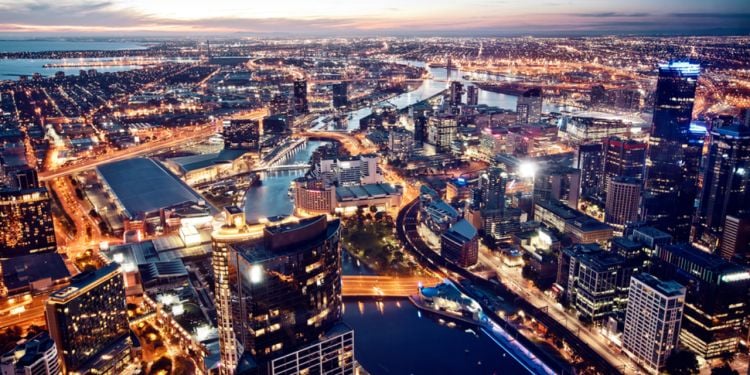
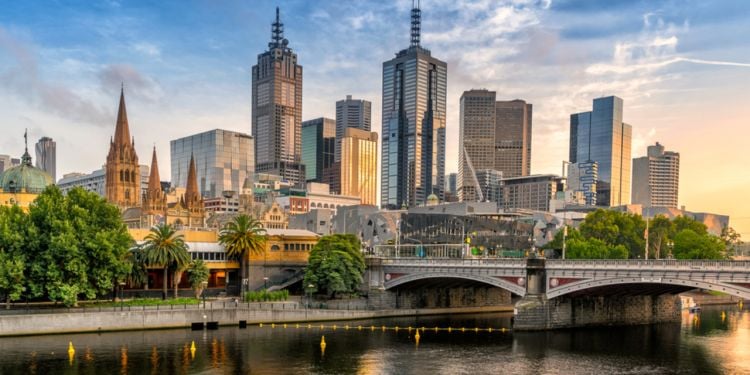
Melbourne, Australia's second-largest city with a population exceeding 5.35 million, offers an exceptional quality of life that consistently earns it recognition as one of the world's most liveable cities. Located on the southeastern coast, this cosmopolitan capital of Victoria combines European elegance with contemporary Australian culture. The city's compact CBD sits along the Yarra River, surrounded by diverse neighbourhoods that range from beachside suburbs to leafy inner-city enclaves. With over 31% of its population born overseas, Melbourne embraces multiculturalism, offering residents access to world-class dining, arts, education, and sports. The city experiences four distinct seasons, with mild winters and warm summers, though its weather is famously changeable.
5 good reasons to move to Melbourne
- World-class education: Home to top-ranked universities including the University of Melbourne (#14 globally) and Monash University (#42 globally), plus excellent international schools.
- Thriving job market: Strong employment opportunities with an unemployment rate of 4.5% and competitive salaries across sectors like technology, healthcare, finance, and professional services.
- Cultural richness: Australia's cultural capital features free-entry museums like the NGV, year-round festivals, live theatre, and a renowned coffee and food scene.
- Excellent public transport: The world's largest tram network, extensive train and bus services, plus a Free Tram Zone in the CBD make getting around convenient and affordable.
- High quality of life: Safe, clean, and green with beautiful parks, beaches within reach, excellent healthcare, and a welcoming multicultural community.
Source: World Population Review
Working in Melbourne
Melbourne's economy is one of Australia's strongest, offering diverse employment opportunities across multiple sectors. The city serves as a key financial services hub and hosts headquarters for numerous multinational corporations.
Key employment sectors
The city's economy is anchored by several thriving industries. Professional services including finance, banking, and insurance employ hundreds of thousands, with companies like ANZ, NAB, and major consulting firms maintaining significant operations. The healthcare and social assistance sector represents Melbourne's largest employer, supported by world-class hospitals and medical research facilities. The technology and innovation sector continues rapid growth, with startups and established tech companies seeking skilled workers in software development, cybersecurity, and data science. Construction and property development remain strong given Melbourne's population growth.
Work permits and visa requirements
International workers must secure appropriate visas before taking up their posts. Options include the Skilled Independent (189) for permanent work without sponsorship, the Employer Nomination Scheme (186) for sponsored permanent residency, and the Temporary Skill Shortage (482).
Unemployment rate | 4.5% |
Average monthly salary (net) | AUD 6,502 |
Key sectors | Healthcare, professional Services, education, technology, finance |
Data correct as of December 2025.
Source: Numbeo
Work in Melbourne
Planning a move to Melbourne? As an expat on the ground in Melbourne, one of the first things you must do is secure a job. Melbourne is ...
Higher education & universities
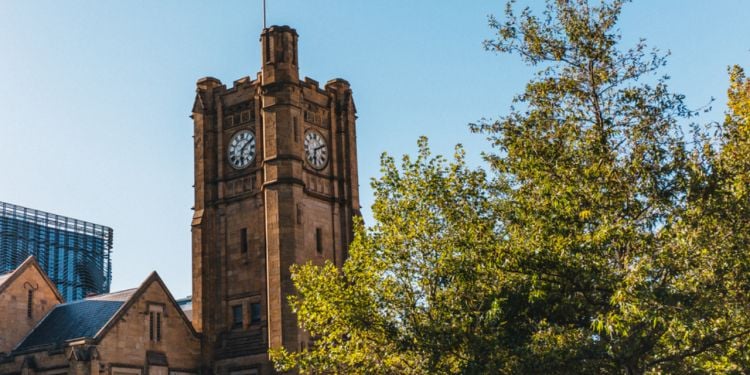
Melbourne is home to eight universities that attract over 300,000 students annually. The city's institutions consistently rank among the world's best, offering undergraduate and postgraduate programs across every discipline. International students comprise a significant portion of the student body, benefiting from globally recognized qualifications and post-study work opportunities.
Leading universities
The University of Melbourne, ranked 14th globally in QS rankings 2024, is Australia's top-ranked institution. Founded in 1853, it offers the distinctive Melbourne Model where students complete a three-year bachelor's degree followed by a specialized master's program. Monash University (ranked 42nd) is Australia's largest, known for engineering and medicine, offering double-degree options. RMIT University specializes in technology and design, providing practical, industry-connected pathways from diplomas to degrees.
Admission requirements and process
International students must generally complete secondary education equivalent to Australian Year 12, with required grades varying by program. Applications are submitted directly through university websites or via the Victorian Tertiary Admissions Centre (VTAC) for undergraduate programs. Application deadlines generally fall between August and November for February intake, or April to May for July intake. Processing takes four to eight weeks, and successful applicants receive offer letters specifying tuition fees and enrollment conditions.
Sources: University of Melbourne, Monash University, RMIT University
Study in Melbourne
The second-largest city in Australia is home to several well-regarded universities, making it a popular destination for international students. Each ...
Schooling for children
The Australian education system comprises primary school (Prep to Year 6), secondary school (Years 7–12), with students typically completing the Victorian Certificate of Education (VCE) for university entry.
Public and international schools
Public schools in Melbourne are free for Australian citizens and permanent residents, though temporary residents may need to pay tuition fees. Schools are assigned based on catchment areas tied to residential addresses.
International schools in Melbourne provide curricula familiar to expat families, including British, American, and IB programs. Among the options are Wesley College in St Kilda, Elsternwick, and Glen Waverley, offering the IB continuum from early childhood through Year 12. Scotch College in Hawthorn provides IB programs for boys from Prep to Year 12 in a prestigious setting. Presbyterian Ladies College (PLC) in Burwood offers the IB Diploma for girls in Years 11–12 as an alternative to VCE, while Australian International Academy combines secular and Islamic education with IB programs (PYP, MYP, and DP).
Enrollment and requirements
Applications typically require previous school reports, birth certificates, passport copies, and student visas. Some schools conduct assessments or interviews. Application fees range from AUD 100 to 300, with additional costs for uniforms, textbooks, and extracurricular activities. English language support is available for non-native speakers through English as an Additional Language (EAL) programs in many schools.

International schools in Melbourne
Australia is known for its quality schools and education system. So, if you're moving to Melbourne with school-aged children, you can either take ...
Housing & neighbourhoods
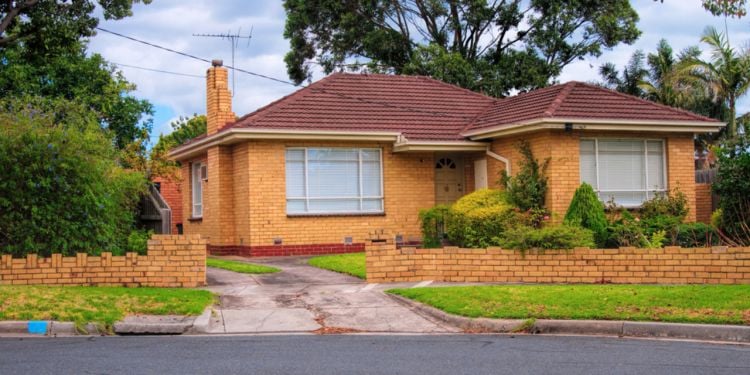
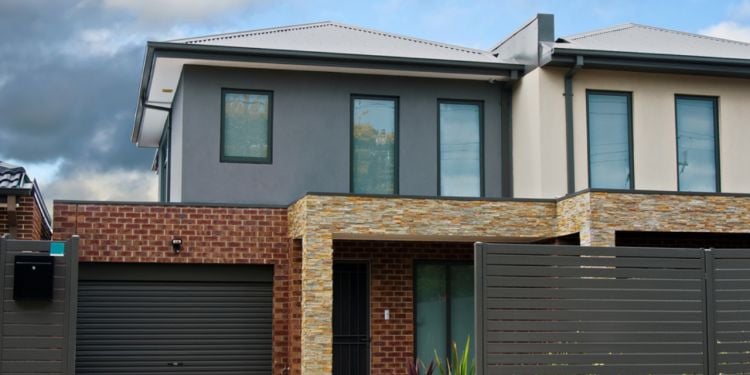
Melbourne's housing market has a range of options from modern CBD apartments to spacious suburban homes. Rental prices vary significantly based on location, with inner-city areas commanding premium rates while outer suburbs provide better value.
Popular expat neighbourhoods
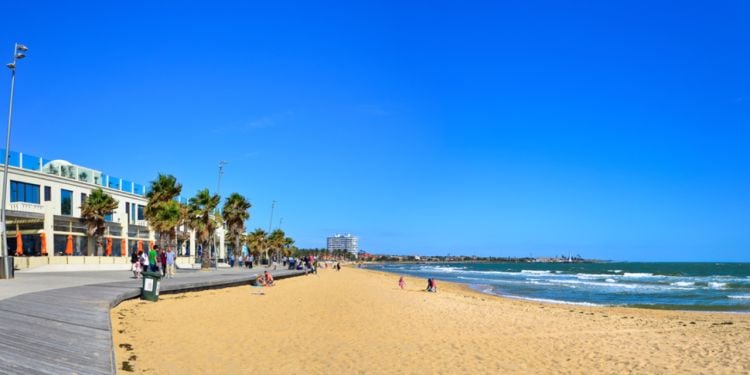
Southbank and Docklands attract young professionals and expats seeking modern apartment living with proximity to CBD. These waterfront areas offer restaurants, entertainment, and excellent transport links. St Kilda provides beachside living with a bohemian atmosphere, popular among internationals for its cafés, markets, and nightlife. Brighton and Bayside suburbs provide upscale residential living with beach access, attracting families seeking quality schools and spacious homes.
Rental process and costs
Prospective tenants have to provide identification, visa documentation, employment references, and proof of income. Landlords typically request one month's rent as bond (security deposit) held by the Residential Tenancies Bond Authority. Advance rent of two to four weeks is standard. Lease terms usually run for 12 months.
1-bedroom apartment in the city center | AUD 1,847 - 3,050/month |
3-bedroom apartment in the city center | AUD 4,000 - 6,000/month |
Data correct as of December 2025.
Source: Numbeo
🔍To learn more
Leisure, culture & things to do
Melbourne's reputation as Australia's cultural capital stems from its year-round festivals, world-class museums, thriving arts scene, and passionate sports culture. The city offers something for every interest, from high culture to street art, and from fine dining to weekend markets.
Museums, galleries and cultural attractions
The National Gallery of Victoria (NGV) is Australia's oldest and most visited art museum, operating two magnificent sites. NGV International on St Kilda Road showcases European, Asian, and international collections, while The Ian Potter Centre: NGV Australia at Federation Square exclusively displays Australian art including Indigenous works. Federation Square is Melbourne's cultural heart, hosting the Australian Centre for the Moving Image (ACMI), which explores film, television, and digital culture. Other popular attractions include the Melbourne Museum, the Immigration Museum and the Shrine of Remembrance, which honours military service with striking architecture and city views.
Sports and nightlife
Melbourne is a sporting city. The Melbourne Cricket Ground (MCG) hosting AFL football from March to September and cricket in summer. Global tennis stars arrive in January for the Australian Open, followed by the Australian Grand Prix in March. For nightlife, follow the crowds to popular areas like Chapel Street in Prahran, Brunswick Street in Fitzroy, and St Kilda's Acland Street.
Sources: Melbourne Cricket Ground (MCG), Melbourne Museum
🔍To learn more

Things to do in Melbourne
Melbourne has a lot going on. Whether you are looking for a park to picnic in, laneways to ...
Sports in Melbourne
Melbourne is the sporting capital of Australia. The proud birthplace of Aussie Rules footy, ...

Gastronomy in Melbourne
It is no secret that Melbourne is very famous for its excellent food and first-rate coffee. A ...
Daily life
Melbourne's daily rhythm combines relaxed Australian lifestyle with urban sophistication. The city wakes early, with cafes bustling by 7am as locals embrace the renowned coffee culture. Work-life balance is valued, with most professionals finishing by 6pm to enjoy evenings at restaurants, parks, or cultural events.
Getting around Melbourne
Melbourne has the world's largest tram network, alongside extensive train and bus services. All public transport uses the myki smartcard for ticketing. A Free Tram Zone covers the CBD, including key landmarks, where no ticket is required. Additionally, the City Circle Tram offers free rides with audio commentary. The Night Network ensures transport availability on Friday and Saturday nights. The City Circle Tram offers free rides with audio commentary between 9:30am–5pm daily.
Lifestyle and cultural habits
Melburnians embrace outdoor living despite variable weather. The city's parks, including the Royal Botanic Gardens and riverside trails, see constant activity from joggers, cyclists, and picnickers. Coffee culture is serious business, with many locals favouring independent cafés over chains. Dress is generally casual except in corporate settings, and the attitude is friendly yet reserved compared to other Australian cities.
Sources: Myki, Royal Botanic Gardens
🔍To learn more

Adjusting to the local culture in Melbourne
Melbourne is home to one of the most culturally diverse communities in the world. Around 140 different cultures are represented in Melbourne, ...

Getting around Melbourne
Melbourne provides a range of different options for getting around, whether you're heading into the city each day for work or trying to find the ...
Living in Melbourne
Melbourne is known as the foodie capital of Australia. It also takes the crown as the sporting ...
Cost of living
When it comes to the cost of living in Melbourne, the city ranks as one of Australia's most expensive, though it remains more affordable than comparable international cities like London or Singapore.
Monthly expenses for a single person
Rent (1-bedroom apartment in the city center) | AUD 1,847 - 3,050 |
Groceries | AUD 400–600 |
Utilities | AUD 190 - 450 |
Data correct as of December 2025.
Monthly expenses for a family of four
Rent (3-bedroom apartment in the city center) | AUD 4,000 - 6,000 |
Groceries | AUD 1,200–1,600 |
Utilities | AUD 350 - 500 |
Data correct as of December 2025.
In short
Melbourne offers expatriates an exceptional blend of urban sophistication and outdoor lifestyle. With top-ranked universities, a thriving job market, excellent public services, and a welcoming multicultural community, the city provides everything needed for a fulfilling life abroad. From world-class museums and dining to beautiful parks and beaches, Melbourne delivers quality living that few cities match. While costs are higher than many global destinations, competitive salaries and comprehensive infrastructure make it manageable. Ready to make Melbourne home? Join the Expat.com Melbourne forum to connect with others who've made the move and get insider tips for settling into this remarkable city.
We do our best to provide accurate and up to date information. However, if you have noticed any inaccuracies in this content, please contact us.


News & testimonies

Distance learning: The world is your classroom
Living abroad can be a great adventure — especially when you are young. Moving to a foreign country comes with many challenges and rewards — an original lifestyle, new friends, unique culture, and new habits. It's also an excellent excuse for you to discover the contemporary way of learning (aka distance learning), and prepare from wherever with access to the Internet for your future job in who-knows-where. Find out more about distance learning from Aurelien, a French expat and digital student in Australia.
Michel: "Melbourne has a more European way of life, with its cafes, terraces and restaurants"
Head of the Alliance Française of Melbourne, Michel has been living in Australia for eight months. He shares with us his feelings about the country and the Alliance Française's actions.

Rosy in Melbourne: "The people here are friendly"
Rosy comes from South Africa. She moved to Melbourne six months ago with her husband. She is a dietitian and is currently involved in the sales of medical equipment.

Australia considers regional visa rules for foreign workers
Australia is amid a major rethink of its regional migration policy, aiming to attract more skilled foreign workers to areas beyond its major cities. The goal? To help fill critical labor shortages in regional communities and make it easier for expatriates to settle and thrive outside the country's urban centers.