Living in Chicago: the ultimate expat guide
Everything you need to know for a successful life in Chicago.
Chicago stands as the third-largest city in the United States, home to approximately 2.7 million residents within city limits and over 9.4 million in the greater metropolitan area. Located on the southwestern shore of Lake Michigan, Chicago offers a unique blend of world-class culture, diverse neighborhoods, and strong economic opportunities that continue to attract newcomers from around the globe.
Known as the "Windy City," Chicago boasts iconic architecture, a thriving food scene, and four distinct seasons. The city serves as a major hub for finance, technology, healthcare, and transportation, with excellent public transit connecting its 77 distinct neighborhoods. For those considering relocation, Chicago offers significantly lower living costs compared to coastal cities like New York or San Francisco while maintaining comparable career opportunities and cultural amenities.
5 Good Reasons to Move to Chicago
- Affordable major city living – Housing and overall costs run 30-45% lower than New York or Los Angeles.
- World-class cultural institutions – Home to the Art Institute, Field Museum, and renowned theater scene.
- Diverse job market – Over 30 Fortune 500 companies headquartered in the metro area.
- Excellent public transportation – The CTA operates 24/7 on key routes, reducing car dependency.
- Lakefront lifestyle – 26 miles of public beaches and trails along Lake Michigan.
Working in Chicago: Career Opportunities in America's Heartland
Chicago's economy ranks among the most diverse in the United States, offering employment opportunities across multiple sectors. The city serves as headquarters for major corporations in finance, food processing, healthcare, and technology. For international professionals, securing employment typically requires sponsorship for an H-1B visa, though recent policy changes have significantly increased associated costs.
Key Industries and Major Employers
The financial services sector anchors Chicago's economy, with the Chicago Mercantile Exchange and Chicago Board of Trade representing the world's largest derivatives markets. Major employers include United Airlines, Boeing, McDonald's, Walgreens, Abbott Laboratories, and Kraft Heinz. The technology sector has grown substantially, with companies like Grubhub, Groupon, and numerous startups establishing presence in neighborhoods like Fulton Market and West Loop.
Work Permits and Visa Requirements
International workers typically require an H-1B specialty occupation visa for professional employment. As of September 2025, new H-1B petitions require an additional $100,000 filing fee for beneficiaries outside the United States, significantly impacting employer sponsorship decisions. The annual H-1B cap remains at 85,000 visas, including 20,000 reserved for advanced degree holders from U.S. institutions. Alternative pathways include the L-1 intracompany transfer visa and O-1 extraordinary ability visa.
The following table summarizes key employment indicators for the Chicago metropolitan area:
Unemployment Rate (Metro Area) | 4.7% (July 2025) |
Average Annual Salary | $74,500 |
Median Hourly Wage | $34.42 |
Top Sectors | Finance, Healthcare, Food & Beverage, Technology |

Work in Chicago
Chicago is one of the largest cities and economies in the United States. Its unique Midwest location means there is a broad range of jobs, from ...
Higher Education in Chicago: World-Renowned Universities
Chicago hosts some of America's most prestigious universities, attracting over 150,000 students to the metropolitan area annually. International students benefit from diverse program offerings, research opportunities, and strong connections to local industries. The city's universities consistently rank among global leaders in business, law, medicine, and engineering.
Top Universities for International Students
The University of Chicago, located in Hyde Park, ranks among the world's top research institutions with particular strength in economics, law, and the sciences. Undergraduate tuition for 2024-25 stands at approximately $70,662 per year, with total cost of attendance reaching $94,971 including housing and fees. The university welcomes students from over 100 countries, with international students comprising 24% of enrollment.
Northwestern University, situated in nearby Evanston, offers highly ranked programs in journalism, business (Kellogg School of Management), and engineering. The University of Illinois Chicago (UIC) provides more affordable options as a public research university, with international undergraduate tuition ranging from $28,000 to $35,000 annually depending on program.
Admission and Application Process
Most universities require standardized test scores (SAT or ACT), English proficiency tests (TOEFL or IELTS), academic transcripts, and personal essays. Application deadlines typically fall between November and January for fall enrollment. International students must demonstrate sufficient funding and obtain an F-1 student visa upon admission. Many institutions offer merit-based scholarships and need-based financial aid to qualified international applicants.
Other notable institutions include DePaul University, Loyola University Chicago, Illinois Institute of Technology, and Columbia College Chicago for arts and media programs.
Sources: University of Chicago, Northwestern University, University of Illinois Chicago
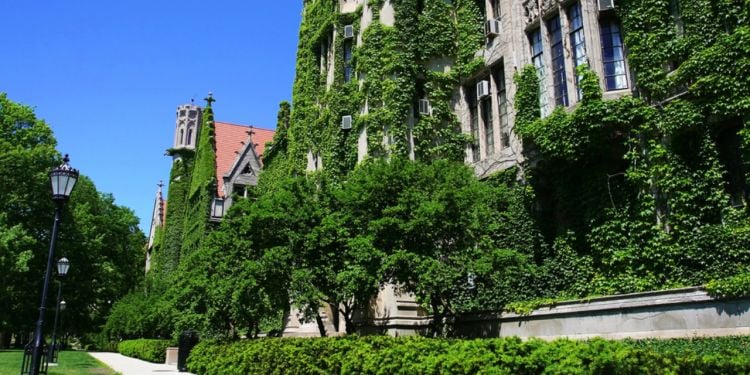
Study in Chicago
The capital of Illinois, Chicago, is one of the biggest cities in the US and by far the biggest in the Midwest. Sitting on Lake Michigan and ...
Schools in Chicago: Education Options for Expat Families
Families relocating to Chicago will find diverse educational options ranging from public schools to prestigious international institutions. Chicago Public Schools (CPS) operates over 600 schools serving approximately 320,000 students, while the private sector offers numerous alternatives including international curricula recognized worldwide.
International and Private Schools
Several international schools cater specifically to expatriate families seeking globally recognized curricula. The British International School of Chicago operates two campuses—Lincoln Park and South Loop—offering the English National Curriculum and International Baccalaureate (IB) Diploma. Annual tuition ranges from $17,810 for nursery programs to approximately $38,400 for high school grades, with additional fees for enrollment and activities.
The German International School Chicago (GISC) in Ravenswood provides bilingual German-English education from preschool through grade 8, while the Lycée Français de Chicago offers French curriculum aligned with France's Ministry of Education standards. The French American School of Chicago provides an affordable alternative at approximately $5,000 annually, operating within Chicago Public Schools facilities.
Public School Enrollment
Chicago Public Schools welcomes all resident children regardless of immigration status. Enrollment requires proof of residency, immunization records, and previous school transcripts. Several CPS schools offer International Baccalaureate programs, including Lincoln Park High School and Jones College Prep. Selective enrollment schools require application through a competitive process based on grades and standardized test scores.
Sources: Chicago Public Schools, British International School of Chicago
Housing in Chicago: Neighborhoods and Rental Prices
Chicago's housing market offers remarkable diversity, from downtown high-rises to historic brownstones in tree-lined neighborhoods. Rental prices remain significantly lower than coastal metropolitan areas, though they vary considerably by neighborhood and proximity to transit. Understanding the city's geography helps newcomers identify areas matching their lifestyle and budget.
Popular Neighborhoods for Expats
Lincoln Park consistently ranks among Chicago's most desirable neighborhoods, featuring the city's largest park, excellent schools, and walkable streets lined with restaurants and shops. Average rent for a one-bedroom apartment reaches $2,200-2,500 monthly. Lakeview, adjacent to Lincoln Park, offers similar amenities at slightly lower prices, with one-bedrooms averaging $1,800-2,100.
Young professionals often gravitate toward West Loop and Fulton Market, trendy areas with new construction, proximity to corporate headquarters, and an exceptional dining scene. Expect one-bedroom rents of $2,500-3,000. Budget-conscious newcomers find value in Rogers Park, Edgewater, and Andersonville on the North Side, with one-bedrooms from $1,200-1,600.
Rental Process and Requirements
Most landlords require proof of income (typically 3x monthly rent), credit checks, and references. International tenants without U.S. credit history may need to provide additional documentation such as employment letters, bank statements, or offer larger security deposits. Lease terms typically run 12 months, with move-in costs including first month's rent, security deposit (usually one month), and application fees ($40-150).
The following table provides average rental prices across Chicago:
Studio Apartment | $1,350 - $1,700/month |
1-Bedroom Apartment | $1,650 - $2,300/month |
2-Bedroom Apartment | $2,100 - $3,000/month |
3-Bedroom Apartment | $2,500 - $3,600/month |
Sources: Apartment List, RentCafe
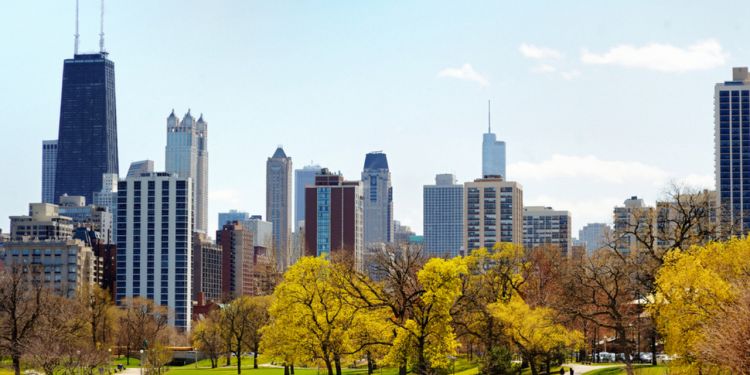
Accommodation in Chicago
Well-connected, multicultural, and business-oriented, Chicago is a great place for expats. It is home to many international organizations and a ...
Leisure and Culture in Chicago: Things to Do
Chicago's cultural offerings rival any world capital, with renowned museums, a legendary music heritage, championship sports teams, and endless dining options. The city hosts major festivals throughout the year and provides abundant green space along Lake Michigan for outdoor recreation.
Museums and Cultural Attractions
The Art Institute of Chicago ranks among the world's premier art museums, housing over 300,000 works including an exceptional Impressionist collection. General admission costs $32 for adults, with free days available for Illinois residents. The Field Museum showcases natural history including Sue, the most complete T. rex skeleton ever discovered. The Shedd Aquarium and Adler Planetarium complete the Museum Campus along the lakefront.
Music lovers appreciate Chicago's legacy as birthplace of Chicago blues and home to world-class venues. The Chicago Symphony Orchestra performs at Symphony Center, while intimate clubs in neighborhoods like Pilsen and Hyde Park feature live jazz and blues nightly. The city's theater scene includes the renowned Steppenwolf Theatre Company and dozens of storefront theaters.
Sports, Parks, and Outdoor Activities
Chicago sports fans support passionate fanbases for the Cubs and White Sox (baseball), Bears (football), Bulls (basketball), and Blackhawks (hockey). The Lakefront Trail stretches 18 miles along Lake Michigan, perfect for running, cycling, and rollerblading. Lincoln Park, at 1,200 acres, offers the free Lincoln Park Zoo, conservatory gardens, and multiple beaches. Summer brings festivals including Lollapalooza, the Chicago Air and Water Show, and neighborhood street fairs throughout the city.
Sources: Art Institute of Chicago, Choose Chicago
Daily Life in Chicago: Transportation and Lifestyle
Chicago's robust public transportation system, diverse dining scene, and neighborhood-centric culture create a lifestyle distinctly different from car-dependent American cities. Residents benefit from walkable communities, extensive transit options, and cultural offerings rivaling any global metropolis.
Getting Around: Public Transportation
The Chicago Transit Authority (CTA) operates the city's buses and elevated trains (the "L"), serving approximately 1 million riders daily. Eight color-coded train lines connect neighborhoods throughout the city, with the Blue Line and Red Line running 24/7. A single ride costs $2.50 for trains and $2.25 for buses, with unlimited ride passes available at $75 monthly. The Ventra contactless payment system simplifies fare payment via card or smartphone app.
Metra commuter rail connects Chicago to suburban communities across 11 routes, useful for those working in the city but living in outlying areas. Fares operate on a zone-based system starting at $4.25 for shorter trips. Many residents opt to live car-free, particularly in well-connected neighborhoods like Lincoln Park, Lakeview, and the Loop.
Climate and Seasonal Considerations
Chicago experiences four distinct seasons with significant temperature variation. Summers (June-August) bring warm, humid weather with temperatures reaching 80-90°F (27-32°C), ideal for enjoying the lakefront and outdoor festivals. Winters (December-February) are notoriously cold, with temperatures frequently dropping below 20°F (-7°C) and significant snowfall. The lake effect can intensify both summer humidity and winter wind chill. Proper winter gear—including insulated coats, waterproof boots, and layered clothing—proves essential for newcomers.
Sources: Chicago Transit Authority, Metra
Cost of Living in Chicago: Monthly Budget Breakdown
Chicago offers a cost of living approximately 16% higher than the U.S. national average but remains significantly more affordable than New York, San Francisco, or Los Angeles. Housing represents the largest expense, followed by transportation and food. Understanding typical costs helps newcomers budget effectively for their Chicago transition.
Monthly Budget for a Single Person
A single professional can expect monthly expenses (excluding rent) of approximately $1,300-1,500. When including rent for a mid-range one-bedroom apartment, total monthly costs typically range from $3,200-4,000 depending on neighborhood choice and lifestyle preferences.
Category | Monthly Cost (USD) | Notes |
Rent (1-bedroom) | $1,800 - $2,300 | Varies by neighborhood |
Utilities | $150 - $200 | Electric, gas, water |
Groceries | $350 - $450 | Home cooking |
Transportation | $75 - $150 | CTA monthly pass: $75 |
Health Insurance | $300 - $500 | If not employer-provided |
Internet & Phone | $100 - $130 | Broadband + mobile |
Total (Single Person) | $3,200 - $4,000 |
Monthly Budget for a Family of Four
Families with children should budget between $7,500-10,000 monthly including rent for a larger apartment. Additional costs for childcare or private school tuition significantly impact family budgets.
Category | Monthly Cost (USD) | Notes |
Rent (3-bedroom) | $2,800 - $3,800 | Family neighborhoods |
Utilities | $250 - $350 | Larger space |
Groceries | $800 - $1,100 | Family of four |
Transportation | $200 - $400 | Transit or car costs |
Health Insurance | $800 - $1,200 | Family plan |
Childcare/School | $1,500 - $3,500 | Daycare or private school |
Total (Family of 4) | $7,500 - $10,500 |
Sources: Numbeo, U.S. Bureau of Labor Statistics
In Short
Chicago offers newcomers a compelling combination of big-city amenities and Midwestern affordability. With diverse neighborhoods, excellent public transportation, world-class cultural institutions, and a thriving job market spanning finance, technology, and healthcare, the city welcomes professionals and families from around the world. The legendary food scene, passionate sports culture, and stunning lakefront provide quality of life that rivals coastal cities at a fraction of the cost. While winters demand preparation, Chicago's warmth lies in its neighborhoods, where community spirit and genuine hospitality make newcomers feel at home. Ready to explore life in the Windy City? Join the Chicago Expat Forum on Expat.com to connect with fellow expats, ask questions, and share your experiences!
We do our best to provide accurate and up to date information. However, if you have noticed any inaccuracies in this content, please contact us.


Essential services for your expat journey