Living in Boston: the ultimate expat guide
Everything you need to know for a successful life in Boston.
Boston is a city where history meets innovation. As the capital of Massachusetts and one of the oldest cities in the United States, Boston combines colonial heritage with cutting-edge research and a thriving economy. Home to over 650,000 residents in the city proper and nearly 5 million in the greater metropolitan area, Boston offers a compact, walkable urban experience with world-class universities, renowned hospitals, and a dynamic job market. The city sits on the Atlantic coast, providing stunning harbor views and easy access to beaches, mountains, and charming New England towns.
5 Good Reasons to Move to Boston
- World-class education hub: Boston is home to over 100 colleges and universities, including Harvard and MIT, creating endless learning and networking opportunities.
- Thriving job market: The city leads in biotechnology, healthcare, finance, and technology, with major employers actively recruiting international talent.
- Rich cultural scene: From the Freedom Trail to world-renowned museums like the Museum of Fine Arts, Boston offers deep historical and cultural experiences.
- Excellent healthcare: Boston's hospitals, including Massachusetts General and Brigham and Women's, consistently rank among the best in the nation.
- Four-season living: Experience colorful fall foliage, snowy winters, blooming springs, and warm summers with easy access to beaches and ski resorts.
Working in Boston: Jobs, Salaries & Opportunities
Boston's economy is powered by education, healthcare, life sciences, finance, and technology. The city receives the highest amount of annual funding from the National Institutes of Health (NIH) of any U.S. city, making it the global capital of biotechnology and pharmaceutical research. Major employers include Massachusetts General Hospital, Harvard University, MIT, Fidelity Investments, and numerous biotech firms in Cambridge's Kendall Square.
Key Industries & Employers
Life sciences represent at least one in six jobs in Boston. Companies like Moderna, Biogen, Takeda, and Vertex Pharmaceuticals maintain headquarters or major operations in the area. The finance sector includes giants like State Street Corporation and Wellington Management. Tech companies including Google, Amazon, and HubSpot have significant Boston offices.
Work Permits & Visas
International workers typically require an H-1B visa for specialty occupations. The annual cap is 65,000 visas, plus 20,000 additional visas for those with U.S. master's degrees or higher. Employers must sponsor H-1B applications. Other options include the L-1 visa for intracompany transfers and O-1 visa for individuals with extraordinary ability. Processing times vary; consult the USCIS website for current information.
The table below shows key employment indicators for Boston:
Unemployment rate (January 2025) | 4.2% |
Median household income | $96,931/year |
Top sectors | Healthcare, Biotech, Finance, Education, Tech |
Sources: Boston.gov Labor Market, U.S. Bureau of Labor Statistics
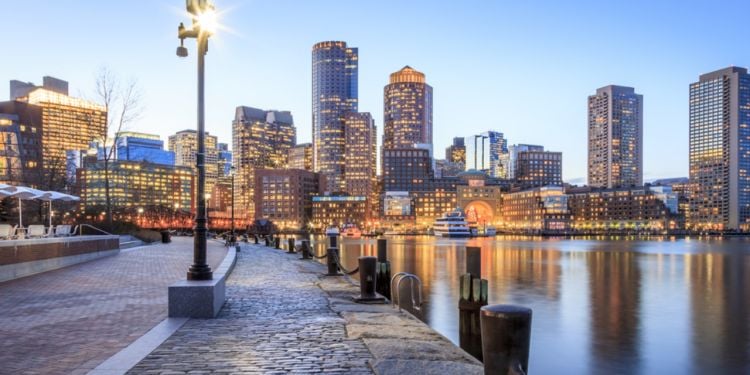
Finding work in Boston
Although it is one of the United States' most historic cities, no particular industry stands out as Boston's top moneymaker. Like many other ...
Higher Education: Universities & International Programs
Boston is one of the world's premier destinations for higher education. The Greater Boston area hosts over 100 colleges and universities with a combined student enrollment exceeding 265,000. International students will find robust support services, diverse campus communities, and access to cutting-edge research facilities.
Top Universities for International Students
Harvard University (harvard.edu) in Cambridge is the oldest university in the United States, founded in 1636. It offers programs across law, business, medicine, and the liberal arts. Massachusetts Institute of Technology (MIT) (mit.edu) is a global leader in engineering, technology, and science. Boston University (bu.edu) enrolls over 37,000 students from 140+ countries and offers more than 300 programs.
Tuition & Admission
Tuition at private universities is substantial. For 2024-2025, Boston University charges approximately $67,000 per year for tuition and fees. Total cost of attendance (including housing and living expenses) can exceed $90,000 annually at top institutions like BU, Tufts, and Harvard. However, many universities offer generous financial aid packages. Boston University meets 100% of demonstrated financial need for admitted U.S. citizens and permanent residents. International students should explore merit scholarships and assistantships. Applications typically require standardized test scores (SAT/GRE/GMAT), English proficiency tests (TOEFL/IELTS), transcripts, and recommendation letters.
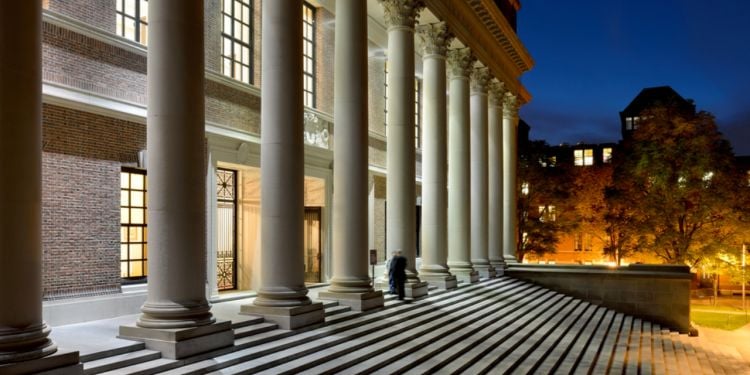
Study in Boston
Boston is probably the most academically renowned city in America due to the presence of Harvard University. Considered to be one of the more ...
Schools for Expat Children: International & Local Options
Boston offers excellent schooling options for expat families. The city has strong public schools, prestigious private institutions, and several international schools that follow British, French, or International Baccalaureate (IB) curricula. Enrollment typically requires proof of residency, immunization records, and previous school transcripts.
International Schools
The British International School of Boston (BISB) (nordangliaeducation.com/bisb-boston) serves students from 18 months to 18 years and follows the British curriculum leading to IGCSEs and the IB Diploma. Tuition for 2024-2025 is approximately $34,590 per year. BISB collaborates with MIT and The Juilliard School for enhanced learning experiences.
The International School of Boston (ISB) (isbos.org) offers a bilingual French-English program from preschool through Grade 12. Students can pursue either the French Baccalaureate or the International Baccalaureate. Upper School tuition is approximately $46,060 per year. ISB offers a tuition freeze program for families with students enrolled since Grade 5.
Public & Private Schools
Boston Public Schools serve over 50,000 students and include exam schools like Boston Latin School, the oldest public school in America. Private options include Dexter Southfield (pre-K through 12th grade) and Buckingham Browne & Nichols in Cambridge. Many private schools offer financial aid and rolling admissions for international families.
Sources: International School of Boston, British International School of Boston
Housing in Boston: Neighborhoods & Rent Prices
Boston's housing market is competitive and expensive. Rental prices rank among the highest in the United States, approximately 60% above the national average. Most leases run from September 1st due to the academic calendar. Apartments are typically rented unfurnished, and tenants should budget for broker fees (often one month's rent), security deposits, and first/last month's rent upfront.
Average Rent Prices (2025)
The following table shows average monthly rents in Boston:
Studio apartment | $2,500 - $2,900 |
1-bedroom apartment | $2,800 - $3,500 |
3-bedroom apartment | $4,100 - $5,000 |
Sources: Zillow, Apartments.com
Best Neighborhoods for Expats
Cambridge is ideal for academics and tech professionals, with easy access to Harvard and MIT. Expect to pay $3,000-$3,800 for a 2-3 bedroom apartment. Brookline is popular with families due to excellent public schools, tree-lined streets, and parks like Larz Anderson Park. Rents range from $2,800 for a 2-bedroom to $3,600 for a 3-bedroom. Back Bay and Beacon Hill offer historic brownstones and proximity to downtown but command premium prices. Jamaica Plain and Somerville provide more affordable options with vibrant local scenes.
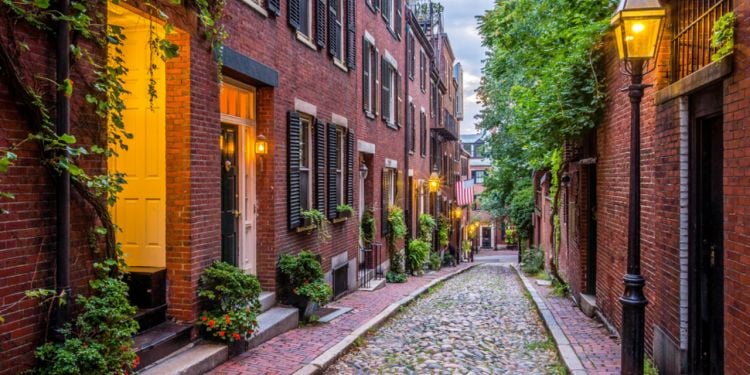
Accommodation in Boston
Boston is a city of contrasts; not only is it a historically significant city (founded in 1630), but it's also a modern city, home to ...
Leisure, Culture & Things to Do in Boston
Boston offers a rich blend of historical sites, cultural institutions, outdoor spaces, and entertainment options. From world-class museums to passionate sports culture, there is always something to explore in this compact, walkable city.
Museums & Cultural Attractions
The Museum of Fine Arts (MFA) houses over 450,000 works spanning ancient to contemporary art. The Isabella Stewart Gardner Museum is set in a stunning Venetian-style palazzo with a tranquil courtyard garden. The Institute of Contemporary Art (ICA) offers cutting-edge exhibitions with free admission on Thursday evenings. Families will enjoy the Museum of Science, the New England Aquarium, and the Boston Children's Museum. History buffs can walk the Freedom Trail, a 2.5-mile path connecting 16 historic sites including Paul Revere's House and the Old North Church.
Parks & Outdoor Activities
Boston Common and the adjacent Public Garden (with its famous Swan Boats) are the heart of the city's green space. The Charles River Esplanade is perfect for jogging, cycling, and summer concerts at the Hatch Shell. Franklin Park includes a zoo and extensive walking trails. In winter, residents ice skate on the Frog Pond on Boston Common.
Nightlife & Entertainment
The Theater District hosts Broadway shows and local productions. Fenway Park, home of the Red Sox, is a must-visit for sports fans. Live music venues include the House of Blues, Paradise Rock Club, and intimate jazz clubs in Cambridge. The Seaport District offers trendy restaurants, rooftop bars, and waterfront dining.
Sources: Meet Boston, Boston.gov
Daily Life in Boston: Transport, Culture & Lifestyle
Daily life in Boston is defined by its walkable neighborhoods, strong public transit, and distinct four seasons. Bostonians embrace outdoor activities, sports culture, and a thriving food scene. The city's compact size makes it easy to navigate, though winters can be challenging with cold temperatures and occasional snowstorms.
Public Transportation
The Massachusetts Bay Transportation Authority (MBTA), known locally as "the T," operates subway lines, buses, commuter rail, and ferries. The subway has four main lines: Red, Orange, Blue, and Green. A single subway or bus ride costs $2.40 with a CharlieCard. A monthly LinkPass for unlimited subway and bus travel costs $90. Commuter rail passes vary by zone, ranging from $90 (Zone 1A) to over $400 for outer zones. Most residents find a car unnecessary for daily commuting within the city.
Climate & Lifestyle
Boston experiences four distinct seasons. Summers are warm (70-85°F / 21-29°C), while winters are cold (20-40°F / -6 to 4°C) with significant snowfall. Spring and fall are mild and beautiful, with fall foliage being a major attraction. Bostonians are passionate about sports—the Red Sox (baseball), Celtics (basketball), Bruins (hockey), and Patriots (football) have devoted followings. The city has a strong café culture, excellent seafood restaurants, and a growing craft beer scene with breweries like Samuel Adams, Harpoon, and Trillium.
Sources: MBTA Fares
Cost of Living in Boston: Budget Breakdown
Boston is one of the most expensive cities in the United States. Living costs are approximately 53% higher than the national average, driven primarily by housing expenses. However, salaries in Boston's key industries tend to compensate for the higher cost of living. Massachusetts has a flat 5% state income tax and a 6.25% sales tax.
Monthly Budget: Single Person
Rent (1-bedroom, city center) | $3,000 - $3,500 |
Utilities (electricity, heating, water) | $150 - $200 |
Groceries | $350 - $420 |
Transportation (monthly pass) | $90 |
Health insurance | $165 - $300 |
Dining out & entertainment | $300 - $500 |
Estimated total | $4,055 - $5,010 |
Monthly Budget: Family of Four
Rent (3-bedroom, city center) | $4,500 - $5,500 |
Utilities | $250 - $390 |
Groceries | $1,000 - $1,400 |
Transportation | $180 - $250 |
Health insurance (family) | $600 - $950 |
International school fees (1 child) | $2,900 - $3,850 |
Dining out & entertainment | $500 - $800 |
Estimated total | $9,930 - $13,140 |
Sources: Numbeo, Salary.com
Boston: In Short
Boston is a city that rewards curiosity. Its compact size, world-renowned universities, and thriving job market in healthcare, biotech, and finance make it an excellent destination for ambitious expats. Yes, the cost of living is high and winters can be harsh, but the trade-off is a city rich in culture, history, and opportunity. From cheering on the Red Sox at Fenway to exploring cobblestone streets in Beacon Hill, Boston offers a quality of life that blends intellectual stimulation with New England charm. The international community is welcoming, with resources and networks to help newcomers settle in. Ready to start your Boston adventure? Join the Expat.com Boston forum to connect with fellow expats, ask questions, and share experiences!
We do our best to provide accurate and up to date information. However, if you have noticed any inaccuracies in this content, please contact us.


Essential services for your expat journey